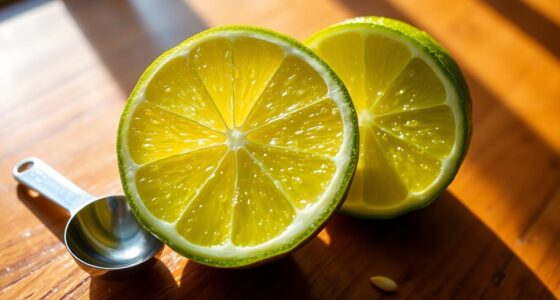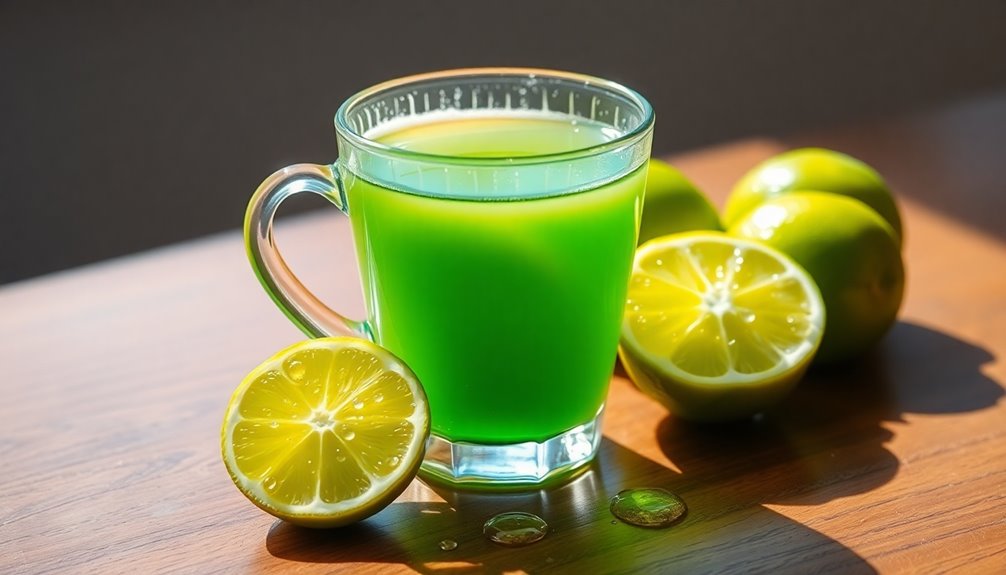

To get 1/4 cup of lime juice, you'll usually need 2 to 3 medium-sized limes. Each medium lime typically provides about 2 tablespoons of juice, so if you choose heavier limes, you might only need 2. It's smart to pick ripe, plump limes for the best yield. Not sure about how to pick the best limes or how to extract more juice? There's more to learn about maximizing your lime juice results!

Get kitchen staples and gadgets delivered free with Prime
- Fast, free delivery on millions of items
- Prime Video, Amazon Music and more included
- Member-only deals all year
Key Takeaways
- 1/4 cup of lime juice equals 4 tablespoons, typically requiring 2 to 3 medium-sized limes.
- Each medium lime usually yields about 2 tablespoons of juice.
- Ripe and heavier limes tend to produce more juice than smaller or lighter ones.
- If limes are smaller or less juicy, consider using a third lime for sufficient juice.
- Selecting the right limes can save time and enhance the flavor of your dish.
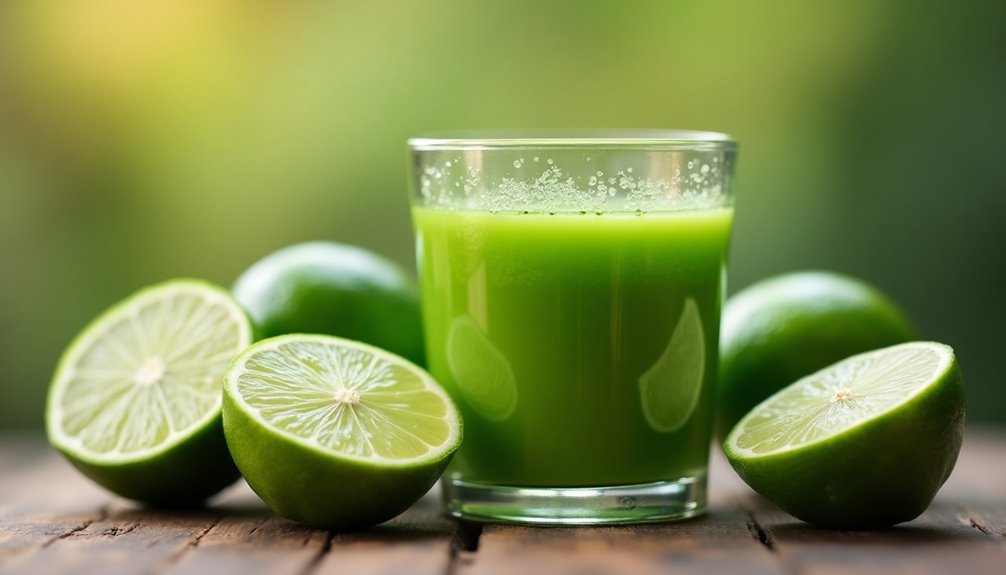
Have you ever wondered how many limes you need to squeeze for 1/4 cup of lime juice? It's a common question, especially when you're diving into a recipe that calls for that tangy flavor. The good news is that getting that quarter cup isn't as tricky as it might seem. Generally, you'll need about 2 to 3 medium-sized limes to reach your desired amount of juice. Each medium lime typically yields roughly 2 tablespoons of juice. Since 1/4 cup equals 4 tablespoons, using 2 limes should do the trick in most cases.
However, you might encounter some variations based on the size and juiciness of the limes you choose. If the limes are particularly small or not very juicy, you might find yourself reaching for a third lime to hit that perfect quarter cup. So, it's crucial to consider the juiciness of the limes you're using. The more ripe and heavy the limes, the better your chances of extracting a sufficient amount of juice. Lighter limes mightn't yield as much, which could leave you short for your recipe.
When you're at the store, keep an eye out for heavier limes. These are your best bet for maximizing juice extraction. Heavier limes usually contain more juice than their lighter counterparts. If you hold two limes in your hand and one feels significantly heavier, that's likely the one to go for. You'll not only save time but also ensure you won't need to squeeze extra limes just to meet the requirement.
If you're preparing a dish that relies heavily on lime juice—think marinades, dressings, or cocktails—having the right amount is essential. No one wants to compromise on flavor because they didn't account for the size of their limes. By understanding that each medium-sized lime gives you about 2 tablespoons, you can easily calculate how many you need for any recipe.
As you get more comfortable with squeezing limes, you'll develop a better sense of how to gauge their juiciness. It's all about practice. You'll start to recognize which limes seem plump and ready to burst with flavor and which ones might leave you struggling to reach that 1/4 cup mark.
As an affiliate, we earn on qualifying purchases.
Frequently Asked Questions
How Many Limes Do I Need for 1 Cup of Juice?
To get 1 cup of juice, you’ll need about 8 limes. Each lime typically yields around 2 tablespoons of juice, and since 1 cup equals 16 tablespoons, that adds up. This means that when you’re wondering how much juice in one lime, you can plan accordingly for your recipes. If you’re preparing a large batch of limeade or a zesty dressing, knowing that each lime gives you about 2 tablespoons can be very helpful. By squeezing the right number of limes, you’ll ensure you have enough juice to achieve the perfect balance of flavor.
Keep in mind that the size and juiciness of the limes can vary, so choosing heavier ones may help. It's best to juice them and measure what you get, as individual limes can produce different amounts of juice.
How Many Key Limes for 1/2 Cup Juice?
To get 1/2 cup of juice, you'll need about 20 key limes. Each key lime typically yields 1 to 2 tablespoons of juice, so you'll require a larger quantity compared to regular limes.
If you're aiming for that distinct flavor in your recipes, keep in mind that key limes are smaller but juicier, making them perfect for dishes like key lime pie.
Can You Use Bottled Lime Juice Instead of Fresh Limes?
You can use bottled lime juice instead of fresh limes, but keep in mind that the flavor won't be the same.
Bottled juice often tastes flat or even bitter due to pasteurization and preservatives. If you're in a pinch, it's a decent substitute, but for the best results in your recipes, fresh lime juice is the way to go.
It delivers a brighter, more vibrant flavor that enhances your dishes and drinks beautifully.
Can I Use Regular Limes in Place of Key Limes?
Yes, you can use regular limes in place of Key limes, but keep in mind the flavor difference.
Regular limes are less acidic and won't provide that unique floral taste. You'll need more Persian limes to match the juice quantity, roughly 2 to 3 times more than Key limes.
While it's a viable substitution, your dish might taste a bit different, so adjust your expectations accordingly.
Conclusion
So, when you squeeze those limes, think of each drop as a burst of sunshine, brightening your dish or drink. Just like life, it takes a few limes to reach that perfect 1/4 cup of lime juice. You've transformed simple ingredients into something vibrant and refreshing, reminding you that even small efforts can create something extraordinary. Next time you zest a lime, remember: a little effort can bring a lot of flavor to your life.
NFL season / tailgating Picks
team gear
As an affiliate, we earn on qualifying purchases.