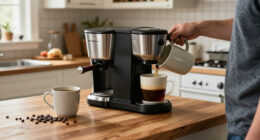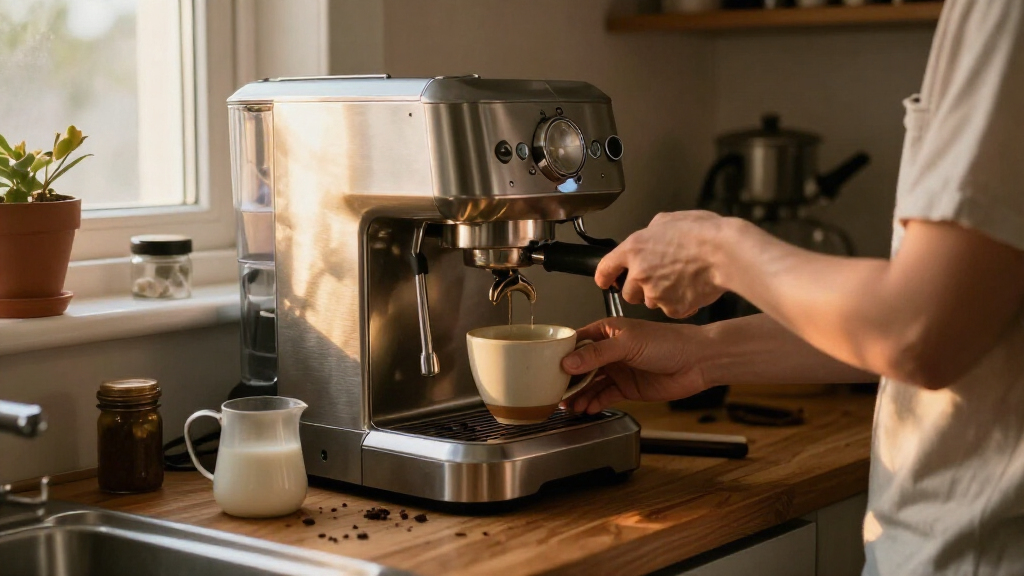

Among these espresso machines for home, I rank the Breville Barista Pro as the best overall for buyers who want an integrated grinder and more hands-on control, while the Breville Bambino is a strong compact choice and the De’Longhi Magnifica Duo suits people who value one-touch convenience. The main tradeoff is between control and simplicity: semi-automatic machines ask you to manage more steps, while fully automatic models reduce daily effort. Built-in grinders save counter space but make the machine a larger commitment if you already own a grinder. Read on for the full breakdown of all 15 options, including who should choose each and who may be better served elsewhere.

Get kitchen staples and gadgets delivered free with Prime
- Fast, free delivery on millions of items
- Prime Video, Amazon Music and more included
- Member-only deals all year
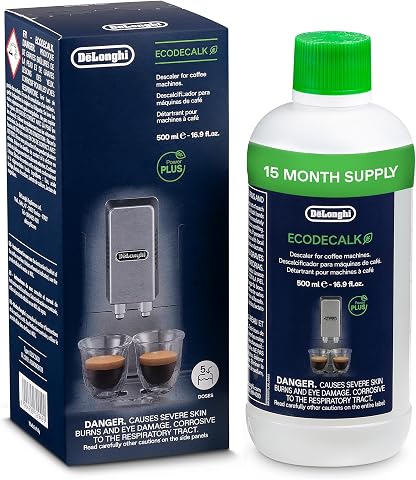
Complete the kit


Key Takeaways
- The Barista Pro is the most rounded pick for buyers seeking an integrated grinder and a more guided, hands-on espresso routine.
- The Bambino prioritizes a smaller footprint over an all-in-one setup; it makes more sense when you already have a grinder or want to choose one separately.
- The Magnifica Duo is the clearest convenience choice in this group, but buyers who want to control each espresso-making step should favor a semi-automatic machine.
- Three Barista Express listings share the same core proposition; their finishes differ, so the choice is more about appearance and availability than a distinct role in the lineup.
- Compact entry-level machines trade room and simplicity for control; buyers wanting repeatable results may prefer a grinder-equipped Breville or AMZCHEF model.


| espresso machines for home | Dimensions | Power | Model | Water tank capacity |
|---|---|---|---|---|
| De’Longhi Classic Signature Es | 11.22 × 13.98 × 15.94 in | 1350 watts | — | — |
| De’Longhi Stilosa Compact Manu | 12.13 × 9.45 × 14.17 in | 1100 watts | EC260BK | 1000 ml |
| Aromaster 1400W Espresso Machi | 13 × 7 × 14 in | 1400 watts | AREM26-9 | 37 fl oz |
| De’Longhi Classic Matte Black | 11.22 × 13.98 × 15.94 in | 1350 watts | EM350BK | — |
| Breville Barista Express Semi- | 13.8 × 12.5 × 15.9 in | 1600 watts | BES870BTR | 67 fl oz |
| Chefman CraftBrew Digital Espr | 10.8 × 8.9 × 11.9 inches (D × W × H) | 1350 watts | — | — |
| Breville Barista Express Espre | 13.8 × 12.5 × 15.9 inches (D × W × H) | 1600 watts | — | 67 oz |
| AERCANA 20-Bar Semi-Automatic | 12.2 × 5.32 × 11.5 inches (D × W × H) | 1450 watts | — | 34 oz (1 liter) |
| Breville Bambino Espresso Mach | 13.7 × 6.3 × 12 inches | — | — | — |
| AMZCHEF Semi-Automatic Espress | 12.5 × 10.82 × 13.38 inches | 1500 watts | — | 60 oz |
| De’Longhi Magnifica Duo Fully | 19.69 x 12.2 x 16.14 in (D x W x H) | 1450 W | ECAM33080SXB | — |
| Breville Barista Express Espre | 13.8 x 12.5 x 15.9 in (D x W x H) | 1600 W | BES870XL | 67 oz |
| De’Longhi Classic Stainless St | 11.22 x 13.98 x 15.94 in (D x W x H) | 1350 W | EM400M | — |
| CASABREWS CM5418 Compact Espre | — | 1350 W | CM5418 | 34 oz |
| Breville Barista Pro Espresso | 13 x 14 x 16 in | — | BES878BSS | 67 oz (2 L) |
More Details on Our Top Picks
De’Longhi Classic Signature Espresso Machine with Adjustable Milk Frother
The De’Longhi Classic Signature suits home brewers who want preset espresso portions without giving up milk-drink options. Its single- and double-shot buttons reduce hands-on steps compared with the manual De’Longhi Stilosa, while the adjustable dual-mode frother accommodates dairy and plant-based milk. Thermoblock temperature control is designed for quick, steady brewing, and the pressure gauge offers a visible cue during extraction. The adjustable-height tray also helps fit different cups without awkward positioning.
The tradeoff is that it takes ground coffee, so whole-bean users need a separate grinder. Its listed width and height also call for a counter-space check; the slimmer Aromaster is easier to place in a narrow kitchen. Choose this De’Longhi for convenient espresso and milk drinks, not for an especially compact footprint or a bean-to-cup workflow.
Pros:- One-touch single and double espresso presets simplify everyday brewing.
- Dual-mode adjustable frother works with dairy and plant-based milk.
- Thermoblock temperature control supports quick, steady brewing.
- Adjustable double-height drip tray accommodates different cup sizes.
Cons:- Uses ground coffee, so whole beans require a separate grinder.
- Its listed dimensions may be difficult to fit on a crowded counter.
- Preset operation offers less hands-on control than the manual Stilosa.
Best for: Home coffee drinkers who want simple single- or double-shot brewing and a frother that can handle dairy or plant-based milk.
Not ideal for: Whole-bean purists who want an integrated grinder, or buyers with very limited counter space who may prefer the narrower Aromaster.
- Machine type:Espresso machine
- Operation mode:Fully automatic
- Pump pressure:15 bar
- Power:1350 watts
- Coffee input:Ground coffee
- Temperature control:Thermoblock
- Frother:Adjustable dual-mode frother
- Dimensions:11.22 × 13.98 × 15.94 in
- Weight:9.3 lb
Our verdict“Choose the De’Longhi Classic Signature if you want preset espresso and flexible milk frothing, and have room for its wider footprint.”
De’Longhi Stilosa Compact Manual Espresso Machine with Milk Frother
The De’Longhi Stilosa is a straightforward entry point for home espresso drinkers who want to learn the basics rather than rely on preset buttons. Its manual operation and steam wand put shot preparation and milk frothing in the user’s hands, while the included portafilter, two filters, and scoop/tamper provide the core tools to get started. Compared with the preset-driven De’Longhi Classic Signature, the Stilosa asks for more effort but gives beginners a clearer introduction to espresso routines.
The compact body and stainless steel boiler suit kitchens where a simpler machine is preferable to a built-in grinder system like the Breville Barista Express. That simplicity has limits: the 1,000 ml tank can mean refills during frequent use, and manual steaming takes practice. Skip it if you want push-button drinks or expect to serve several milk coffees in quick succession.
Pros:- Manual controls let beginners learn the espresso and milk-frothing process.
- Includes a portafilter, single- and double-shot filters, and a scoop/tamper.
- Stainless steel boiler is designed for durable brewing.
- Compact design and two-level cup holder suit varied cups and smaller kitchens.
Cons:- Manual brewing and steaming require practice and attention.
- The 1,000 ml tank may need refilling during frequent use.
- Ground-coffee operation lacks the integrated grinder found on the Breville Barista Express.
Best for: New espresso hobbyists who want a compact, manual machine and are willing to practice tamping and milk steaming.
Not ideal for: Busy households seeking quick preset drinks or frequent back-to-back milk beverages without hands-on frothing.
- Model:EC260BK
- Operation mode:Manual
- Pump pressure:15 bar
- Boiler material:Stainless steel
- Power:1100 watts
- Water tank capacity:1000 ml
- Coffee input:Ground coffee
- Dimensions:12.13 × 9.45 × 14.17 in
- Weight:8.6 lb
Our verdict“Pick the Stilosa if you want an approachable, hands-on introduction to espresso and can accept a learning curve.”
Aromaster 1400W Espresso Machine with Milk Frother
The Aromaster AREM26-9 packs several temperature and maintenance features into a relatively narrow body. Its PID temperature control and pre-infusion offer more brewing-oriented control than the simpler De’Longhi Stilosa, while fast heat-up and a one-touch descaling function aim to make daily use less demanding. The 37-ounce removable tank and swivel steam wand add practical flexibility for home or office brewing.
At 7 inches wide, it is the most space-conscious pick in this group, especially beside the broader De’Longhi Classic Signature. The compromise is a ground-coffee-only workflow: buyers using whole beans still need a grinder, unlike with the Breville Barista Express. The tank is also modest for frequent entertaining, so expect more refilling than with the Breville’s 67-ounce reservoir. It fits buyers who value compact placement and useful controls over an integrated grinder or larger capacity.
Pros:- Narrow 7-inch listed width can fit tighter counter spaces than the De’Longhi Classic Signature.
- PID temperature control and pre-infusion provide added brewing control.
- Removable 37-ounce tank and one-touch descaling support routine upkeep.
- 360-degree swivel steam wand makes it easier to position a milk pitcher.
Cons:- Ground coffee only; whole beans require a separate grinder.
- The 37-ounce tank may need frequent refilling in higher-use households.
- Manual milk frothing takes more effort than preset drink preparation.
Best for: Apartment or office users who want a narrow espresso machine with temperature controls, a swivel wand, and straightforward descaling.
Not ideal for: Whole-bean drinkers who want grinding built in, or households making many drinks between refills.
- Model:AREM26-9
- Power:1400 watts
- Pump pressure:20 bar
- Water tank capacity:37 fl oz
- Coffee input:Ground coffee
- Temperature control:PID
- Special features:Pre-infusion, fast heat-up, one-touch descaling
- Dimensions:13 × 7 × 14 in
- Color:Steel
Our verdict“Choose the Aromaster if counter width and extra brewing controls matter more than an integrated grinder or a large water tank.”
De’Longhi Classic Matte Black Espresso Machine with Milk Frother
This De’Longhi Classic in matte black is a fit for buyers who want automatic shot portions and an uncomplicated milk frother in a restrained finish. Customizable single- and double-shot presets, automatic stop, and Thermoblock heating make daily brewing less hands-on than with the manual Stilosa. Its adjustable drip tray accommodates different cup heights, while the removable tank makes refilling easier.
Compared with the stainless-steel De’Longhi Classic Signature, this model lists 9-bar pressure and plastic-and-stainless-steel construction, so buyers prioritizing a more metal-forward build may prefer the other finish option or a different machine. Like the Signature, it uses ground coffee rather than an integrated grinder, which makes the Barista Express a better fit for whole-bean convenience. This is a practical choice for preset simplicity, not a machine for extensive manual control.
Pros:- Customizable single- and double-shot presets make repeat brewing simple.
- Thermoblock heating and automatic stop streamline routine espresso preparation.
- Adjustable drip tray accommodates different cup sizes.
- Removable water tank simplifies refilling.
Cons:- Uses ground coffee, unlike the integrated-grinder Breville Barista Express.
- Plastic-and-stainless-steel construction may disappoint buyers seeking an all-metal machine.
- The listed 9-bar pressure differs from the 15-bar spec of the De’Longhi Classic Signature.
Best for: Buyers who want a matte-black home machine with customizable shot presets and straightforward milk frothing.
Not ideal for: Whole-bean users seeking an integrated grinder, or shoppers who prefer an all-metal body and more hands-on extraction control.
- Model:EM350BK
- Operation mode:Fully automatic
- Pressure:9 bar
- Power:1350 watts
- Coffee input:Ground coffee
- Materials:Plastic and stainless steel
- Water tank:Removable
- Dimensions:11.22 × 13.98 × 15.94 in
- Weight:9.3 lb
Our verdict“Choose this matte-black De’Longhi for customizable, low-effort espresso portions, but look elsewhere if you want whole-bean grinding or an all-metal build.”
Breville Barista Express Semi-Automatic Espresso Machine with Built-In Grinder, Black Truffle
The Breville Barista Express is the clearest choice here for buyers who want fresh grinding and control in one home machine. Its integrated conical burr grinder doses beans directly into the portafilter, avoiding the separate-grinder step required by the Stilosa and other ground-coffee models. Low-pressure pre-infusion and PID temperature control give the brewer tools to shape extraction, while the steam wand supports hands-on milk texturing.
That flexibility comes with a steeper routine than the preset-driven De’Longhi Classic Signature: grinding, dosing, and steaming all involve user input. At 22.1 pounds, it is also much heavier than the compact Aromaster, and its larger build is less convenient to move or fit into a tight space. The 67-ounce tank and included accessories suit regular home use, but this machine makes most sense for people who want to develop a repeatable espresso workflow rather than just press a drink button.
Pros:- Integrated conical burr grinder sends freshly ground beans into the portafilter.
- PID temperature control and low-pressure pre-infusion support controlled extraction.
- Manual steam wand allows milk texturing for lattes and cappuccinos.
- 67-ounce water tank and included brewing and cleaning accessories support regular use.
Cons:- Grinding, dosing, and milk texturing require hands-on work.
- At 22.1 pounds, it is considerably heavier than the Aromaster and compact De’Longhi models.
- The larger semi-automatic workflow involves more setup and cleanup than preset machines.
Best for: Home espresso enthusiasts who want an integrated grinder, fresh beans, and hands-on control over extraction and milk texture.
Not ideal for: Buyers who prioritize a light, compact machine or want automatic drinks with minimal preparation and cleanup.
- Model:BES870BTR
- Machine type:Semi-automatic espresso machine
- Grinder:Integrated precision conical burr grinder
- Bean hopper capacity:1/2 lb
- Water tank capacity:67 fl oz
- Power:1600 watts
- Temperature control:Digital PID
- Dimensions:13.8 × 12.5 × 15.9 in
- Weight:22.1 lb
Our verdict“Choose the Barista Express if you want fresh grinding and room to refine your espresso technique, rather than the simplest push-button routine.”
Chefman CraftBrew Digital Espresso Machine with Steam Wand, 15-Bar Pump and 1.5 L Removable Reservoir
The Chefman CraftBrew suits home coffee drinkers who want milk drinks and adjustable shots without adding a separate grinder. Its touch controls, programmable timer, and adjustable shot volume make routine brewing more guided than the hands-on setup of the Breville Barista Express, which adds a built-in grinder but asks more of the user. The 1.5-liter removable reservoir also holds more water than the AERCANA’s 34-ounce tank, so it can mean fewer refills.
The tradeoff is that the CraftBrew takes pre-ground coffee, limiting control over freshness and grind size. Its steam wand supports cappuccinos and lattes, but buyers seeking a machine that grinds beans on demand should look to the Barista Express or AMZCHEF. The descaling alert is a useful maintenance prompt, though it does not make cleaning automatic.
Pros:- Touch controls and programmable timer simplify repeat brewing.
- Adjustable shot volume and brew strength provide useful control.
- 1.5-liter removable reservoir reduces refill interruptions.
- Steam wand and frother support cappuccinos and lattes.
Cons:- Uses ground coffee only, with no built-in grinder.
- Semi-automatic brewing and milk steaming still require user involvement.
- 120-volt specification may not suit some regions.
Best for: Home users who want programmable shot volume, a steam wand, and a roomy removable reservoir while using pre-ground coffee.
Not ideal for: Espresso hobbyists who want an integrated grinder or buyers outside 120-volt regions.
- Operation:Semi-automatic
- Pump pressure:15 bar
- Reservoir capacity:1.5 liters
- Power:1350 watts
- Coffee input:Ground coffee
- Controls:Touch control panel
- Dimensions:10.8 × 8.9 × 11.9 inches (D × W × H)
- Maintenance feature:Descaling alert after 500 brewing cycles
Our verdict“Choose the CraftBrew if you want guided, adjustable brewing from pre-ground coffee and do not need an integrated grinder.”
Breville Barista Express Espresso Machine with Built-In Grinder, Black Sesame
The Barista Express is the strongest fit here for buyers who want to shape the whole espresso process, starting with freshly ground beans. Its integrated conical burr grinder doses directly into the portafilter, while PID temperature control and low-pressure pre-infusion give more brewing control than the simpler Chefman CraftBrew. That combination can help users tune shots to different beans rather than relying on a preset approach.
It is not the easiest path to a quick cup: grinding, dosing, tamping, and steaming all call for hands-on work. The compact Breville Bambino heats faster and takes up less width, but it has no grinder, so it requires a separate one. At 22.1 pounds with a substantial footprint, the Barista Express is better for a dedicated counter spot than a kitchen where storage and easy movement matter.
Pros:- Integrated conical burr grinder feeds fresh grounds into the portafilter.
- PID temperature control and low-pressure pre-infusion support controlled extraction.
- Steam wand can create microfoam for milk drinks and latte art.
- Includes portafilter, baskets, tamper, milk jug, and cleaning accessories.
Cons:- Manual grinding, shot preparation, and milk texturing take practice and time.
- Heavy build and broad footprint make it less convenient to move or store.
- Requires a 120-volt power supply.
Best for: Home espresso drinkers ready to grind, dose, tamp, and steam manually in exchange for an integrated bean-to-cup workflow.
Not ideal for: People who want minimal preparation, a lightweight machine, or a narrow countertop footprint.
- Operation:Semi-automatic
- Grinder:Integrated precision conical burr grinder
- Water tank capacity:67 oz
- Bean hopper capacity:1/2 lb
- Power:1600 watts
- Dimensions:13.8 × 12.5 × 15.9 inches (D × W × H)
- Weight:22.1 lb
- Temperature features:PID control and low-pressure pre-infusion
Our verdict“Pick the Barista Express if you want a built-in grinder and are willing to trade convenience for hands-on control.”
AERCANA 20-Bar Semi-Automatic Espresso Machine with Milk Frother, Stainless Steel, 34 oz Water Tank, Silver
The AERCANA is a space-conscious choice for home users who want a visible pressure gauge and a steam wand without giving up much counter depth. At just 5.32 inches wide, it is notably slimmer than the Breville Bambino, whose width is listed at 6.3 inches. The AERCANA also includes a removable tank and drip tray, plus a hot-water function for drinks beyond espresso.
Its small footprint comes with a smaller 34-ounce reservoir than the Bambino’s 47-ounce capacity, so frequent brewers should expect more refills. The machine also needs to preheat before brewing and cool after frothing; switching straight from steaming milk to espresso can trigger overheat protection. Unlike the AMZCHEF, it has no built-in grinder, so buyers need ground coffee or a separate grinder. The pressure gauge offers feedback, not a shortcut around dialing in a shot.
Pros:- Narrow 5.32-inch width suits tight counter spaces.
- Pressure gauge provides a visible brewing reference.
- Steam wand supports milk microfoam and latte-style drinks.
- Removable water tank and drip tray simplify routine cleaning.
Cons:- 34-ounce tank is smaller than the Breville Bambino’s 47-ounce capacity.
- Requires cooling after milk frothing before brewing to avoid overheat protection.
- No built-in grinder, so it relies on ground coffee.
Best for: Apartment dwellers or occasional espresso drinkers who need a narrow machine and value a visible pressure gauge.
Not ideal for: Frequent multi-drink households or anyone who wants to switch rapidly between steaming and brewing without a cooling pause.
- Operation:Semi-automatic
- Pump pressure:20 bar
- Power:1450 watts
- Water tank capacity:34 oz (1 liter)
- Dimensions:12.2 × 5.32 × 11.5 inches (D × W × H)
- Coffee input:Ground coffee
- Included features:Milk frother, auto shut-off, cup warmer, hot-water dispenser, removable tank
- Material:Stainless steel
Our verdict“Choose the AERCANA when a slim footprint and gauge matter more than a large tank or fast milk-to-espresso workflow.”
Breville Bambino Espresso Machine, Brushed Stainless Steel (BES450BSS)
The Bambino makes the most sense for home drinkers who want a quick start and a relatively slim machine without moving to an automatic espresso system. Its ThermoJet system reaches extraction temperature in three seconds, a clear convenience advantage over the AERCANA, which calls for preheating and a cooling pause after steaming. The Bambino also pairs PID temperature control with low-pressure pre-infusion, giving it more extraction-focused features than the simpler Chefman CraftBrew.
That speed does not remove the hands-on steps: users still need to prepare ground coffee and operate the portafilter and steam wand. The Bambino’s 47-ounce capacity is smaller than the Chefman’s 1.5-liter reservoir, so heavy daily use can mean more refilling. Its narrow 6.3-inch width is helpful for crowded counters, but a separate grinder adds both cost and space for buyers who want freshly ground beans.
Pros:- Three-second heat-up supports quick espresso preparation.
- PID control and low-pressure pre-infusion support consistent extraction.
- Compact 6.3-inch width fits narrower counter spaces.
- Steam wand and included milk jug support milk-based drinks.
Cons:- Requires ground coffee and a separate grinder for fresh-bean preparation.
- 47-ounce capacity may need frequent refilling in busy households.
- Manual shot preparation and milk texturing require attention.
Best for: Busy home users with limited counter width who want fast heat-up, manual espresso control, and milk steaming.
Not ideal for: Buyers seeking an integrated grinder, a larger water capacity, or a mostly hands-off coffee routine.
- Operation:Semi-automatic
- Heating system:ThermoJet
- Heat-up time:3 seconds
- Temperature control:PID
- Portafilter size:54 mm
- Water capacity:47 fl oz
- Dimensions:13.7 × 6.3 × 12 inches
- Weight:10.9 lb
Our verdict“Choose the Bambino if speed and a narrow footprint matter more than an integrated grinder or a large reservoir.”
AMZCHEF Semi-Automatic Espresso Machine with Built-In Grinder
The AMZCHEF is the most adjustable grinder-equipped option in this group on paper: its 44 grind settings and 190°F–201°F temperature range give home users room to tune brewing across different beans. It also offers hot and cold brew modes, a touchscreen, and a 60-ounce removable tank. Compared with the Breville Barista Express, it brings a broader stated range of grind settings and a touchscreen interface, while the Breville lists PID control and low-pressure pre-infusion for extraction.
That flexibility comes with a learning curve. The AMZCHEF remains semi-automatic, so it is not a one-touch substitute for a fully automatic machine, and the listed 6-ounce capacity may constrain batch size. Its built-in grinder saves counter space over a separate grinder, but buyers who value a more explicitly described extraction system may prefer the Barista Express. The 60-ounce tank is generous, though the 13.38-inch height still needs clearance.
Pros:- 44 grind settings provide broad adjustment for different beans and brewing preferences.
- Adjustable brew temperature ranges from 190°F to 201°F.
- Built-in grinder, touchscreen, and hot and cold brew modes consolidate functions.
- Removable 60-ounce tank and descaling function support upkeep.
Cons:- Semi-automatic preparation still involves hands-on steps.
- Listed 6-ounce capacity may limit the amount brewed at once.
- Many adjustment options may be unnecessary for buyers who prefer a simple routine.
Best for: Curious home brewers who want an integrated grinder, many grind settings, and adjustable brew temperature in one machine.
Not ideal for: People who want fully automatic preparation, large servings per brew, or a simple machine with few settings.
- Operation:Semi-automatic
- Grind settings:44
- Temperature range:190°F–201°F
- Water tank capacity:60 oz
- Power:1500 watts
- Steam wand:8 mm stainless steel
- Dimensions:12.5 × 10.82 × 13.38 inches
- Special features:Built-in grinder, cold brew mode, touchscreen, removable tank, descaling function
Our verdict“Pick the AMZCHEF if you want an integrated grinder with extensive adjustment options and can accept hands-on brewing and a limited listed serving capacity.”
De’Longhi Magnifica Duo Fully Automatic Espresso Machine with Milk Frother, Silver
The Magnifica Duo suits households that want a broad café-style menu without grinding, dosing, or steaming each drink by hand. Its 20 hot and iced presets, built-in burr grinder, and automatic hot-and-cold milk systems put convenience ahead of control. Cold Extraction Technology also makes cold brew in under three minutes, a capability the manual Breville Barista Express does not offer as a preset, hands-off process. Removable frothing parts and auto-clean help contain the routine cleanup, though this machine still takes up substantial counter space at nearly 20 inches deep. Its plastic-and-steel construction is less metal-forward than the Breville. Choose it for variety and automation; skip it if you want to refine each shot or have a small kitchen.
Pros:- Twenty preset hot and iced drinks cover espresso, drip-style coffee, lattes, and cold brew.
- Integrated conical burr grinder handles whole beans without a separate grinder.
- LatteCrema Hot and Cool systems automate dairy or plant-based milk frothing.
- Removable frothing components and auto-clean simplify routine cleanup.
Cons:- Nearly 20 inches deep, so it needs more counter depth than the compact CASABREWS CM5418.
- Plastic is among the listed construction materials, unlike the stainless-steel Breville Barista Express.
- Automatic drink preparation offers less hands-on control than the Barista Express.
Best for: Households that regularly make different hot and iced drinks and want automatic grinding and milk frothing.
Not ideal for: Small-kitchen owners or espresso hobbyists who want manual control over each shot and milk texture.
- Model:ECAM33080SXB
- Operation:Fully automatic
- Preset recipes:20
- Grinder:Integrated conical burr grinder
- Milk system:LatteCrema Hot and Cool
- Cold brew preparation:Under 3 minutes
- Dimensions:19.69 x 12.2 x 16.14 in (D x W x H)
- Power:1450 W
Our verdict“Choose the Magnifica Duo if your priority is an automated, varied drink menu and you have room for its large footprint.”
Breville Barista Express Espresso Machine with Built-In Grinder, Brushed Stainless Steel
The Barista Express is for home brewers who want to shape the process, not just select a drink. Its integrated conical burr grinder feeds the portafilter directly, while PID temperature control and low-pressure pre-infusion support a more controlled extraction. The steam wand also lets you texture milk yourself, which offers more practice and flexibility than the automatic milk systems on the De’Longhi Magnifica Duo. That control comes with a learning curve: you manage grinding, dosing, tamping, extraction, and milk. The included tools and baskets give new users a useful starting kit, but the machine remains a substantial countertop appliance at 22.1 pounds. Compared with the quicker-heating Barista Pro, this model lacks a stated three-second heat-up feature, making it a better fit for patient routine-making than speed-first mornings.
Pros:- Integrated conical burr grinder delivers freshly ground coffee directly into the portafilter.
- PID temperature control and low-pressure pre-infusion support controlled extraction.
- Manual steam wand allows microfoam and latte-art practice.
- Includes portafilter, filter baskets, tamper, milk jug, and maintenance tools.
Cons:- Manual grinding, extraction, and milk texturing require time and practice.
- At 22.1 pounds, it is heavier than the Barista Pro and compact CASABREWS CM5418.
- Its one-year limited warranty is shorter than the Barista Pro’s stated two-year limited warranty.
Best for: Home espresso learners who want an integrated grinder, manual milk texturing, and room to build barista skills.
Not ideal for: Anyone who wants push-button drinks, minimal daily steps, or a lightweight machine that is easy to move.
- Model:BES870XL
- Machine type:Manual espresso machine
- Grinder:Integrated precision conical burr grinder
- Bean hopper capacity:1/2 lb
- Water tank capacity:67 oz
- Temperature control:PID
- Dimensions:13.8 x 12.5 x 15.9 in (D x W x H)
- Power:1600 W
Our verdict“Pick the Barista Express if you want to learn hands-on espresso on an all-in-one machine and are willing to manage each step.”
De’Longhi Classic Stainless Steel Espresso Machine with Milk Frother
The De’Longhi Classic keeps home espresso straightforward: choose a single or double shot, brew with ground coffee, then use the dual-mode frother for dairy or plant-based milk. Its 9-bar extraction and Thermoblock heating make it a simpler alternative to the grinder-equipped Breville Barista Express, but that simplicity means buying pre-ground coffee or adding a separate grinder. At 9.3 pounds, it is much easier to reposition than the heavier Breville machines, and the adjustable drip tray accommodates different cup heights. The frother and presets suit routine drinks without asking users to manage a built-in grinder. On the other hand, its plastic-and-stainless body is less metal-forward than the all-steel CASABREWS CM5418, and manual coffee preparation offers fewer automated drink choices than the Magnifica Duo.
Pros:- Single- and double-shot presets simplify routine brewing.
- Dual-mode frother works with dairy and plant-based alternatives.
- Thermoblock heating and 9-bar extraction support home espresso preparation.
- Adjustable drip tray accommodates different cup sizes.
Cons:- Uses ground coffee and has no built-in grinder, unlike the Breville Barista Express.
- Plastic is part of the construction, unlike the CASABREWS CM5418’s brushed stainless-steel finish.
Best for: Beginners and occasional espresso drinkers who use ground coffee and want basic shot presets with milk frothing.
Not ideal for: Whole-bean enthusiasts who want an integrated grinder or frequent users seeking a broad automatic drink menu.
- Model:EM400M
- Operation:Fully automatic
- Coffee input:Ground coffee
- Extraction pressure:9 bar
- Power:1350 W
- Milk frother:Dual-mode
- Dimensions:11.22 x 13.98 x 15.94 in (D x W x H)
- Weight:9.3 lb
Our verdict“Choose the De’Longhi Classic for uncomplicated ground-coffee shots and milk drinks without the bulk or learning curve of an integrated-grinder machine.”
CASABREWS CM5418 Compact Espresso Machine with Milk Frother
For a tight counter, the CASABREWS CM5418 offers a compact semi-automatic setup with a steam wand, removable tank, and single- and double-shot filters. Its pressure gauge gives beginners a visible cue while adjusting their extraction, a feature that makes the process more informative than the preset-focused De’Longhi Classic. It also has a brushed stainless-steel exterior, unlike the Classic’s mixed plastic-and-steel body. The tradeoff is hands-on brewing: grind, dose, and tamp choices matter, and the listed guidance notes that a finer grind, more coffee, or firmer tamping may be needed. After steaming milk, the machine must cool before brewing to avoid overheating protection, which can interrupt back-to-back drinks. Compared with the grinder-equipped Barista Express, it also leaves grinding to you.
Pros:- Compact design is suited to smaller kitchens and office counters.
- Pressure gauge offers a visible reference during extraction.
- Steam wand supports milk texturing for lattes and cappuccinos.
- Removable 34-ounce tank and single- and double-shot filters support everyday use.
Cons:- Requires a cooling period after frothing before brewing, slowing consecutive drink preparation.
- Extraction may need grind, dose, or tamp adjustments to reach the desired result.
- No integrated grinder, unlike the Breville Barista Express and Barista Pro.
Best for: Apartment dwellers and occasional home baristas who want a compact machine, manual milk steaming, and a pressure gauge.
Not ideal for: People who want fast consecutive milk drinks, automatic brewing, or a built-in grinder.
- Model:CM5418
- Machine type:Semi-automatic espresso machine
- Pump pressure:20 bar
- Water tank capacity:34 oz
- Power:1350 W
- Milk frothing:Steam wand
- Finish:Brushed stainless steel
- Included filters:One-cup and two-cup
Our verdict“Choose the CM5418 if counter space matters and you want an affordable-in-effort manual routine, but not if you need rapid milk-drink service.”
Breville Barista Pro Espresso Machine with Grinder, Brushed Stainless Steel
The Barista Pro combines hands-on espresso preparation with a speed advantage: its ThermoJet system reaches extraction temperature in three seconds. The integrated burr grinder, dose control, PID regulation, and LCD progress display give users more guidance than the dial-controlled Barista Express, while the steam wand keeps milk texture in the brewer’s hands. It is not a one-touch machine like the De’Longhi Magnifica Duo; grinding, extracting, and steaming still take active work. The speed is most useful when you want a quick start, not when you want every drink automated. Its 1/2-pound hopper and 67-ounce tank may need refilling in a busy household, and the machine’s roughly 13-by-14-by-16-inch footprint still calls for dedicated counter space. This is the stronger fit for practiced users who value pace and control together.
Pros:- ThermoJet heating system reaches extraction temperature in 3 seconds.
- Integrated conical burr grinder with dose control supports fresh, adjustable dosing.
- PID temperature regulation and low-pressure pre-infusion support controlled extraction.
- LCD shows grinding and extraction progress, adding guidance beyond the Barista Express’s dial controls.
Cons:- Manual grinding, extraction, and milk texturing still require attention and practice.
- The 1/2-pound bean hopper and 67-ounce tank may need frequent refills in heavy use.
- Takes dedicated counter space and is less automated than the De’Longhi Magnifica Duo.
Best for: Home baristas who want an integrated grinder and manual milk control, with a fast heat-up for weekday routines.
Not ideal for: Buyers seeking one-touch drinks, minimal cleanup, or a large bean hopper for frequent multi-person use.
- Model:BES878BSS
- Operation:Manual
- Grinder:Integrated precision conical burr grinder
- Heating system:ThermoJet; 3-second heat-up
- Temperature control:PID, ±2°C
- Bean hopper capacity:1/2 lb
- Water tank capacity:67 oz (2 L)
- Dimensions:13 x 14 x 16 in
Our verdict“Pick the Barista Pro if you want manual espresso control with a quick heat-up, rather than the hands-off convenience of a fully automatic machine.”
How We Picked
I ranked these espresso machines for home by how well each fits a real household routine: the amount of control it offers, whether a grinder is included, how approachable its workflow appears, and how much counter space and upkeep it is likely to require. I also weighed milk preparation, water capacity, and the difference between manual, semi-automatic, and fully automatic operation. A feature only counted as a benefit when it changed the buyer experience—for example, an integrated grinder can simplify a setup, but it also adds bulk and another component to maintain.
The ranking favors useful balance over headline specifications. The Barista Pro leads for its combination of grinder, control, and workflow; the Bambino earns a distinct place for a more compact setup, while the Magnifica Duo serves buyers who value automation. Similar De’Longhi Classic and Breville Barista Express listings are grouped by their shared role rather than treated as meaningfully different machines. Less-documented or more basic options remain relevant for buyers with specific space or budget priorities, but they rank lower when the lineup offers a clearer route to control or convenience.
| espresso machines for home | Operation |
|---|---|
| De’Longhi Classic Signature Es | — |
| De’Longhi Stilosa Compact Manu | — |
| Aromaster 1400W Espresso Machi | — |
| De’Longhi Classic Matte Black | — |
| Breville Barista Express Semi- | — |
| Chefman CraftBrew Digital Espr | Semi-automatic |
| Breville Barista Express Espre | Semi-automatic |
| AERCANA 20-Bar Semi-Automatic | Semi-automatic |
| Breville Bambino Espresso Mach | Semi-automatic |
| AMZCHEF Semi-Automatic Espress | Semi-automatic |
| De’Longhi Magnifica Duo Fully | Fully automatic |
| Breville Barista Express Espre | — |
| De’Longhi Classic Stainless St | Fully automatic |
| CASABREWS CM5418 Compact Espre | — |
| Breville Barista Pro Espresso | Manual |
Factors to Consider When Choosing Espresso Machines For Home
The right machine depends less on the number printed on its pump and more on how much work you want to do before your first cup. I’d start by mapping your routine, counter space, grinder situation, and milk-drink habits before choosing a machine class.
Choose the workflow you will actually use
A semi-automatic machine gives you more control over dosing, tamping, and extraction, but those steps take practice and attention. A fully automatic model reduces the number of decisions between you and a drink, which can matter more than fine control on busy mornings. Buyers sometimes choose a manual workflow for its flexibility, then find they prefer a simpler routine every day. Think about whether making espresso is part of the hobby or simply a way to get coffee. If multiple people will use the machine, favor a workflow everyone can repeat without coaching.
Decide whether a built-in grinder helps or limits you
An integrated grinder can simplify a home setup and reduce the number of separate appliances on the counter. It also means the machine and grinder occupy one footprint, and any grinder adjustment or repair is tied to the same unit. If you already own a capable grinder, a machine without one—such as a compact option—may avoid paying for duplicated equipment. Do not assume a grinder-equipped machine is automatically easier: dialing in beans and keeping the grinder clean still take attention. Choose the all-in-one route when convenience and a consolidated setup matter more than modularity.
Measure the full working footprint
Measure not only the space under the cabinets but also the room needed to fill the water tank, load beans, and steam milk. A machine that fits on paper may be awkward if its reservoir is difficult to access in your kitchen layout. Compact machines can be a better match for small counters, but a smaller body may mean less capacity or a different workflow. Leave room for a grinder, tamper, milk pitcher, and cleaning supplies if they are separate from the machine. The practical footprint includes the tools you need to use it, not just the appliance itself.
Match milk features to your usual drinks
If you mostly drink straight espresso or Americanos, a steam wand may be a feature you rarely use. For cappuccinos and lattes, consider whether you want to texture milk yourself or prefer a more automated approach. Manual steaming offers more control over foam, though it adds a skill and a cleanup step. A wand also needs regular wiping and purging, so its upkeep belongs in the decision. Buyers who make milk drinks for several people should prioritize a routine that feels manageable cup after cup.
Look beyond pump pressure claims
Marketing figures such as a 15-bar or 20-bar pump rating do not tell you by themselves how a machine will perform in a kitchen. Grinder consistency, coffee dose, tamping, temperature management, and the user’s technique all shape the result. A higher printed number should not outweigh a clearer workflow or a grinder that suits your needs. Beginners often focus on the pump spec because it is easy to compare, while overlooking whether the machine makes daily preparation understandable. Compare the whole system and the effort it asks of you instead.
Plan for cleaning and long-term ownership
Espresso machines need routine care, including cleaning coffee residue and dealing with mineral buildup from water. More automated features can reduce hands-on preparation but may add internal parts and cleaning tasks. Check how easy it is to remove the drip tray, access the water tank, and clean the milk components before deciding. Water hardness varies by home, so follow the manufacturer’s care guidance rather than assuming one descaling schedule fits everyone. A machine that is straightforward to maintain is more likely to remain part of your routine.
Frequently Asked Questions
Should I buy a machine with a built-in grinder if I already own one?
Usually, I would choose a machine without an integrated grinder if your existing grinder is capable and you are happy with it. That avoids duplicating equipment and can give you more flexibility to replace or upgrade each piece separately. An all-in-one model may still suit you if reducing counter clutter matters more than keeping the setup modular. Check the machine’s footprint as well as the grinder arrangement, since combined units are not automatically smaller. Your current grinder and kitchen layout should drive this choice, not the appeal of having every feature in one box.
Is a fully automatic machine a better choice for beginners?
It can be, if your main goal is a quick, repeatable drink rather than learning espresso preparation. The Magnifica Duo is the lineup’s clearest fit for buyers who want automation, while a semi-automatic model gives you more room to adjust each step. Beginners who enjoy practicing may prefer that extra control; beginners who want fewer daily tasks may not. Also check how milk drinks are prepared and cleaned, since automation does not remove every maintenance chore. Choose based on the routine you want to repeat, not on which machine sounds more advanced.
Do I need a steam wand if I mostly drink lattes?
A steam wand is useful for latte drinkers who want to prepare and texture milk at home, but it requires a little practice and cleaning after each use. If you prefer a hands-on routine, a wand-equipped semi-automatic machine gives you control over the milk texture. If you want fewer manual steps, compare automated milk options and their cleaning requirements instead. Buyers who only drink straight espresso can treat a wand as optional rather than a must-have. Consider how often you make milk drinks and whether you enjoy the extra preparation.
Are the three Breville Barista Express listings different machines?
The three Barista Express entries in this roundup share the same named machine line and built-in grinder proposition, with the listed finishes differing. I would not treat them as three distinct performance categories based on the product names alone. Compare the exact listing details, included accessories, and finish before choosing, since those specifics can vary by listing. If you are deciding between the Express and the Barista Pro, focus on their workflow and features rather than color. The Pro has a distinct role in this guide, while the Express entries represent the same general all-in-one approach.
Is a compact espresso machine a good choice for a small kitchen?
It can be, but check access and working space as well as the machine’s listed dimensions. You still need room to fill the tank, place a cup, and handle a grinder or milk pitcher if those are separate. The Bambino and compact CASABREWS and Stilosa options address buyers who want a smaller setup, while integrated-grinder machines generally combine more equipment into one unit. A compact body may also mean fewer conveniences or a more hands-on routine. Measure your counter and cabinet clearance before choosing, and include the surrounding tools in that measurement.
Conclusion
For the broadest mix of control and an integrated grinder, I’d start with the Breville Barista Pro as my best overall pick. The best value direction is a simpler compact machine such as the De’Longhi Stilosa or CASABREWS CM5418, especially for buyers who already have a grinder and do not need an all-in-one setup. For a premium, hands-on routine, the Barista Express offers the integrated-grinder format, while the Barista Pro is the more distinct upgrade choice in this lineup. The best beginner pick for convenience is the De’Longhi Magnifica Duo; those who want to learn semi-automatic espresso in a smaller space should look at the Bambino instead. For specific needs, choose the Bambino for a compact machine, the Magnifica Duo for automated drinks, or an AMZCHEF model if you want a built-in grinder outside the Breville line. I’d make the final choice by matching daily effort, counter space, and grinder needs—not by chasing a pump-pressure number.
Black Friday Picks

Ninja Foodi DualZone Smart XL Air Fryer, 10-Quart, 6-in-1, Black, DZ550
As an affiliate, we earn on qualifying purchases.