
If you’re new to juicing, avoid common mistakes that could sabotage your health goals. Don’t overload on sweet fruits; keep a balanced mix of 30% fruit and 70% veggies. Always consume your juice immediately for the best nutrients, and drink it on an empty stomach for maximum absorption. Make sure to thoroughly wash all produce to eliminate harmful residues and consider organic ingredients to enhance health benefits. Keep exploring to uncover more juicing tips you won’t want to miss!
Key Takeaways
- Overloading juices with sweet fruits can lead to excessive sugar intake and energy crashes; aim for 30% fruit and 70% vegetables.
- Fresh juice should be consumed immediately for maximum nutrient retention, as nutrients degrade within 15 minutes of exposure to air.
- Drinking juice on an empty stomach enhances nutrient absorption; wait at least two hours after meals for optimal digestion.
- Thoroughly wash all produce, including organic options, to eliminate harmful pesticide residues and contaminants.
- Choosing organic ingredients reduces exposure to harmful chemicals and supports better health and sustainable farming practices.

Godspeeds Juicer Machines with 5.8" Large Feed Chute, Slow Masticating Cold Press Juicer for Whole Fruits & Vegetables, Easy to Clean Design, High Juice Yield Home Juicer for Daily Wellness
Easy to Clean, Designed for Real Life:Built with a removable filter that resists pulp buildup, this easy to…
As an affiliate, we earn on qualifying purchases.
As an affiliate, we earn on qualifying purchases.
Overloading on Sweet Fruits and Vegetables
One common mistake beginners make is overloading their juices with sweet fruits and vegetables. This can lead to excessive sugar intake, spiking insulin levels and causing energy crashes that counteract your health goals.
To maintain a healthier sugar level, aim to balance fruit content, keeping it around 30% of your juice while filling the remaining 70% with vegetables. High sugar content can hinder weight loss and trigger cravings, especially if you’re monitoring your sugar intake.
Juicing primarily with greens like kale and spinach provides essential nutrients without the added sweetness. By gradually reducing sweet fruits, you can adapt your taste preferences and stabilize energy levels, making green juices a more enjoyable and beneficial choice for your health journey.
JoyJolt Glass Milk Bottles with Lids and Pourer – 64 Oz, 3 Pack Airtight Heavy Duty Reusable Glass Bottles, Leakproof, BPA-Free, Food Grade, Dishwasher Safe Jug, Pitcher for Milk, Juice, and Water
NOSTALGIC AND PRACTICAL: Whether you remember them as a kid or not, we can all agree old milk…
As an affiliate, we earn on qualifying purchases.
As an affiliate, we earn on qualifying purchases.
Neglecting Freshness and Immediate Consumption
While it might be tempting to prepare a big batch of juice to enjoy throughout the week, neglecting freshness can greatly diminish its health benefits.
Fresh juice should ideally be consumed immediately to retain maximum nutrients. Once exposed to air, live enzymes and nutritional content can degrade in just 15 minutes.
Fresh juice is best enjoyed right away, as nutrients can diminish within just 15 minutes of exposure to air.
If you can’t drink it right away, store it in an airtight container in the fridge, but remember—slow juicers should consume it within 24-36 hours, while press juicers can last up to 72 hours. Freshly squeezed juice retains more nutrients than processed juice, making immediate consumption even more crucial.
Prioritizing freshness in juice consumption not only enhances nutrient density but also boosts energy-boosting properties.
Don’t miss out on the vibrant flavors and essential nutrients that come from enjoying your juice fresh!

PRODUCE Organic Juicing Orange Bag, 64 OZ
Typically smaller than Navel Oranges, Valencias have a sweet, tangy flavor perfect for juicing or snacking.
As an affiliate, we earn on qualifying purchases.
As an affiliate, we earn on qualifying purchases.
Ignoring Timing for Optimal Nutrient Absorption
Freshness isn’t the only factor in maximizing the benefits of your juice; timing plays a critical role too. To achieve optimal nutrient absorption, drink your juice on an empty stomach. Ideally, wait at least two hours after a meal before indulging.
Consuming juice right after preparation enhances its benefits, as nutrients begin to degrade after just 15 minutes of exposure to air. Drinking juice before meals can help curb cravings for unhealthy foods and promote better digestion, requiring minimal digestive energy.
Also, make sure to wait at least 30 minutes after drinking juice before eating solid food to allow for ideal nutrient uptake. Morning is the ideal time for juicing, as it boosts energy levels and sets a healthy tone for your day.

Juicing for Beginners: The Complete Guide to Juicing with Simple and Delicious Juice Recipes for a Healthier Life | Boost Energy, Cleanse and Detoxify, Improve Digestion, and Lose Weight
As an affiliate, we earn on qualifying purchases.
As an affiliate, we earn on qualifying purchases.
Failing to Clean Produce Thoroughly
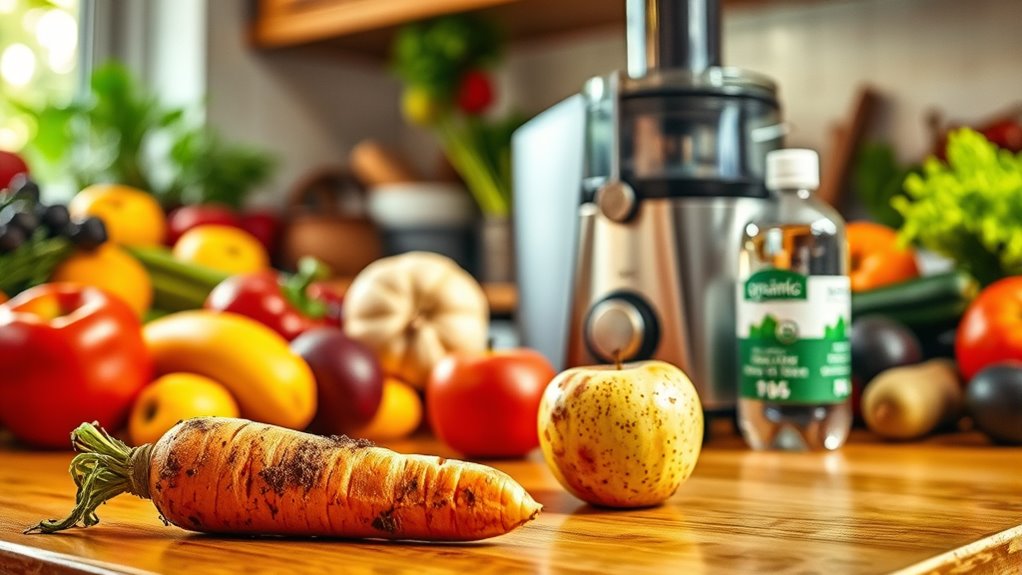
Many beginners overlook the importance of thoroughly cleaning their produce before juicing. Failing to clean produce thoroughly can lead to gastrointestinal issues and diminish the health benefits of your juice.
Pesticides and chemicals can linger, affecting the nutritional value of even the freshest ingredients. To guarantee your juice is safe and nutritious, remember to:
- Wash all produce under hot water
- Remove harmful residues through thorough washing
- Clean fruits and veggies before peeling or cutting
- Use organic produce when possible, but still wash thoroughly
- Be aware of contaminants that can affect your health
Using Non-Organic Ingredients
When you choose non-organic ingredients for your juice, you might unintentionally expose yourself to harmful pesticide residues. Using organic produce instead not only enhances your juice’s health benefits but guarantees a cleaner source of nutrients. Non-organic fruits and vegetables can compromise nutrient absorption, leading to chemical contamination in your juicing routine.
| Non-Organic Risks | Organic Benefits | Impact on Health |
|---|---|---|
| Pesticide Residues | Cleaner Nutrients | Improved Wellness |
| Chemical Contamination | Sustainable Farming | Better Nutrient Absorption |
| Higher Toxin Levels | Enhanced Flavor | Reduced Health Risks |
Investing in organic ingredients supports sustainable farming practices and protects your well-being. Don’t overlook the importance of choosing wisely for your health!
Frequently Asked Questions
What Is the 80/20 Rule for Juicing?
The 80/20 rule for juicing means you should aim for 80% vegetables and 20% fruits in your juice.
This balance helps you minimize sugar intake while maximizing nutrients, which is especially helpful if you’re watching your blood sugar levels.
By focusing on more vegetables, you’ll get essential vitamins and antioxidants without the excess fructose from fruits.
Following this guideline can support your health goals, including weight loss and improved energy levels.
What Should You Not Do While Juicing?
When it comes to juicing, don’t let your enthusiasm lead you astray like a ship without a compass.
Avoid excessive sweetness by limiting sugary fruits and veggies, and steer clear of drinking juice right after meals to guarantee proper nutrient absorption.
Always prioritize fresh, organic produce to keep harmful pesticides at bay, and remember to clean your juicer immediately.
These steps will help you craft nutritious, delicious juices that nourish your body!
What Happens When You First Start Juicing?
When you first start juicing, you’ll likely feel excited about the health benefits. You might notice increased energy and improved digestion, but you could also face challenges.
If you don’t consume juice on an empty stomach, you mightn’t absorb nutrients effectively. Plus, if you use too many sweet fruits, you could experience sugar spikes.
Remember to clean your juicer promptly, or you’ll end up with bacteria that can ruin your juice.
What Are 5 Cons of Juicing?
Imagine you’re a garden gnome, surrounded by vibrant fruits and veggies. Juicing might seem like a magical potion, but it has its downsides.
You might overdo sugar and spike your blood sugar. If you skip washing, you risk nasty pesticides. You could also lose nutrients with quick juicing methods.
Drinking too fast can upset your stomach, and consuming juice on a full stomach limits absorption.
Conclusion
In your juicing journey, remember: balance your sweetness, cherish freshness, honor timing, prioritize cleanliness, and choose organic. By avoiding these common mistakes, you’ll not only enjoy tastier juices but also reap the full benefits of their nutrients. Embrace the joy of vibrant flavors, the satisfaction of healthy choices, and the boost of energy that comes from mindful juicing. Don’t let regret hold you back—start creating delicious, nutritious juices today and transform your health one sip at a time!

Cindy thoroughly researches juicing trends, techniques, and recipes to provide readers with practical advice and inspiration. Her writing style is accessible, engaging, and designed to make complex concepts easy to understand. Cindy’s dedication to promoting the advantages of juicing shines through her work, empowering readers to make positive changes in their lives through the simple act of juicing.