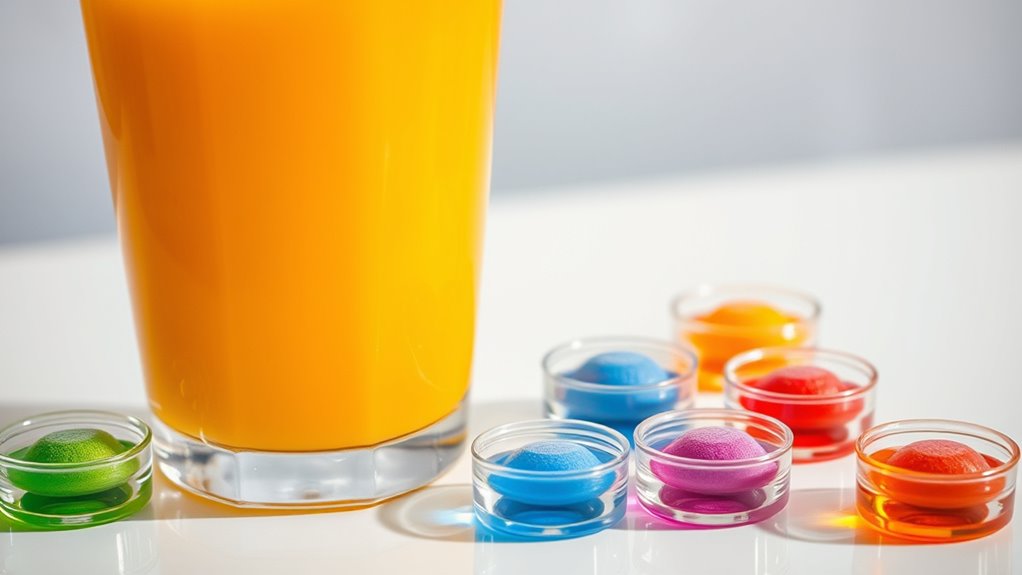
When selecting juice sterilization tablets, the key factors are effectiveness, ease of use, and versatility. The Sanitizing Tablets, Food Contact Surface Sanitizer, Model 1-G stands out as the best overall for its reliable disinfection and straightforward application. For those seeking bulk options, the Pack of 6 Steramine Sanitizing Tablets with Test Strips offers great value for high-volume needs. Readers face tradeoffs between potency, cost, and compatibility with different surfaces. Continue reading for a detailed comparison to find the best fit for your sterilization needs.

Get kitchen staples and gadgets delivered free — and shop member deals
- Fast, free delivery on millions of items
- Access to Prime Big Deal Days deals on October 6–7
- Prime Video, Amazon Music and more included
Key Takeaways
- The top-ranked products balance strong disinfectant properties with user-friendly application methods.
- Bulk packaging options often provide better value but may sacrifice convenience for smaller-scale users.
- Test strips are a valuable addition for verifying proper sanitizer concentration, especially in commercial settings.
- Not all tablets are suitable for food contact surfaces—checking NSF or similar certifications is essential.
- Price varies widely, with premium options offering higher purity and consistency for professional use.
| Sanitizing Tablets, Food Contact Surface Sanitizer, Model 1-G, 150 Tablets |  | Best Overall for Ease and Cost-Effective Sanitization | Model: 1-G | Quantity: 150 tablets | Color: Blue | VIEW ON AMAZON | See Our Full Breakdown |
| Steramine Tablets |  | Best Value for Concentrated, Cost-Saving Sanitization | Usage: 1 tablet per 1 gallon of water | Yield: 150 gallons per bottle | Application: Food contact surfaces, utensils, glassware, non-food contact surfaces | VIEW ON AMAZON | See Our Full Breakdown |
| Pack of 6 Steramine Sanitizing Tablets with Test Strips, 900 Tablets Total, for Commercial and Food Service Sanitation |  | Best for Commercial Settings with Monitoring Capabilities | Quantity: 900 tablets (6 bottles of 150) | Includes: 30 QT-10 test strips | Application: Food contact surfaces, utensils, glassware, countertops | VIEW ON AMAZON | See Our Full Breakdown |
| 6 x Steramine Quaternary Sanitizing Tablets, Pack of 6 Bottles, 150 Tablets Each |  | Best for Heavy-Duty Bacterial and Viral Disinfection | Quantity: 6 bottles | Tablets per bottle: 150 | Color: Blue | VIEW ON AMAZON | See Our Full Breakdown |
| Steramine Sanitizer Tablets with Test Strips – 150 Count |  | Best for Balanced Performance with Monitoring Features | Quantity: 150 tablets | Test Strips: 15 QT-10 | Application: Food contact surfaces, utensils, equipment | VIEW ON AMAZON | See Our Full Breakdown |
| 2 Bottles Steramine Sanitizer Tablets, 300 Count + 15 Test Strips |  | Best for Large-Scale Commercial Use | Quantity: 300 tablets | Test Strips: 15 QT-10 test strips | Application: Food contact surfaces, utensils, equipment | VIEW ON AMAZON | See Our Full Breakdown |
| Steramine Quaternary Sanitizing Tablets (6 Pack of 150 Each), Blue |  | Best for Versatile Non-Porous Surface Sanitizing | Item Form: tablet | Scent: Unscented | Specific Uses: Cooktop, Countertop, Furniture, Refrigerator, Sink | VIEW ON AMAZON | See Our Full Breakdown |
| Steramine Sanitizer Tablets – Multi-Purpose Food Contact Surface Sanitizer, 150 Count |  | Best for Professional Food Contact Disinfection | Quantity: 150 tablets | Application: Food contact surfaces, utensils, kitchen equipment | Use: Dissolve one tablet per gallon of water | VIEW ON AMAZON | See Our Full Breakdown |
| Steramine Quaternary Sanitizing Tablets (450 Count) – Commercial Food-Contact Surface Sanitizer |  | Best for High-Volume Commercial Sanitation | Count: 450 tablets | Application: Food-contact surfaces, dishes, utensils, toys, water bottles | Usage: 1 tablet per 1 gallon of water | VIEW ON AMAZON | See Our Full Breakdown |
| Food Contact Sanitizer Tablets, No Rinse, NSF D2, 100 PPM, 1 Quart |  | Best for Quick, On-Demand Food Surface Sanitizing | Quantity: 100 tablets | Volume: 1 quart | PPM: 100 | VIEW ON AMAZON | See Our Full Breakdown |
| Steramine Sanitizer Tablets (Sanitabs) – 150 Count Bottle, Pack of 6 |  | Best for Cost-Effective Bulk Sanitizing | Quantity: 6 bottles | Tablets per bottle: 150 | Usage: 1 tablet per 1 gallon of water | VIEW ON AMAZON | See Our Full Breakdown |
| 6 Bottles Steramine Sanitizer Tablets with QT-10 Test Strips – Multi-Purpose Food Contact Surface Sanitizer (900 Count) |  | Best for Precise, Commercial-Grade Disinfection | Number of bottles: 6 | Tablets per bottle: 150 | Total tablets: 900 | VIEW ON AMAZON | See Our Full Breakdown |
| juice sterilization tablet | Application | Quantity |
|---|---|---|
| Sanitizing Tablets | Sanitizer for restaurants, bars, schools, households | 150 tablets |
| Steramine Tablets | Food contact surfaces, utensils, glassware, non-food contact surfaces | — |
| Pack of 6 Steramine Sanitizing | Food contact surfaces, utensils, glassware, countertops | 900 tablets (6 bottles of 150) |
| 6 x Steramine Quaternary Sanit | — | 6 bottles |
| Steramine Sanitizer Tablets wi | Food contact surfaces, utensils, equipment | 150 tablets |
| 2 Bottles Steramine Sanitizer | Food contact surfaces, utensils, equipment | 300 tablets |
| Steramine Quaternary Sanitizin | — | — |
| Steramine Sanitizer Tablets | Food contact surfaces, utensils, kitchen equipment | 150 tablets |
| Steramine Quaternary Sanitizin | Food-contact surfaces, dishes, utensils, toys, water bottles | — |
| Food Contact Sanitizer Tablets | — | 100 tablets |
| Steramine Sanitizer Tablets | Food contact surfaces, equipment, household sanitizing | 6 bottles |
| 6 Bottles Steramine Sanitizer | Food contact surfaces, utensils, equipment | — |
More Details on Our Top Picks
Sanitizing Tablets, Food Contact Surface Sanitizer, Model 1-G, 150 Tablets
This pack of 150 pre-measured tablets stands out for its simplicity and affordability, making it a strong choice for both small-scale and commercial food service environments. Compared to the larger quantity options like the 6 x Steramine Quaternary Sanitizing Tablets, it offers a more manageable size for occasional use without sacrificing volume. Its straightforward design means you just drop one tablet per gallon of water, which ensures consistent dosing—crucial for effective sanitization. However, it’s limited to sanitizing surfaces and doesn’t include features like test strips or broad-spectrum disinfectants. The water turns blue, providing a visual cue that the solution is active, but users must still verify proper quat levels for safety. This makes it ideal for users prioritizing simplicity, cost, and effective surface sanitizing without the need for additional testing tools.
Pros:- Pre-measured, easy-to-use tablets ensure consistent dosing
- Economical, capable of making up to 150 gallons of sanitizer
- Effective for sanitizing food contact surfaces and utensils
Cons:- Requires water and proper testing for quat levels to ensure safety
- Limited to sanitizing surfaces; not a general-purpose cleaner
Best for: Small restaurants or households looking for an easy, economical sanitizing solution for food contact surfaces.
Not ideal for: Large commercial kitchens that require detailed monitoring or multi-purpose disinfectants, as this product lacks testing features and broad-spectrum cleaning capabilities.
- Model:1-G
- Quantity:150 tablets
- Color:Blue
- Use:Food contact surfaces, equipment, dishes, utensils
- Application:Sanitizer for restaurants, bars, schools, households
Our verdict“This product is best suited for users seeking a straightforward, cost-effective sanitizer for routine surface disinfection in small-scale settings.”
Steramine Tablets
Compared with the Sanitizing Tablets Model 1-G, Steramine Tablets offer a highly concentrated solution that can yield up to 150 gallons per bottle, making it ideal for budget-conscious users managing larger areas. Its pre-measured tablets dissolve easily in water to produce a visible blue sanitizing solution, suitable for food contact surfaces, utensils, and glassware. While it’s economical, the product provides less detailed information about contact times or specific disinfectant properties, which could be a drawback for those needing precise protocols. Unlike the Pack of 6 Steramine Sanitizing Tablets with Test Strips, it lacks monitoring tools, so users must rely on their own testing procedures. This pick makes the most sense for those who want high volume, low cost, and simple use, but are comfortable with manual verification of effectiveness.
Pros:- Concentrated formula yields up to 150 gallons per bottle
- Pre-measured tablets simplify the mixing process
- Suitable for commercial and household use
Cons:- Lacks included test strips or monitoring tools
- Limited information on contact time and disinfectant spectrum
Best for: Large food service operations or households seeking economical, bulk sanitization without added testing tools.
Not ideal for: Users requiring detailed disinfection protocols or monitoring, since specific contact times and efficacy details are limited.
- Usage:1 tablet per 1 gallon of water
- Yield:150 gallons per bottle
- Application:Food contact surfaces, utensils, glassware, non-food contact surfaces
Our verdict“This product fits budget-conscious users needing large-volume sanitization with straightforward application, accepting less detailed efficacy data.”
Pack of 6 Steramine Sanitizing Tablets with Test Strips, 900 Tablets Total, for Commercial and Food Service Sanitation
This set of six bottles provides 900 tablets, making it a highly economical choice for large-scale food service environments. It includes test strips, a feature that sets it apart from smaller or simpler options like the Sanitizing Tablets Model 1-G. The test strips enable precise monitoring of sanitizer strength, crucial for maintaining safety standards in busy kitchens. The tablets dissolve quickly to create an effective sanitizer suitable for use in three-compartment sinks, spray bottles, and sanitizer buckets. While the large volume and testing capability make it ideal for commercial use, some users might find the tablets slightly large or cumbersome to handle, and improper dilution could reduce effectiveness. It’s best for professionals who prioritize both high capacity and proper testing in their sanitation routines.
Pros:- Includes 30 QT-10 test strips for verifying sanitizer strength
- Fast-dissolving tablets effective for broad microbial coverage
- High volume at a cost-effective price point
Cons:- Requires proper handling and dilution for safety
- Some users may find tablets slightly large or difficult to handle
Best for: Large commercial kitchens or food processing facilities that need reliable, measurable sanitization solutions.
Not ideal for: Small households or users who don’t require monitoring tools, as the extra testing features add complexity and cost.
- Quantity:900 tablets (6 bottles of 150)
- Includes:30 QT-10 test strips
- Application:Food contact surfaces, utensils, glassware, countertops
- Dissolution:Fast
Our verdict“This product is best for large-scale operations that benefit from monitoring capabilities and high-volume capacity, with some complexity in use.”
6 x Steramine Quaternary Sanitizing Tablets, Pack of 6 Bottles, 150 Tablets Each
This set of six bottles maximizes disinfectant strength, with each bottle containing 150 tablets designed to produce a blue solution effective against bacteria, viruses, and germs like E. coli, HIV, and Listeria. Compared to the Sanitizing Tablets Model 1-G, these tablets are more concentrated and intended for heavy-duty disinfection, suitable for environments where microbial control is critical. While highly effective, they require careful handling, proper dilution, and are limited mostly to food contact surfaces and equipment—making them less versatile for general cleaning. The blue color change provides a visual cue, but without included testing tools, users must rely on proper procedures. This choice suits high-risk settings needing robust germ control, but could be overkill for casual or low-risk environments.
Pros:- Effective against a broad spectrum of microorganisms including HIV and Listeria
- Highly concentrated, capable of making 150 gallons per bottle
- Blue color change indicates active solution
Cons:- Requires careful handling and proper dilution
- Limited to specific applications like food contact surfaces
Best for: Hospitals, food processing plants, or cleanup crews requiring intense microbial control and virus inactivation.
Not ideal for: Home users or small kitchens that do not need such aggressive disinfectants, as the concentration and handling requirements are more demanding.
- Quantity:6 bottles
- Tablets per bottle:150
- Color:Blue
- Model:1-G
Our verdict“This set is perfect for high-risk environments demanding heavy-duty disinfection, with some added complexity and handling precautions.”
Steramine Sanitizer Tablets with Test Strips – 150 Count
This set, including 150 tablets and 15 test strips, offers a practical balance between ease of use and verification for both commercial and home kitchens. The inclusion of test strips allows for proper monitoring of sanitizer strength, a feature missing in some other products like the Sanitizing Tablets Model 1-G. The tablets dissolve quickly to produce a blue solution effective against common pathogens, making it suitable for a variety of surfaces and equipment. While it’s a versatile choice with high yield, users must remember to dissolve tablets beforehand and may need to adjust dilution based on specific needs. Its combination of effectiveness, monitoring, and high volume makes it an attractive option for those wanting reliable results with verification.
Pros:- Includes 15 test strips for proper concentration verification
- Effective against a wide range of microorganisms
- High yield of up to 150 gallons per bottle
Cons:- Requires dissolving tablets before use
- Limited specific contact time information
Best for: Food service operators or home cooks who want a reliable, monitored sanitization process without complexity.
Not ideal for: Users seeking a no-test, quick-and-easy solution or those with very delicate surfaces that might require gentler options.
- Quantity:150 tablets
- Test Strips:15 QT-10
- Application:Food contact surfaces, utensils, equipment
- Use:Dissolve one tablet per gallon of water
- Yield:Up to 150 gallons
Our verdict“This product is well-suited for users who value verification and effectiveness in their sanitization routine, balancing convenience with safety.”
2 Bottles Steramine Sanitizer Tablets, 300 Count + 15 Test Strips
This set stands out for its high-volume capacity, making it ideal for busy restaurants and food prep areas. The inclusion of 15 test strips helps maintain proper sanitizer strength, a feature that sets it apart from smaller packs like the Steramine Tablets (no role) options. Its ability to disinfect food contact surfaces, utensils, and equipment in up to 150 gallons per bottle emphasizes its economical and reliable nature. However, the need to dissolve tablets in water adds an extra step, which might slow down fast-paced environments. It’s less suitable for quick, on-the-go sanitizing or for users preferring ready-to-use solutions. Best for large kitchens and food service operations that prioritize volume and monitoring but less convenient for small households or quick touch-ups.
Pros:- Effective at disinfecting food contact surfaces and utensils
- Includes test strips for monitoring sanitizer concentration
- Economical with high yield per bottle
Cons:- Requires dissolving tablets in water, which may slow workflow
- Limited to food contact surfaces and not suitable for non-food contact areas
Best for: Large commercial kitchens, food processing plants, or busy restaurant staff needing high-volume sanitation
Not ideal for: Small households or individuals seeking quick, no-dissolution disinfectants due to the extra preparation step
- Quantity:300 tablets
- Test Strips:15 QT-10 test strips
- Application:Food contact surfaces, utensils, equipment
- Yield:Up to 150 gallons per bottle
- Formulation:Food-grade sanitizer tablets
Our verdict“This product makes the most sense for high-volume operations that need reliable, monitored sanitation, not for quick or small-scale use.”
Steramine Quaternary Sanitizing Tablets (6 Pack of 150 Each), Blue
Compared with the larger 12-pack options, this 6-pack offers a manageable quantity for medium-sized operations or occasional use, making it ideal for settings like schools or smaller restaurants. The tablets produce a quaternary solution that is odor-free, non-corrosive, and safe on a variety of non-porous surfaces such as counters, sinks, and appliances. Its premeasured design simplifies dilution, but it requires test strips to verify proper concentration, unlike the Steramine Tablets (no role) with built-in testing. The need for mixing water may be inconvenient for some, especially if quick sanitizing is needed. It’s less suited for food contact surfaces directly but excels in general surface and equipment sanitation. Best for users needing a versatile, non-porous surface sanitizer with consistent dosing but less ideal for those wanting ready-to-use or direct application products.
Pros:- Produces a non-corrosive, odor-free quaternary solution
- Premeasured tablets ensure consistent dilution
- Suitable for a variety of non-porous surfaces
Cons:- Requires water mixing, which may be less convenient
- Limited to non-porous surfaces only
Best for: Small to medium food service operations, schools, or households needing reliable surface sanitation
Not ideal for: Users seeking quick, ready-to-use solutions or direct surface application without mixing
- Item Form:tablet
- Scent:Unscented
- Specific Uses:Cooktop, Countertop, Furniture, Refrigerator, Sink
- Surface Recommendation:Countertop
- Special Features:No Rinse
- Materials & Care:Quaternary solution
Our verdict“This pick makes the most sense for those wanting a reliable, non-corrosive surface sanitizer with consistent dosing, not for fast, on-the-fly cleaning.”
Steramine Sanitizer Tablets – Multi-Purpose Food Contact Surface Sanitizer, 150 Count
This product offers a straightforward, EPA-registered solution for disinfecting food contact surfaces, utensils, and kitchen equipment, making it comparable to the Steramine Tablets (no role) but with a focus on professional settings. Its ability to produce a sanitizing solution that kills harmful pathogens like E. coli and HIV-1 emphasizes its efficacy. The formulation requires dissolving one tablet per gallon of water, which can be less convenient than ready-to-use sprays but provides a high yield of up to 150 gallons. Its primary limitation is the need to dissolve tablets, which might slow down quick cleaning routines. It’s less suitable for direct application or quick touch-ups but excels in environments where large batches of sanitizer are needed. Ideal for professional kitchens and food prep areas needing large-scale, reliable disinfection but less suited for immediate, on-the-spot cleaning.
Pros:- Effective against common pathogens including E. coli
- Yields up to 150 gallons of sanitizing solution
- No-rinse when used correctly
Cons:- Requires dissolving tablets, less convenient for quick use
- Limited to liquid sanitizing solutions, not for direct surface application
Best for: Food service businesses, commercial kitchens, or food prep areas requiring bulk sanitization
Not ideal for: Individuals seeking quick, no-dissolution solutions for small or sporadic cleaning tasks
- Quantity:150 tablets
- Application:Food contact surfaces, utensils, kitchen equipment
- Use:Dissolve one tablet per gallon of water
- EPA Registered:Yes
Our verdict“This product suits large-scale, professional sanitation needs where volume and efficacy are priorities, not rapid or casual cleaning.”
Steramine Quaternary Sanitizing Tablets (450 Count) – Commercial Food-Contact Surface Sanitizer
Compared to the 6-pack of Steramine Quaternary Tablets, this 3-pack offers a larger total count of 450 tablets, making it better suited for high-volume, ongoing sanitation tasks in busy kitchens or food processing facilities. Its premeasured, quick-dissolving tablets ensure consistent dilution, while the no-rinse feature simplifies cleanup. However, the need for test strips to verify proper concentration adds an extra step, which can slow down operations if not managed properly. Its higher cost might be less appealing for small-scale or infrequent use, but it delivers reliable, effective sanitation for large operations. It isn’t the best choice for users who prefer ready-to-use solutions or those with limited storage space. Ideal for large-scale commercial environments that need dependable, bulk sanitation solutions but less useful for sporadic or small-scale applications.
Pros:- Premeasured for consistent dilution
- Effective for a variety of food-contact surfaces and utensils
- No-rinse sanitizer when used as directed
Cons:- Requires test strips to verify proper dilution
- More expensive than smaller or liquid options for limited use
Best for: Large commercial kitchens, food processing plants, or institutions with high sanitation demands
Not ideal for: Small restaurants or households with infrequent need for bulk sanitizing tablets
- Count:450 tablets
- Application:Food-contact surfaces, dishes, utensils, toys, water bottles
- Usage:1 tablet per 1 gallon of water
- Color:Blue
- Package:3-pack
Our verdict“This choice is best for large, busy environments prioritizing volume and consistent results over convenience for small-scale use.”
Food Contact Sanitizer Tablets, No Rinse, NSF D2, 100 PPM, 1 Quart
This product offers an easy-to-use, no-rinse solution ideal for quick, on-demand disinfection in busy commercial kitchens. By dropping a tablet into a quart of water, it produces a EPA-registered sanitizer effective within one minute, comparable to the Food Contact Sanitizer Tablets (no role). Its simplicity—no measuring or pouring—makes it attractive for fast-paced environments. The use of hypochlorous acid ensures safety and effectiveness, providing a safer alternative to bleach or quats. Its main limitation is the need to drop a tablet for each use, which might be less convenient for frequent small jobs. It’s not designed for direct surface application but excels in producing a ready-to-use sanitizer on demand. Perfect for restaurants and cafeterias needing quick, effective surface disinfection without residue but less suitable for those preferring pre-mixed solutions.
Pros:- Easy to use with no measuring or pouring
- No-rinse, leaves no residue
- Effective against common pathogens in 1 minute
Cons:- Requires dropping a tablet into water each time, less convenient for frequent use
- Limited to surface sanitation only
Best for: Food service settings requiring rapid, on-the-spot sanitizing of surfaces
Not ideal for: Users who prefer ready-to-use sprays or need to sanitize large areas repeatedly without dropping tablets
- Quantity:100 tablets
- Volume:1 quart
- PPM:100
- Certification:NSF D2
- Active Ingredient:Hypochlorous acid
Our verdict“This product is ideal for quick, effective surface disinfection in busy kitchens, not for continuous large-area sanitizing without frequent tablet handling.”
Steramine Sanitizer Tablets (Sanitabs) – 150 Count Bottle, Pack of 6
This option stands out for its high concentration and economical use, providing enough solution to sanitize up to 900 gallons across six bottles. Compared with products like the 6 Bottles Steramine Sanitizer Tablets with QT-10 Test Strips, it offers a straightforward, no-frills approach to general sanitizing without the added convenience of test strips. Its long shelf life of over ten years makes it suitable for infrequent use, especially in commercial settings where bulk purchases pay off. However, the need to measure and dissolve tablets can slow down busy workflows, and it’s not suitable for direct contact on skin or non-food surfaces. This pick makes the most sense for large-scale food service environments or households with regular sanitizing needs that prioritize economy over ease of use.
Pros:- Highly concentrated and economical, with enough solution for 150 gallons per bottle
- Effective against a broad spectrum of pathogens including HIV-1 and MRSA
- Long shelf life of over ten years ensures product longevity
Cons:- Requires measuring and dissolving tablets, which can slow down workflow
- Not suitable for direct application on skin or delicate surfaces
Best for: Large kitchens or food processing facilities seeking an economical, bulk sanitizing solution.
Not ideal for: Home users needing quick, on-the-spot sanitization without measuring or dissolving tablets.
- Quantity:6 bottles
- Tablets per bottle:150
- Usage:1 tablet per 1 gallon of water
- Application:Food contact surfaces, equipment, household sanitizing
- Shelf Life:Over 10 years
- Effectiveness:Kills bacteria, viruses, and germs including HIV-1 and MRSA
Our verdict“This product suits large-scale operations prioritizing cost savings and bulk supply over convenience and immediate application.”
6 Bottles Steramine Sanitizer Tablets with QT-10 Test Strips – Multi-Purpose Food Contact Surface Sanitizer (900 Count)
This set makes an appealing choice for users who want both bulk sanitizing power and verification tools. Unlike the basic Sanitabs, it includes QT-10 test strips, enabling precise checks of solution concentration—crucial for commercial kitchens or institutions where compliance matters. Its capacity of 900 tablets offers extensive coverage, but proper dissolution and handling of concentrated tablets are essential to avoid under- or over-dilution, which can compromise effectiveness. Compared with the simpler Sanitabs, this kit adds a layer of control and confidence, though it involves more steps and careful handling. It’s ideal for foodservice environments where ensuring microbial safety through verified concentrations is a priority, but less suited for quick, casual use at home due to handling complexity.
Pros:- Includes test strips (QT-10) for verifying proper sanitizer concentration
- Effective against pathogens like E. coli and Listeria
- Large total quantity of 900 tablets for extensive use in busy environments
- Suitable for both commercial and home kitchen applications
Cons:- Requires careful dissolution to ensure effectiveness, adding complexity
- Handling concentrated tablets may pose safety or spillage concerns
- Not ideal for surfaces that haven’t been tested for compatibility
Best for: Commercial kitchens or food establishments requiring verified, consistent sanitizing solutions.
Not ideal for: Home cooks or occasional users who prefer quick and easy sanitization without the need for testing supplies.
- Number of bottles:6
- Tablets per bottle:150
- Total tablets:900
- Includes:QT-10 test strips
- Application:Food contact surfaces, utensils, equipment
- EPA Registered:Yes
Our verdict“This set is best suited for professionals who need to maintain strict sanitization standards with verification, accepting the extra steps involved.”

How We Picked
These products were selected based on their disinfectant strength, ease of use, packaging options, and certifications relevant to food contact safety. I prioritized items with clear instructions, reliable performance, and good value for both commercial and home settings. The ranking reflects a balance between potency, convenience, and cost, ensuring buyers can find options suitable for different scales and purposes. Products with additional features like test strips or NSF certification score higher, as they meet stricter safety standards and offer better user control.Factors to Consider When Choosing Juice Sterilization Tablets
Choosing the right juice sterilization tablets involves understanding several key factors that impact effectiveness, safety, and cost. Beyond basic disinfection, it’s important to consider how the product fits your specific needs, whether for home use or professional environments. Here are the main aspects to evaluate when selecting sterilization tablets.Effectiveness and Disinfectant Power
The primary purpose of sterilization tablets is to eliminate bacteria, viruses, and other pathogens. Look for products with proven active ingredients like quaternary ammonium compounds or chlorine-based agents, which provide strong, broad-spectrum disinfection. Higher concentration tablets tend to be more effective, especially for heavy-duty sanitation, but may require careful handling to avoid residue or surface damage. Consider your specific needs—light cleaning might suffice with milder formulas, while high-risk environments demand more potent options.
Certifications and Safety Standards
Products with certifications such as NSF D2 or EPA registration provide assurance of safety and efficacy, especially for food contact surfaces. These standards help prevent contamination and ensure the tablets won’t leave harmful residues. If you’re using the tablets in a commercial food service setting, prioritizing certified options reduces liability and builds consumer trust. Always verify that the product is suitable for food contact to avoid cross-contamination or chemical residues in beverages or produce.
Ease of Use and Packaging
Ease of application is often overlooked but can significantly impact routine sanitation. Tablets that come in pre-measured doses or compatible with test strips streamline the process and reduce waste. Bulk packages might offer better value but could be less convenient for small-scale or infrequent use. Consider whether your setup favors single-use packets, bottles, or bulk containers, and whether the product includes tools like test strips for verifying concentration, which can prevent under- or over-dosing.
Cost and Value
Price varies considerably among sterilization tablets, driven by factors like active ingredient quality, packaging size, and certifications. While cheaper options may suffice for occasional home use, professional settings often require higher-grade products that justify a higher cost with better reliability and safety. Buying in larger quantities generally reduces per-unit costs, but you should balance this against your actual volume needs to avoid waste. Always consider the long-term value over initial price alone.
Compatibility and Surface Types
Not all tablets are suitable for every surface. Some formulations are safe for food contact surfaces, while others are intended solely for non-porous or hard surfaces. Check product labels for compatibility, especially if you plan to use them on delicate materials like plastics or rubber. Using an incompatible product can cause surface degradation or chemical residues, which might compromise safety or damage equipment. When in doubt, opt for products explicitly tested and approved for food contact and rinse-free use.
Frequently Asked Questions
Can I use juice sterilization tablets on fruit or vegetables?
Most sterilization tablets designed for surfaces are not intended for direct application on edible produce. If you need to sanitize fruits or vegetables, look for products explicitly labeled as food-safe, rinse thoroughly after treatment, and follow manufacturer instructions. Using the wrong product or improper application could leave residues or alter the taste, so always prioritize items with NSF certification for edible items.
How do I know if a tablet is strong enough for commercial use?
Commercial-grade sterilization tablets typically carry certifications like NSF D2 or EPA registration, indicating they meet strict safety and efficacy standards. Check the label for active ingredient concentration—higher levels generally mean more potent disinfection. Additionally, products with test strips or clear dosing instructions help ensure proper use, which is especially important in high-volume or high-risk environments. When in doubt, choose tested and certified options designed for professional sanitation.
Are there any risks associated with using too many sterilization tablets?
Overusing sterilization tablets can lead to chemical residues that might be harmful if ingested or cause surface damage over time. Excessive concentration can also result in incomplete rinsing, potentially affecting taste or safety of food and drinks. Always follow manufacturer instructions for dosage and contact time, and use test strips if available to verify proper concentration. Proper handling and measurement are essential to maintain safety and effectiveness.
How often should I replace my sterilization tablets?
Most tablets have a shelf life printed on the packaging; it’s best to store them in a cool, dry place and replace them once expired. For frequent use, keep an eye on packaging integrity and consider rotating stock to ensure potency. In commercial settings, regularly check for certification updates or recalls that might affect safety standards. Proper storage and adherence to expiration dates are key to maintaining their disinfectant power.
Is it necessary to rinse surfaces after using sterilization tablets?
Depending on the active ingredients and intended use, some sterilization tablets do not require rinsing, especially if they are NSF D2 registered and labeled as no-rinse. Rinsing can remove chemical residues that might affect taste or safety. Always read the product instructions—some formulations are designed to be residue-free, while others recommend rinsing to ensure complete removal of chemical residues, particularly on food-contact surfaces.
Fall Picks
fall essentials
As an affiliate, we earn on qualifying purchases.