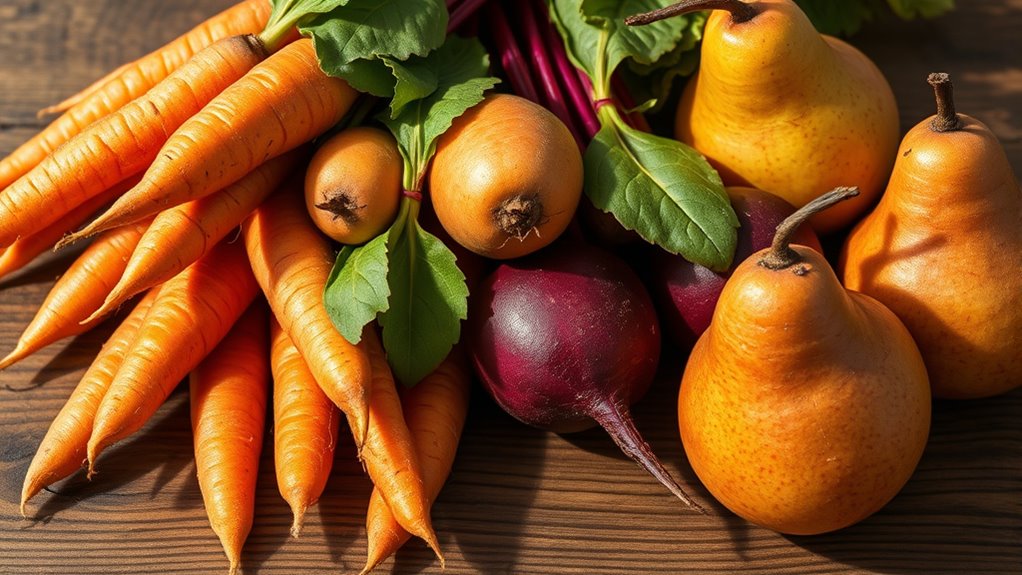

To harvest autumn roots like carrots, beets, and pears, wait until the tops turn yellow and roots are firm, then loosen soil carefully to avoid damage. Handle crops gently during picking, and store carrots and beets in a cool, humid place with tops removed but roots uncut. Pears should ripen at room temperature before refrigerating. If you want to discover more about perfect harvest and storage techniques, keep exploring these practices.
Key Takeaways
- Harvest carrots and beets when tops turn yellow and roots are firm and well-formed.
- Pick pears when they develop full color and slight softness at the stem for optimal ripeness.
- Handle root vegetables gently during harvesting to prevent bruising and maintain quality.
- Store carrots and beets in a cool, dark, humid environment, removing tops to retain moisture.
- Ripen pears at room temperature, then transfer to the fridge to preserve flavor and texture.

Have you ever wondered how the changing leaves and crisp air of autumn connect us to our roots? It’s a time when nature’s bounty offers us fresh, flavorful produce that links us to the land. When harvesting carrots, beets, and pears, your techniques matter. Using proper harvesting techniques ensures you get the best quality and keeps your crops healthy for later use. For root vegetables like carrots and beets, wait until they’ve reached full maturity—usually when their tops start to yellow and the roots are firm and well-formed. Carefully loosen the soil around the roots with a garden fork or spade, being gentle to avoid damaging them. Gently lift the vegetables out of the ground, taking care not to bruise or cut them. This careful approach preserves their freshness and quality. Once harvested, you’ll want to consider seasonal storage options that prolong their freshness. For carrots and beets, removing the tops helps prevent moisture loss, but don’t cut into the roots until you’re ready to use them. Store these vegetables in a cool, dark, and humid place—like a root cellar or a refrigerator’s crisper drawer—where temperatures hover around 32-40°F. Proper seasonal storage keeps root vegetables crisp and flavorful for weeks, providing you with a supply of nutritious food long after harvest. Pears, on the other hand, require a different approach. Harvest them when they develop full color and slightly soften at the stem, indicating ripeness. Handle them gently to avoid bruising, which could lead to rot during storage. After picking, store pears at room temperature to ripen if needed, but once they’re ripe, transfer them to the fridge. This slows down ripening and preserves their delicate texture and sweetness. As you manage your harvest, remember that the way you handle and store these fruits and vegetables connects you directly to the cycles of nature. It’s about respecting the time and effort that went into growing them and making sure they serve you well beyond the season. Your patience and attention to detail in harvesting techniques and seasonal storage aren’t just practical—they’re a tribute to the roots that sustain us. By learning these methods, you honor the land’s rhythm, ensuring that the flavors of autumn’s bounty remain vibrant and accessible long after the leaves have fallen. Proper post-harvest handling ensures maximum freshness and nutritional value, highlighting the importance of gentle techniques and correct storage conditions. This mindful approach transforms your harvest into a lasting gift, a tangible link to the earth’s seasonal dance.
As an affiliate, we earn on qualifying purchases.
Frequently Asked Questions
How Do I Store Carrots, Beets, and Pears for Long-Term Freshness?
To keep carrots, beets, and pears fresh longer, store them properly by using root cellar storage if possible, which maintains ideal humidity and temperature. For refrigeration tips, remove greens from carrots and beets to prevent moisture loss, and keep pears in a crisper drawer. Make sure the produce is dry before storing, and use perforated bags to allow airflow, ensuring your vegetables and fruits stay fresh for weeks.
What Are Some Creative Recipes Using Carrot-Beet-Pear Combinations?
Think of carrot-beet-pear combos as a vibrant canvas waiting for your creativity. You can blend them into a bright smoothie, mixing in ginger and honey for warmth. Try roasting beets and carrots with thyme, then topping with thin pear slices for a colorful salad. For a unique presentation, serve layered parfaits with yogurt and granola. These creative flavor pairings turn simple ingredients into eye-catching, delicious dishes that surprise and delight.
Are There Any Health Benefits Specific to This Seasonal Trio?
You’ll benefit from a seasonal nutrient synergy with this trio, as carrots provide beta-carotene, beets supply nitrates, and pears add dietary fiber. Together, they boost your immune system and improve digestion. Their antioxidant properties help combat oxidative stress, supporting your overall health. Consuming this combination during the season maximizes these benefits, giving you a natural, delicious way to nurture your body and enjoy the vibrant flavors of autumn.
How Can I Select the Ripest Carrots, Beets, and Pears?
To select the ripest carrots, beets, and pears, focus on harvest timing and ripeness indicators. Look for carrots that are firm, with bright, deep orange color, and avoid ones with cracks. Choose beets that are smooth, firm, and have vibrant color. For pears, pick slightly firm fruits that yield gently to pressure, indicating ripeness. Always check for freshness by inspecting the stems and skin for blemishes or soft spots.
What Are the Best Growing Conditions for These Root Vegetables and Fruits?
To grow healthy carrots, beets, and pears, you need well-draining soil that’s rich in organic matter, with a slightly acidic to neutral pH. Make sure they get plenty of sunlight exposure—at least six hours a day for the best yields. Keep the soil moist but not waterlogged, and avoid compacted soil to promote root growth. Proper conditions help you enjoy flavorful, nutritious harvests.
Conclusion
As you savor these autumn roots—carrots, beets, and pears—you embrace the season’s bounty, much like a pioneer harvesting by lantern light. Their earthy sweetness and vibrant hues bring comfort and importance to your table. So, next time you mix these humble ingredients, remember you’re partaking in a timeless ritual, connecting past and present. Don’t forget, even in this modern age, a well-cooked root veggie can make you feel like you’ve stepped into a cozy, old-world kitchen.