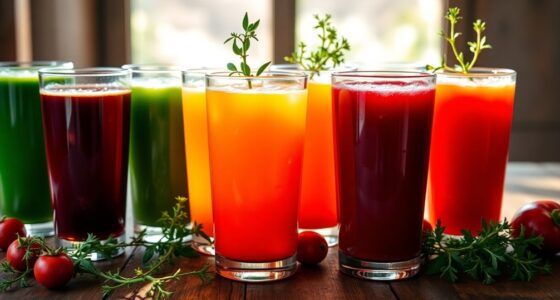
Sodium levels in tomato and vegetable juices can vary widely, especially depending on whether they contain added salt or are labeled as low-sodium options. Many store-bought juices have higher sodium content, which can impact your health over time. Choosing no-salt-added or low-sodium varieties helps you better control your intake. If you’re curious about how to find healthier options or reduce salt in your diet, there’s more to discover below.
Key Takeaways
- Sodium levels in tomato and vegetable juices vary widely, often due to added salt during processing.
- Reading labels helps identify and compare sodium content in different juice brands.
- Low-sodium or no-salt-added options are available to reduce sodium intake.
- Excess sodium can diminish the health benefits of these juices, impacting heart health.
- Using herbs and spices instead of salt enhances flavor without increasing sodium levels.
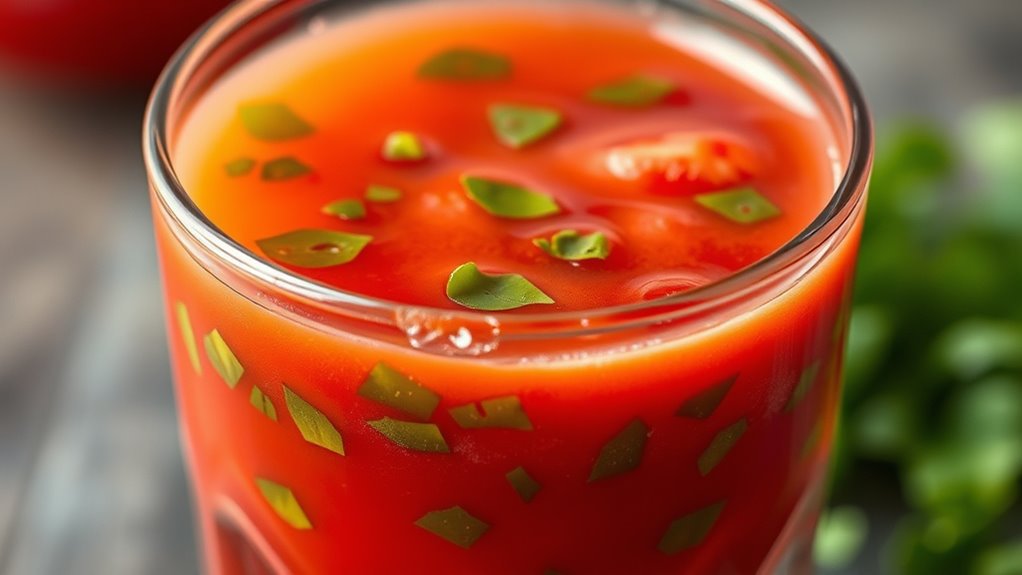
Sodium content in tomato and vegetable juices varies widely, and understanding these differences is essential for managing your intake. Whether you’re enjoying a glass on its own or using it as a base for a recipe, knowing how much sodium is in your juice can impact your health and how you experience its flavor. Many store-bought options contain added salt, which can substantially increase sodium levels, so it’s important to read labels carefully. Choosing low-sodium or no-salt-added varieties allows you to better control your intake while still enjoying the health benefits and flavor enhancement these juices can provide.
Understanding sodium levels in tomato and vegetable juices helps you make healthier, tastier choices.
Tomato and vegetable juices are packed with nutrients that support overall health, such as vitamins A and C, potassium, and antioxidants. These nutrients help boost your immune system, improve skin health, and maintain proper cell function. Consuming these juices can be a convenient way to increase your vegetable intake, especially if you’re short on time or not a big vegetable eater. However, the sodium content can sometimes diminish these health benefits if you’re not mindful. Excessive sodium intake is linked to high blood pressure and increased risk of cardiovascular disease. Accordingly, selecting options with lower sodium levels ensures you maximize the health benefits without compromising your heart health.
Flavor enhancement is another crucial reason to pay attention to sodium levels in tomato and vegetable juices. Salt acts as a natural flavor enhancer, making juices taste richer and more satisfying. However, too much salt can mask the natural flavors of the vegetables and tomatoes, leading to a less fresh or overly salty taste. When you choose low-sodium versions, you give yourself the opportunity to enjoy the natural flavor profile of the produce. You might even find that you prefer the more authentic, less salty taste, which can encourage you to experiment with adding your own herbs and spices to boost flavor without relying on salt. Additionally, choosing sodium-reduction methods can help improve your overall diet quality and support long-term health.
Frequently Asked Questions
How Does Sodium Content Vary Between Store-Bought and Homemade Juices?
You’ll find store-bought juices usually have higher sodium levels because manufacturers add salt for flavor enhancement and preservation techniques, which extend shelf life and improve taste. Homemade juices typically contain less sodium since you control the ingredients, making them healthier. If you’re mindful of sodium intake, making your own juice allows you to enjoy fresh flavors without the added salt, promoting better health and taste customization.
Are There Natural Sources of Sodium in Tomatoes and Vegetables?
You’ll find natural sodium in tomatoes and vegetables, which is part of their plant minerals. These natural sources contribute small amounts of sodium, essential for your body’s functions. While they aren’t high in sodium compared to processed foods, consuming a variety of fresh produce helps you get the natural plant minerals your body needs, including this modest amount of natural sodium, without excess added salt.
What Are the Health Implications of High Sodium in These Juices?
Consuming high sodium in tomato and vegetable juices can increase your hypertension risks, making it harder for your heart to work efficiently. Elevated sodium levels may lead to higher blood pressure, which over time can harm your heart health. To protect yourself, limit your intake of these juices or choose low-sodium options, especially if you have a history of hypertension or cardiovascular concerns.
Can Low-Sodium Versions of Tomato and Vegetable Juices Be Effective?
Low-sodium versions of tomato and vegetable juices can be effective, but they might lack some flavor enhancement and preservative effects that salt provides. You may notice a slightly different taste, and the juices could have a shorter shelf life. To compensate, look for products with natural preservatives or add your own herbs and spices for flavor. Overall, they’re a healthier choice, but be mindful of flavor and freshness.
How Can Consumers Reduce Sodium Intake From These Beverages?
You can reduce sodium intake from these beverages by choosing low-sodium or no-salt-added options, which often taste less salty but still flavorful. Try flavor enhancement techniques, like adding herbs, spices, or a splash of lemon, instead of salt. Using salt substitutes can also help, but check if they suit your health needs. This way, you enjoy the taste without compromising your sodium limits.
Conclusion
Knowing the sodium content in tomato and vegetable juices helps you make healthier choices. For example, imagine someone with high blood pressure switching to low-sodium options, markedly lowering their risk of complications. By reading labels carefully, you can enjoy these nutritious drinks without exceeding your sodium limits. Staying informed empowers you to prioritize your health—making small changes today can lead to better heart health tomorrow.

Cindy thoroughly researches juicing trends, techniques, and recipes to provide readers with practical advice and inspiration. Her writing style is accessible, engaging, and designed to make complex concepts easy to understand. Cindy’s dedication to promoting the advantages of juicing shines through her work, empowering readers to make positive changes in their lives through the simple act of juicing.