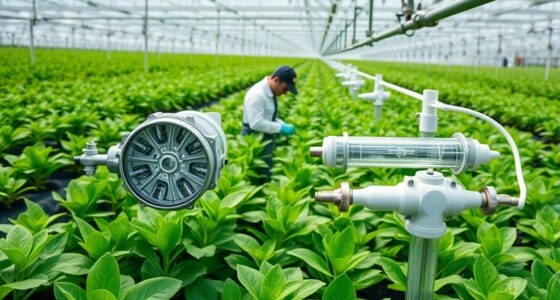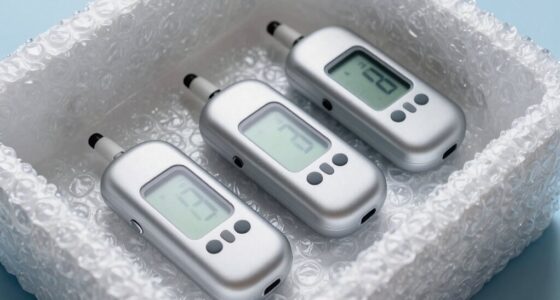
To control dissolved oxygen, you can use deaeration techniques like gas stripping, which involves passing inert gases such as nitrogen through liquids to remove oxygen efficiently. Adjusting conditions like temperature, pressure, and gas flow can optimize the process, preventing corrosion and protecting equipment. Regular monitoring guarantees oxygen levels stay low, while combining methods can improve results. Continuing to explore this topic will give you deeper insights into maximizing oxygen removal for your specific needs.
Key Takeaways
- Gas stripping with inert gases like nitrogen effectively removes dissolved oxygen from liquids without chemicals.
- Optimizing parameters such as temperature, pressure, and gas flow enhances oxygen removal efficiency.
- Continuous monitoring of dissolved oxygen levels prevents reoxygenation and maintains process integrity.
- Proper system design maximizes contact surface area and contact time for effective deaeration.
- Combining gas stripping with chemical methods can further improve dissolved oxygen control in sensitive applications.
Have you ever wondered why controlling dissolved oxygen levels is essential in industrial processes? The answer lies in the fact that excess oxygen can cause corrosion, reduce product quality, and impair equipment performance. To prevent these issues, industries employ various techniques to achieve oxygen removal from liquids, with gas stripping being one of the most effective. Gas stripping involves passing a gas—usually nitrogen or air—through the liquid to remove dissolved gases like oxygen. As the gas bubbles ascend through the liquid, they carry oxygen molecules to the surface, where they’re released into the atmosphere. This process is highly efficient because it increases the contact between the gas and liquid, promoting rapid oxygen removal.
Controlling dissolved oxygen prevents corrosion and maintains product quality through efficient gas stripping techniques.
In gas stripping, the key is to optimize conditions so that oxygen is stripped out as quickly and completely as possible. You might use a packed column or a sparger to disperse the gas into fine bubbles, maximizing surface area and contact time. The choice of stripping gas is crucial; nitrogen is commonly used because it’s inert and won’t react with the liquid or produce unwanted byproducts. By controlling parameters such as temperature, pressure, and gas flow rate, you can fine-tune the process to achieve the desired dissolved oxygen levels. For example, increasing the temperature generally decreases the solubility of oxygen, making it easier to strip out. Similarly, increasing the gas flow rate enhances oxygen removal but must be balanced to avoid excessive energy consumption.
Oxygen removal isn’t just about eliminating oxygen—it’s about doing so efficiently and reliably. You need to ensure that your system maintains low dissolved oxygen levels over time, especially if the process involves storage or long-term operation. This often means implementing continuous gas stripping and monitoring dissolved oxygen levels regularly to prevent reoxygenation. Sometimes, you’ll combine gas stripping with chemical deaeration methods, like adding reducing agents, for even more effective control. But in many industrial settings, gas stripping alone suffices and offers a clean, chemical-free way to keep oxygen levels in check. Additionally, regional factors such as local laws and regulations may influence the choice of deaeration methods to ensure compliance.
Ultimately, understanding how to effectively implement gas stripping for oxygen removal empowers you to protect your equipment, improve product quality, and extend the lifespan of your processes. With proper control of dissolved oxygen, you minimize corrosion risks and ensure your operations run smoothly. This proactive approach to dissolved oxygen control, centered on efficient oxygen removal via gas stripping, is vital for maintaining process integrity and achieving optimal results.
As an affiliate, we earn on qualifying purchases.
Frequently Asked Questions
How Does Temperature Affect Dissolved Oxygen Removal Efficiency?
Temperature impacts dissolved oxygen removal efficiency because higher temperatures decrease oxygen solubility, making it harder to remove oxygen from water. When temperatures rise, oxygen escapes more easily, but the deaeration process becomes less effective at lower temperatures due to increased solubility. You’ll find that maintaining ideal temperature conditions helps improve oxygen removal, ensuring better control over dissolved oxygen levels in your water treatment system.
What Are the Common Indicators of Inadequate Deaeration?
You can tell deaeration is inadequate if oxygen levels remain high despite using oxygen scavengers, indicating they aren’t effectively removing dissolved oxygen. Poor deaerator design, such as insufficient steam contact or inadequate venting, can also cause this. You might notice increased corrosion or fouling in your system, which signals that the deaeration process isn’t working properly. Regular monitoring of dissolved oxygen levels helps catch these issues early.
Can Chemical Additives Replace Mechanical Deaeration Methods?
Chemical additive alternatives can partially replace mechanical deaeration, but they aren’t always as effective. Mechanical vs chemical deaeration involves using physical methods like stripping to remove oxygen, which is more reliable for large-scale or critical processes. While chemical additives, such as oxygen scavengers, can reduce dissolved oxygen levels quickly and cost-effectively, they often work best alongside mechanical methods rather than replacing them entirely.
How Often Should Dissolved Oxygen Levels Be Monitored?
Think of yourself as a vigilant lighthouse keeper; monitoring frequency is key. You should check dissolved oxygen levels at least daily, especially during process changes or temperature fluctuations. Implement regular data logging to track trends and identify issues early. If conditions are stable, weekly checks might suffice, but never skip daily monitoring in critical stages. Consistent oversight guarantees ideal oxygen control, preventing corrosion and maintaining system efficiency.
What Maintenance Is Required for Deaeration Equipment?
You should perform regular maintenance on your deaeration system according to the maintenance schedule provided by the manufacturer. This includes inspecting and cleaning the deaerator, checking for corrosion or leaks, testing the valves and controls, and replacing any worn or damaged parts. Regular maintenance ensures peak performance, prevents unexpected failures, and extends the lifespan of your deaeration equipment, keeping dissolved oxygen levels consistently controlled.
Conclusion
By mastering deaeration and dissolved oxygen control, you prevent corrosion and extend equipment life. While removing oxygen seems simple, the process’s complexity guarantees constant vigilance. Just as a flawless engine relies on clean fuel, your system depends on precise oxygen management. Balancing these elements might seem challenging, but with careful control, you create a resilient, corrosion-free environment. In this dance between removal and regulation, you turn potential threats into reliable performance.