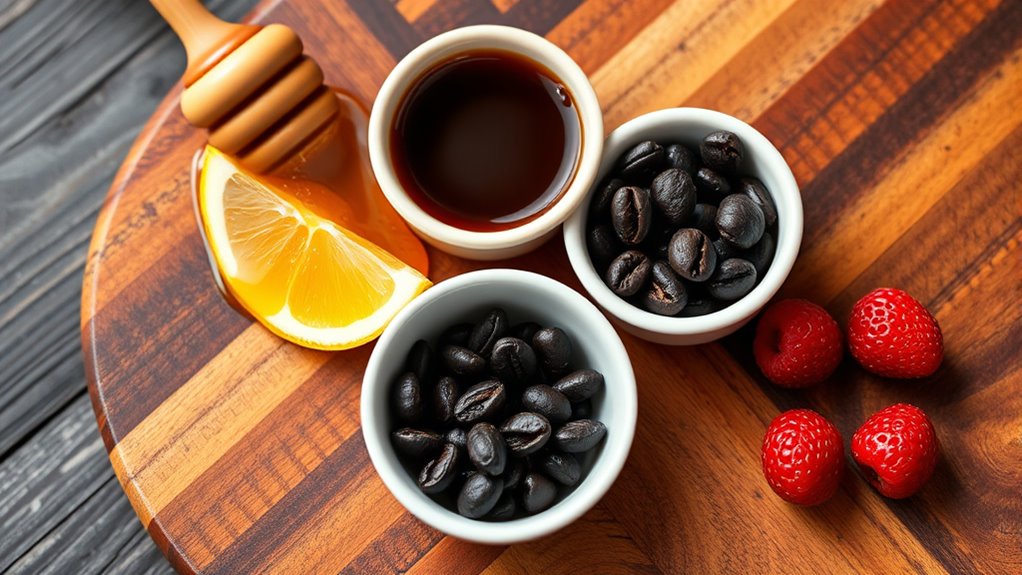

Balancing sweet, sour, and bitter flavors is key to making delicious dishes. You can soften acidity or bitterness by gradually adding sugar or honey, and use acids like lemon juice or vinegar to brighten flavors. Avoid overpowering any one taste to keep your dishes harmonious. Practice pairing ingredients thoughtfully, and over time you’ll develop a better feel for creating flavor balance. Keep exploring these tips, and you’ll soon master the art of taste harmony.
Key Takeaways
- Recognize and control sweetness to mellow acidity and bitterness, creating harmony in dishes.
- Use sour ingredients like vinegar or lemon to add brightness and balance richness.
- Balance bitterness with small amounts of sweet or sour elements to prevent overpowering flavors.
- Gradually add and taste sweeteners to enhance flavors without overwhelming the dish.
- Proper pairing of ingredients ensures flavor harmony and prevents any single taste from dominating.

Have you ever tasted a dish that felt off, even though the ingredients seemed perfect? That’s often a sign that the flavors are not balanced, and understanding how to achieve flavor harmony is key to cooking better. When you focus on ingredient pairing, you learn how different tastes interact, especially sweet, sour, and bitter, which are the foundation of taste balancing. Mastering these elements helps you create dishes that are pleasing to the palate and avoid those awkward, unappealing bites.
Sweetness is usually the easiest to recognize and control. It can mellow out acidity or bitterness, making your dish more rounded. For example, a touch of honey or sugar can soften the sharpness of a tomato-based sauce or cut through the bitterness of certain greens. But don’t overdo it—adding too much sugar can make your dish cloying. The trick is to add sweet ingredients carefully, tasting as you go, until you hit that perfect point where sweetness complements other flavors. This is where ingredient pairing shines; knowing which sweeteners work best with specific ingredients allows you to enhance the overall flavor harmony without overpowering the dish.
Adding sweet ingredients carefully enhances flavor harmony without overpowering the dish.
Sourness, on the other hand, adds brightness and contrast. It can elevate a dish by balancing out richness or sweetness, but too much can make it tangy or acidic. Common sour ingredients like vinegar, lemon juice, or fermented products should be used sparingly. When you’re cooking, adding a splash of acid at the right moment can lift flavors and bring everything together. Experiment with pairing sour elements with different ingredients—citrus with seafood, vinegar with greens—to see how they interact. Proper ingredient pairing here creates a lively, balanced taste that keeps the dish interesting without overwhelming the other flavors.
Bitter is often the trickiest to get right. It can add complexity but easily become overpowering if not handled carefully. Think of ingredients like coffee, dark chocolate, or bitter greens. To balance bitterness, you might add a touch of sweetness or acidity, which can soften the sharp edges. For example, a little honey in a bitter green salad dressing or lemon juice in a dark chocolate dessert can make the bitter notes more harmonious. When you understand how to pair bitter ingredients with sweet or sour elements, you prevent the bitterness from dominating and instead, create a well-rounded flavor profile. Recognizing ingredient pairing principles helps you develop intuition for balancing these flavors effectively.
In the end, mastering taste balancing involves understanding how these elements work together through ingredient pairing. As you practice, you’ll develop a sense for when to add a touch of sweetness, acidity, or bitterness, leading to dishes that are more satisfying and flavorful. The goal is to create harmony, where no single taste overwhelms the others but instead, they complement each other beautifully.

Amazon Grocery, Golden Pure Honey, 16 Oz (Previously Amazon Fresh, Packaging May Vary)
One 16 ounce bottle of Golden Pure Honey
As an affiliate, we earn on qualifying purchases.
As an affiliate, we earn on qualifying purchases.
Frequently Asked Questions
How Do I Identify the Dominant Taste in a Dish?
To identify the dominant taste in a dish, focus on flavor layering and the taste hierarchy. Take a small bite and pay attention to the first impression—the strongest flavor you notice. Is it sweetness, sourness, or bitterness? Usually, the dominant taste will linger longer or stand out more in your palate. Trust your senses and compare each flavor’s intensity to determine which one takes the lead in the overall profile.
What Are Natural Ingredients to Enhance Bitterness?
Think of bitterness as a garden needing bold, natural accents. You can enhance it with herbal remedies like dandelion greens, radicchio, or turmeric. These ingredients act as flavor enhancers, deepening the dish’s complexity. Adding a touch of quinine (found in tonic water) or bitter orange zest also boosts bitterness naturally. Embrace these ingredients to craft a more layered, intriguing flavor profile that balances and enriches your culinary creations.
Can Balancing Tastes Improve a Dish’s Overall Aroma?
Yes, balancing tastes can improve a dish’s overall aroma by creating flavor harmony, which enhances aroma perception. When you properly adjust sweetness, sourness, and bitterness, you allow each element to complement the others, amplifying the dish’s scent. This synergy makes the aroma more inviting and complex, elevating your culinary experience. So, don’t overlook taste balancing — it’s a key step to aroma enhancement and a more delightful dish.
How Does Temperature Affect Taste Perception?
Ever wonder how temperature effects your taste perception? When you serve food hot, it enhances sweetness and diminishes bitterness, making flavors more vibrant. Conversely, cold temperatures can mute sharp tastes and bring out subtle notes. As you cook, consider how temperature impacts taste perception—adjusting heat can transform dishes from bland to balanced. So, isn’t it fascinating how temperature can completely change your experience of a dish?
Are There Cultural Differences in Taste Balancing?
Yes, there are cultural differences in taste balancing. You’ll find that regional flavor profiles influence how people perceive and combine sweet, sour, and bitter tastes. For example, in Asia, balancing umami and sour flavors is common, while Western cuisines might emphasize sweetness or bitterness. Your taste preferences are shaped by regional traditions, ingredients, and culinary history, so what’s balanced in one culture may differ in another.

Tuscanini 100% Sicilian Lemon Juice, Not from Concentrate, 6.7oz Lemon Shaped Convenient Squeeze Bottle | No Water Added | Product of Italy | Certified Kosher (Including Passover)
🍋 No Added Water – Each bottle of the Tuscanini Real Lemon Juice is made with freshly squeezed…
As an affiliate, we earn on qualifying purchases.
As an affiliate, we earn on qualifying purchases.
Conclusion
As you begin to master balancing sweet, sour, and bitter flavors, you’ll notice how unexpected moments—like a pinch of salt or a splash of acid—can transform your dishes. Sometimes, the simplest adjustments lead to the most delightful surprises, reminding you that good taste isn’t just about technique but also about patience and intuition. Trust these small coincidences; they’re guiding you toward a more intuitive and flavorful cooking journey.

Wish-Bone Red Wine Vinaigrette Salad Dressing, 15 FL OZ
One 15 fl oz bottle of Wish-Bone Red Wine Vinaigrette Dressing
As an affiliate, we earn on qualifying purchases.
As an affiliate, we earn on qualifying purchases.

Taylor Farms Green Goddess Chopped Salad Kit 10oz
Complete salad kit, including unique toppings & dressing
As an affiliate, we earn on qualifying purchases.
As an affiliate, we earn on qualifying purchases.

Cindy thoroughly researches juicing trends, techniques, and recipes to provide readers with practical advice and inspiration. Her writing style is accessible, engaging, and designed to make complex concepts easy to understand. Cindy’s dedication to promoting the advantages of juicing shines through her work, empowering readers to make positive changes in their lives through the simple act of juicing.