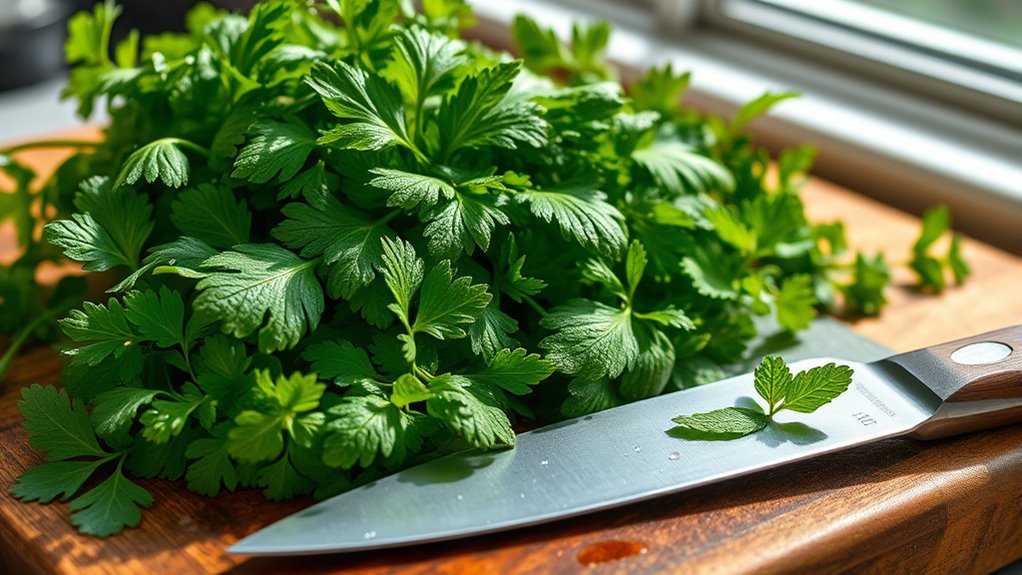

To supercharge greens with herbs, focus on clever pairings that enhance flavor and aroma without overpowering. Toss fresh herbs like basil, dill, or parsley into salads or sautéed greens, starting with small amounts and adjusting to taste. Use delicate herbs for lighter dishes and stronger ones for cooked greens. Incorporate herbs thoughtfully to add nutritional benefits and create memorable, vibrant dishes. If you keep exploring, you’ll discover even more ways to elevate your greens with herbs.
Key Takeaways
- Select herbs like basil, dill, cilantro, or thyme that complement the specific greens for balanced flavor.
- Toss freshly chopped herbs into salads or stir into sautéed greens to enhance aroma and taste.
- Use dried herbs as a convenient alternative, but prefer fresh herbs for vibrant flavor and aroma.
- Match herb strength with green type: delicate herbs for raw salads, stronger herbs for cooked greens.
- Experiment regularly with herb and green pairings to create flavorful, nutritious, and satisfying dishes.
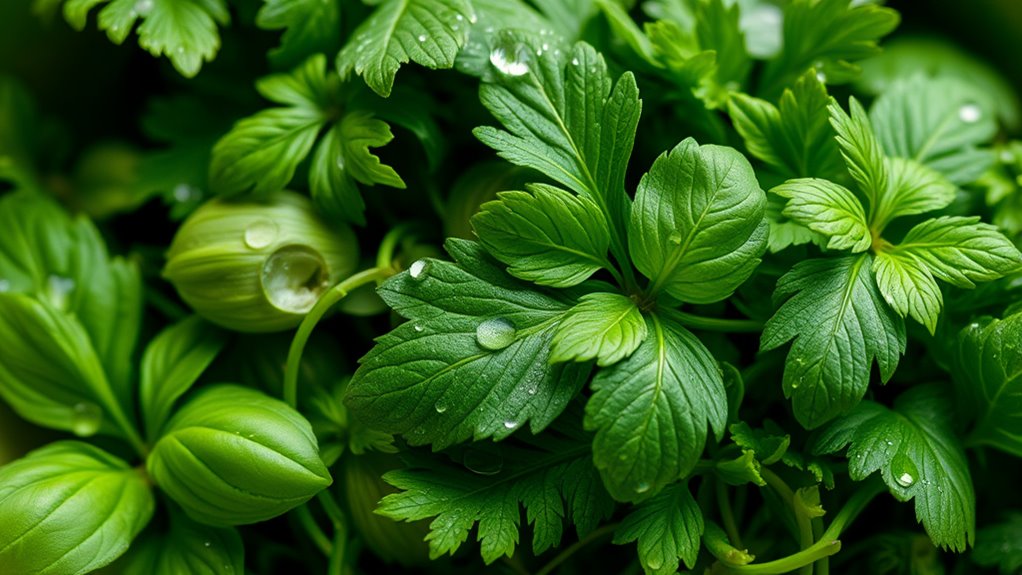
Adding herbs to your greens can transform a simple dish into a flavorful superfood boost. When you choose the right herbs, you not only elevate the taste but also secure additional nutritional benefits. Herb pairing is essential here—certain herbs naturally complement the flavors of leafy greens, creating a harmonious balance that makes each bite more exciting. For example, basil pairs beautifully with spinach, adding a sweet, peppery note that brightens the dish, while dill offers a fresh, slightly tangy flavor that works well with kale or arugula. By understanding these pairings, you enhance the natural flavor profile of your greens without overpowering them, making your meals more satisfying and complex. Researching trending herbs can also uncover new flavor combinations that keep your dishes innovative and appealing.
Flavor enhancement is a key reason to add herbs to your greens. Fresh herbs introduce aromatic oils that amplify the dish’s overall aroma and taste, turning a bland salad into a vibrant culinary experience. A sprinkle of cilantro can bring a citrusy brightness to mixed greens, or thyme can add earthy depth to sautéed spinach. When you incorporate herbs thoughtfully, you elevate the dish, making it more appealing and encouraging you to eat more greens. The goal is to use herbs as a natural flavoring agent, reducing the need for heavy dressings or salt, which is better for your health. Experimenting with different herb combinations allows you to discover new flavor profiles that keep your greens exciting and delicious.
Adding herbs doesn’t have to be complicated. You can toss chopped fresh herbs directly into your salads or greens before serving, or stir them into warm dishes like sautéed kale or chard. Dried herbs are also an option if fresh aren’t available, but fresh herbs tend to provide a more vibrant flavor and aroma. When selecting herbs, consider their intensity—delicate herbs like parsley or chives work well in light salads, while stronger herbs like rosemary or oregano are better suited for cooked greens. Remember, a little goes a long way, so start with small amounts and adjust to taste. This approach guarantees you get the perfect balance of flavor enhancement without overwhelming the natural taste of your greens.
Incorporating herbs into your greens is an easy, effective way to boost flavor and nutrition. With thoughtful herb pairing, you create dishes that are more than just healthy—they become memorable, flavorful experiences. By experimenting with different herbs, you can continuously discover new ways to enjoy your greens, making healthy eating both fun and satisfying. Exploring herb pairing techniques can further elevate your culinary skills and ensure your dishes are always delicious.

2026 Upgraded Herb Scissors, Effortless Herb Shears Cutter Tool with Sharp Stainless Steel Blades for Fresh Herbs, Must-Have Kitchen & Cooking Gadget, Green
- Five Sharp Stainless Steel Blades: Made of durable, rust-resistant stainless steel
- Ergonomic Non-Slip Handle: Comfortable grip with TPR rubber handle
- Includes Cleaning Brush and Cover: Easy to clean and store with protective cover
As an affiliate, we earn on qualifying purchases.
As an affiliate, we earn on qualifying purchases.
Frequently Asked Questions
Can Herbs Improve the Nutritional Value of Greens?
Herbs can definitely boost the nutritional value of greens. By using herb pairing tips, you enhance flavor and add antioxidants, vitamins, and minerals. Comparing nutritional content, herbs like parsley and basil offer more vitamin C and iron, complementing greens like spinach or kale. Incorporate herbs in your dishes to maximize health benefits, making your greens more nutrient-dense and delicious with simple, effective combinations.
Which Herbs Are Best for Enhancing Flavor?
Did you know that pairing herbs can elevate a dish by up to 50% in flavor? To enhance your greens, choose herbs with complementary flavor profiles like basil for sweetness, mint for freshness, or dill for a tangy note. Use herb pairing techniques to balance flavors—add thyme for earthiness or cilantro for brightness. These herbs will transform your greens into a vibrant, flavorful dish you’ll love.
Are There Any Herbs That Help With Digestion?
Yes, certain herbs are great herbal digestion aids due to their medicinal properties. You should try adding ginger, peppermint, or fennel to your greens. Ginger helps stimulate digestion and reduce nausea, while peppermint relaxes digestive muscles, easing bloating. Fennel seeds can also soothe your stomach and improve overall digestion. Incorporate these herbs into your meals to support healthy digestion naturally and enjoy a more comfortable, flavorful eating experience.
How Do I Store Fresh Herbs Properly?
Did you know that properly stored herbs can stay fresh up to two weeks? To achieve this, focus on herb preservation techniques like wrapping herbs in damp paper towels and placing them in airtight containers or jars. For ideal herb storage conditions, keep them in the refrigerator’s crisper drawer away from direct sunlight. Regularly check for wilted leaves and change water if storing herbs like basil in a glass of water.
Can Herbs Be Grown Indoors Year-Round?
Yes, you can grow herbs indoors year-round with proper herb container gardening and indoor herb lighting. Choose the right containers with good drainage and place them near a sunny window or use grow lights to provide adequate light. Regular watering and occasional fertilizing help your herbs thrive. With consistent care and the right environment, you can enjoy fresh herbs anytime, regardless of the season.
Conclusion
Incorporating herbs into your greens can boost their nutritional value and flavor. Did you know that adding herbs like basil and parsley can increase antioxidants by up to 20%? So, next time you’re preparing your salad or sautéed greens, don’t hold back on herbs—they’re a simple way to elevate your meals and health. Start experimenting today and enjoy vibrant, nutrient-packed dishes that taste as good as they look!