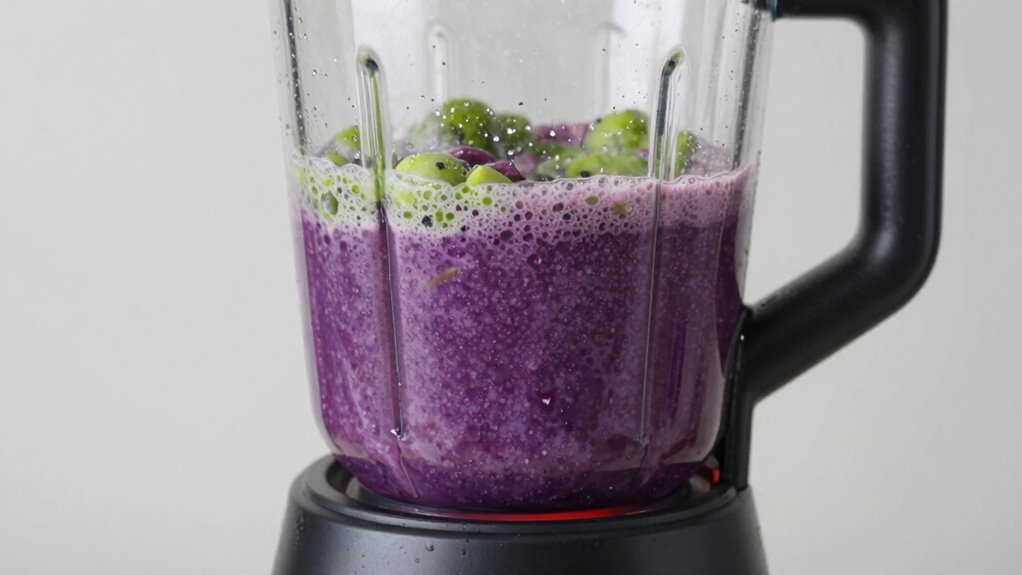
When you use a high-speed blender, the intense friction and extended blending create heat inside the motor. This heat can cook your ingredients slightly, causing the smoothie to develop a cooked or heated taste and altering their natural flavors. Dense ingredients like frozen fruit or nuts generate more heat, increasing the chance of overheating. If you want to keep your smoothies fresh and flavorful, understanding how to prevent this heat buildup is key—keep exploring to learn more.

Get kitchen staples and gadgets delivered free with Prime
- Fast, free delivery on millions of items
- Prime Video, Amazon Music and more included
- Member-only deals all year
Key Takeaways
- High-speed blending generates friction and heat, causing ingredients to cook slightly and develop a cooked flavor.
- Prolonged blending increases internal temperature, leading to a warm or heated taste in the smoothie.
- Overheating alters the natural flavor profile of fruits and vegetables, diminishing freshness and vibrancy.
- Dense or frozen ingredients require more motor effort, generating more heat and risking cooked or off-flavor results.
- Using short bursts and allowing cooling periods prevents excessive heat buildup, maintaining raw, fresh-tasting smoothies.
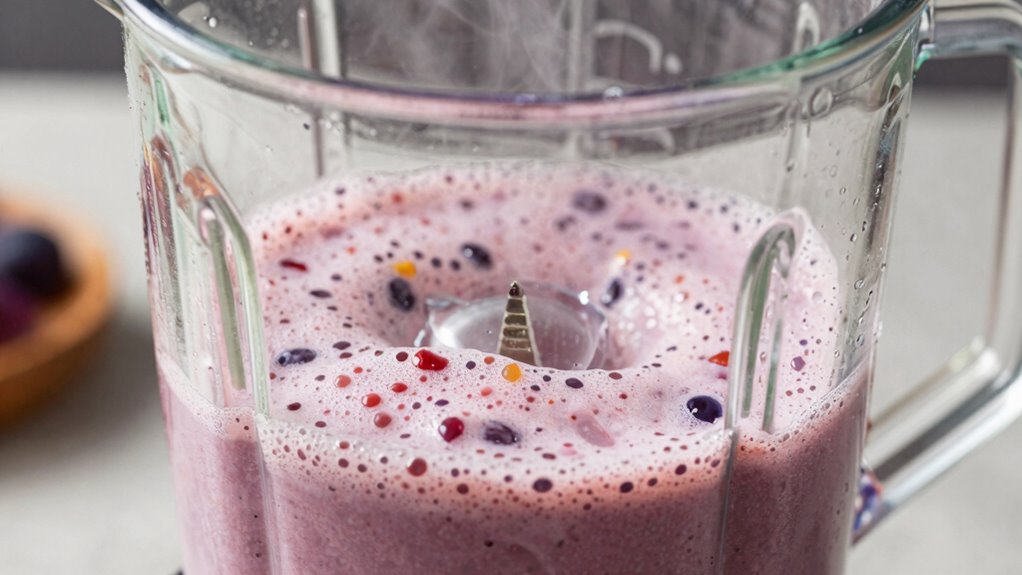
Have you ever wondered how a cooked smoothie tastes compared to its raw counterpart? When you blend ingredients at high speeds, especially with powerful blenders, you might notice something unexpected—your smoothie feels warmer than usual. This isn’t just a minor inconvenience; it’s a sign that your blender is overheating. Overheating can cause more than just temperature changes. It can lead to a noticeable flavor change, affecting the quality of your smoothie and making it taste different from what you intended.
Blenders, particularly high-speed ones, generate a lot of friction as they break down tough ingredients. When you push your machine to its limits, it heats up. If you’re blending for an extended period or using particularly dense foods like frozen fruits or nuts, the motor works harder, raising the internal temperature. This excessive heat doesn’t just make your blender work harder; it can cause the ingredients to cook slightly, turning raw produce into a warm, almost cooked mixture. That’s where the “cooked smoothie” taste comes from—your ingredients are being heated enough to alter their natural flavor profile.
Overworking your blender heats ingredients, causing them to cook slightly and alter their natural flavor profile.
Blender overheating isn’t just about the appliance—it directly impacts the taste of your smoothie. When ingredients get warm, their flavors can change, sometimes turning bitter or off-putting. The freshness of raw fruits and vegetables is lost, replaced by a cooked undertone that can make your smoothie less vibrant and more muted. For example, berries might lose their bright tartness, and greens could develop a slightly bitter note. This flavor change makes your smoothie taste less like a fresh, nutritious blend and more like something cooked or heated, which is usually not what you’re aiming for.
To avoid this, it’s important to be mindful of how long you blend and how much you’re pushing your blender. Giving your machine breaks or blending in shorter bursts can prevent overheating. Using ingredients at room temperature or slightly thawed can also help reduce the risk. Some blenders come with built-in thermal protection, so if you notice your blender getting hot, it’s wise to stop and let it cool down before continuing. This simple step can preserve the raw, fresh flavors you want in your smoothie, ensuring it stays true to its intended taste without the unwanted cooked undertones caused by overheating.
Additionally, understanding the effects of heat on food chemistry can help you better control your blending process. In the end, understanding how your blender’s heat affects flavor helps you make better smoothies. By preventing overheating, you keep your ingredients fresh and vibrant, maintaining that crisp, raw brightness you crave. Remember, a well-maintained blender not only lasts longer but also produces the best-tasting results every time.
high-speed blender heat protection
As an affiliate, we earn on qualifying purchases.
As an affiliate, we earn on qualifying purchases.
Frequently Asked Questions
Can Overheating Damage My Blender Permanently?
Overheating can damage your blender permanently, especially if it occurs frequently. You might void your blender warranty if overheating causes internal damage. Modern blenders often have a heat sensor that protects against overheating, but if it fails, the motor could burn out. To keep your blender safe, avoid prolonged high-speed blending and give it time to cool down. Regularly check for signs of overheating to prevent costly repairs.
How Long Should I Blend to Avoid Overheating?
To prevent overheating, limit your blending duration to about 30 to 60 seconds. Studies show that most blender motors can handle this timeframe without risking damage. If you blend longer, the motor heats up, causing that cooked taste you dislike. Always pulse your ingredients and give your blender a 30-second break between sessions. This keeps the motor cool, extending its lifespan and maintaining the fresh flavor of your smoothies.
Are There Specific Blender Models That Overheat Less?
Yes, some blender models overheat less, especially those designed with advanced cooling systems and better motor durability. To prevent overheating, you should focus on proper blender maintenance, like cleaning the vents and motor base regularly. Additionally, using cooling accessories, such as ice packs or pre-cooling ingredients, can help. Brands like Vitamix and Blendtec are known for their reliable performance and built-in cooling features, making them good choices for frequent use.
Does Overheating Affect the Nutritional Content of Smoothies?
Overheating in blenders is like a wildfire threatening your nutrients. It can cause nutritional degradation and enzyme destruction, reducing the health benefits you seek. When a blender overheats, the high temperatures break down sensitive vitamins and enzymes, diminishing the smoothie’s nutritional value. To keep your drinks nutrient-rich, avoid prolonged blending and give your blender breaks, preserving the integrity of your ingredients and ensuring maximum health benefits.
Can I Prevent Overheating With Cooling Techniques?
Yes, you can prevent overheating with cooling methods. To guarantee overheating prevention, try pulsing your blender instead of continuous run, add small ice cubes or cold water to lower the temperature, and give your blender breaks during extended use. Using these cooling techniques helps control the heat generated, protecting your blender’s motor and maintaining the quality of your smoothies. Always monitor the temperature to avoid overworking the appliance.
Conclusion
So, next time your high-speed blender leaves your smoothie tasting like it’s been cooked, remember—you might just be enjoying a hot, overprocessed treat rather than a fresh, vibrant blend. Ironically, what’s supposed to be a quick, cool refreshment turns into a mini kitchen heatwave. Maybe it’s time to slow down and embrace a gentler blend—your taste buds and your appliance will thank you for avoiding the unintentional “cooked” surprise.
Halloween Picks
halloween
As an affiliate, we earn on qualifying purchases.