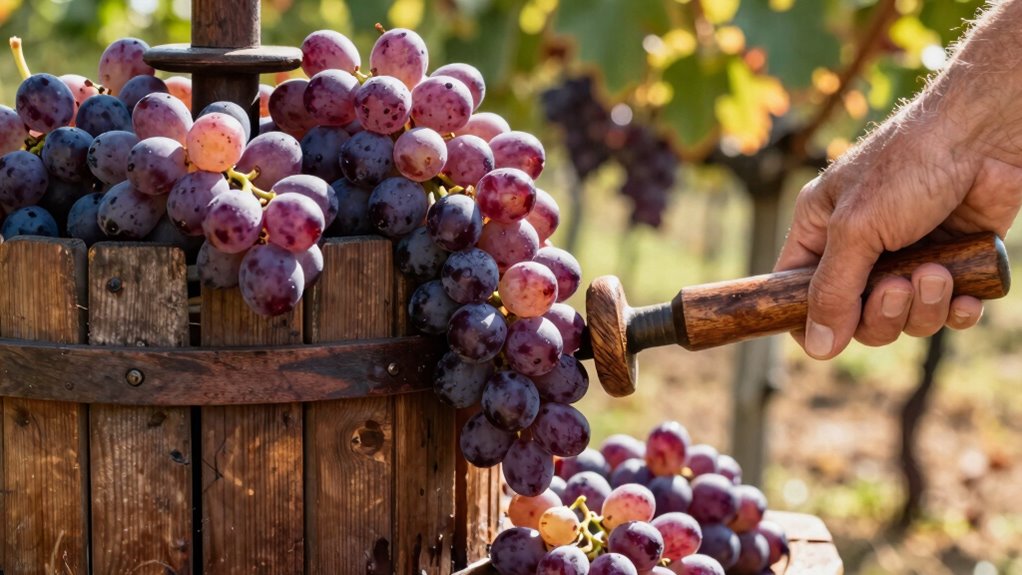

To reduce harshness during grape pressing without watering down, focus on gentle, well-timed extraction to avoid over-releasing tannins. Use proper fermentation techniques, like monitoring temperature and limiting skin contact, which help develop smooth flavors. Barrel aging also softens tannins naturally and adds complexity. By controlling these steps, you can enhance wine quality without compromising flavor. Keep exploring how each process impacts your final product for the best results.
Key Takeaways
- Use gentle pressing techniques to avoid extracting excess tannins and bitterness.
- Monitor fermentation timing to prevent early or over-extraction of harsh phenolics.
- Allow natural aging in barrels to soften tannins and enhance smoothness.
- Control temperature during fermentation to optimize flavor extraction and minimize harshness.
- Avoid adding water; instead, focus on process adjustments and aging to achieve a balanced, mellow wine.
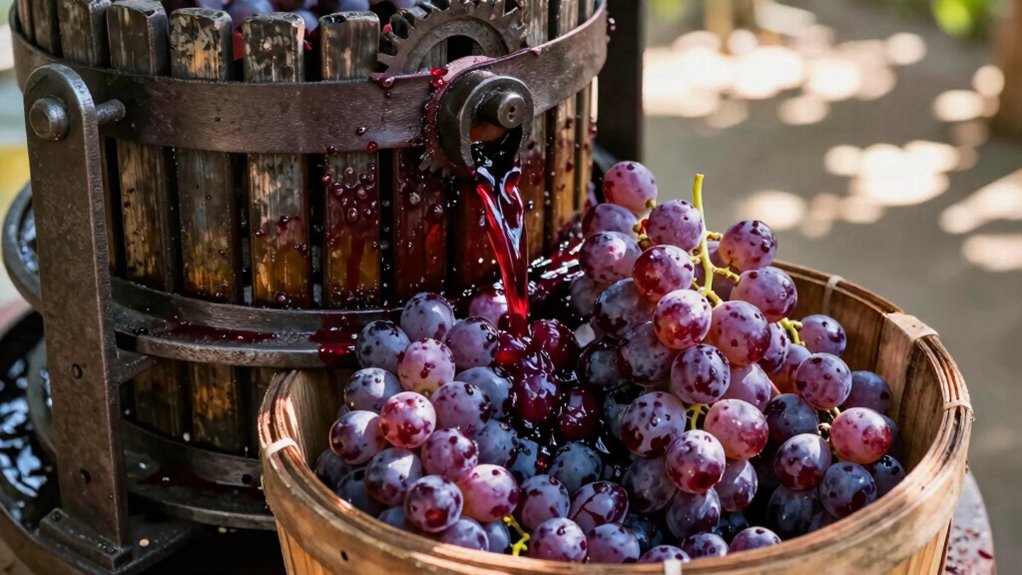
Have you ever wondered how fresh grapes transform into the juice that becomes your favorite wine? The process of grape pressing is a vital step in winemaking that can profoundly influence the final product’s quality and taste. When you press grapes, you’re fundamentally extracting juice from the fruit, but the challenge lies in doing so without extracting harsh tannins or bitterness that can ruin the wine’s smoothness. To achieve this, careful attention to fermentation timing and barrel aging is indispensable. These steps help mellow out the wine naturally, reducing harshness without the need to dilute it with water or other additives.
The timing of fermentation plays a pivotal role in how a wine develops its character. If fermentation occurs too early or too aggressively, it can lead to a wine with rough tannins and astringent flavors. Conversely, allowing the grapes to ferment for an ideal period enables delicate extraction of flavors while minimizing harsh tannins. This is why many winemakers monitor fermentation closely, adjusting temperature and duration to guarantee the juice extracts just enough phenolic compounds without becoming overpowering. Proper fermentation timing allows the wine to develop complexity and smoothness, making it less likely to taste rough or astringent right after pressing. Additionally, phenolic compounds such as tannins are naturally extracted during pressing and fermentation, which makes controlling these processes essential for a balanced wine.
Barrel aging is another key factor in reducing harshness. Once the wine has undergone primary fermentation, aging it in oak barrels can work wonders. The slow oxygen exchange that occurs during barrel aging helps soften tannins and integrate flavors, resulting in a more balanced and refined wine. During this period, the wine interacts with the wood, gaining subtle notes of vanilla, spice, and toast, which mask any residual harshness from the pressing process. Furthermore, barrel aging encourages the wine to undergo gentle chemical changes that promote stability and finesse, making it smoother and more enjoyable to drink.
As an affiliate, we earn on qualifying purchases.
Frequently Asked Questions
What Are the Best Pressing Techniques for Different Grape Varieties?
You should tailor your pressing techniques based on grape variety, harvest timing, and desired wine style. For delicate varieties, use gentle pressing to prevent harsh tannins, while more robust grapes can handle harder presses. Incorporate gentle, slow presses during harvest to preserve fruitiness. Adjust your methods considering fermentation techniques, such as cold soaking or skin contact, to manage tannin extraction and soften harshness without watering down.
How Does Temperature Affect Grape Pressing and Resulting Harshness?
Ever consider how temperature control affects your pressing? If you don’t regulate temperature, heat impact can intensify harshness in your wine. Cooler pressing minimizes heat build-up, preserving delicate flavors and reducing bitterness. Conversely, high temperatures can extract harsh tannins and phenolics, leading to a rougher profile. To achieve the smoothest results, maintain consistent, moderate temperatures throughout pressing, ensuring you don’t unintentionally amplify harsh characteristics. Do you want a balanced, refined wine?
Can Specific Equipment Settings Reduce Harshness Effectively?
Yes, you can reduce harshness by optimizing your pressing equipment settings. Adjust the pressure and duration to avoid over-extraction, which causes bitterness. Use gentle, controlled presses to maximize juice without pulling out harsh tannins. Regularly calibrate your equipment to guarantee consistent settings, and consider pre-soaking grapes at lower pressures. Setting optimization helps you achieve a smoother, more balanced wine without diluting the flavor.
How Do Skin Contact Duration and Pressing Impact Tannin Levels?
Skin contact duration and pressing directly influence tannin levels by affecting fermentation timing and tannin extraction. Longer skin contact increases tannin extraction, making the wine more astringent, while gentle pressing minimizes harsh tannins. To balance this, you should carefully control pressing pressure and limit skin contact time, ensuring you extract enough tannins for complexity without overwhelming harshness. Adjusting these factors helps you craft a smoother, well-rounded wine.
Are There Natural Additives That Can Lessen Harshness Without Watering Down?
Imagine you’re a wizard in a vineyard, wielding natural additives to tackle harshness. You can use things like tannin extracts, grape seed extract, or bentonite clay for harshness mitigation. These natural additives soften tannins and smooth out the wine’s profile without watering it down. Just remember, moderation is key—start small and taste often to achieve the perfect balance, much like a maestro conducting a symphony.
Conclusion
By carefully managing your grape pressing process, you can effectively reduce harshness without watering down your wine. Techniques like gentle pressing and avoiding over-extraction help preserve flavor complexity. Remarkably, studies show that wines pressed with gentler methods retain up to 20% more aromatic compounds, enhancing overall quality. So, take your time and pay attention to pressing details—your efforts will reward you with a smoother, more refined final product that showcases the true character of your grapes.