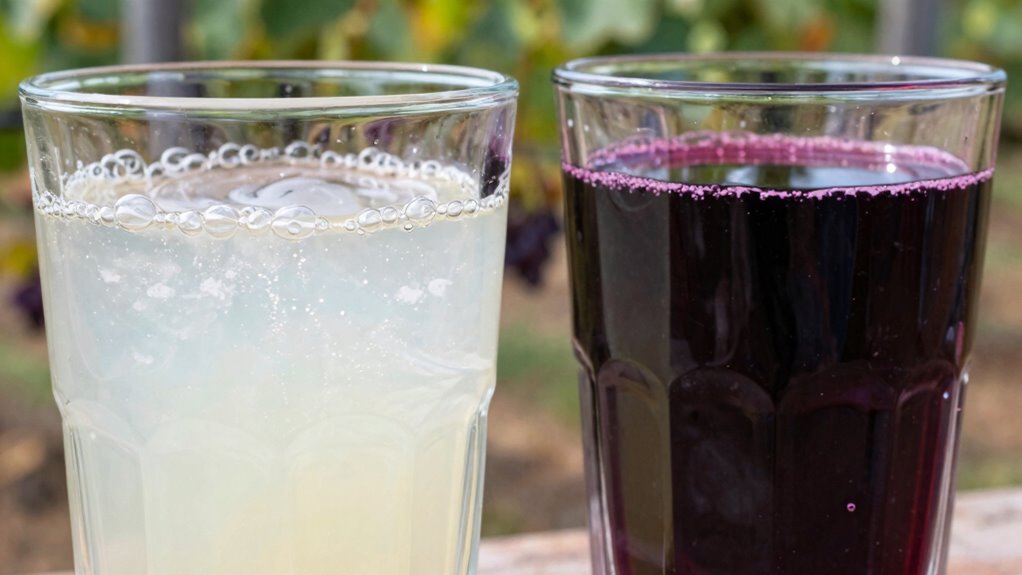

White grape juice tastes different from purple because it’s made from different grape varieties and processed differently. White grapes like Chardonnay and Sauvignon Blanc are picked early and pressed quickly to keep their fresh, delicate flavors, while purple grapes such as Cabernet Sauvignon stay in contact with their skins longer, adding tannins, color, and richer, jammy notes. Processing methods and grape variety choices shape each juice’s unique flavor, aroma, and color—so there’s much more to discover further on.
Key Takeaways
- White grape juice is pressed quickly, minimizing skin contact and color extraction, resulting in a lighter, more delicate flavor.
- Purple grapes undergo extended skin contact, imparting tannins, deeper color, and richer, more complex flavors.
- Varietals like Chardonnay and Sauvignon Blanc produce lighter, floral notes, while purple varietals like Cabernet Sauvignon offer jammy, earthy flavors.
- The skin contact and fermentation processes significantly influence taste, aroma, and color differences between the two juice types.
- Environmental factors such as soil and climate subtly impact the flavor profiles of both white and purple grape juices.
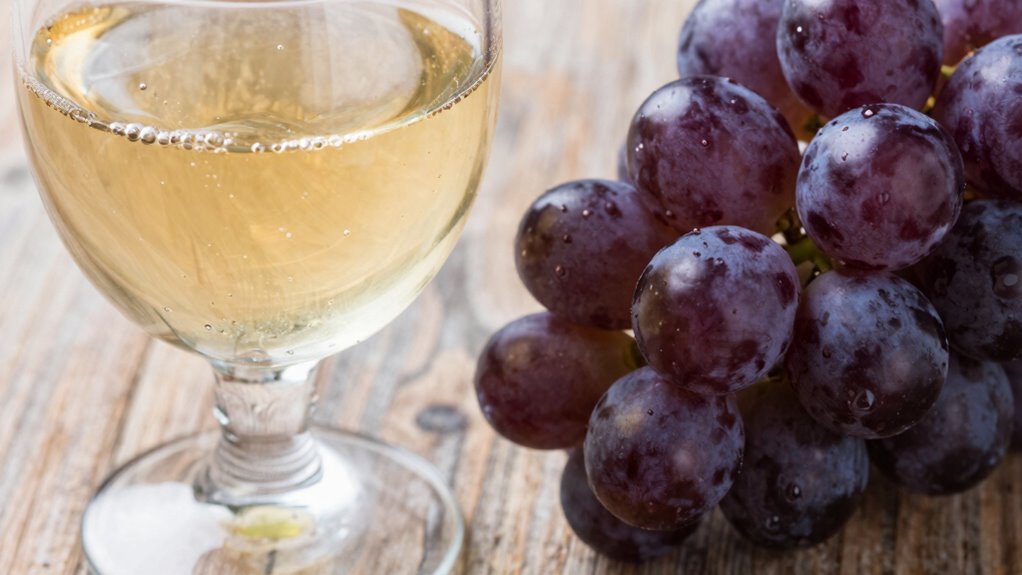
Have you ever wondered why white grape juice tastes so different from purple? The answer lies in a combination of factors, primarily the fermentation processes and the grape varietals used. When you sip on white grape juice, you’re experiencing a product that’s often made from different grape types and processed differently than purple grapes. These differences markedly influence the flavor, aroma, and overall taste profile of the juice.
White and purple grape juices differ mainly due to distinct fermentation methods and grape varieties.
The fermentation process plays an essential role in shaping the final taste. For white grape juice, the fermentation is typically designed to preserve the fruit’s natural flavors and acidity. Winemakers often control the temperature and duration of fermentation to retain delicate floral and fruity notes. In contrast, purple grape juice—especially when turned into red wine—undergoes fermentation with the grape skins intact. This skin contact allows color compounds, tannins, and additional flavors to leach into the juice, giving red and purple wine its distinctive boldness and complexity. The fermentation of purple grapes often involves more extended contact with the skins, leading to a richer, more robust taste compared to the lighter, crisper profile of white grape juice.
Grape varietals also contribute markedly to the flavor differences you notice. White grape varieties, such as Chardonnay or Sauvignon Blanc, tend to have lighter, more delicate flavors—think citrus, green apple, and floral hints. These grapes are usually harvested earlier to preserve their acidity and freshness. Purple grape varietals, like Concord or Cabernet Sauvignon, tend to have more intense, jammy, and fruity flavors, often with earthy or spicy undertones. The skin pigmentation in purple grapes also affects the juice’s color and taste, imparting a deeper, more complex flavor profile.
Additionally, the way grapes are handled and processed influences the final product. White grapes are usually pressed quickly to separate the juice from the skins, minimizing color extraction and tannin development. Purple grapes, on the other hand, are often left in contact with their skins longer during fermentation, which enhances color and tannins. This difference in handling accentuates the taste gap between white and purple grape juices. Furthermore, fermentation techniques can vary significantly depending on the desired flavor profile, further impacting the final taste of the juice.
In some cases, the climate and soil conditions where grapes are grown also influence their flavor characteristics, adding subtle nuances to the final product. In essence, the taste disparity between white and purple grape juice isn’t just about the grapes themselves but also about how they’re fermented and processed. The specific grape varietals contribute their unique flavors, while the fermentation process determines how much of those flavors are preserved or transformed. That’s why white grape juice remains light, crisp, and aromatic, while purple grape juice tends to be richer, deeper, and more complex.

Amazon Grocery, White Grape Juice, 64 Fl Oz (Pack of 2)
- Pack Size: 2 bottles of 64 fl oz each
- Product Details: Per-pack information only
- Juice Type: White Grape Juice
As an affiliate, we earn on qualifying purchases.
As an affiliate, we earn on qualifying purchases.
Frequently Asked Questions
Do White and Purple Grapes Have Different Nutritional Values?
Yes, white and purple grapes have different nutritional values. You’ll notice that purple grapes generally have more antioxidants, thanks to their grape skin, which is rich in polyphenols. White grapes tend to have slightly higher sugar content, making their juice taste sweeter. These differences come from variations in grape skin and sugar levels, influencing not only flavor but also health benefits.
How Do Harvesting Methods Affect Grape Juice Flavor?
Harvesting methods profoundly influence grape juice flavor. When you pick grapes at the perfect ripening stage, they retain vibrant flavors and balanced sugars, resulting in sweeter, tastier juice. Early or late harvest timings can cause tartness or dullness. Precision in timing guarantees grapes are ripe, robust, and ready, allowing the juice to shine with the true taste of the grape variety. Proper harvest practices produce pure, pleasing, and punchy grape juice.
Is There a Health Benefit to White vs. Purple Grape Juice?
You might notice white grape juice often offers fewer antioxidants than purple, which contains more anthocyanins. During grape fermentation, these compounds develop, providing health benefits like anti-inflammatory effects. Juice pasteurization can reduce some nutrients, but choosing minimally processed juice helps retain antioxidants. Overall, purple grape juice tends to offer more health benefits due to higher polyphenol content, but both can be part of a healthy diet.
Can Blending Different Grape Types Alter the Juice’s Taste?
Blending different grape varieties is like painting a new masterpiece—your flavor profile can become richer and more complex. When you mix grape types, the unique flavors from each variety combine, creating a taste that’s different from any single type. So, flavor blending allows you to customize your juice, balancing sweetness and tartness, and experimenting with different grape varieties to craft a unique and delightful beverage tailored to your preferences.
How Does Storage Impact the Flavor of Grape Juice?
Storage impacts your grape juice’s flavor considerably. If you store it at high temperatures, fermentation effects can occur, causing off-flavors and spoilage. Keep your juice in a cool, refrigerated environment to preserve its freshness and natural sweetness. Proper storage slows down fermentation effects and prevents flavor degradation, ensuring your juice tastes just as fresh and vibrant as when you first opened it.
Conclusion
So, next time you sip white or purple grape juice, remember they’re like two stories told by the same fruit. I once watched a friend marvel at the stark taste difference and realized it’s like hearing a song in a different language — familiar yet completely unique. Just like these juices, life’s experiences can be sweet or bold, but each one offers its own flavor. Embrace the variety; it’s what makes the journey interesting.