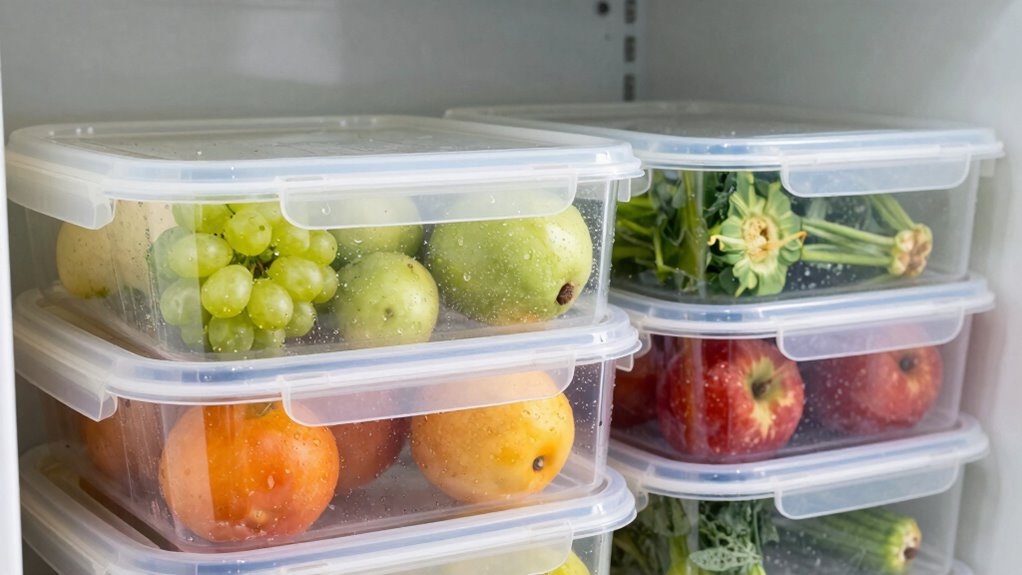

Using improper produce storage bins can trap condensation, speeding up spoilage and encouraging mold growth. Airtight containers without proper ventilation hold moisture, creating a humid environment that damages your produce. To prevent this, choose bins with ventilation or adjustable lids that allow moisture to escape. Drying produce thoroughly and adding breathable materials can also help. Keep these tips in mind, and you’ll discover more ways to keep your produce fresh longer.

Get kitchen staples and gadgets delivered free with Prime
- Fast, free delivery on millions of items
- Prime Video, Amazon Music and more included
- Member-only deals all year
Key Takeaways
- Use bins with ventilation or adjustable lids to allow moisture escape and prevent condensation buildup.
- Avoid airtight containers unless specifically designed to manage moisture effectively.
- Ensure produce is thoroughly dried before storage to reduce internal moisture.
- Place breathable materials like paper towels at the bottom of bins to absorb excess moisture.
- Maintain proper airflow and storage conditions to slow ripening and inhibit mold growth.
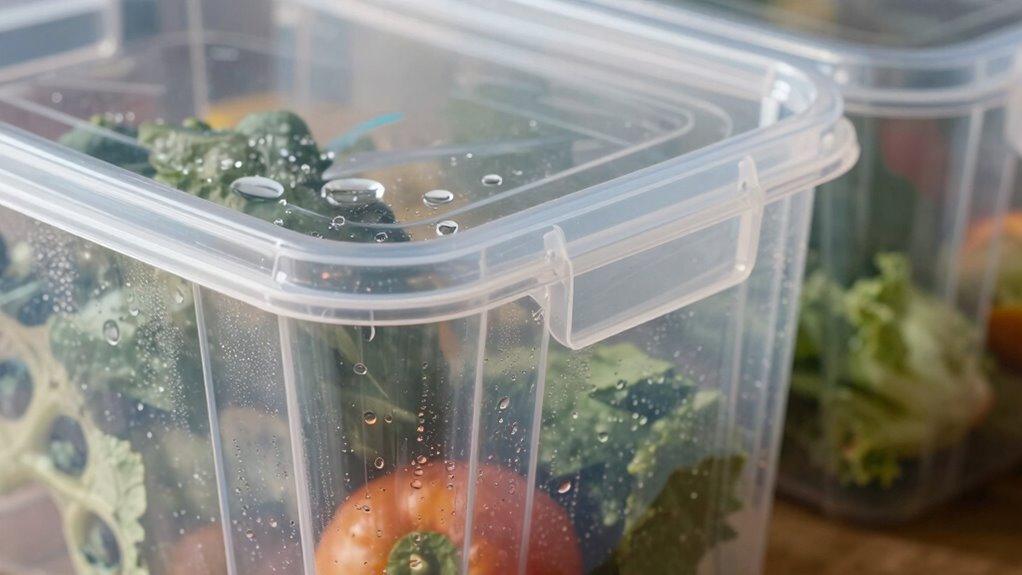
Are you tired of your produce spoiling too quickly or cluttering your countertops? If so, you’re not alone. Many people struggle with keeping fruits and vegetables fresh for longer periods, often resorting to storage methods that unintentionally cause more harm than good. One common culprit is the produce storage bin, especially those that trap condensation. When moisture builds up inside these bins, it creates a perfect environment for mold prevention issues and accelerates fruit ripening, which shortens the life of your produce.
Trapped moisture in produce bins causes mold and speeds up ripening. Choose breathable storage to keep produce fresh longer.
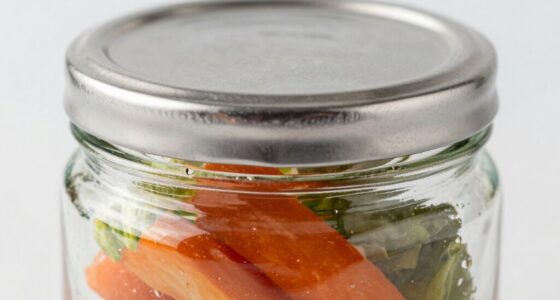
You might think that storing produce in a bin keeps things neat, but if the bin isn’t designed properly, condensation can become a silent enemy. As your produce releases moisture, this vapor condenses on the cooler surfaces of the bin, creating a humid environment. This excess moisture not only leads to mold growth but also speeds up fruit ripening. When fruits ripen faster than expected, they become overripe and spoil sooner, making you throw away more food than necessary. Mold prevention becomes nearly impossible when moisture is trapped inside the storage container, turning your tidy setup into a breeding ground for mold spores.
To avoid this condensation trap, you should choose storage bins that promote proper airflow and moisture control. Look for bins with ventilation or adjustable lids that allow excess humidity to escape. Avoid airtight containers unless they’re specifically designed with moisture-wicking features. Proper ventilation helps regulate the internal environment, slowing down the fruit ripening process and preventing mold buildup. Additionally, some produce, like berries or leafy greens, require different storage conditions, so it’s best to store each type in a way that minimizes moisture exposure. Understanding the impact of moisture buildup and how it affects produce longevity can help you make better storage choices. Using storage solutions that support moisture control can make a noticeable difference in extending produce freshness. A well-ventilated container can significantly extend the freshness of your produce by reducing excess humidity.
It’s also wise to consider how you prepare your produce before storing it. Washing fruits and vegetables thoroughly and then drying them completely reduces moisture levels inside the bin. When you do this, you’re actively helping prevent mold formation and extending the shelf life of your produce. Additionally, placing a paper towel or a breathable cloth at the bottom of your bin can absorb excess moisture, further reducing the chances of mold and over-ripening. Incorporating proper storage techniques ensures your produce remains fresh longer and minimizes waste. Moreover, paying attention to storage temperature can further enhance produce longevity, as cooler temperatures slow down ripening and microbial growth.
In the end, smart produce storage isn’t just about finding the right bin—it’s about understanding how moisture impacts your fruits and vegetables. By avoiding condensation traps and choosing containers that promote airflow, you’ll keep your produce fresh longer, cut down on waste, and enjoy healthier, tastier fruits and veggies every week.
produce storage bins with ventilation
As an affiliate, we earn on qualifying purchases.
As an affiliate, we earn on qualifying purchases.
Frequently Asked Questions
How Do Condensation Issues Vary With Different Produce Types?
Condensation issues vary with produce types because some fruits and vegetables are more sensitive to moisture migration caused by temperature fluctuations. For instance, leafy greens easily absorb excess moisture, leading to spoilage, while apples are more resistant. You should monitor storage conditions carefully, keep temperature stable, and avoid rapid changes, as these factors trigger condensation and promote mold growth, ultimately reducing shelf life for different produce types.
Are There Specific Materials That Prevent Condensation Better?
Certain materials, like insulated plastic or vented bins, better prevent condensation by reducing temperature fluctuations. Material insulation helps keep produce at stable temperatures, minimizing moisture buildup. Additionally, ventilation improvements in storage bins allow excess humidity to escape, further preventing condensation. You should choose containers with these features to keep your produce fresh longer. Combining insulation and ventilation provides the most effective solution for avoiding condensation issues in produce storage.
Can Improper Storage Cause Food Spoilage Beyond Condensation?
Did you know improper storage can cause up to 30% of food spoilage? Yes, beyond condensation, poor humidity control and temperature regulation lead to faster decay, mold growth, and nutrient loss. If you don’t store produce correctly, bacteria and fungi thrive, shortening shelf life. So, make certain proper airflow, consistent temperature, and humidity levels to prevent spoilage and keep your produce fresh longer.
What Are the Best Practices for Cleaning Produce Storage Bins?
You should regularly clean produce storage bins using effective cleaning techniques like warm water and mild detergent. After washing, make sure you thoroughly rinse and dry the bins to prevent moisture buildup. Use sanitizing methods such as food-safe disinfectants or vinegar solutions to eliminate bacteria. Avoid harsh chemicals that could contaminate produce. Consistent cleaning and sanitizing help prevent mold, spoilage, and condensation, keeping your produce fresh and safe longer.
How Often Should Storage Bins Be Replaced to Avoid Condensation Problems?
When it comes to avoiding condensation problems, you should replace storage bins every 6 to 12 months. Think of it as giving your bins a fresh start, ensuring proper humidity control and bin ventilation. Over time, wear and tear hinder airflow and trap moisture, turning your bins into condensation traps. Regular replacement keeps your produce fresh and prevents mold, making your storage space efficient and your produce safe.
Conclusion
To keep your produce fresh longer, avoid storage bins that trap condensation. Imagine you’re storing strawberries in a poorly ventilated bin, and excess moisture causes mold to develop overnight. Switching to breathable bins allows moisture to escape, preventing spoilage. By choosing the right storage containers, you’ll reduce waste and save money. Remember, a simple change in your storage habits can make a big difference—your fruits and veggies will thank you!
Halloween Picks
halloween
As an affiliate, we earn on qualifying purchases.