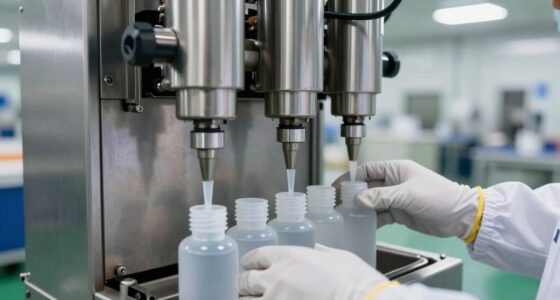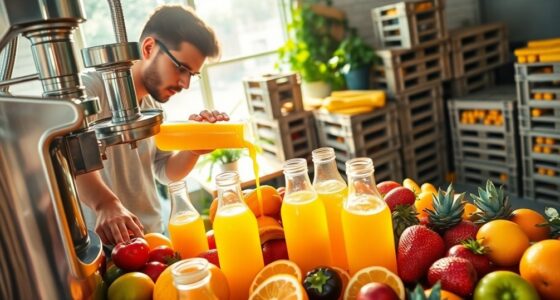
As you scale up juice production, maintaining a uniform flavor becomes more difficult because larger batches pose challenges in fermentation and temperature control. You need proper tank design and agitation to guarantee even mixing, which can be tricky at bigger volumes. Fluctuations in temperature or inconsistent agitation can lead to flavor variations and off-notes. To keep your quality steady, advanced automation and precise controls are key—there’s more to discover about optimizing the process further.

Get kitchen staples and gadgets delivered free with Prime
- Fast, free delivery on millions of items
- Prime Video, Amazon Music and more included
- Member-only deals all year
Key Takeaways
- Larger batches require more effective mixing to ensure consistent flavor distribution throughout the juice.
- Maintaining uniform fermentation becomes more complex as tank size increases.
- Temperature fluctuations are harder to control precisely in bigger tanks, affecting flavor consistency.
- Inadequate agitation in large tanks can lead to uneven fermentation and aroma development.
- Advanced process automation is essential to manage variables and maintain uniform quality at scale.
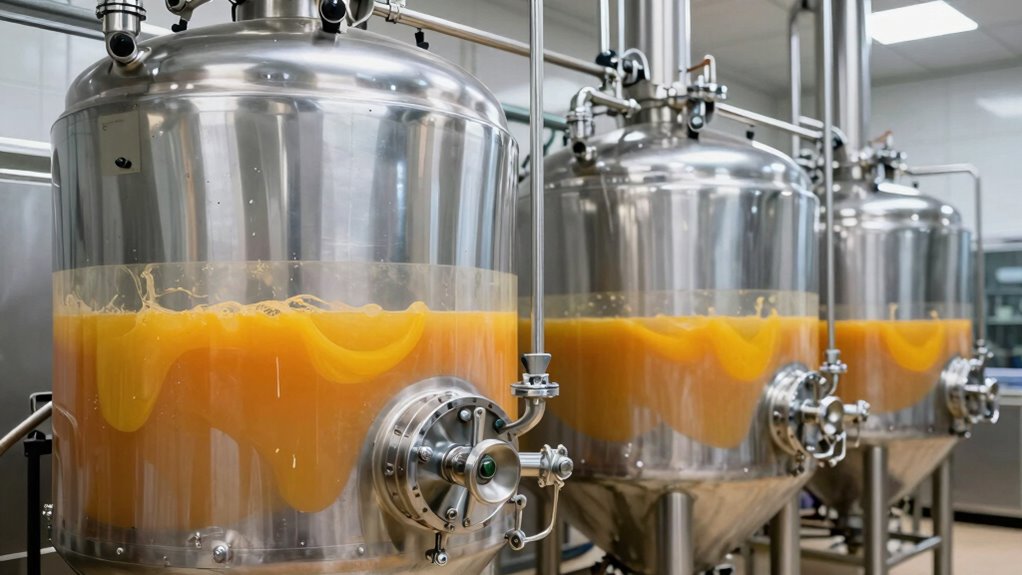
When producing juice, using the right mixing tanks is essential to guarantee quality and consistency. As your production scales up, maintaining uniform flavor becomes more challenging. One key reason is that larger batches require more careful management of fermentation processes and temperature control. If these factors aren’t properly handled, the juice’s flavor profile can vary from batch to batch, making it harder to meet customer expectations.
Fermentation processes play a crucial role in developing unique flavors in fermented or probiotic juices. When working with larger volumes, it’s vital that your mixing tanks are designed to support even fermentation. Poor design or inadequate agitation can lead to uneven fermentation, where some sections of the tank ferment faster than others. This inconsistency affects flavor, aroma, and overall quality. To avoid this, you need tanks equipped with efficient mixing mechanisms that promote uniform fermentation throughout the entire batch, ensuring each bottle has the same taste.
Temperature control becomes even more critical as you scale up your juice production. Large mixing tanks must have precise temperature regulation to maintain optimal fermentation conditions. Fluctuations in temperature can cause uneven fermentation rates, risking off-flavors or spoilage. If the temperature isn’t consistently monitored and controlled, parts of your batch may overferment or underferment, leading to inconsistent flavor profiles. Investing in tanks with integrated temperature control systems allows you to keep the environment stable, which is essential for producing high-quality juice at large volumes. Additionally, consistent monitoring of fermentation conditions helps ensure that each batch maintains the desired flavor profile. Proper tank design also plays a significant role in facilitating effective temperature management and agitation, further supporting consistent quality. Improving process control can help prevent issues and streamline large-scale production. Furthermore, implementing advanced automation systems can enhance precision in managing fermentation parameters, reducing human error and increasing consistency. When your mixing tanks support precise fermentation and temperature management, you’re better positioned to scale your operations without sacrificing quality.
Products Worth Considering

Breville Bambino Espresso Machine, Brushed Stainless Steel

Breville Barista Pro Espresso Machine with Grinder, Brushed Stainless Steel

Cuisinart PerfecTemp Electric Kettle, 1.7 L, 1500 W, 6 Temperature Settings
As an affiliate, we earn on qualifying purchases.
Frequently Asked Questions
How Do Mixing Tank Materials Affect Juice Flavor?
Your choice of mixing tank materials directly impacts juice flavor because material durability and surface finish influence contamination and flavor retention. Smooth, high-quality finishes prevent bacteria buildup and minimize flavor transfer from previous batches. Durable materials resist corrosion and degradation, ensuring consistent flavor over time. When selecting tanks, prioritize those with non-reactive surfaces like stainless steel, which maintains purity and preserves the natural taste of your juice, no matter the scale.
Can Mixing Tanks Handle Different Juice Viscosities Simultaneously?
Mixing tanks can handle different juice viscosities simultaneously, but it’s no small feat—it’s like juggling flaming torches! You need to take into account viscosity compatibility and tank design. Proper agitation systems and strategic tank shapes help guarantee even mixing without cross-contamination. Advanced tank features, like adjustable blades or separate zones, allow you to work with varying viscosities effectively, maintaining quality and consistency across different juice types.
What Maintenance Is Required for Large-Scale Mixing Tanks?
You need regular tank cleaning to prevent residue buildup that can affect juice quality. It’s also vital to check for corrosion and apply prevention measures like coating or suitable materials to extend tank life. Inspect seals, valves, and fittings often, and perform preventative maintenance to avoid leaks or contamination. Proper maintenance ensures your large-scale mixing tanks operate efficiently, maintain juice flavor, and last longer.
How Does Temperature Control Impact Flavor Consistency?
You might think temperature regulation isn’t crucial, but it’s essential for flavor stability in large-scale juice production. Precise control guarantees consistent heat levels, preventing flavor fluctuations caused by temperature shifts. By maintaining ideal temperature, you help preserve the natural taste and aroma, making sure each batch matches your desired flavor profile. Without proper temperature control, even slight variations can lead to inconsistent flavor, impacting product quality and customer satisfaction.
Are There Eco-Friendly Options for Mixing Tank Construction?
Yes, eco-friendly options for mixing tank construction exist, using sustainable materials like recycled stainless steel, bioplastics, and responsibly sourced composites. These choices reduce environmental impact while maintaining durability and safety standards. By opting for sustainable construction, you not only support eco-conscious practices but also promote long-term sustainability in your juice production process. Implementing these materials helps you create environmentally responsible mixing tanks that align with green manufacturing goals.
Conclusion
So, next time you think bigger is better, remember that scaling up your juice mixing tanks might just turn your perfectly balanced blend into a flavor-free mystery. Who knew that increasing size could make uniformity so elusive? But hey, if your juice starts tasting like a random assortment of fruit, at least you’ll have a good story about how you tried to conquer the chaos of scale—one batch at a time. Cheers to the sweet, unpredictable art of juicing!