
Using a digital scale is essential for accurate juice recipes because volume measurements can be misleading due to varying fruit densities and packing methods. When you rely on volume, you risk inconsistent results, watery or overly concentrated juice, and unpredictable flavor. A digital scale guarantees precise weight measurements, giving you better control over taste, texture, and nutrition. Keep going, and you’ll discover how this simple tool can transform your juice-making process for consistently great results.
Play games included with Prime
Start a Prime free trial and play with Amazon Luna on your devices.
As an affiliate, we earn on qualifying purchases.
Key Takeaways
- Volume measures are inconsistent due to fruit density differences and packing variations, affecting juice quality.
- Digital scales provide precise weight, ensuring consistent flavor, texture, and nutritional content across batches.
- Relying on volume can lead to watery or overly concentrated juice, compromising recipe accuracy.
- Weighing ingredients eliminates guesswork and allows for better recipe experimentation and refinement.
- Using a digital scale enhances reliability, efficiency, and the ability to meet specific nutritional or flavor goals.
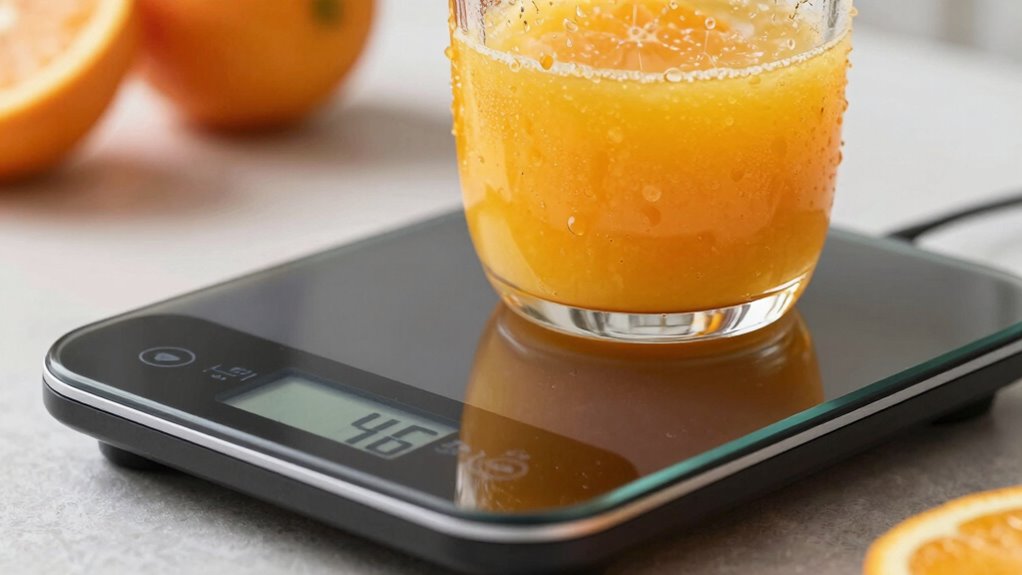
When it comes to making perfect juice recipes, having a reliable digital scale can make all the difference. Unlike volume measurements, which can be inconsistent due to varying fruit densities, weighing ingredients provides a level of measurement accuracy that’s hard to beat. Fruits like strawberries, mangoes, and apples all have different densities, meaning that a cup of one fruit might weigh significantly more or less than a cup of another. Relying solely on volume can lead to inconsistent results, especially if you’re aiming for a precise flavor balance or nutritional profile. Using a digital scale ensures that you measure by weight, giving you a more dependable way to replicate your favorite recipes every time. Incorporating measurement accuracy into your process can significantly improve your results.
Volume measures are tempting because they seem quick and straightforward—just fill a cup or a spoon, and you’re done. But the truth is, they don’t account for fruit density variations, which can throw off your measurements. For example, a loosely packed cup of chopped strawberries might weigh less than a tightly packed cup of diced mango, even if they look similar. This inconsistency can result in juice that’s too watery or too concentrated, affecting both taste and texture. A digital scale eliminates this guesswork, allowing you to precisely weigh your fruits, ensuring each batch of juice has the same quality and flavor. Additionally, consistent measurements are essential for developing and refining recipes over time. Understanding measurement techniques can further enhance your accuracy and success in juice crafting.
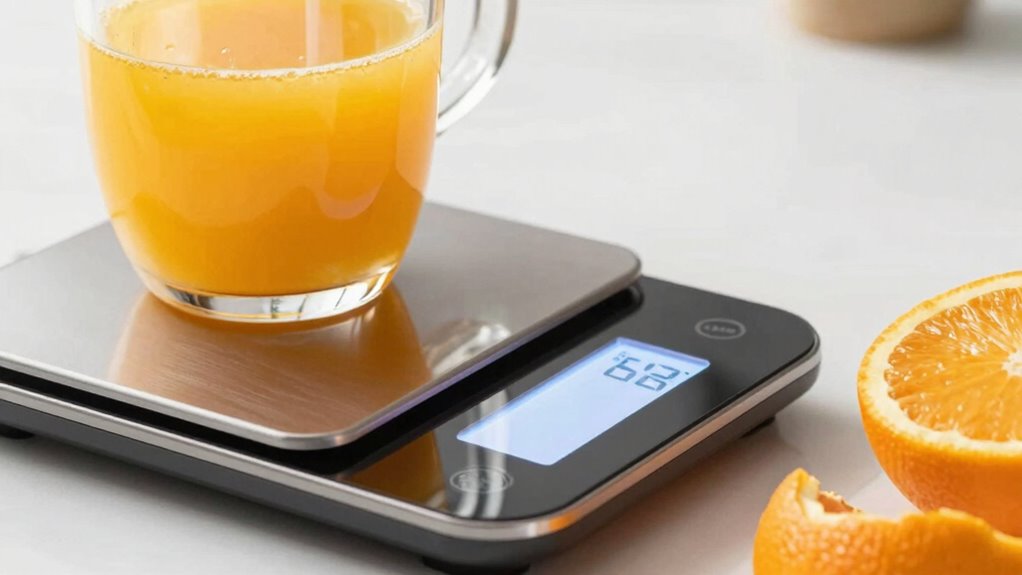
Measurement accuracy is especially crucial when experimenting with new recipes or trying to achieve specific nutritional goals. When you weigh ingredients, you get a clear picture of exactly how much fruit you’re adding, whether it’s for a low-sugar juice or a nutrient-dense blend. This precision helps you control sweetness, acidity, and pulp content, leading to a more consistent product. Plus, a digital scale is quick to use—just place your fruit on the platform, and it displays the weight instantly. No more fumbling with different-sized measuring cups or trying to estimate volume, which can be especially tricky with chopped or mashed fruits. Ensuring proper measurement techniques is vital for accurate results and reduces measurement errors.
Ultimately, investing in a good digital scale makes your juice-making process more reliable and efficient. It takes into account the fruit’s density and provides measurement accuracy that volume measures simply can’t match. If you’re serious about crafting the perfect juice every time, weighing your ingredients is the way to go. It’s a small step that significantly improves your results, giving you confidence in your recipes and freeing you from the inconsistencies that come with volume-based measurements.
digital kitchen scale for juice recipes
As an affiliate, we earn on qualifying purchases.
As an affiliate, we earn on qualifying purchases.
Frequently Asked Questions
Can Digital Scales Measure the Juice’s Density Accurately?
Yes, digital scales can measure juice’s density accurately, enhancing your flavor consistency and measurement reliability. By weighing the juice, you get precise data that helps you adjust recipes consistently. While scales don’t directly measure density, you can determine it by weighing a known volume. This method guarantees your juice turns out the same every time, giving you confidence in your measurements and resulting flavors.
How Do Temperature Changes Affect Juice Weight Measurements?
Imagine you’re measuring a glass of freshly squeezed juice, and it’s warm from the sun. Due to temperature fluctuations, density variations occur, causing the juice to weigh slightly more or less. These small changes impact weight measurements because warmer juice becomes less dense and cooler juice more dense. So, temperature fluctuations directly influence how accurately your digital scale reflects the juice’s true weight, especially when precision matters.
Are There Specific Scales Recommended for Liquid Measurements?
Yes, there are scales specifically designed for liquid measurements, often called digital liquid or kitchen scales. When choosing one, look for models with precise calibration tips to guarantee accuracy, especially for small quantities. Alternative measurement methods, like using graduated jugs, can also help. Always regularly calibrate your scale to maintain accuracy, and consider a model that displays weight in milliliters or fluid ounces for convenience.
Do Digital Scales Require Calibration for Different Juice Types?
Calibration requirements depend on your scale, but generally, digital scales don’t need frequent recalibration for juice type variations. However, if you switch between different liquids with varying densities, it’s wise to calibrate periodically to guarantee accuracy. You’ll want to check your scale’s instructions and perform calibration if you notice discrepancies. Consistent calibration keeps your measurements precise, preventing pesky problems with juice type variations and ensuring perfect recipes every time.
How Do I Convert Volume Measurements to Weight Precisely?
To convert volume measurements to weight precisely, you need to ensure liquid density for each juice type. Start by finding the specific density, usually in grams per milliliter. Then, multiply the volume in milliliters by this density to get the weight in grams. This method guarantees measurement accuracy, especially since different juices vary in density, making simple volume-to-weight conversions unreliable.
Conclusion
While digital scales may seem like the trusty compass for your juice adventures, relying solely on volume is like chasing shadows—your measurements can drift and deceive. To truly capture the essence of your recipes, embrace the steadfast weight, the solid anchor amid swirling uncertainties. Think of your scale as a steady hand guiding you through a foggy morning, revealing the true flavor beneath. Trust the weight; it’s your secret ingredient for juice that’s perfectly balanced and true.
Fall yard work Picks
leaf blowers
As an affiliate, we earn on qualifying purchases.