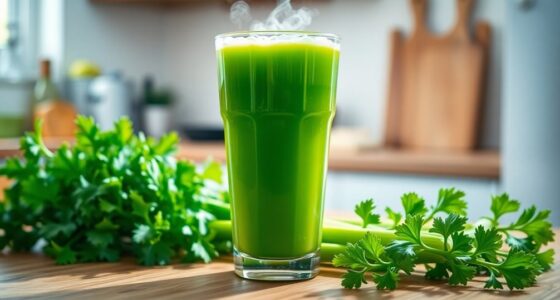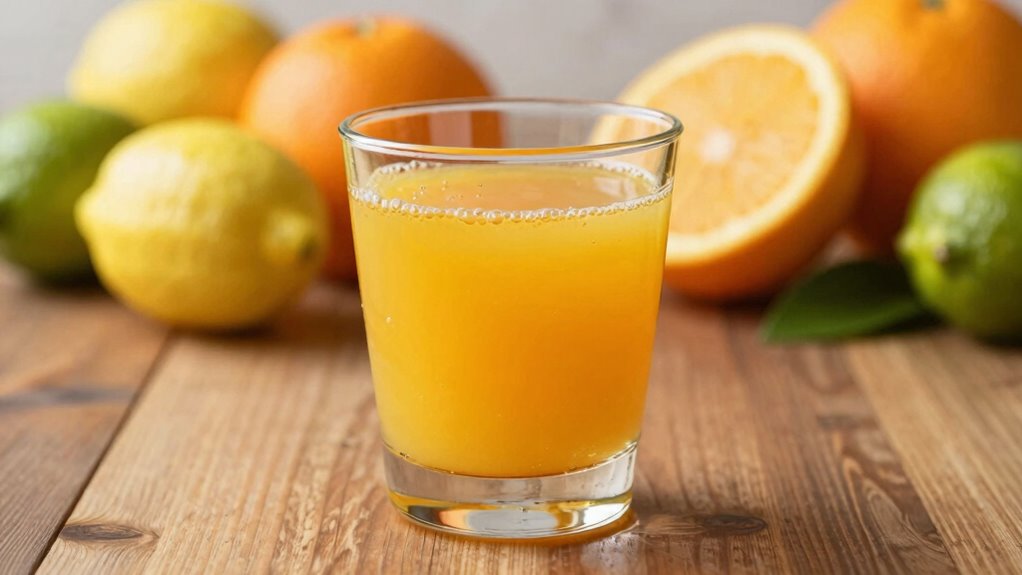

A clean-tasting juice delivers a fresh, pure flavor that reflects the natural qualities of the fruit, thanks to careful ingredient selection and minimal processing techniques like cold pressing. It should taste consistent and free from artificial additives or overpowering flavors, providing a smooth, honest flavor experience. The goal is to connect you with the fruit’s genuine taste in a transparent way. If you want to discover what truly makes a juice taste pristine, there’s more to explore ahead.

Get kitchen staples and gadgets delivered free with Prime
- Fast, free delivery on millions of items
- Prime Video, Amazon Music and more included
- Member-only deals all year
Key Takeaways
- Natural ingredients and absence of artificial additives ensure a pure, unaltered flavor.
- Minimal processing techniques preserve the fruit’s original taste and nutrients.
- Strict quality control prevents off-flavors and maintains flavor consistency.
- A balanced, natural sweetness enhances the authentic taste without overpowering flavors.
- Clear, fresh taste reflects honesty and simplicity in ingredients and production methods.
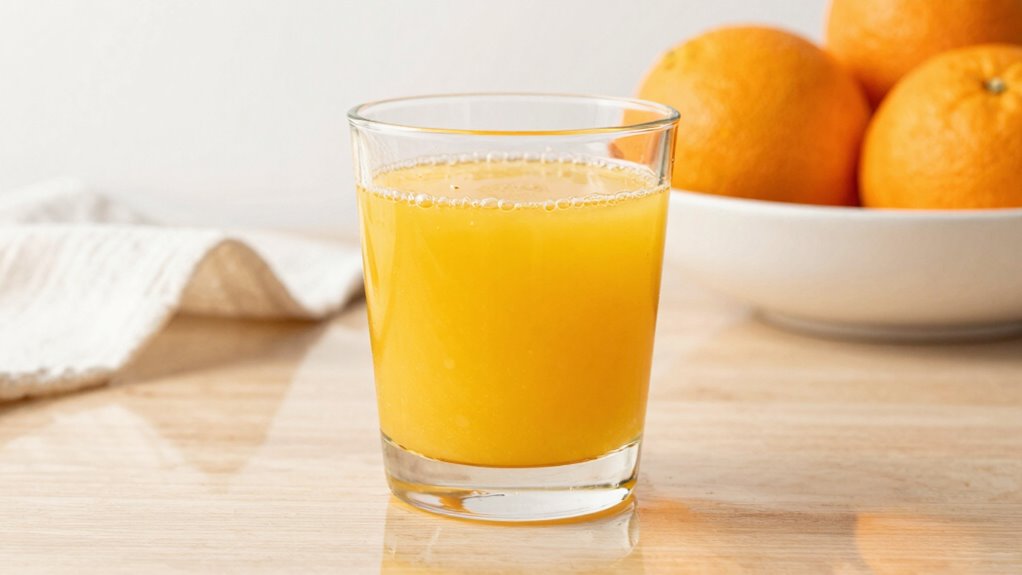
Have you ever wondered what exactly makes a juice taste “clear”? It’s a question that often pops up when you’re shopping for beverages or tasting a freshly made glass. The answer lies in several key factors, but two of the most important are flavor consistency and natural sweetness. When a juice maintains flavor consistency, it means each sip delivers a familiar, balanced taste that you can rely on. This consistency isn’t accidental; it results from careful selection of ingredients, precise processing techniques, and strict quality controls. When the flavor is consistent, you’re not surprised by sudden off-notes or overpowering flavors. Instead, you get a smooth, harmonious profile that feels pure and true to the fruit or vegetable used. This predictability is what many consumers associate with a “clean” taste—they want their juice to taste crisp, genuine, and free from artificial additives or overpowering processing. Additionally, maintaining proper processing techniques is crucial to preserving the natural qualities of the juice. Employing minimal processing methods helps retain the fruit’s original nutrients and flavors, further enhancing the “clean” taste experience. A well-controlled environment during production also minimizes contamination risks that could compromise the juice’s purity. Proper handling during extraction is essential to prevent contamination or flavor degradation. minimal processing, such as cold pressing and pasteurization, helps retain the natural qualities of the ingredients. The absence of artificial flavors, preservatives, and additives further ensures the juice remains pure and true to its source. When all these elements come together—flavor consistency, natural sweetness, and minimal processing—you end up with a juice that tastes clean, fresh, and natural. It’s a straightforward, honest beverage that appeals to your desire for transparency and authenticity in what you drink. Ultimately, a clear-tasting juice connects you to the fruit’s genuine flavor, offering a pure experience that feels both satisfying and trustworthy.
As an affiliate, we earn on qualifying purchases.
Frequently Asked Questions
How Do Processing Methods Impact Juice Cleanliness?
Processing methods directly impact juice cleanliness by influencing flavor retention and overall purity. When you choose gentle processing techniques like cold pressing or minimal pasteurization, you preserve natural flavors and reduce artificial aftertastes. These methods help remove impurities without stripping away essential, fresh-tasting elements. As a result, the juice tastes cleaner to you, offering a more authentic and wholesome experience that aligns with your expectations of fresh, natural flavor.
What Role Does Packaging Play in Maintaining a Clean Taste?
Packaging plays an essential role in maintaining a clean taste by protecting the juice from external factors. Using high-quality packaging materials guarantees flavor consistency, preventing contamination and preserving freshness. You should select materials that are inert and resistant to odors, as they help keep the juice’s natural flavor intact. Proper packaging not only preserves the clean, fresh taste consumers expect but also extends shelf life, maintaining quality from bottling to consumption.
Are Organic Juices Inherently Cleaner in Flavor?
Organic juices aren’t inherently cleaner in flavor, but they often offer more consistent flavor because of stricter standards like organic certification. You might notice fewer artificial additives, which can contribute to a purer, more natural taste. However, flavor consistency depends on factors like sourcing and processing. So, while organic certification suggests a cleaner profile, it doesn’t guarantee a uniformly cleaner flavor, but it often aligns with higher quality and transparency.
How Does Storage Temperature Affect Juice’s Clean Flavor?
Temperature effects markedly influence a juice’s clean flavor. When you store juice at proper temperatures, typically cold, it helps preserve its fresh, crisp taste by slowing down oxidation and microbial growth. Conversely, warmer temperatures accelerate flavor degradation, dulling that vibrant, clean profile consumers expect. By maintaining consistent, cool storage conditions, you guarantee flavor preservation, keeping your juice tasting fresh and true to its natural essence.
Can Additives Influence the Perception of a Clean Taste?
Additives can definitely influence how you perceive a clean taste, acting like a filter for flavor consistency. When additives are subtle or well-balanced, they enhance freshness without overpowering the natural fruit notes. However, if they’re too strong or obvious, they can muddy the waters, making the juice seem less pure. So, careful use of additives helps maintain that crisp, clean flavor you expect, keeping the perception of freshness intact.
Conclusion
When you seek a juice that tastes clean, you’re craving purity, freshness, and simplicity. You’re looking for a beverage free from artificial flavors, free from overpowering sweetness, and free from lingering aftertastes. You want clarity in flavor, brightness in aroma, and a true reflection of the fruit itself. Ultimately, a clean juice refreshes your senses, satisfies your palate, and leaves you feeling naturally revitalized—delivering purity, authenticity, and quality in every sip.
Fall Picks
fall essentials
As an affiliate, we earn on qualifying purchases.