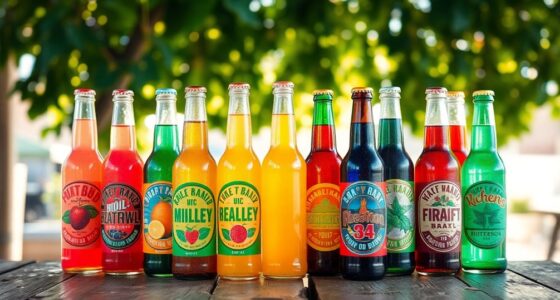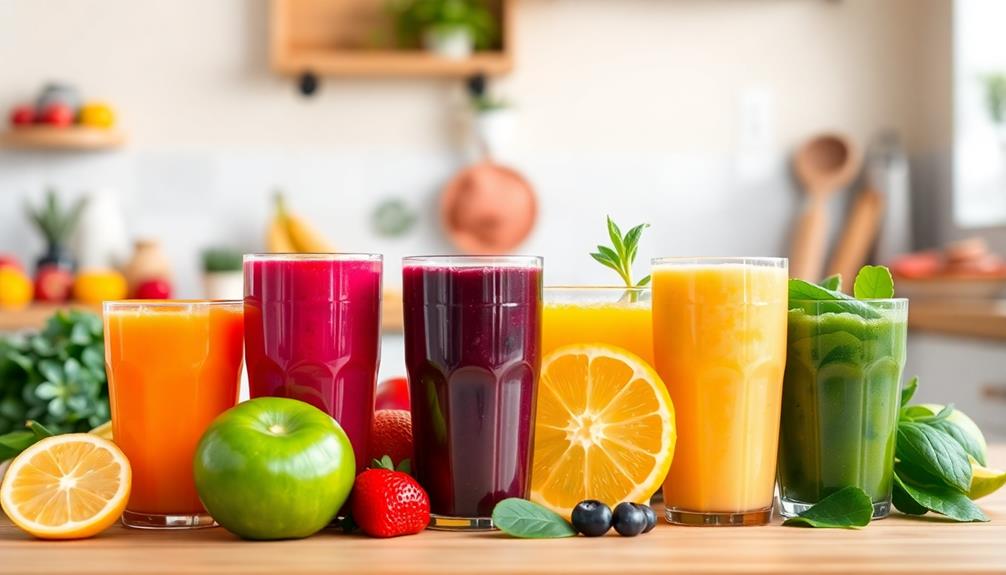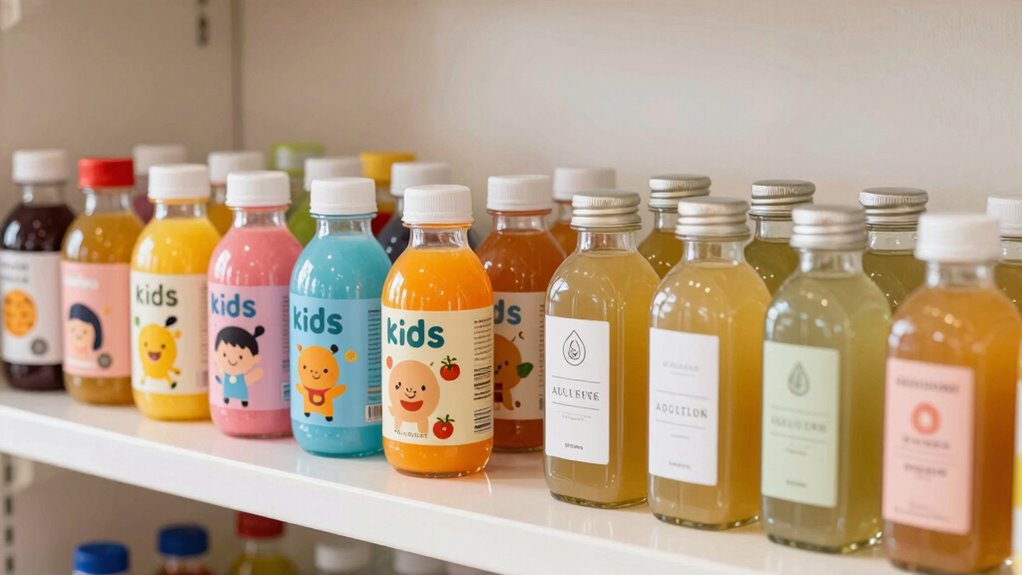
You’ll notice kids’ juice brands use bright colors, playful characters, and interactive designs to make them feel fun and exciting. They emphasize health benefits like added vitamins and no artificial ingredients, reassuring parents while engaging children. Clear labeling, educational messages, and safety standards further set them apart from adult options. These brand choices focus on creating emotional connections, blending nutrition with entertainment. If you want to discover more about how these features influence choices, keep exploring how they stand out.

Get kitchen staples and gadgets delivered free — and shop member deals
- Fast, free delivery on millions of items
- Access to Prime Big Deal Days deals on October 6–7
- Prime Video, Amazon Music and more included
Key Takeaways
- Packaging features playful characters, vibrant colors, and interactive elements to appeal to children and evoke fun.
- Emphasis on health benefits, added vitamins, and transparency to reassure parents about nutrition.
- Clear labeling of ingredients, sugar content, and safety information aligns with regulations and promotes trust.
- Marketing strategies target both children’s enjoyment and parents’ health concerns, blending fun with nutrition.
- Design avoids minimalist adult aesthetics, instead focusing on excitement and educational messaging to stand out.
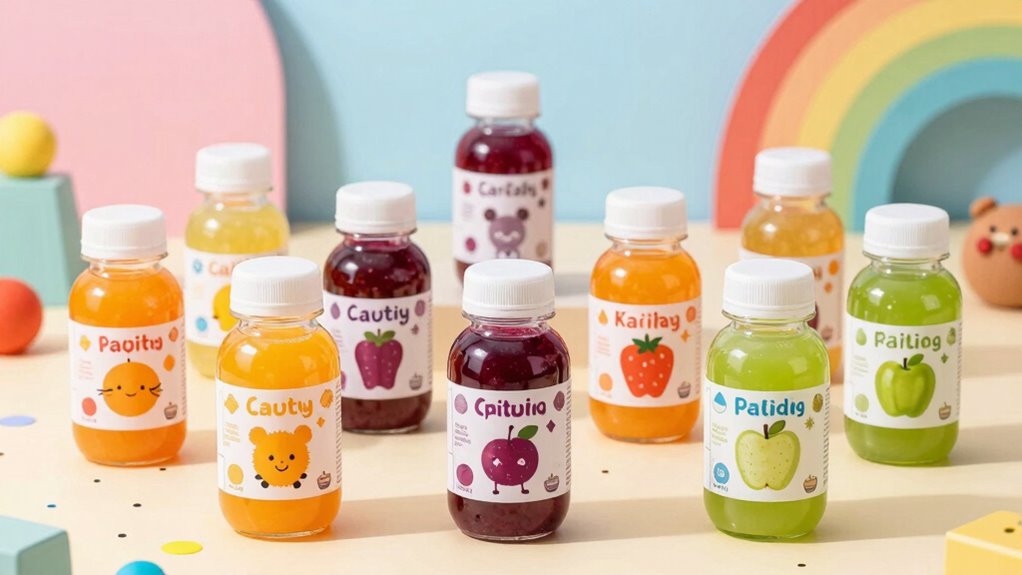
When choosing a kids’ juice, you might notice that not all brands are created equal. The first thing that often catches your eye is the packaging design. Kids’ juice bottles and boxes are usually bright, colorful, and adorned with playful characters or cartoon themes. This isn’t just for fun; it’s a strategic move to attract a child’s attention and make the product feel more appealing. Unlike adult juice packaging, which tends to be sleek and minimalist, kids’ juice packaging aims to evoke a sense of fun and excitement. You might see characters from popular cartoons, vibrant colors, or even interactive elements like puzzles or games on the box. These design choices help the brand stand out on shelves and create an emotional connection with young consumers and their parents, who often choose products that look engaging and trustworthy.
Beyond packaging, the nutritional content is a key factor that sets kids’ juice apart from adult options. Brands targeting children typically emphasize health benefits and try to make their products seem as nutritious as possible. You’ll notice labels highlighting added vitamins, minerals, or fruit content, often with claims like “made with real fruit” or “no added sugar.” These marketing tactics aim to reassure parents that the juice is a healthy choice for their kids, even if it’s sweetened or flavored. In contrast, adult juices may focus more on flavor variety or organic ingredients without the same emphasis on kid-specific nutritional benefits. As a parent, you might also pay attention to the sugar content and ingredient list, ensuring that the juice is not overly sugary or filled with artificial additives—something brands for kids are increasingly aware of and try to address. Additionally, the regulations around labeling for kids’ products often require clearer disclosure of nutritional information to promote healthier choices. It’s also common for these brands to use marketing strategies that appeal directly to both children and parents, reinforcing the idea that their product is both fun and nutritious. Furthermore, many brands incorporate educational elements to encourage healthier eating habits, making the products more appealing to health-conscious families. Moreover, these brands often tailor their messaging to emphasize safety and quality, which reassures parents about the product’s standards. A focus on transparent ingredient lists is also common to build trust and demonstrate commitment to quality.
kids' juice with vitamins and no artificial ingredients
As an affiliate, we earn on qualifying purchases.
As an affiliate, we earn on qualifying purchases.
Frequently Asked Questions
How Do Branding Strategies Differ Between Kids’ and Adults’ Juice Brands?
You tailor branding strategies for kids’ and adults’ juice brands by focusing on different aspects. For kids, you emphasize flavor innovation and playful, colorful packaging that sparks curiosity. You use brand storytelling to create a fun, memorable identity that resonates with children and parents. In contrast, adult juice branding leans on health benefits and sophisticated messaging, aiming for trust and premium quality. Both strategies prioritize engagement but target different emotional triggers.
What Packaging Features Appeal Specifically to Children Versus Adults?
You’ll notice that kids’ juice packaging often features colorful characters and playful fonts, which instantly attract their attention and evoke a sense of fun. Bright, vibrant colors stimulate excitement and curiosity, making the product feel lively and appealing. For adults, packaging tends to be more minimalist and sophisticated, emphasizing quality and health. These features are carefully designed to resonate with each audience’s preferences, making the product feel tailored specifically for them.
How Do Ingredient Preferences Vary for Kids’ Versus Adult Juice Products?
You notice that kids’ juice products often prioritize fun flavors like berry or tropical blends, appealing to their taste preferences. Meanwhile, adults tend to prefer more sophisticated or natural flavors. Ingredient transparency is essential for both groups, but especially for parents choosing for kids; they want clear labels showing no added sugars or artificial ingredients. Balancing appealing flavors with transparent, wholesome ingredients helps brands connect with both kids and their parents.
Are There Specific Marketing Channels Preferred for Kids’ Juice Brands?
Think of marketing channels as the playground where your kids’ juice brand shines brightest. You’ll find social media platforms like Instagram and TikTok as the swings and slides that attract young parents and caregivers. Influencer partnerships act as your friendly guides leading children and parents alike to trust your brand. By focusing on these channels, you create a fun, engaging environment that resonates with your target audience, boosting brand loyalty and recognition.
How Do Nutritional Claims Differ Between the Two Target Audiences?
You’ll notice that nutritional claims for kids’ juice brands focus on essential nutrients, like vitamins and antioxidants, emphasizing health benefits suitable for children’s growth. In contrast, adult juice brands highlight benefits like added fiber or low sugar, often featuring flavor innovations to appeal to mature palates. Health messaging for kids tends to be playful and simple, while adult messaging is more detailed, aligning with their expectations for informed choices.
Conclusion
Choosing a kids’ juice brand is like picking a trusted guardian for your little one’s health and happiness. The playful packaging, natural ingredients, and fun flavors make it stand out from adult options. When you opt for a brand that understands your child’s needs, you’re planting seeds for healthy habits that grow strong over time. Remember, the right juice isn’t just a drink — it’s a happy, nourishing adventure waiting to be savored.
NFL season / tailgating Picks
team gear
As an affiliate, we earn on qualifying purchases.