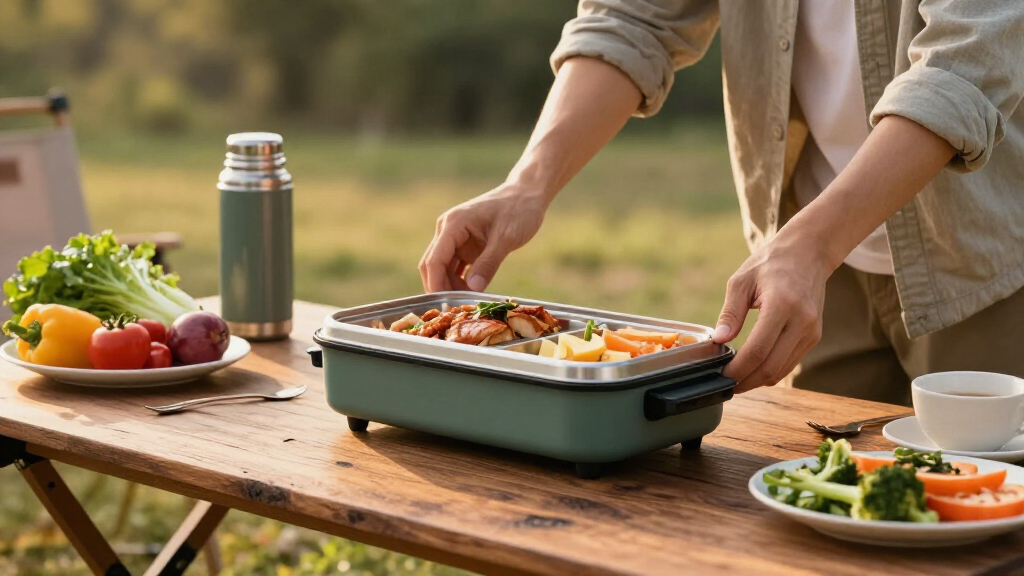
Electric lunch box warmers solve a simple problem: getting a genuinely hot meal without a microwave, whether you’re at a desk, on a job site, or in a truck cab. After comparing 15 of the most popular models, the Travelisimo 100W 1.5L stands out as the best overall pick for its fast heating, leakproof stainless steel container, and full 12V/24V/110V compatibility. The Buddew 100W is a close runner-up with similar power and a food-grade 304 stainless interior, while the Crock-Pot 20-Ounce Lunch Box is the easiest option for office-only users who want a familiar brand and simple cleanup. The main tradeoffs in this category come down to heating speed versus price, capacity versus portability, and whether you need multi-voltage cords for vehicles or just a wall plug. Read on for the full breakdown of all 15 models.

Get kitchen staples and gadgets delivered free with Prime
- Fast, free delivery on millions of items
- Prime Video, Amazon Music and more included
- Member-only deals all year
Key Takeaways
- The 100W models (Travelisimo, Buddew, COZYEXPERT) consistently heated food noticeably faster than the 80W units, which matters most if your lunch window is short.
- Capacity varied more than any other spec: the 2.8L dual-layer boxes hold nearly twice the food of the 1.5L standard, but they sacrifice the compact footprint that makes lunch boxes car-friendly.
- Only a handful of models include all three power cords (12V, 24V, 110V) in the box — several competitors sell them separately, which changes the true cost comparison.
- The Crock-Pot is the only pick that behaves like a slow warmer rather than a heater, which suits desk workers but frustrates anyone expecting hot food in 30 minutes.
- The EAST OAK cordless model is the only battery-powered option here, trading raw heating power for the freedom to warm food with no outlet at all.


| electric lunch box warmer | Capacity | Material | Power | Heating Time |
|---|---|---|---|---|
| SOHIDA 1.5L Electric Lunch Box | 1.5L stainless steel container with 0.45L compartment | Stainless steel, PP plastic | 80W | — |
| Monteka Electric Lunch Box Foo | 1.5L stainless steel + 0.45L plastic compartment | 304 stainless steel, food-grade plastic | Max 80W | 20–35 minutes |
| 1.8L Heated Lunch Box for Men | 1.8L | 304 stainless steel | 80W | 25–40 minutes |
| Crock-Pot Portable Electric Lu | 20 ounces (~0.6L) | Dishwasher-safe removable container | — | — |
| 2.8L Electric Heated Lunch Box | 2.8L dual layer | Food-grade 304 stainless steel, PP plastic | 100W | 20–30 minutes |
| Electric Lunch Box | 1.5L main + 0.45L fruits box | Food-grade stainless steel, BPA-free | 80W | 25-40 minutes |
| Buddew Electric Heated Lunch B | 1.5L | Food-grade 304 stainless steel, BPA-free | 100W | — |
| DUPASU Electric Lunch Box Food | 1.8L | Food-grade PP plastic and stainless steel | 100W | — |
| COZYEXPERT Electric Lunch Box | 1.8L stainless steel + 0.45L plastic container | Stainless steel, PP plastic | 100W | 20-30 minutes |
| Vabaso Electric Lunch Box for | 1.5L | 304 stainless steel, PP plastic | 80W | — |
| EAST OAK Cordless Electric Lun | 5.5 cups (1.3 L / 44 oz) | — | — | — |
| Travelisimo Electric Lunch Box | 1.5L | Stainless steel | 100W | 20–30 minutes |
| Aotto Portable Oven | — | — | — | — |
| Electric Lunch Box for Adults | 2.8L total | 304 stainless steel and PP | 100W | 20–30 minutes |
| Travelisimo Electric Lunch Box | 1.5L | Stainless steel | 100W | 20–30 minutes |
More Details on Our Top Picks
SOHIDA 1.5L Electric Lunch Box Food Heater, 80W (Green)
The SOHIDA 1.5L earns the top spot because it solves the everyday problems better than the rest of this lineup: where to plug in, how to carry it, and how to clean it. The triple voltage support (12V, 24V, 110V) means one box covers the car, the truck, and the office wall outlet — a flexibility the Crock-Pot below simply can’t match, since that one is wall-only. Compared with the Monteka, which shares the same 1.5L capacity, the SOHIDA pulls ahead with a full accessory kit: insulation bag, two cables, utensil compartment, and even a smartphone stand for desk lunches. The 80W element heats most meals evenly in a reasonable window without drying them out.
The tradeoff? The 0.45L side compartment doesn’t heat, and it can warp if you subject it to heat improperly — so it’s a fruit-and-snacks tray, not a second hot course. The outer shell also can’t go in the fridge.
Pros:- Works on 12V, 24V, and 110V, covering car, truck, and home use with one device
- Leakproof and dishwasher-safe components make cleanup realistic for daily use
- Complete bundle: insulation bag, both cables, utensils, and a phone stand
- 80W heating is fast and even for a 1.5L capacity
Cons:- The 0.45L compartment cannot be heated and may melt if used incorrectly
- Outer shell cannot be refrigerated, limiting meal-prep flexibility
Best for: Commuters and office workers who want one lunch box that works at a desk, in a car, and on a truck
Not ideal for: Anyone who wants every compartment heated — the small 0.45L tray stays cold and is easy to misuse
- Capacity:1.5L stainless steel container with 0.45L compartment
- Power:80W
- Voltage Compatibility:12V, 24V, 110V
- Material:Stainless steel, PP plastic
- Included Accessories:Home cable, car cable, insulation bag, utensils, phone stand
- Warranty:1 year
Our verdict“If you want one well-rounded heated lunch box that handles every power source and daily commute, this is the safest all-around pick.”
Monteka Electric Lunch Box Food Heater, 1.5L Stainless Steel
What the Monteka does well is deliver the core heated-lunch-box experience — 1.5L of 304 stainless steel, leakproof latches, and 12V/24V/110V compatibility — at a friendlier price than feature-loaded rivals like the SOHIDA. You give up the smartphone stand and the more refined accessory package, but you keep the essentials: a sealing ring that genuinely prevents spills in a bag, and a heating cycle of 20–35 minutes that holds moisture instead of nuking the edges of your rice.
Compared with the 1.8L box further down, the Monteka’s smaller footprint makes it easier to stash in a backpack, though big appetites will notice the difference. The real compromises are maintenance and transparency: the body can’t be immersed in water, so cleaning is a careful wipe-and-rinse routine, and the manufacturer doesn’t publish dimensions, which makes bag-fit planning a guess before it arrives.
Pros:- 1.5L stainless steel liner with a separate plastic compartment for versatile meal packing
- Secure latches and sealing ring keep soups and saucy dishes from leaking
- Triple voltage compatibility (110V, 12V, 24V) at a lower price than feature-rich rivals
- Heats in 20–35 minutes while keeping food moist
Cons:- Body cannot be submerged in water, making cleaning more tedious
- No published dimensions, so portability is hard to judge before purchase
Best for: Budget-conscious buyers who want full car-and-home voltage support without paying for extra accessories
Not ideal for: People who hate fussy cleanup — the non-immersible body means washing is more chore than rinse
- Capacity:1.5L stainless steel + 0.45L plastic compartment
- Power:Max 80W
- Voltage Compatibility:110V, 12V, 24V
- Material:304 stainless steel, food-grade plastic
- Heating Time:20–35 minutes
- Included Accessories:12V/24V/110V cables, carry bag, cleaning cloth, fork, spoon
Our verdict“A sensible buy if you want the fundamentals done cheaply and don’t mind hand-wiping the body after meals.”
1.8L Heated Lunch Box for Men, Portable Food Warmer for Car/Truck/Office
This one plays a specific role the 1.5L crowd — SOHIDA, Monteka, Vabaso — can’t: volume. At 1.8L of 304 stainless steel, it fits the kind of hearty, two-dish lunch that leaves smaller boxes half-empty. The silicone seal paired with reinforced buckles is a step up in ruggedness too, and the impact-resistant build makes more sense tossed behind a truck seat than a delicate desk-only warmer like the Crock-Pot. Thoughtful cable lengths — 75cm for the vehicle, 100cm for home — mean you’re not stretching a cord across a cab.
Heating runs 25–40 minutes at 80W, which is on the slower end next to the 2.8L dual-layer box’s 20–30 minute claim at 100W. And be honest about your bag: the extra capacity makes this bulky in compact backpacks, and like every non-battery option here, it’s useless without an outlet or a socket.
Pros:- 1.8L capacity handles hearty, multi-item meals that 1.5L boxes can’t
- Silicone seal with reinforced buckles survives rough handling in vehicles
- Longer vehicle and home cables give flexible placement
- 12V/24V/110V compatibility covers truck, car, and office
Cons:- 25–40 minute heating is slower than 100W rivals
- Physically bulkier, fitting awkwardly in small bags and tight cab spaces
Best for: Truckers, tradespeople, and anyone whose lunch is genuinely a full meal, not a snack
Not ideal for: Commuters with slim bags or small frames — the extra capacity translates directly into bulk
- Capacity:1.8L
- Power:80W
- Heating Time:25–40 minutes
- Voltage Compatibility:12V, 24V, 110V
- Material:304 stainless steel
- Cable Length:75cm vehicle cable, 100cm home cable
- Seal:Silicone seal with reinforced buckles
Our verdict“Buy this if portion size is your priority; skip it if you carry a light lunch in a slim bag.”
Crock-Pot Portable Electric Lunch Box, 20-Ounce Food Warmer
The Crock-Pot lunch box is the odd one out in this roundup, in a good way. Where the SOHIDA and Monteka are chunky multi-voltage workhorses, this is a streamlined 20-ounce warmer built around one idea: carry less, clean less. The removable dishwasher-safe container is genuinely the easiest cleanup in the lineup — no wiping a non-immersible body like the Monteka — and the spill-proof lid with detachable cord makes it a natural fit for a tote or car cupholder-adjacent space. The modern-vintage styling doesn’t hurt either.
The compromises are structural. At 20 ounces, it holds roughly a third of what the 1.5L boxes carry, so it’s a soup-and-leftovers device, not a meal system. And it’s wall-outlet only — no 12V car cable — so truckers should look at the 1.8L box instead. It also warms rather than actively cooks from raw, so temper expectations.
Pros:- Most compact and portable option in the roundup
- Removable dishwasher-safe container beats hand-wiping competitors
- Truly spill-proof lid with detachable cord for tidy transport
- Attractive modern-vintage design that doesn’t look like gear
Cons:- 20-ounce capacity is far below the 1.5L+ standard of rival boxes
- Wall power only — no car or truck compatibility
Best for: Office workers and travelers who eat lighter portions and prioritize easy cleaning over capacity
Not ideal for: Drivers and truckers — there’s no 12V option, and 20 ounces won’t cover a real workday meal
- Capacity:20 ounces (~0.6L)
- Color:Moonshine Green
- Material:Dishwasher-safe removable container
- Key Features:Spill-proof lid, detachable cord, easy-carry handle
- Power Source:Wall outlet only
Our verdict“Choose this for light office lunches and travel where compact size and cleanup matter more than volume or vehicle power.”
2.8L Electric Heated Lunch Box with Dual Layers, 100W Fast Heating
If you pack a full day’s food rather than a single lunch, the 2.8L dual-layer box is the only option here that genuinely works as a portable meal system. The removable dual layers let you separate a hot main from fruit or snacks — something the SOHIDA’s tiny 0.45L cold tray only partially achieves — and the 100W element is the strongest in this batch, cutting heat-up to 20–30 minutes where the 80W models take longer. Broad voltage support (110–230V plus 12/24V car cords) even makes it travel-friendly internationally.
The flip side of 2.8L is sheer size: this is the bulkiest box in the roundup, and the complete absence of published dimensions makes that bulk hard to plan around. There’s no battery option, like the cordless EAST OAK in the wider lineup, so it’s still tethered to a socket. And 100W warms efficiently but won’t cook from raw.
Pros:- 2.8L dual-layer design separates hot mains from cold sides or fruit
- 100W heating is the fastest in this batch at 20–30 minutes
- 110–230V plus 12/24V support works at home, abroad, and in vehicles
- Leak-proof silicone sealing ring with dishwasher-safe stainless steel
Cons:- Largest footprint in the roundup, with no published dimensions to plan storage
- No battery operation — still requires an outlet or vehicle socket
Best for: Meal preppers and long-shift workers who pack multiple courses and want them separated and hot
Not ideal for: Anyone who values compact carry — this is the largest, heaviest option here and dimensions aren’t even listed
- Capacity:2.8L dual layer
- Power:100W
- Heating Time:20–30 minutes
- Voltage:110–230V, plus 12V/24V car cord
- Material:Food-grade 304 stainless steel, PP plastic
- Included Accessories:Fork, spoon, insulated carry bag
- Seal:Silicone sealing ring, leak-proof
Our verdict“This is the pick if you think of lunch as several courses, not one container, and you accept the bulk that comes with it.”
Electric Lunch Box, 1.5L Heated Food Warmer, 80W
This option stands out for pairing a 1.5L main container with a separate 0.45L fruits box at a price point that undercuts better-known models like the Buddew 100W. The two-compartment approach means lunch and a snack travel together, though the fruits box sits outside the heating zone — a tradeoff the DUPASU 1.8L avoids by giving you one larger heated cavity instead. Heating lands in the 25-40 minute range, which is respectable for 80W but slower than the COZYEXPERT‘s 20-30 minute claim. Like nearly every water-bath warmer here, you’ll need to add water before each use, and the leakproof lid does its job only if you seat it properly. This pick makes the most sense for first-time buyers who want the full accessory package without paying for the Buddew’s longer warranty or faster PTC heating.
Pros:- Two-compartment design keeps fruit or snacks separate from the heated main dish
- Leakproof lid makes it genuinely transportable in a work bag
- Food-grade stainless steel and BPA-free construction throughout
- Broad voltage support covers home, office, and vehicle outlets
Cons:- Fruits box cannot be heated, so it only works for cold sides
- Requires adding water before every heating cycle
- 80W output is slower than the 100W models in this roundup
Best for: First-time buyers who want a complete two-compartment setup at a lower price than premium models
Not ideal for: Impatient lunchers — 25-40 minute heat times and a non-heated fruits box make it a poor fit for quick, single-dish meals
- Capacity:1.5L main + 0.45L fruits box
- Power:80W
- Voltage:110V-230V / 12V / 24V
- Material:Food-grade stainless steel, BPA-free
- Heating Time:25-40 minutes
- Design:Portable, leakproof
Our verdict“A sensible low-cost entry point for buyers who value the bundled fruits box over raw heating speed.”
Buddew Electric Heated Lunch Box, 100W Fast Heating, 1.5L Food-Grade 304 Stainless Steel
What separates the Buddew from similarly sized boxes like the Vabaso 80W is its upgraded PTC heating element, which distributes heat more evenly and holds moisture better — a real difference when you’re reheating rice or pasta rather than soup. The 12V/24V/110V compatibility covers cigarette lighter sockets in trucks and RVs, and the two-year warranty with one-year free replacement is the strongest coverage in this batch, which matters for gear that lives in a vehicle and takes abuse. Compared with the COZYEXPERT, you give up the bundled insulated bag and extra container, but you gain dishwasher-safe stainless steel and faster, more consistent warm-ups. The footprint is bulkier than compact options, so commuters with slim bags may find it awkward. This model is better suited to drivers who eat in the cab daily than to occasional office users.
Pros:- PTC technology heats evenly and preserves food moisture
- True 12V, 24V, and 110V support works in cars, trucks, and wall outlets
- Dishwasher-safe 304 stainless steel container simplifies cleanup
- Two-year warranty with one-year free replacement leads this lineup
Cons:- 100W ceiling struggles with very large or frozen portions
- Requires a power source, so it’s useless for true off-grid lunches
- Bulky shape takes up more bag space than compact rivals
Best for: Truckers and drivers who eat in the vehicle daily and want even heating plus strong warranty protection
Not ideal for: Commuters with small bags or limited desk space — the body is bulkier than slimmer 1.5L competitors
- Power:100W
- Capacity:1.5L
- Material:Food-grade 304 stainless steel, BPA-free
- Voltage Compatibility:12V / 24V / 110V
- Heating Technology:PTC
- Cleaning:Dishwasher-safe container
- Warranty:1-year free replacement, 2-year warranty
Our verdict“The most dependable pick for anyone whose lunch break happens behind the wheel.”
DUPASU Electric Lunch Box Food Warmer, 1.8L Heated Lunch Box for Adults
The DUPASU wins on everything-in-the-box value: detachable stainless steel container, salad box, utensils, and an insulated carrying bag, where rivals like the Buddew ship with fewer accessories. Its 1.8L capacity edges out the 1.5L standard set by the Vabaso and Travelisimo models, enough for a genuinely filling adult lunch. Compared with the COZYEXPERT, which matches the 1.8L size and 100W power, the DUPASU counters with a richer accessory bundle but stumbles on one detail: the salad box isn’t heat-resistant and can melt if you mistakenly heat it — a sharper failure mode than most competitors’ plastic inserts. You also have to open the exhaust cover before heating, or pressure builds and results are uneven. This pick makes the most sense for buyers who want a ready-to-gift, ready-to-commute package rather than piecing together containers and bags separately.
Pros:- 1.8L capacity handles larger adult appetites than 1.5L rivals
- Includes insulated bag, utensils, salad box, and detachable container
- Dishwasher-safe components cut cleanup time
- Multi-voltage support works at desks and in vehicles
Cons:- Salad box is not heat-resistant and may melt if heated
- Exhaust cover must be opened before each heating cycle
- Big eaters may still find 1.8L limiting compared to 2.8L dual-layer models
Best for: Office workers who want a full kit — container, salad box, utensils, and insulated bag — in one purchase
Not ideal for: Absent-minded users — the meltable salad box and mandatory exhaust-cover step invite user error
- Capacity:1.8L
- Power:100W
- Material:Food-grade PP plastic and stainless steel
- Voltage Compatibility:110V-230V / 12V / 24V
- Includes:Detachable container, salad box, fork, spoon, insulated bag
- Cleaning:Dishwasher-safe components
Our verdict“The best turnkey bundle for commuters, provided you remember which container goes on the heat.”
COZYEXPERT Electric Lunch Box Heated Food Warmer 100W
Speed is the whole story here: the COZYEXPERT heats in 20-30 minutes, beating the 80W Vabaso and the generic 1.5L box by a clear margin, and edging out the DUPASU despite matching its 100W power and 1.8L capacity. For anyone with a rigid 30-minute lunch window, that difference decides the purchase. The leak-proof lid and bundled utensils and insulation bag give it near-parity with the DUPASU’s kit, though its 0.45L secondary container — like most in this category — cannot be heated, and the heating base must never go in the fridge, so you can’t pre-chill leftovers in the same unit. One quirk shared with the DUPASU: the exhaust cover needs opening before each cycle. This option stands out for desk-bound workers who plan lunch around a clock rather than an appetite.
Pros:- 20-30 minute heating is the fastest in this batch
- 1.8L stainless steel container suits hearty meals
- Works with both car outlets and home/office power
- Includes utensils and insulation bag for a complete commute kit
Cons:- Secondary 0.45L container cannot be heated
- Heating base cannot be refrigerated, limiting meal-prep flexibility
- Exhaust cover must be opened before every use
Best for: Office workers with short lunch breaks who need reliably hot food in under half an hour
Not ideal for: Meal preppers who store and heat in one container — the base can’t be refrigerated and the small container can’t be heated
- Power:100W
- Capacity:1.8L stainless steel + 0.45L plastic container
- Heating Time:20-30 minutes
- Voltage Compatibility:12V/24V car, 110-230V home/office
- Material:Stainless steel, PP plastic
- Includes:Stainless steel fork and spoon, insulation bag
- Design:Leak-proof lid, portable
Our verdict“The pick for time-pressed desk lunchers who rank heating speed above all else.”
Vabaso Electric Lunch Box for Adults, 80W Portable Food Warmer with 1.5L Stainless Steel Container
The Vabaso strips the category down to its essentials: a durable 304 stainless steel container, an improved leak-proof lid, and dual power cords for home and car — no fruits box, no insulated bag, none of the extras that push the DUPASU and COZYEXPERT up in price. That simplicity is the draw. Compared with the Buddew, you lose the PTC even-heating advantage and the two-year warranty, but you also typically pay noticeably less, and the dishwasher-safe container keeps daily cleanup painless. Heat times vary with how much food you load, and adding a splash of water or stock speeds things up meaningfully — plan on 30-45 minutes for a full 1.5L. The one firm rule is never submerging the heating base. This pick makes the most sense for buyers who already own bags and containers and just want a dependable warming core.
Pros:- Durable, dishwasher-safe 304 stainless steel container
- Dual 110V and 12V/24V power covers home and vehicle use
- Improved leak-proof lid handles bag transport well
- Lower price than accessory-heavy rivals like the DUPASU
Cons:- Heating time varies with food quantity and can run long
- Requires adding water or stock for faster, more even heating
- Heating base cannot be cleaned with water, complicating maintenance
Best for: Budget-conscious buyers who already have lunch bags and containers and just need a reliable heating unit
Not ideal for: Buyers wanting a complete kit or fast heat times — no bag or accessories, and 80W is slower than the 100W models
- Power:80W
- Capacity:1.5L
- Material:304 stainless steel, PP plastic
- Voltage:110V / 12V / 24V
- Cleaning:Dishwasher-safe stainless steel container
- Includes:Fork and spoon
- Design:Leak-proof lid, dual power cords
Our verdict“A no-frills warmer that trades accessories and speed for a lower price and proven durability.”
EAST OAK Cordless Electric Lunch Box with Timer
This is the only option in this lineup that doesn’t need an outlet or a running car engine, and that alone changes who it’s for. The 10,000mAh battery means a construction worker without a power source, or a hiker at a trailhead, can still get a hot meal — something the Travelisimo 1.5L and Aotto portable oven simply can’t do. The smart timer and memory function let you schedule heating so lunch is ready when you are, and the leak-proof lid plus dishwasher-safe divider keep cleanup painless. The tradeoff is real, though: you get roughly one heating cycle per charge, and at 5.5 cups the capacity trails the 1.5L and 2.8L models here. Compared with the dual-layer 2.8L Heated Lunchbox, it’s less about volume and more about freedom from cords.
Pros:- Truly cordless — heats anywhere thanks to a 10,000mAh battery
- Smart timer with memory function schedules heating automatically
- Removable divider and dishwasher-safe parts simplify cleaning
- Leak-proof lid plus included utensils and insulated bag make it grab-and-go ready
Cons:- Battery supports only about one full heating cycle per charge
- 5.5-cup capacity is smaller than most 1.5L+ competitors in this roundup
Best for: Commuters, outdoor workers, and travelers who often have no outlet or vehicle power available at lunchtime
Not ideal for: Big-appetite eaters or anyone who wants multiple heating cycles a day — the battery allows only one heat per charge and capacity is modest
- Capacity:5.5 cups (1.3 L / 44 oz)
- Battery:10,000mAh rechargeable
- Controls:Smart timer with memory function
- Divider:Removable, dishwasher safe
- Lid:Leak-proof
- Includes:Utensils, insulated carrying bag
- Use Case:Work, outdoor activities, travel
Our verdict“Buy this if your lunch spots lack power; skip it if you eat near an outlet and want more capacity for the money.”
Travelisimo Electric Lunch Box for Adults, 1.5L Stainless Steel Portable Food Warmer, 100W, 12/24/110V
For shoppers who just want a dependable heated lunch box without paying for a battery or a smart timer, this Travelisimo hits the sweet spot. The 12V/24V/110V triple voltage support matches what the Aotto portable oven offers, meaning it works in a sedan, a semi truck, and a wall outlet — but here you get a dedicated stainless steel container rather than needing to supply your own. Heating lands in the 20–30 minute range typical of 100W models like the Buddew, and the dishwasher-safe interior keeps maintenance minimal. The compromises are familiar ones: it’s tethered to a power source, so unlike the EAST OAK cordless it won’t help you off the grid, and the steel build adds noticeable weight to a bag. It also costs less than the cord-free alternatives while covering more scenarios than a 110V-only unit like the Crock-Pot Lunch Box.
Pros:- 12V, 24V, and 110V compatibility covers car, truck, and wall outlet use
- 100W element heats meals in roughly 20–30 minutes
- Stainless steel construction is hygienic and dishwasher safe
- Undercuts cordless and multi-container rivals on price
Cons:- No battery — completely dependent on an external power source
- Stainless build makes it heavier than plastic-bodied competitors
Best for: Drivers and office workers who split their week between car and desk and want the cheapest reliable way to heat a full meal
Not ideal for: Anyone without access to a car port or outlet — it has no battery, so remote job sites and outdoors use are out
- Power:100W
- Capacity:1.5L
- Voltage:12V / 24V / 110V
- Material:Stainless steel
- Heating Time:20–30 minutes
- Cleaning:Dishwasher-safe container
Our verdict“The straightforward pick if you want triple-voltage heating and solid stainless construction at the lowest practical price.”
Aotto Portable Oven, Electric Lunch Box Food Heater – 12V/24V/110V 3-in-1 Car Food Warmer
The Aotto takes a fundamentally different approach from every dedicated lunch box here: instead of proprietary containers, its heating plate accepts glass, ceramic, metal, foil, and heat-resistant plastic up to 257°F. If you meal-prep in glass containers or want to reheat a takeout tin, this solves a problem the Travelisimo 1.5L and the 2.8L double-layer box can’t, since those require their own inserts. The foldable, lightweight design and included shoulder strap also make it easier to stash than rigid steel boxes. Buyers should calibrate expectations, though: it’s conduction heating, not a microwave, so times run long and vary by power source — a 12V car port is slower than a wall outlet. And unlike the EAST OAK, it still needs a plug. For people whose containers vary week to week, the flexibility is worth the slower warm-up.
Pros:- Works with glass, ceramic, metal, foil, and heat-resistant plastic containers
- Auto temperature control prevents overheating and dried-out food
- Folds flat and is lightweight with an included shoulder strap
- 12V/24V/110V options suit truck, car, office, and home
Cons:- Conduction heating only — slower and less powerful than a microwave or dedicated 100W lunch box
- Plastic containers must be rated to 257°F, which rules out ordinary deli tubs
Best for: Meal preppers who use their own glass, ceramic, or foil containers and want one warmer that fits them all
Not ideal for: Impatient eaters or anyone wanting set-and-forget speed — heating is slow and varies by container and power source
- Power Sources:12V / 24V / 110V
- Container Compatibility:Glass, ceramic, metal, stainless steel, foil, heat-resistant plastic up to 257°F
- Dimensions:Up to 9.76″ x 7.01″ x 3.94″
- Heating Method:Conduction with auto temperature control
- Design:Foldable lunch bag style
- Includes:Lunch bag, heating plate, shoulder strap, 2 power cords
Our verdict“Choose this if flexibility with your own containers matters more than raw heating speed.”
Electric Lunch Box for Adults, 2.8L Double Layer Heated Lunchbox
If a single 1.5L compartment leaves you hungry by mid-afternoon, this is the answer in this batch. The 2.8L double-layer design heats a main course and sides separately — roughly double what the Travelisimo 1.5L or the Vabaso 1.5L can hold — making it the practical choice for shift workers and anyone packing a full day of food. Like the Travelisimo, it runs 100W across 12V/24V/110V, so it moves between truck cab and office without missing a beat, and the leak-proof lids plus handle make a full box survivable in a backpack. The tradeoffs are bulk and care: a loaded double-decker takes up serious bag space, and the heating base can’t be submerged, so washing is a two-step chore. It’s less nimble than the Aotto’s foldable bag, but no other option here feeds you this much.
Pros:- 2.8L double-layer capacity roughly doubles typical 1.5L rivals
- 100W heating delivers hot food in 20–30 minutes
- 12V/24V/110V support for truck, car, and office outlets
- Leak-proof lids, carry handle, insulated bag, and utensils included
Cons:- Heating base must never be immersed in water, complicating cleanup
- Larger and heavier than single-layer models like the Travelisimo 1.5L
Best for: Truckers, shift workers, and heavy eaters who need a main dish and snacks heated at once
Not ideal for: Minimalists and small-bag commuters — the double-layer footprint is bulky and the base needs careful hand-washing
- Capacity:2.8L total
- Configuration:Double layer — separate main and snack compartments
- Power:100W
- Voltage:12V/24V car and truck, 110V home and office
- Material:304 stainless steel and PP
- Heating Time:20–30 minutes
- Includes:Insulated carry bag, fork, spoon, car cord, home cord
Our verdict“The pick when quantity is the priority — nothing else in this lineup heats this much food at once.”
Travelisimo Electric Lunch Box for Adults, 100W Portable Food Warmer, 1.5L Stainless Steel, 12/24/110V for Travel & Work
Think of this as the no-frills entry point to heated lunch: same 100W heating element, same 1.5L stainless interior, and same 12V/24V/110V flexibility as its Travelisimo sibling, but positioned for first-time buyers who don’t want to study specs. It heats in the standard 20–30 minutes, cleans up in a dishwasher, and handles a genuinely substantial single meal — more than the 20-ounce Crock-Pot Lunch Box can manage. Compared with the 2.8L double-layer box, it trades capacity for simplicity and a slimmer profile that fits ordinary work bags. Where it falls short is speed and weight: half an hour is slower than a microwave, and the steel body plus dimensions make it bulky for small totes. Like every corded model here, it’s useless without power — the EAST OAK cordless is the choice if outlets are scarce.
Pros:- Plug-and-play simplicity with no settings to learn
- Triple voltage works in cars, trucks, and wall outlets
- 1.5L stainless container is hygienic and dishwasher safe
- 100W output heats meals in about 20–30 minutes
Cons:- Full heating takes 20–30 minutes with no way to speed it up
- Bulky dimensions strain small backpacks and totes
Best for: First-time buyers who want a simple, forgiving heated lunch box for a desk or vehicle
Not ideal for: People with tiny bags or those needing off-grid heating — it’s bulky and entirely outlet-dependent
- Power:100W
- Capacity:1.5L
- Voltage Options:12V / 24V / 110V
- Material:Stainless steel
- Heating Time:20–30 minutes
- Dishwasher Safe:Yes
- Use Cases:Travel, work, home, car, truck
Our verdict“A safe first heated lunch box that does the basics well, as long as you have a plug and a roomy bag.”

How We Picked
I ranked these electric lunch box warmers using four buyer-facing criteria. Heating performance came first: wattage, realistic warm-up times, and whether the unit actually brings leftovers to a pleasant eating temperature or merely takes the chill off. Versatility came second — models with 12V, 24V, and 110V support outscored wall-only units because most buyers split time between office and vehicle. Practical design was the third filter, covering leak resistance, container material, ease of cleaning, and whether the lid seals well enough to survive a tote bag.
The final factor was value relative to capacity and included accessories. A cheaper box that omits car cords often costs more in reality than a pricier model that bundles everything. Ranking followed from there: the top spots went to units balancing fast heating, multi-voltage flexibility, and leakproof stainless interiors, while lower-ranked models lost points for slow warm-up, awkward cleaning, or capacities that don’t match their price. Niche picks like the cordless EAST OAK and the compact Crock-Pot earned their places by serving specific buyers exceptionally well rather than trying to win every category.
Factors to Consider When Choosing Electric Lunch Box Warmers
Before picking a specific model, it helps to understand what actually separates a satisfying electric lunch box from one that collects dust in a cabinet. These are the factors that shaped this ranking — and the ones most buyers get wrong.Power Source and Where You’ll Actually Eat
The single biggest mistake buyers make is buying a warmer that doesn’t match their eating location. If you eat in a vehicle — truckers, delivery drivers, field technicians — you need 12V (car) or 24V (truck) support, and not every model includes those cords even when it claims compatibility. Office-only users can save money with a 110V-only unit like the Crock-Pot. A common trap is assuming “3-in-1” means all cords are in the box; check the included accessories before comparing prices, because a missing car cord can add real cost. Also remember that vehicle outlets have limited amperage, so a 100W box drawing from a 12V socket will heat more slowly than it does on wall power. Match the power profile to your routine first, and half the decision makes itself.
Heating Speed: Wattage Isn’t Everything, But It Matters
Most lunch box warmers range from 60W to 100W, and that gap translates directly into wait time — roughly 20 to 30 minutes for a 100W unit versus 40 or more for an 80W model with a full container. What wattage doesn’t tell you is heat distribution. Boxes with flat heating plates and thin stainless containers transfer heat more evenly than thick-walled designs that concentrate warmth at the base. Frozen food is the exception no model handles well; plan to refrigerate rather than freeze portions if you want same-day reheating. If your lunch break is fixed and short, prioritize 100W models like the Travelisimo or Buddew. If you can plug in an hour before eating, the slower and often cheaper 80W units become perfectly reasonable.
Capacity and the Portability Tradeoff
Standard 1.5L boxes suit most adults with a single satisfying meal, but capacity claims can be misleading when a box divides space between a main tray and small side compartments. The 2.8L dual-layer models genuinely hold twice as much, which is great for big appetites, split meals, or shift workers eating twice from one box — but they’re bulkier, heavier, and awkward in a car cupholder-adjacent space or crowded commuter bag. A practical test: measure the footprint of your current lunch container and compare it to the product dimensions before committing. Also check whether the capacity figure includes removable trays, since some brands count the entire cavity rather than usable food space. Bigger is not automatically better; it’s a tradeoff between meal size and how easily the box travels.
Leak Resistance and Cleanup
A warmer that leaks in a backpack is a failure regardless of how well it heats, and this is where cheap models cut corners. Look for sealed gasket lids, latching clips on all four sides, and a removable stainless steel inner container — plastic interiors absorb odors and stain with tomato-based dishes. The best designs let you pull the inner tub out entirely and wash it like a regular food container, while the worst require wiping the whole electrical unit by hand. Dishwasher-safe claims usually apply only to the removable tray, never the base with the heating element, so read carefully. If you regularly pack soups, curries, or saucy dishes, prioritize models specifically marketed as leakproof with rubber seals rather than snap lids alone.
Build Quality and Safety Features
Water and electricity in one device means safety features deserve real scrutiny. Better models include boil-dry protection, auto shut-off, and overheat sensors; budget units sometimes skip these entirely to hit a price point. The quality of the stainless steel matters too — 304 food-grade steel resists corrosion and doesn’t impart metallic flavors, while unspecified alloys can degrade with acidic foods. Cord quality is a hidden weak spot on cheap models: thin cables running to a 12V socket get hot and wear out. Check warranty length as a proxy for manufacturer confidence; a one-year warranty on a $30 box suggests the company expects it to last. Spending $10–20 more for certified safety features is one of the smarter upgrades in this category.
When to Pay More: Cordless and Smart Features
The premium end of this category adds features most buyers don’t need — but a few genuinely change the experience. Cordless models with built-in batteries, like the EAST OAK, let you warm food at a park bench or job site with no outlet, which is worth real money to construction workers and outdoor crews. Programmable timers let you load the box in the morning and have food ready at a set hour, mirroring how people actually use slow cookers. Heated handles, digital displays, and carrying straps are conveniences rather than necessities. My advice: pay extra only for a feature that fixes a specific frustration in your week. If you always have an outlet within reach, a $35 corded 100W model will outperform a $70 box loaded with features you’ll never touch.
Frequently Asked Questions
How long does an electric lunch box warmer actually take to heat food?
Expect 20 to 40 minutes for refrigerated leftovers, depending on wattage and how full the container is. A 100W model like the Travelisimo or Buddew typically brings a room-temperature meal to pleasantly hot in about 20 minutes, while 80W units usually need 30 to 40 minutes for the same job. Frozen food is a different story — most warmers struggle for an hour or more, so thaw overnight instead. These devices heat gently rather than flash-cooking like a microwave, which preserves texture but demands planning ahead. If your break is strictly 30 minutes, plug the box in before your break starts, not at the beginning of it.
Can I use an electric lunch box in my car without draining the battery?
For short lunch sessions, yes — a 100W box draws roughly 8 amps from a 12V outlet, which a healthy battery handles easily for 30 to 45 minutes with the engine off. The risk comes with repeated uses or older batteries, where several heating cycles without driving in between can leave you with a weak start. If you drive between stops, this is a non-issue. Truckers on 24V systems have even less to worry about given larger battery banks. A reasonable habit is running the engine during heating when practical, or limiting engine-off sessions to one per day.
Is a bigger 2.8L dual-layer lunch box better than a 1.5L one?
Only if you genuinely need the volume. The 2.8L dual-layer models hold enough for two meals or one very large appetite, making them popular with shift workers and anyone trying to avoid vending machines all day. The cost is portability: they’re taller, heavier, and won’t slide into the same bag space as a 1.5L box, and the dual layers mean more parts to wash each night. For most office workers eating one standard meal, 1.5L is plenty and the smaller footprint gets used more often. Choose the big box when your eating pattern demands it, not because more capacity sounds like a better deal.
Are electric lunch box warmers safe to leave plugged in at my desk?
Models with auto shut-off and overheat protection — which include most of the mid-range picks here — are designed for unattended desk use, and thousands of office workers run them daily without incident. The risk profile is similar to a small slow cooker: low, steady heat rather than high temperatures. Still, avoid models with no listed safety certifications, and never submerge or rinse the base unit containing the electrical components. If your office has strict policies about personal appliances, a cordless battery model sidesteps the outlet issue entirely. Common sense applies: keep cords tidy, don’t block vents, and unplug when you leave for the day.
What’s the difference between a food warmer and a portable oven like the Aotto?
A standard electric lunch box heats a removable container sitting on a heating plate, which works well for moist foods like rice, stews, and pasta. The Aotto Portable Oven works differently — it’s essentially an insulated bag that surrounds your own containers, including foil pans and flat-packaged meals, with low even heat. That means you can reheat things a lunch box shape can’t accommodate, like a full flat container or even certain frozen meals, but the heating is slower, often 60 minutes or more. If you eat a lot of varied container shapes, the Aotto approach wins; if you pack consistent leftovers in one tub, a conventional warmer is faster and easier to clean. Some buyers actually own both for exactly these different jobs.
Conclusion
The right pick depends entirely on where and how you eat. For best overall, the Travelisimo 100W 1.5L balances fast heating, leakproof stainless construction, and all three power cords at a fair price — it’s the model I’d point most buyers toward. For best value, the SOHIDA 1.5L 80W delivers the core warming experience at the lowest sensible price point, ideal if you have wall power and patience. For best premium, the EAST OAK Cordless with Timer earns its higher cost by freeing you from outlets entirely and letting you schedule meals in advance. For beginners, the Crock-Pot 20-Ounce is the gentlest introduction — a trusted brand, dead-simple operation, and no cord-swapping confusion. For specific needs: truckers and multi-voltage users should look at the Buddew 100W, big-appetite eaters at the 2.8L dual-layer boxes, and people reheating odd-shaped containers at the Aotto Portable Oven. Whatever your routine, match the power source to your actual eating spot and the capacity to your actual appetite — those two decisions narrow this list of 15 down to one or two real candidates almost immediately.