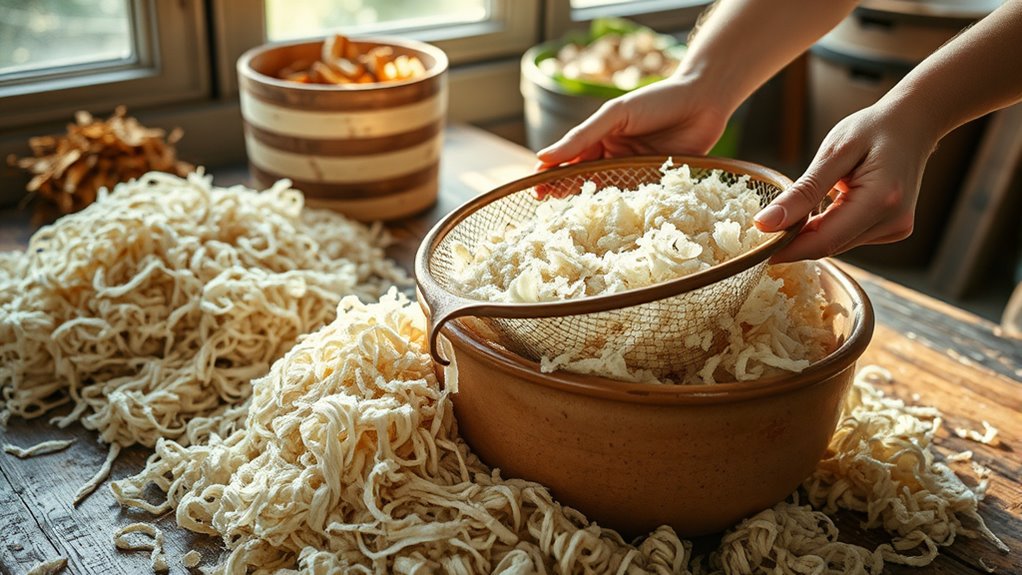

Pulp is the raw material used to make many paper products like newspapers, tissues, and packaging. To be eco-friendly, you can strain recycled pulp, reuse paper items, and compost paper waste to reduce landfill contribution. Recycling and responsible disposal help protect forests and conserve resources. By understanding these practices, you can make smarter choices to support sustainable paper use. Keep exploring to discover simple ways to contribute to a greener environment through pulp management.

Get kitchen staples and gadgets delivered free with Prime
- Fast, free delivery on millions of items
- Prime Video, Amazon Music and more included
- Member-only deals all year
Key Takeaways
- Straining pulp involves filtering or pressing to remove excess liquids, aiding in recycling and waste reduction.
- Reusing pulp can include repurposing waste fibers for paper products or other materials, promoting sustainability.
- Composting pulp transforms organic waste into nutrient-rich soil, reducing landfill waste and supporting eco-friendly practices.
- Recycling pulp minimizes forest resource use, lowers energy consumption, and decreases environmental impact of paper production.
- Sustainable pulp management emphasizes responsible sourcing, recycling, and composting to balance industry needs and environmental protection.

Have you ever wondered what pulp really is and why it’s so essential? Pulp is the raw material used to make countless paper products, from newspapers and packaging to tissues and cardboard boxes. It’s produced through a process called pulp processing, where raw plant fibers—usually wood, bamboo, or recycled paper—are broken down into a slurry. This slurry is then cleaned, refined, and turned into sheets of paper or other cellulose-based products. Understanding pulp processing helps you appreciate the complexity behind everyday items and highlights the importance of pulp sustainability. As demand for paper and packaging grows, so does the need to produce pulp responsibly, ensuring that forests are managed carefully and that waste is minimized. Pulp sustainability is about balancing the needs of production with environmental protection, making sure that forests aren’t overharvested and that ecosystems remain healthy.
When you think about pulp processing, it’s essential to realize that it’s not just about creating paper, but also about doing it efficiently and responsibly. Modern pulp mills incorporate advanced technology to reduce water and energy consumption, lower emissions, and maximize the use of recycled materials. This means that more of the raw materials are reused, and waste is kept to a minimum, aligning with sustainable practices. Reusing pulp and recycled paper helps lessen the strain on forests and reduces the environmental footprint of paper production. It’s a crucial part of pulp sustainability because it demonstrates that you can produce high-quality paper products without depleting natural resources. Recycling also helps save energy and water, making the entire process more eco-friendly.
Additionally, innovations in pulp processing technology are continuously improving the efficiency and sustainability of pulp production, making it easier to meet environmental standards while still fulfilling market demand. As a consumer or someone concerned about the planet, you can also participate in pulp sustainability by choosing recycled paper products and supporting companies that prioritize responsible sourcing. Reuse is another simple yet impactful step—reusing paper items whenever possible or composting paper waste can considerably reduce landfill contributions. When paper is composted, it breaks down naturally, enriching the soil without releasing harmful chemicals. Composting paper is an eco-conscious way to close the loop on pulp use, turning waste into a valuable resource for your garden or community green spaces. Overall, understanding pulp processing and the importance of pulp sustainability empowers you to make more informed choices that benefit the environment and promote responsible resource management. It’s about recognizing that every sheet of paper, every recycled fiber, and every composted piece contributes to a healthier planet.
As an affiliate, we earn on qualifying purchases.
Frequently Asked Questions
Can Pulp Be Used as Animal Feed?
Yes, pulp can be used as animal feed, making it a good alternative for animal nutrition. You might consider incorporating pulp into feed options for livestock, as it provides fiber and nutrients. Using pulp as a feed alternative reduces waste and can lower feeding costs. Just verify you process it properly and check for any additives or contaminants to keep your animals healthy and well-nourished.
Is Pulp Safe to Consume Directly?
You might wonder if pulp is safe to eat directly, and the answer isn’t straightforward. While pulp offers good nutritional value, it can contain residues or bacteria if not properly processed. To guarantee pulp safety guidelines are met, always check for cleanliness and avoid eating pulp from spoiled fruits. If prepared correctly, pulp can be a safe, nutritious addition—just be cautious and follow proper handling tips to prevent any health risks.
How Long Does Pulp Decomposition Take Naturally?
Pulp naturally decomposes within a biodegradation timeline of a few weeks to several months, depending on conditions. If you leave it exposed to air, moisture, and microbes, it’ll decay faster, typically in 4 to 8 weeks. Factors like temperature, humidity, and whether it’s buried or on the surface influence its natural decay rate. Keep in mind, composting accelerates this process substantially.
Are There Environmentally Friendly Pulp Processing Methods?
Think of your choices as planting seeds for a greener future. You can choose eco-friendly pulp processing methods, like biodegradable plastics and eco-friendly bleaching, which act as nurturing rain for our planet. These techniques reduce harmful waste and promote sustainability. By opting for environmentally friendly practices, you help transform pulp into a symbol of hope—showing that innovation and care can coexist beautifully in preserving our environment.
What Are Innovative Uses for Leftover Pulp?
You can turn leftover pulp into eco-friendly products like biodegradable packaging, fiber recycling materials, or natural fiber textiles. By doing so, you help preserve the pulp’s integrity and reduce waste. You might also explore creating paper or compostable items, which promote pulp preservation and sustainability. These innovative uses not only minimize environmental impact but also add value to what would otherwise be discarded, making your practices more eco-conscious and resource-efficient.
Conclusion
By understanding how to strain, reuse, and compost pulp, you can substantially reduce waste and support sustainability. Did you know that recycling paper pulp can save up to 60% of the energy compared to producing new paper? Every small effort counts, and incorporating pulp reuse into your routine makes a real difference. So, next time you handle pulp, remember your impact and take steps to minimize waste—your actions contribute to a greener planet.
Fall Picks
fall essentials
As an affiliate, we earn on qualifying purchases.