
Aseptic cartons keep juice and other beverages safe and fresh on shelves for months by using sterilization and multi-layered packaging that acts as a strong barrier against light, oxygen, and bacteria. The process involves sterilizing both the liquid and the carton separately so microbes and spoilage are eliminated without preservatives. This innovative packaging allows products to stay fresh without refrigeration, helping you understand why shelf-stable juice lasts longer—keep exploring to learn more.
Key Takeaways
- Aseptic cartons use multi-layered materials and sterilization to block light, oxygen, and bacteria, preventing spoilage.
- They undergo sterilization of both the liquid and packaging, ensuring microbial safety without preservatives.
- The aseptic process creates an environment that keeps juice fresh and safe for months without refrigeration.
- Their barrier properties and sterilization extend shelf life while maintaining product quality.
- The lightweight, recyclable design reduces environmental impact and supports long shelf stability.

Have you ever wondered how your favorite juice or milk stays fresh on the shelf without refrigeration? The secret lies in the incredible technology behind aseptic cartons. These packaging solutions are designed to keep beverages safe and fresh without the need for cold storage, which is a game-changer for both consumers and retailers. Aseptic cartons are a prime example of sustainable packaging, as they substantially reduce the environmental impact compared to traditional glass bottles or plastic containers. They use a lightweight, recyclable material that minimizes waste and carbon footprint, making them a popular choice in retail marketing strategies aimed at eco-conscious shoppers.
Aseptic cartons keep beverages fresh safely and sustainably without refrigeration, reducing environmental impact and supporting eco-conscious shoppers.
When you pick up a carton of juice at the store, you’re often holding a product encased in a multi-layered package. This packaging combines paperboard, plastic, and aluminum layers, all working together to create a barrier against light, oxygen, and bacteria. The process involves sterilizing both the liquid and the packaging separately before filling and sealing them in a sterile environment. This process, called aseptic processing, ensures that the beverage remains free from microbes that could cause spoilage. Because the contents are sterilized and sealed in a sterile environment, these cartons can sit on the shelf for months without spoiling, without the need for preservatives or refrigeration. Additionally, the multi-layered packaging enhances the barrier properties, ensuring long shelf life and product integrity.
From a retail marketing perspective, aseptic cartons are a strategic asset. They allow brands to expand their reach into markets where refrigeration infrastructure is limited, such as remote or developing regions. Additionally, they appeal to consumers who prioritize convenience and sustainability. Retailers increasingly highlight the eco-friendly aspects of aseptic packaging, emphasizing its recyclable nature and reduced environmental impact. This aligns with a growing consumer demand for products that are both convenient and environmentally responsible, helping brands position their products as modern, sustainable choices.
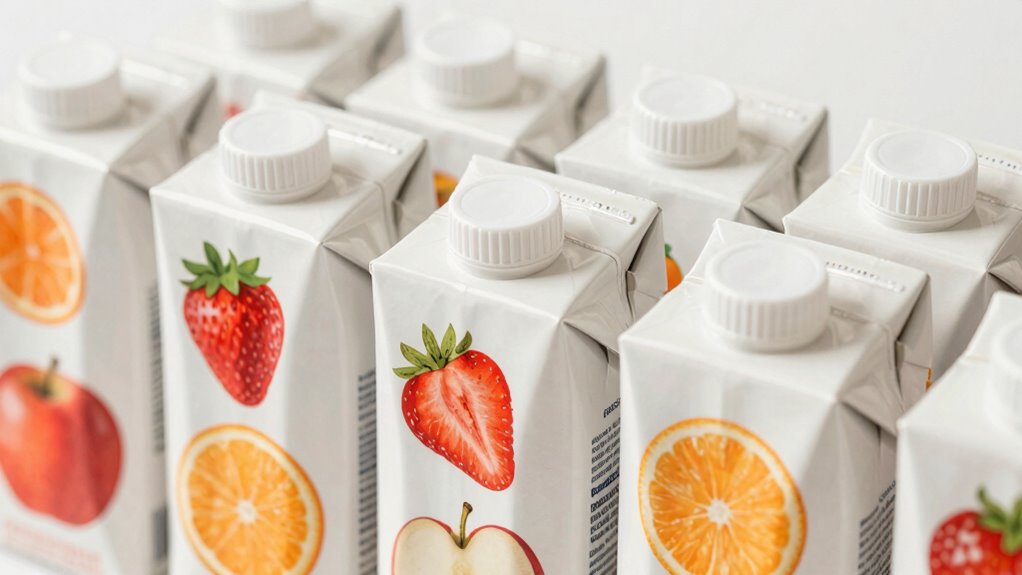
The design of aseptic cartons also plays a role in retail marketing. Bright, attractive packaging with clear labeling helps products stand out on shelves. The portability and convenience of these cartons make them ideal for on-the-go consumption, which appeals to busy consumers. Plus, their lightweight nature reduces shipping costs, making them more economical and eco-friendly for distribution. Overall, aseptic cartons blend technological innovation with sustainable packaging and savvy retail marketing, creating a product that’s both practical and environmentally considerate. This combination keeps your favorite beverages fresh, accessible, and aligned with the values of today’s conscious consumers.
Frequently Asked Questions
How Long Do Aseptic Cartons Typically Last Unopened?
Unopened aseptic cartons typically last anywhere from 6 to 12 months, thanks to their shelf life and packaging integrity. You should check the expiration date on the carton, but as long as the packaging remains intact and sealed, the juice stays safe and fresh. Store it in a cool, dry place, and avoid exposing it to sunlight or temperature fluctuations, which can affect its shelf life.
Are Aseptic Cartons Environmentally Friendly?
Imagine your carton as a tiny ship steering recycling challenges. Aseptic cartons are more eco-friendly than they seem, but their layered structure complicates recycling, impacting the environment. While they reduce food waste and use less energy, their plastic and aluminum components pose environmental impacts. You can help by supporting recycling programs and choosing brands committed to sustainable packaging, making your eco-ship sail smoother through the seas of environmental impact.
Can Aseptic Cartons Be Recycled Everywhere?
Aseptic cartons can’t be recycled everywhere due to recycling challenges and regional regulations. You might find that some recycling facilities lack the technology to process these cartons properly, or regional policies restrict their disposal. To guarantee proper recycling, check your local guidelines and facilities. By staying informed, you help reduce waste and support environmentally responsible disposal, even when aseptic cartons aren’t universally accepted.
Do Aseptic Cartons Contain Preservatives?
Aseptic cartons generally don’t contain preservatives because their packaging safety relies on the sterile environment created during manufacturing. The aseptic process ensures that the juice stays safe and fresh without added chemicals, allowing it to remain shelf-stable. This means your juice stays good longer naturally, reducing the need for preservatives. So, when you choose aseptic cartons, you’re opting for a packaging solution that keeps your beverage safe and preservative-free.
Are There Health Risks Associated With Aseptic Packaging?
There are minimal health risks associated with aseptic packaging when food safety standards and packaging regulations are followed. You can trust that these cartons are designed to prevent contamination and maintain quality without introducing harmful substances. Proper handling and storage are essential to guarantee safety. Always check for proper sealing and expiry dates, and choose reputable brands to minimize any potential health concerns related to aseptic packaging.
Conclusion
Now you know why shelf-stable juice can sit for months without spoiling—thanks to aseptic cartons, which are like the superheroes of food packaging. They keep your favorite drinks fresh and safe, no matter how long they’re stored. It’s almost like they have a secret power to stop time! So next time you grab a juice box, remember, you’re holding a tiny fortress that shields your drink from spoilage, ensuring freshness is never just a fleeting dream.