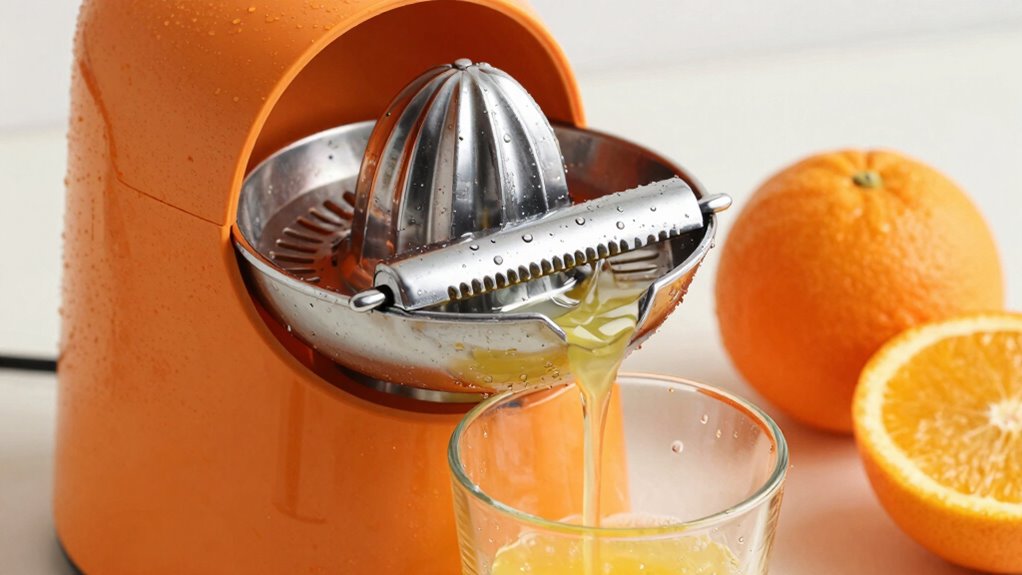
To keep your automatic orange juicer running smoothly, you need to clean it thoroughly after every use. Many forget to disassemble parts like the juicing cone and pulp collector, which can harbor residue, mold, and bacteria. Rinsing with warm water and mild soap is essential, and using a dishwasher-safe cycle is even better. If you skip these steps, residues harden and affect taste and hygiene. Continue exploring to learn the vital daily cleaning routines you might overlook.
Key Takeaways
- Always disassemble and rinse the juicing cone and pulp collector immediately after use to prevent residue buildup.
- Use warm water and mild soap to thoroughly clean filters and crevices where pulp and peel fragments lodge.
- Avoid neglecting cleaning of small or hard-to-reach parts to prevent mold and bacterial growth.
- Regularly check and clean the machine’s exterior and removable parts with appropriate tools for complete sanitation.
- Develop a daily cleaning routine to ensure consistent hygiene, optimal performance, and extended juicer lifespan.
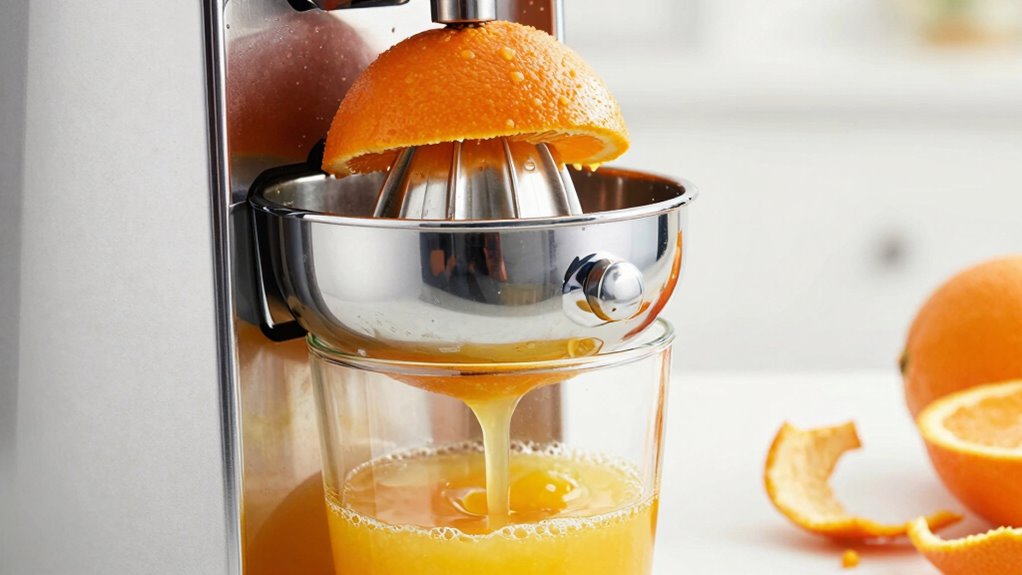
Automatic orange juicers have revolutionized how you enjoy fresh juice at home or in commercial settings. They make the process quick, efficient, and mess-free, but many users overlook the importance of maintaining hygiene to keep the machine functioning at its best. One common issue is the buildup of residues like orange peel and pulp, which can affect both the flavor and the longevity of your juicer. Proper cleaning after each use ensures that these residues are removed, preventing mold and bacterial growth, and preserving the machine’s performance.
Regular cleaning of your orange juicer prevents residue buildup, mold, and bacterial growth to keep it functioning at its best.
When you’re juicing oranges, the automatic juicer handles the extraction of juice while separating the pulp from the liquid. Pulp separation is a key feature that allows you to enjoy smoother juice or a more textured drink, depending on your preference. However, this process leaves behind bits of orange peel and pulp inside the machine’s components. If you neglect cleaning these parts, they can harden and become difficult to remove, increasing the risk of cross-contamination in future uses. Regular cleaning isn’t just about hygiene; it also ensures that the pulp separation mechanism continues to work smoothly, preventing clogs that could impair juice extraction.
To keep your automatic orange juicer in top shape, it’s essential to disassemble and clean the removable parts after each use. Pay close attention to the juicing cone, pulp collector, and any filters used for pulp separation. Rinsing these components with warm water and mild soap is often sufficient, but for more thorough sanitation, you might want to run them through a dishwasher if compatible. Be sure to clear out any lingering orange peel fragments, as these can sometimes get lodged in crevices, leading to mold or bacterial growth if left untouched. Additionally, using proper cleaning techniques can help ensure that all residues are effectively removed and the machine remains hygienic over time.
Additionally, wiping down the exterior of your juicer helps prevent sticky residue buildup from orange oils and pulp particles. Many models have a dedicated cleaning cycle, which can be used periodically to flush out any hidden residues. Remember, the key to maintaining a hygienic and efficient automatic orange juicer is consistency; develop a routine of cleaning immediately after each use rather than letting residues sit and harden over time.
Frequently Asked Questions
How Often Should I Replace the Juicer’s Filters?
You should replace the juicer’s filters every 3 to 6 months, depending on your cleaning schedule and usage. Regular filter replacement guarantees peak performance and prevents buildup. Make sure to follow the manufacturer’s guidelines for cleaning and replacing filters, especially if you notice a decline in juice quality or flow. Staying consistent with your filter replacement and cleaning schedule keeps your juicer functioning smoothly and your juice tasting fresh.
Can Automatic Orange Juicers Handle Other Citrus Fruits?
Yes, automatic orange juicers can handle other citrus fruits like grapefruits, lemons, and limes. They’re designed for fruit variety compatibility, so you can enjoy a range of citrus options. Just make sure to adjust the settings if needed and remove seeds to prevent clogging. Using different citrus fruits broadens your juice options and keeps your juicer functioning smoothly, making your morning routine more versatile.
What’s the Best Way to Clean Hard-To-Reach Parts?
Think of your juicer’s hard-to-reach parts as secret gardens needing care. To clean them effectively, use small cleaning brushes to reach tight spots, gently scrubbing away residue buildup. This prevents mold and keeps your juicer functioning smoothly. Regularly cleaning these areas ensures every squeeze delivers fresh juice, and your appliance stays hygienic and long-lasting. Remember, consistent care turns a neglected garden into a thriving oasis.
Are There Safety Features to Prevent Accidental Operation?
Yes, many automatic orange juicers have safety features like safety sensors that detect when the lid isn’t properly closed, preventing accidental operation. Additionally, an emergency stop button is often included, allowing you to quickly halt the machine if needed. These safety features help safeguard you from injury and guarantee the machine operates only when it’s safe, giving you peace of mind during use.
How Do I Troubleshoot Common Juicer Malfunctions?
To troubleshoot common juicer malfunctions, first consult your user manual for specific guidance. Check if the juicer is properly assembled and plugged in. Clear any blockages or pulp buildup. If the problem persists, verify if your warranty coverage still applies and contact customer service for repairs or replacements. Regular maintenance, like cleaning and inspecting parts, helps prevent issues and keeps your juicer working smoothly.
Conclusion
Don’t underestimate the power of your daily hygiene routine—skipping those small steps with your orange juicer could turn your kitchen into a germ sanctuary overnight. If you think a quick wipe or rinse doesn’t matter, think again; it’s like leaving the door open for bacteria to invade your space. Remember, a spotless juicer isn’t just about cleanliness—it’s about protecting your health from unseen invaders lurking in every nook. Stay vigilant, stay healthy!