

To make a balanced breakfast with juice, start with a serving of whole grains like toast or oatmeal to provide lasting energy. Add a protein source such as eggs or yogurt, and include a variety of fruits and vegetables in a smoothie or fresh juice to boost vitamins and fiber. Incorporate healthy fats with nuts or seeds if desired. Combining these elements guarantees you get a nutritious, energizing start—you’ll discover more tips as you continue exploring.
Key Takeaways
- Include a variety of food groups like proteins, whole grains, fruits, and vegetables for a well-rounded meal.
- Add freshly made juice or smoothies to boost flavor, nutrients, and hydration.
- Personalize smoothies with berries, spinach, and bananas for tailored nutrition.
- Store juices properly in airtight containers and consume within 24-48 hours for maximum freshness.
- Balance juice with proteins and whole grains to sustain energy and promote fullness throughout the morning.
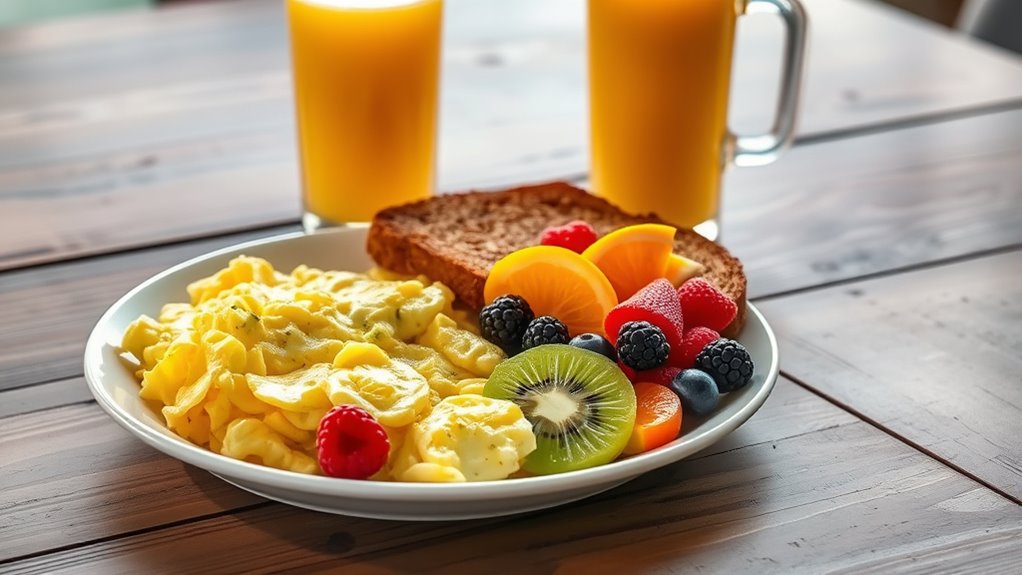
A balanced breakfast sets the tone for a productive day, and incorporating juice can add both flavor and nutritional value. When you craft your morning meal, consider including a invigorating smoothie or freshly made juice to boost your energy levels and keep you full longer. Smoothie recipes are versatile and easy to customize; blend together fruits, vegetables, and a splash of liquid like water, milk, or yogurt. Think berries, spinach, banana, and a bit of honey for a sweet, nutrient-packed drink. These smoothies serve as a perfect complement to your meal, providing essential vitamins, fiber, and antioxidants. Plus, they’re quick to prepare, making them ideal for busy mornings. Incorporating freshly made juice that utilizes effective filtration methods can help ensure you’re getting the maximum health benefits from your drinks.
To keep your smoothies and juices tasting their best, mastering juice storage tips is key. Freshly made juice can lose its flavor and nutritional content if left out too long, so store it properly. Use airtight containers, preferably glass bottles or jars, to minimize oxidation and preserve freshness. Fill the container to the brim, leaving as little air as possible to slow down nutrient degradation. Keep your juice refrigerated and consume it within 24 to 48 hours for energetic flavor and health benefits. If you want to prepare juice in advance, consider freezing smaller portions. Frozen juice is convenient and retains most of its nutrients, but always thaw it in the fridge before drinking to maintain its quality.
In addition to smoothies and fresh juice, think about incorporating a variety of liquids into your breakfast. For example, a glass of fresh orange juice or a homemade vegetable blend can provide a zesty, nutritious start. Combining different juice types not only enhances flavor but also maximizes health benefits, such as improved immune function or digestive health. When planning your breakfast, balance your juice intake with proteins and whole grains. A balanced meal could include scrambled eggs, whole-grain toast, and a glass of fresh juice or smoothie, ensuring you get a mix of macronutrients and micronutrients to fuel your day.
Frequently Asked Questions
Can Juice Replace Whole Fruits in Breakfast?
Juice can’t fully replace whole fruits in breakfast because it lacks fruit fiber, which is essential for digestion and feeling full. While juice offers some nutrients, it often doesn’t provide the same nutrient density as whole fruits. Eating whole fruits helps you get the fiber and slower sugar release, making your breakfast more balanced and satisfying. So, enjoy juice, but don’t skip the whole fruits for a healthier start.
What Are Healthy Juice Options for Breakfast?
You should choose healthy juice options like freshly squeezed orange, apple, or vegetable blends. These juices retain more nutrients and offer better nutrient retention, supporting your health. To enhance flavor, add a touch of ginger or mint, making your breakfast more enjoyable. Opt for juices with minimal added sugars, and combine them with protein or fiber-rich foods to keep your breakfast balanced and satisfying.
How Much Juice Is Recommended Daily?
You should aim for a daily intake of about 4 to 6 ounces of juice, which is roughly one small glass. Keep portion size in check to avoid excess sugar and calories. Drinking juice in moderation helps you enjoy its nutrients without overdoing added sugars. Focus on balancing it with other healthy breakfast options like protein and fiber to start your day well.
Should I Add Sugar to My Breakfast Juice?
Think of your breakfast juice as a symphony of natural sweetness—adding sugar is like turning up the volume too loud. You should avoid adding extra sugar, practicing sugar moderation to keep the harmony balanced. Instead, let the fruit’s natural sweetness shine through, nourishing your body without unnecessary extras. Your goal is a vibrant, revitalizing start that energizes you without tipping the scales of health.
How Can I Make Juice More Filling?
To make your juice more filling, add fiber and protein. You can blend in a scoop of chia seeds, flaxseeds, or oats for extra fiber, helping you stay full longer. Incorporate protein by mixing in Greek yogurt, a splash of milk, or a scoop of protein powder. These additions boost satiety, provide sustained energy, and make your juice a more satisfying part of a balanced breakfast.
Conclusion
So, next time you’re tempted to skip the carbs or protein, just remember—adding a glass of juice makes everything perfectly balanced. Who needs eggs or toast when you’ve got sweet, vitamin-packed liquid happiness? Just don’t forget, a truly balanced breakfast isn’t complete without a little humor—and maybe some actual food, too. Because, after all, no amount of juice can replace the satisfaction of a real, hearty meal. Cheers to your “balanced” mornings!

Cindy thoroughly researches juicing trends, techniques, and recipes to provide readers with practical advice and inspiration. Her writing style is accessible, engaging, and designed to make complex concepts easy to understand. Cindy’s dedication to promoting the advantages of juicing shines through her work, empowering readers to make positive changes in their lives through the simple act of juicing.