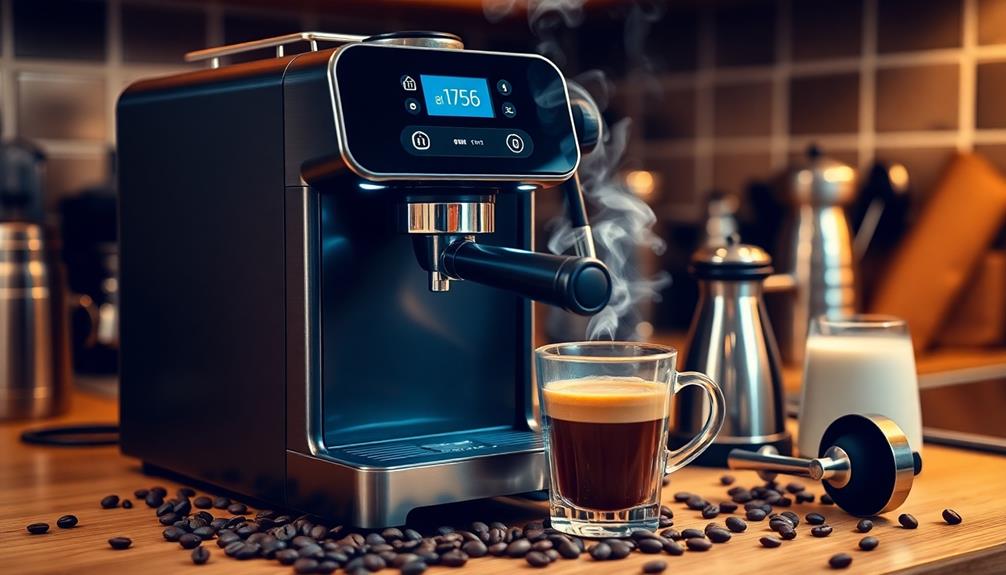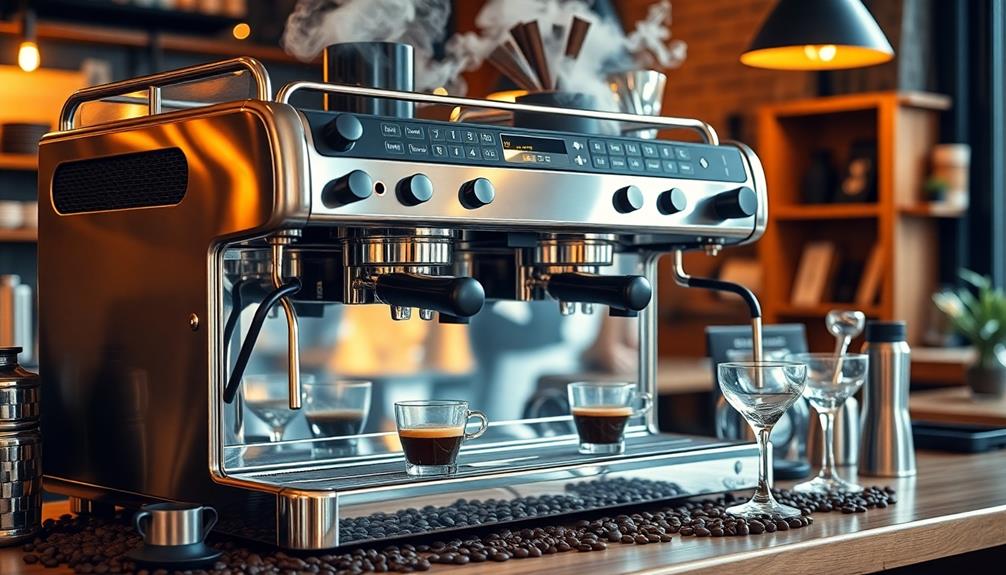

Choosing a commercial espresso machine comes down to three questions: how many drinks you make per hour, how skilled (or how new) your baristas are, and whether your space has the plumbing and power a true commercial unit demands. In this roundup I compare three machines that answer those questions very differently. My top pick, the Nuova Simonelli Appia Life 2 Group, earns the Best Overall spot for its volumetric dosing and barista-friendly ergonomics that keep shot quality consistent across a rotating staff. The Commercial Semi-Automatic 2-Group takes Best Value for operators who want dual-group throughput without paying for automation. And the Nuova Simonelli Oscar II is my pick for low-volume settings — a pour-over machine that brings commercial boiler architecture to spaces where a plumbed-in unit simply isn’t practical.

Get kitchen staples and gadgets delivered free with Prime
- Fast, free delivery on millions of items
- Prime Video, Amazon Music and more included
- Member-only deals all year
The core tradeoff in this lineup is automation versus control: volumetric machines trade away hands-on shot management in exchange for consistency, while semi-automatics demand more skill from your staff but give experienced baristas room to dial in. Below I break down who each machine is really for, and who should walk away.
Complete the kit


Key Takeaways
- The Appia Life 2 Group is the strongest pick for busy cafes because volumetric dosing keeps shots consistent even with new or rotating baristas.
- The Commercial Semi-Automatic 2-Group delivers dual-group throughput and a large 1.6-gallon boiler at a lower complexity level — but it requires skilled staff to manage extraction manually.
- The Oscar II is the only pour-over option here: it runs on a standard 110V outlet with no plumbing, making it the practical choice for offices, food trucks, and small bistros.
- Only the Appia Life offers automated backflushing and volumetric programming; the semi-automatic model shifts cleaning and dosing work entirely onto your team.
- Plumbing and power requirements separate these machines sharply: the Appia Life and semi-automatic 2-group need 220-240V plus a water line and drain, while the Oscar II needs neither.
| Nuova Simonelli Appia Life Auto Volumetric 2 Group Espresso Machine |  | Best Overall | Groups: 2 | Operation: Volumetric (automatic) with 4 programmable doses per group | Steam System: Push-pull lever with cool-touch wand | VIEW ON AMAZON | See Our Full Breakdown |
| Commercial Semi-Automatic 2-Group Espresso Machine with 1.6-Gallon Boiler and Rotary Pump |  | Best Value | Groups: 2 | Boiler Capacity: 1.6 gallons | Pump Type: Rotary | VIEW ON AMAZON | See Our Full Breakdown |
| Nuova Simonelli Oscar II Semi-Automatic Espresso Machine |  | Best Compact Pick | Machine Type: Semi-automatic, single group | Boiler: 2 L copper heat-exchange | Water Source: 3 L pour-over tank | VIEW ON AMAZON | See Our Full Breakdown |
| commercial espresso machine | Groups | Operation | Power |
|---|---|---|---|
| Nuova Simonelli Appia Life Aut | 2 | Volumetric (automatic) with 4 programmable doses per group | 3,400 W, 220-240V |
| Commercial Semi-Automatic 2-Gr | 2 | Semi-automatic | — |
| Nuova Simonelli Oscar II Semi- | — | — | 1,200 W, 110V |
More Details on Our Top Picks
Nuova Simonelli Appia Life Auto Volumetric 2 Group Espresso Machine
The Appia Life 2 Group sits at the top of my list because it solves the problem that quietly kills most cafes: inconsistency between baristas. Its volumetric dosing lets you program four shot volumes per group — single, double, short, long — and every staff member then pulls the same shot with one touch. Compared with the semi-automatic 2-group below, which leaves extraction timing entirely in the barista’s hands, the Appia Life removes the single largest variable in drink quality, which matters enormously when your weekend shift includes someone hired two weeks ago.
The ergonomics here are also a class above both alternatives. The push-pull steam system locks down for continuous steaming instead of forcing a wrist rotation, and the cool-touch wand reduces burn risk during a rushed service. The raised group heads fit large to-go cups without a scrape-and-tilt maneuver, and the reverse mirror on the back panel lets the barista watch extraction from a bottomless portafilter without bending over the drip tray. Over a ten-hour shift, those small reductions in physical strain compound into fewer repetitive-strain complaints and faster drink output.
Maintenance is where this machine pulls furthest ahead of the semi-automatic pick: automated backflushing turns the most-hated nightly cleaning task into a button press, which means it actually gets done correctly. The tradeoffs are real, though. This is a plumbed, 240V machine requiring a cold water connection, a drain, and a water softener to keep the warranty intact — a genuine installation project, not an unboxing. And if your head barista wants hands-on control over every extraction for a pour-over-style menu, the volumetric system trades that control away on purpose.
Pros:- Programmable volumetric dosing delivers one-touch shot consistency across all staff
- Push-pull steam lever and cool-touch wand reduce barista strain and burn risk
- Automated backflushing simplifies daily cleaning and protects long-term hygiene
- Solid steel frame with stainless and brass components built for years of commercial service
Cons:- Requires 240V power, a plumbed cold water line, a drain, and a water softener for warranty coverage
- Volumetric automation limits hands-on shot control for technique-focused baristas
- Professional installation and barista training add cost beyond the machine itself
Best for: Busy cafes, restaurants, and hotels with rotating or less-experienced staff who need shot consistency at high volume.
Not ideal for: Locations without 240V power, a water line, and a drain — or single operators who want manual control over every shot.
- Groups:2
- Operation:Volumetric (automatic) with 4 programmable doses per group
- Steam System:Push-pull lever with cool-touch wand
- Power:3,400 W, 220-240V
- Construction:Steel frame, stainless steel and ABS panels, chrome-plated brass portafilters
- Maintenance:Automated backflushing; pressure gauges for pump and steam
- Installation:Plumbed cold water connection and drain required; water softener required for warranty
- Warranty:2 years
- Origin:Made in Italy
Our verdict“The most complete high-volume machine in this lineup — consistent, ergonomic, and easy to maintain, provided your space can support its plumbing and power needs.”
Commercial Semi-Automatic 2-Group Espresso Machine with 1.6-Gallon Boiler and Rotary Pump
This semi-automatic 2-group machine makes my list as the value play for operators who already employ skilled baristas. It matches the Appia Life on the fundamentals that drive throughput — two groups for simultaneous shots, a 1.6-gallon boiler, and a rotary pump that runs quieter and lasts longer than vibratory pumps — while skipping the expensive volumetric electronics. If your staff can time an extraction by eye and feel, you’re paying for capability, not automation you don’t need.
That large boiler deserves attention on its own. Compared with the Oscar II’s 2-liter heat-exchange system, this machine’s reservoir gives it serious steam endurance during back-to-back milk-drink orders, and the rotary pump keeps pressure steady when both groups are running at once. The stainless body wipes down quickly, which matters for health inspections and end-of-shift cleanup alike.
The honest tradeoff is control — and workload. Semi-automatic operation means every shot depends on the barista stopping the extraction manually, so drink quality lives and dies with your training program; the Appia Life exists precisely to remove that variable. You also give up its automated backflushing, so group cleaning becomes a fully manual daily routine. Factor in the footprint: this is a heavy, counter-dominating machine that needs dedicated space, proper ventilation, and likely professional installation, so it’s a poor fit for a home kitchen despite its appeal to espresso hobbyists.
Pros:- Dual groups support simultaneous brewing for high-demand service
- Large 1.6-gallon boiler with rotary pump delivers stable heat and continuous steaming
- Durable stainless steel body is easy to clean and inspection-friendly
- Semi-automatic controls give skilled baristas precision over extraction
Cons:- Manual dosing makes shot quality dependent on barista skill and training
- Large footprint and heavy build demand dedicated counter space
- No automated backflushing — cleaning is fully manual
Best for: Cafes and restaurants with trained baristas who want dual-group capacity and steam endurance at a lower equipment cost.
Not ideal for: Businesses relying on new or rotating staff, and anyone without the counter space or expertise for a manual commercial machine.
- Groups:2
- Boiler Capacity:1.6 gallons
- Pump Type:Rotary
- Operation:Semi-automatic
- Material:Stainless steel
- Intended Use:Commercial — cafes and restaurants
Our verdict“The smart choice for teams with experienced baristas who can convert its manual controls into excellent coffee without paying for automation.”
Nuova Simonelli Oscar II Semi-Automatic Espresso Machine
The Oscar II takes a completely different position in this lineup: it’s the machine for spaces that want espresso capability without a commercial installation project. Running on a standard 110V outlet and a 3-liter pour-over tank, it needs no water line and no drain — the only machine here you can genuinely place in an office break room, a small bistro, or a catering setup. That flexibility is why it beats both 2-group machines for low-volume contexts, despite being far less powerful on paper.
What elevates the Oscar II above typical compact machines is its 2-liter copper heat-exchange boiler — genuine commercial architecture that lets you brew and steam at the same time, something entry-level home machines can’t do. Timed dosing with a soft-touch keypad adds a layer of shot consistency that narrows the gap with the Appia Life’s volumetric system, though with fewer programmable doses and no automation of the steam side, where the single manual wand demands real technique.
The limitations are worth stating plainly. With one group, 1,200 watts, and a manual steam wand, it cannot keep pace with a rush the way either 2-group machine can — this is a five-drinks-at-a-time machine, not a fifty. There’s no hot water nozzle for Americanos or tea, and no built-in grinder, so budget for a separate quality grinder since grinder choice will shape your shots more than anything else. Compared directly with the Appia Life, you give up volumetric flexibility, backflushing automation, and steam power; what you gain is the ability to put professional espresso anywhere there’s an outlet.
Pros:- Professional copper heat-exchange boiler brews and steams simultaneously
- Pour-over tank and 110V operation require no plumbing or special wiring
- Timed dosing with soft-touch keypad supports consistent shots
- Stainless and copper construction at a compact, 29 lb footprint
Cons:- Single group and one manual steam wand cap throughput severely
- No built-in grinder and no hot water nozzle
- Frequent tank refills needed under sustained use
Best for: Small offices, cafes with light espresso volume, food trucks, and serious home users who want commercial boiler performance without plumbing.
Not ideal for: High-volume businesses — a single group, manual steaming, and a 3 L tank won’t survive a morning rush.
- Machine Type:Semi-automatic, single group
- Boiler:2 L copper heat-exchange
- Water Source:3 L pour-over tank
- Steam Wand:1, manual
- Controls:Keypad / soft-touch timed dosing
- Power:1,200 W, 110V
- Weight:29 lbs
- Dimensions (H x W x D):15 3/4″ x 11 13/16″ x 16 1/16″
Our verdict“The right machine where installation constraints rule out true commercial units — commercial boiler performance in a plug-in package.”

How We Picked
I evaluated these three machines against the criteria that actually decide a commercial purchase: throughput, workflow, durability, maintenance burden, and installation requirements. Throughput isn’t just about group heads — boiler capacity and recovery time determine whether a machine survives a morning rush, so I weighed the Appia Life’s factory-programmable volumetric dosing against the semi-automatic’s 1.6-gallon boiler and the Oscar II’s 2-liter heat-exchange system.
Workflow mattered just as much as raw specs. A machine that reduces stress on the barista — through push-pull steam levers, cool-touch wands, or raised groups — pays dividends every hour of service, so I compared the ergonomic details rather than just counting features. I also factored in what each machine demands from your building: a 240V circuit with a plumbed water line and drain is a real cost and constraint that a pour-over tank eliminates entirely. Finally, I favored machines built on steel frames with copper or brass components, since component quality drives longevity far more than exterior finish. No single machine wins every category, and I’ve been explicit about where each one falls short.
| commercial espresso machine | Operation |
|---|---|
| Nuova Simonelli Appia Life Aut | Volumetric (automatic) with 4 programmable doses per group |
| Commercial Semi-Automatic 2-Gr | Semi-automatic |
| Nuova Simonelli Oscar II Semi- | — |
Factors to Consider When Choosing Commercial Espresso Machine
Before committing to any machine in this lineup, I’d walk through five decisions that determine whether a commercial espresso machine fits your business — or becomes an expensive regret.Volumetric vs. Semi-Automatic
This is the single biggest fork in the road. Volumetric machines like the Appia Life program shot volumes once, then reproduce them with one button press — ideal when multiple staff members of varying skill levels work the bar. Semi-automatic machines require the barista to start and stop each extraction manually, giving trained hands finer control but making shot quality hostage to whoever’s behind the counter. If you hire frequently or run weekend-only staff, automation pays for itself in waste reduction alone.
Boiler Capacity and Recovery
Boiler size determines how long you can steam and brew continuously before temperatures sag during a rush. The semi-automatic’s 1.6-gallon boiler gives it the deepest steam reserves here; the Oscar II’s 2-liter heat-exchange boiler is impressive for its size but will show strain under sustained demand. Match boiler capacity to your peak hour, not your average hour — a machine that’s adequate at 10 AM and falls apart at 8 AM loses you the customers who matter most.
Plumbing, Power, and Installation
True commercial machines need a dedicated 220-240V circuit, a cold water line, and a floor drain, plus a water softener to protect the boiler and often the warranty itself. Those installation costs can rival a significant fraction of the machine’s price and should be quoted before purchase, not after. If your space can’t accommodate that infrastructure — or your lease won’t allow it — a pour-over tank machine like the Oscar II is not a compromise, it’s the only realistic option.
Group Count and Physical Footprint
A second group head lets two baristas work side by side or one barista pull parallel shots, but it also means more width, more weight, and more counter space consumed permanently. Single-group machines like the Oscar II fit a 12-inch footprint and can live on a standard counter. Measure your bar space including the grinder, knock box, and milk station before choosing — an oversized machine that forces a cramped workflow costs you speed every single service.
Maintenance and Daily Workflow
Cleaning is where machines differentiate themselves daily. Automated backflushing on the Appia Life turns group cleaning into a routine button press; manual machines make it a nightly time investment that gets skipped when staff are tired, and skipped cleaning shortens machine life and degrades flavor. Cool-touch steam wands, wipe-clean stainless panels, and pressure gauges that surface problems early all reduce the hidden labor cost of ownership.
Frequently Asked Questions
Can I use a commercial espresso machine at home?
Technically the Oscar II is the only machine in this lineup designed to work in a home environment, because it runs on standard 110V power and uses a pour-over tank rather than a plumbed line. The Appia Life and the semi-automatic 2-group both require 220-240V circuits, a water connection, and a drain, which most residential kitchens simply don’t have — and retrofitting them is rarely worth the cost for home volumes. Even setting aside power, a 2-group commercial machine is physically enormous and heavy for a domestic counter. If you love the commercial boiler architecture, the Oscar II delivers it in a home-compatible package.
What’s the difference between volumetric and semi-automatic operation?
Volumetric operation means the machine measures and stops the shot automatically: you program the desired water volume once, and every press of the button dispenses exactly that amount. This makes shots repeatable regardless of who’s working, which is why the Appia Life suits businesses with rotating staff. Semi-automatic operation means the machine runs the pump when you tell it to and keeps running until you stop it, so the barista must time each extraction by sight and experience. Skilled baristas often prefer this control because they can adjust on the fly for fresh beans or humidity changes, but the approach demands training and consistency from every person on the schedule.
Do commercial espresso machines require a water softener?
In most cases, yes — and with the Appia Life, a water softener is explicitly required to maintain the warranty. Hard water deposits scale inside the boiler and group heads, which degrades temperature stability, clogs valves, and eventually causes expensive failures that manufacturers classify as owner neglect rather than defects. Even where it isn’t contractually mandated, as with the semi-automatic 2-group, running untreated hard water through a large commercial boiler shortens its lifespan dramatically. I’d budget for water treatment from day one and treat it as part of the machine’s operating cost, not an optional accessory.
How many drinks per hour can each of these machines handle?
The Appia Life’s two volumetric groups make it the throughput leader here — capable of sustained production for a busy cafe morning with consistent, repeatable shots. The semi-automatic 2-group can produce similar volumes thanks to its 1.6-gallon boiler, but only in the hands of experienced baristas who can manage manual extraction at speed. The Oscar II is in a different category: its single group, manual steam wand, and 3-liter tank make it comfortable for roughly light office or small-bistro demand, and it will bottleneck badly during any real rush. Matching the machine to your peak hour is the honest way to make this decision.
Do I need a separate grinder with a commercial espresso machine?
Yes — none of these three machines includes a grinder, and a commercial espresso setup is always a two-part purchase. In fact, the grinder arguably matters more than the machine for flavor quality: inconsistent particle sizes produce uneven extraction that no boiler or volumetric system can fix. For a commercial environment I’d recommend a dedicated espresso grinder with stepped dosing positioned beside the machine, sized to your volume, and refreshed regularly. Budgeting for a quality grinder alongside the machine avoids the common mistake of pairing an excellent machine with an inadequate grinder and wondering why the coffee disappoints.
Conclusion
After comparing all three, my recommendations split cleanly by buyer type. Busy cafes and restaurants with rotating staff should choose the Nuova Simonelli Appia Life 2 Group: its volumetric dosing, push-pull steam, and automated backflushing deliver the consistency and maintainability that high-volume service demands, provided you can support its plumbing and 240V requirements. Operators with an experienced, stable barista team get more value from the Commercial Semi-Automatic 2-Group, which matches the dual-group throughput and adds a 1.6-gallon boiler while skipping the premium for automation you may not need. And for offices, small bistros, food trucks, or anyone without a water line and dedicated circuit, the Nuova Simonelli Oscar II is the clear call — its copper heat-exchange boiler brings genuine commercial performance to any space with a standard outlet. Whatever you choose, remember that the machine is only half the equation: water treatment, a quality grinder, and staff training determine whether your investment actually shows up in the cup.
Fall Picks
fall essentials
As an affiliate, we earn on qualifying purchases.