
A commercial juicer machine needs to match your menu and service volume; the label alone does not show whether it can handle sustained work. My best overall pick is the Nama J2 for hands-free feeding, while the Breville Juice Fountain Plus suits buyers who prioritize faster centrifugal extraction. For larger batches with less ingredient prep, the EanOruus 3-in-1 models stand out for their wide chutes and large hoppers. The main tradeoff is speed versus juice style, cleanup, and the machine’s stated capacity. Read on for the full comparison and guidance on choosing a model that fits your actual service needs.

Get kitchen staples and gadgets delivered free with Prime
- Fast, free delivery on millions of items
- Prime Video, Amazon Music and more included
- Member-only deals all year
Complete the kit


Key Takeaways
- The Nama J2 earns the overall lead for its self-feeding design, which can reduce hands-on loading during routine juicing; its cold press approach is not the speed-first choice.
- Wide chutes and large hoppers recur across several cold press picks, including Canoly and EanOruus, but they do not establish how long a machine can run continuously.
- The Breville Juice Fountain Plus represents the centrifugal route: buyers seeking faster extraction should weigh that against the different operating and juice characteristics of masticating models.
- Three 370W stainless steel extractor listings share a similar stated power rating; the listing details alone do not distinguish their sustained-duty capacity or service support.
- The Garveetech manual sugar cane press has a narrow specialty role, while the 2-in-1 and 3-in-1 cold press models offer broader ingredient uses.




More Details on Our Top Picks
Nama J2 Cold Press Juicer – Self-Feeding, Hands-Free Operation, Wide Mouth Hopper, Zero Waste Masticating Juicer
The Nama J2 is the strongest fit here for buyers who want to load a juice recipe and spend less time feeding produce piece by piece. Its self-feeding hopper and 50 RPM masticating action suit steady home batch prep, while the listed 15-year warranty is longer than the Canoly C16’s one-year coverage. That makes it a more reassuring long-term home choice, though the C16 offers sorbet and nut-milk strainers that the Nama’s listed setup does not. The tradeoff is pace: this is a cold-press machine, so it lacks the Breville Juice Fountain Plus’s fast centrifugal approach. Its larger footprint and limited juicing method also make it a poor match for buyers who need a compact, multi-purpose commercial station.
Pros:- Self-feeding hopper reduces hands-on loading during batch prep
- 50 RPM masticating operation is suited to slower cold-press extraction
- Listed 15-year warranty is longer than the Canoly C16’s one-year warranty
- Includes juice and pulp containers, strainers, auger, and spinning brush
Cons:- Cold-press juicing only, with no listed sorbet or nut-milk function
- Bulkier size may be difficult to accommodate in small kitchens
- Slower operation is less suited to fast commercial service than the Breville centrifugal model
Best for: Home juice makers who prepare full recipes in batches and value hands-free feeding and a long listed warranty
Not ideal for: Cafes that need rapid service, or buyers seeking sorbet and nut-milk functions in the same machine
- Power:200 W
- Speed:50 RPM
- Juicing type:Masticating cold press
- Feeding:Self-feeding hopper
- Warranty:15 years
- Included components:Power cord, chamber hopper, hopper lid, spinning brush, auger, juice containers, pulp container, strainers, pusher
Our verdict“Choose the Nama J2 for hands-free cold-press batch prep and long listed warranty coverage, provided its size and single-purpose design fit your kitchen.”
Canoly C16 Cold Press Juicer with 6-Inch Wide Feed Chute and 3-in-1 Strainers – Space Gray
The Canoly C16 earns its place through flexibility: its three strainers support juice, sorbet, and nut milk, giving it more uses than the single-purpose Nama J2. A six-inch chute and 90-ounce hopper also favor family batches and meal prep by reducing produce cutting and repeat loading. For a buyer choosing among cold-press options, that combination is more useful than the Breville Juice Fountain Plus’s faster but juice-only centrifugal setup. The limits matter, though: the listed warranty is just one year, far shorter than the Nama’s 15 years, and the large hopper can take up substantial kitchen space. I’d favor it for households that will use its extra functions; a cafe focused on quick juice orders may get more value from a faster machine.
Pros:- Three strainers support juice, sorbet, and nut milk
- Six-inch feed chute accommodates whole fruits and reduces cutting
- 90-ounce hopper supports larger batches before reloading
- Parts are described as BPA-free and dishwasher safe
Cons:- One-year limited warranty is much shorter than the Nama J2’s listed 15 years
- Large hopper and body may crowd a small kitchen
- Cold-press workflow is less suited to fast service than the Breville centrifugal juicer
Best for: Families and meal preppers who want large cold-press batches plus options for sorbet and nut milk
Not ideal for: Small-kitchen users or commercial operators who prioritize a compact setup, long warranty, or rapid juice service
- Model:C16
- Feed chute:6 inches
- Hopper capacity:90 oz
- Functions:Juice, sorbet, nut milk
- Recommended uses:Apple, beetroot, carrot, celery, nut milk, watermelon
- Warranty:1-year limited warranty
- Included components:3-in-1 strainers, cup, juicer, pusher, single-auger masticating juicer
Our verdict“Pick the Canoly C16 if your household will use its large hopper and three functions, and can accommodate its footprint and short warranty.”
Breville Juice Fountain Plus JE98XL, Silver
For buyers who put speed ahead of cold-press versatility, the Breville Juice Fountain Plus is the clearest choice in this group. Its 850-watt centrifugal motor and two speeds are built for quick juice extraction, while the three-inch chute accepts many whole fruits and vegetables. That makes it better suited to a rush of individual drinks than the slower Nama J2, which is designed for cold-press batch prep. The Breville also includes a 35.2-fluid-ounce juice jug and a 2.6-quart pulp container, so it has defined collection capacity for a home station. Its tradeoffs are noise and upkeep: the filter basket may need frequent cleaning, and it only extracts juice, unlike the Canoly C16’s sorbet and nut-milk setup. Its listed residential use also makes it a less direct fit for sustained commercial workloads.
Pros:- 850-watt motor and dual speeds support quick juicing of soft and hard produce
- Three-inch chute reduces the need to cut many fruits and vegetables
- Juice jug and pulp container provide specified collection capacities
- Built-in froth separator helps separate froth from collected juice
Cons:- Centrifugal operation is relatively noisy
- Filter basket may need frequent cleaning
- Juice-only function offers less versatility than the Canoly C16
- Listed recommended use is residential, not commercial
Best for: Home juice enthusiasts who want quick extraction from whole produce and have room for a countertop juicer
Not ideal for: Cold-press buyers, quiet-workspace operators, or businesses needing documented commercial-duty use
- Model:JE98XL
- Juicing type:Centrifugal
- Power:850 W
- Voltage:110–120 V
- Feed chute:3 inches
- Juice jug capacity:35.2 fl oz
- Pulp container capacity:2.6 qt
- Warranty:1-year limited warranty
- Recommended use:Residential
Our verdict“Choose the Breville for quick home juice extraction, but look elsewhere if you need cold pressing, quieter operation, or a commercial-use specification.”
Commercial Heavy Duty Juicer Machine, 110V 370W Electric Juicer, Fruit and Vegetables Automatic Juice Extractor, Stainless Steel Centrifugal Juicer
This 370-watt stainless steel centrifugal juicer is the most explicitly commercial-positioned option in this batch, with automatic pulp separation and a listed 2,800 RPM speed. Those details point toward a straightforward extraction workflow for a small restaurant or cafe, unlike the residential-use Breville Juice Fountain Plus. The stated 75% juice yield may also appeal to operators tracking produce use, although the product data does not explain how that figure was measured. Compared with the Nama J2, this model favors a faster centrifugal format over slow masticating cold press. The tradeoff is sparse practical detail: there is no listed warranty, capacity, cleaning process, or accessory set. I’d shortlist it only if the commercial-style format matters more than verified operating and maintenance specifics.
Pros:- Commercial positioning and stainless steel construction suit a work-oriented setup
- Listed 2,800 RPM speed indicates a centrifugal extraction format
- Automatic pulp separation is specified
- 110V power specification is provided
Cons:- No warranty, capacity, or included accessories are specified
- Cleaning process is not described in the supplied product data
- The stated 75% yield lacks details about measurement conditions
- May be bulky for a home kitchen
Best for: Small food-service operators seeking a stainless steel centrifugal extractor with automatic pulp separation
Not ideal for: Buyers who need a documented warranty, clear cleaning guidance, specified collection capacity, or accessories
- Voltage:110 V
- Power:370 W
- Material:Stainless steel
- Speed:2,800 RPM
- Juice yield:75% (as stated in product data)
- Juice extraction:Automatic pulp separation
Our verdict“Consider this model for a basic commercial-style centrifugal setup only if you can confirm its capacity, cleaning needs, and warranty before buying.”
EanOruus 3-in-1 Cold Press Juicer with 6.5″ Chute and 100oz Capacity, Bright White
The EanOruus E-18-White is the batch-capacity pick: its 100-ounce hopper and 6.5-inch chute are the largest stated loading combination in this five-product group. That should cut down on repeated filling and produce prep for families or meal-prep sessions, while its three functions cover juice, nut milk, and sorbet. Compared with the Canoly C16, it offers a larger stated hopper and chute; the Canoly, however, lists BPA-free parts and dishwasher-safe cleanup, details not included for this EanOruus model. Its cold-press format also favors planned batches over quick counter service, where the Breville centrifugal juicer is the speed-oriented alternative. The one-year warranty and substantial footprint are real constraints, so this is best for buyers who can use its capacity regularly.
Pros:- 100-ounce hopper supports larger batches than the Canoly C16’s 90-ounce hopper
- 6.5-inch chute reduces cutting and repeated loading
- Three functions cover juice, nut milk, and sorbet
- Quiet AC motor is described as high torque
Cons:- Large size may require significant counter space
- One-year limited warranty is short beside the Nama J2’s listed 15 years
- Dishwasher-safe parts are not specified in the supplied product data
- Cold-press operation is less suited to rapid service than the Breville centrifugal model
Best for: Large households and meal preppers who make cold-pressed juice, nut milk, and sorbet in substantial batches
Not ideal for: Small kitchens, occasional juicers, or commercial counters that need fast individual orders and a longer listed warranty
- Model:E-18-White
- Finish:Bright white
- Feed chute:6.5 inches
- Hopper capacity:100 oz
- Functions:Juice, nut milk, sorbet
- Motor:AC motor, described as quiet and high torque
- Warranty:1-year limited warranty
Our verdict“Choose the EanOruus if you regularly prepare large cold-press batches and have room for its wide chute and 100-ounce hopper.”
EanOruus 3-in-1 Cold Press Juicer with Large Chute and Capacity, Gray
The EanOruus 3-in-1 is the most flexible pick here for a small café or food business that wants one machine for juice, nut milk, and sorbet. Its 100-ounce capacity and 6.5-inch chute can cut down on refills and produce prep during larger batches. Compared with the similarly sized Cold Press Juicer Machine with 6.5-inch Feed Chute, this model specifies an AC brushless motor, but does not list motor wattage or extraction speed, so output is harder to compare. The multiple strainers add menu options, though they also mean more parts to wash and store. Its size may be awkward in a compact work area, and the one-year limited warranty is a modest coverage period for equipment expected to see frequent use.
Pros:- 100-ounce capacity can reduce interruptions for refilling during batch prep
- 6.5-inch chute accommodates larger pieces of produce
- Strainers support juice, nut milk, and sorbet preparation
- AC brushless motor is described as quiet and heavy-duty
Cons:- No motor wattage, RPM, or production rate is provided for judging commercial throughput
- Large capacity and multiple accessories can take up counter and storage space
- Cleaning several components may take time, and warranty coverage is limited to one year
Best for: Small juice bars or cafés that want to make juice, nut milk, and sorbet in batches with fewer hopper refills
Not ideal for: High-volume shops needing documented throughput or teams with limited counter and storage space
- Model:E-18-Gray
- Capacity:100 oz
- Chute size:6.5 in
- Motor:AC brushless motor
- Functions:Juice, nut milk, and sorbet
- Included strainers:Juicer strainers and sorbet strainer
- Warranty:1-year limited warranty
Our verdict“Choose it for varied, batch-oriented menus where capacity and multiple functions matter more than documented production speed.”
Cold Press Juicer Machine with 6.5-inch Feed Chute, 100oz Hopper, and Easy Cleaning
For buyers comparing large-chute cold press machines, this model offers a clearer operating profile: its 350W motor runs at 60 RPM, giving a concrete indication of its slow-extraction approach. The 6.5-inch chute and 100-ounce hopper match the EanOruus 3-in-1 on the headline capacity and feed size, while the quick-release parts are presented as a cleaning convenience. It also handles nut milks and sorbets, which can extend a compact shop’s menu. The tradeoff is speed: 60 RPM suits steady batch work better than rapid service at peak demand, especially compared with the 370W, 2800 RPM centrifugal extractor in this lineup. Its large hopper also asks for substantial counter space, and no production rate or warranty is specified.
Pros:- 350W motor and 60 RPM speed provide a clearer operating specification
- 100-ounce hopper and 6.5-inch chute reduce frequent loading and produce cutting
- Three functions cover juice, nut milk, and sorbet
- Quick-release parts are intended to simplify cleaning
Cons:- Slow 60 RPM extraction may not suit rush-period service
- Large hopper can be difficult to fit in a small kitchen
- No production rate or warranty details are provided
Best for: Small cafés and family-oriented juice counters that want a large-batch slow juicer with stated motor power and speed
Not ideal for: Busy service stations that need rapid centrifugal extraction or kitchens short on counter space
- Feed chute:6.5 in
- Hopper capacity:100 oz
- Motor power:350 W
- Speed:60 RPM
- Material:BPA-free
- Functions:Juice, nut milk, and sorbet
Our verdict“Pick this model when you want a large-capacity cold press with stated speed and power, and can work at a slower pace.”
Garveetech Manual Sugar Cane Juicer with Stainless Steel 3 Rollers
This is the lineup’s specialist choice: the Garveetech manual press is built for sugarcane rather than a mixed fruit and vegetable menu. Its three stainless steel rollers and 110-pound-per-hour stated production rate make it more relevant to a cane juice stall than the electric cold press and centrifugal machines here. The 2.4-inch inlet can take larger cane pieces, reducing some cutting, but a manual mechanism shifts the workload onto the operator. That may be manageable for a focused outdoor stand, yet tiring through sustained service compared with an electric machine such as the 370W stainless steel juice extractor. Its commercial focus also makes it a poor fit for casual home juicing. The listing does not give its weight or explain the effort required to reach the stated rate.
Pros:- Three stainless steel rollers are designed for pressing sugarcane
- Stated production rate of 110 lb per hour suits commercial stall use
- 2.4-inch inlet accommodates larger cane sections
- Manual operation avoids dependence on an electric motor
Cons:- Continuous manual operation can demand considerable effort
- Specialized for sugarcane rather than a varied juice menu
- Weight is unspecified, making placement and portability harder to judge
Best for: Sugarcane vendors and beverage stalls that need a dedicated manual cane press and can staff it during service
Not ideal for: Restaurants seeking one machine for varied produce, or operators expecting hands-free extraction over long shifts
- Material:Stainless steel
- Rollers:3 stainless steel rollers
- Inlet size:2.4 in (62 mm)
- Production rate:110 lb/hour
- Drive:Manual
- Model number:2Db9fTZp41U7nHWOcZjocg
Our verdict“Choose it for a dedicated sugarcane operation that values a stated cane throughput and can accommodate manual work.”
Juicer Machine, Fruit and Vegetables Juice Maker, Commercial Juice Extractor, Stainless Steel, 110V, 370W
Among this batch, this centrifugal extractor has the clearest case for speed-focused service: the listed 2800 RPM design is rated to produce up to 3¼ quarts per minute. That makes it a stronger fit for a juice bar or restaurant serving made-to-order drinks quickly than either 60 RPM cold press model. Its eight-position adjustable outlet gives operators flexibility in directing juice into different vessels, while stainless steel construction suits a commercial workspace. The speed comes with tradeoffs: centrifugal extraction can create more foam than the EanOruus 3-in-1 cold press, and the listed 110V supply limits where it can be used. At 12 kg, it is also less convenient to move between stations. The production figure is stated, but no duty cycle is provided.
Pros:- 2800 RPM design is listed with production up to 3¼ quarts per minute
- Eight outlet positions allow flexible juice collection setups
- Stainless steel construction is suited to commercial use
- 370W power specification makes electrical demand easier to assess
Cons:- Centrifugal extraction may produce more foam than the cold press options
- 110V supply limits compatibility in some workspaces
- At 12 kg, it is less portable than lighter equipment
Best for: Juice bars and restaurant stations prioritizing quick service and a stated high-speed production rate
Not ideal for: Businesses prioritizing low-foam slow extraction, portable equipment, or a power supply other than 110V
- Power:370 W
- Voltage:110 V
- Weight:12 kg (26.45 lb)
- Rotation speed:2800 RPM
- Production speed:Up to 3¼ qt/min
- Material:Stainless steel
- Adjustable outlet positions:8
- Extraction type:Centrifugal
Our verdict“Choose this extractor for rapid service where its 110V supply works and some added foam is acceptable.”
Heavy Duty Commercial Juice Extractor Machine, Stainless Steel Juicer for Fruits and Vegetables, 110V 60Hz 370W
This electric extractor is aimed at shops that want multiple juice outlet positions and a straightforward fruit-and-vegetable workflow. Its stainless steel and aluminum alloy construction is presented as suitable for intensive use, and the listing says it separates juice from dregs. Compared with the other 370W centrifugal extractor in this batch, it shares the 110V supply and motor rating but does not provide a rotation speed or production rate. That makes it harder to judge for a high-throughput counter. The eight outlets offer placement flexibility, though they should not be mistaken for a measured speed advantage. Potential noise, regular cleaning, and maintenance add operating demands; buyers seeking versatile cold press functions such as nut milk and sorbet should look instead at the EanOruus models.
Pros:- Stainless steel and aluminum alloy construction is intended for intensive use
- Eight juice outlets provide multiple collection positions
- 370W power and 110V supply are specified
- Juice and dregs separation is described as part of its operation
Cons:- No RPM or production rate is listed to gauge service capacity
- May be noisy and requires regular cleaning and maintenance
- 110V, 60Hz electrical specifications may not fit every commercial setup
Best for: Small restaurants or juice shops that value adjustable collection positions and a stated 110V, 370W setup
Not ideal for: High-volume operators who need verified output rates, or buyers seeking cold press extraction and multiple food functions
- Material:Stainless steel and aluminum alloy
- Voltage:110 V
- Frequency:60 Hz
- Power:370 W
- Juice outlets:8
- Operation:Electric juice extraction
- Separation:Separates juice from dregs
Our verdict“Consider it for a fixed 110V shop station that needs adjustable outlets, after confirming its output suits your service volume.”
2-in-1 Cold Press Juicer with 5.8-Inch Large Feed Chute, 400W Masticating Juicer for Whole Fruits and Vegetables, Nut Milk, Juice, Easy to Clean, Titanium Gray
For a small café or juice counter that favors cold-pressed drinks, this model’s 5.8-inch feed chute can cut prep time by taking whole fruits and vegetables. Its 55 rpm masticating action suits slower extraction and is a different fit from the high-speed Commercial Juice Extractor 370W, which runs at 2800 rpm and separates residue. The 400W motor and included cups, lid, mixers, and cleaning brush make this a flexible option for a limited menu that includes juice and nut milk. The tradeoff is pace: slow squeezing may be less suited to a busy service rush, and the listed 55 rpm caveat suggests output may lag faster machines. Its bulky design may also challenge tight counters, and reported operating noise could matter in quiet settings.
Pros:- 5.8-inch feed chute accepts whole fruits and vegetables, reducing prep work.
- 55 rpm masticating extraction is suited to slow cold-press juicing.
- Included brush and simple disassembly support routine cleanup.
- Cups, lid, and mixers add flexibility for juice and nut milk.
Cons:- Slow operation may not keep pace with high-volume commercial service.
- Bulky design can take up valuable counter space.
- Some operating noise is reported, which may be disruptive in quiet settings.
Best for: Small cafés and juice counters serving a modest volume of cold-pressed juice or nut milk, where whole-produce prep time matters more than rapid throughput.
Not ideal for: High-volume businesses with a queue during peak service, or operators with very limited counter space who need a compact machine.
- Motor power:400W
- Feed chute:5.8 inches
- Operating speed:55 rpm
- Juicing type:Masticating cold press
- Finish:Titanium Gray
- Included components:Brush, cups, lid, mixers
- Warranty:One year
Our verdict“Choose it for a small juice operation that values whole-produce cold pressing and nut milk capability over fast service throughput.”
Commercial Juice Extractor 370W Stainless Steel Juicer Machine with Residue Separation
Among these three, this extractor is the clearest fit for a counter that needs rapid juice extraction and a smoother result. Its 2800 rpm motor and residue-separation system set it apart from the slower 55 rpm 2-in-1 Cold Press Juicer, which is better aligned with cold-press menus and nut milk. Aluminum construction with stainless steel contact areas gives operators durable working surfaces, while dishwasher-safe detachable parts can simplify cleanup between batches. The stated 30–40 dB noise level may also suit quieter service environments. Its 370W rating and 75% extraction efficiency are the listed figures; they do not establish how it will perform across every ingredient or commercial workload. This machine also carries a regular cleaning burden to limit clogging, and its bulk and power consumption may be unwelcome in a small setup.
Pros:- 2800 rpm motor supports faster extraction than the lineup’s slow masticating models.
- Residue separation is designed to produce smooth, pulp-free juice.
- Dishwasher-safe detachable parts can make cleanup easier.
- Stainless steel contact areas and built-in safety features suit regular operation.
Cons:- Regular cleaning is needed to reduce clogging.
- Relatively high power consumption may add operating cost.
- Bulky construction may not fit a compact counter.
Best for: Small food-service operators who prioritize quick extraction and pulp-free juice for a focused menu.
Not ideal for: Cold-press-focused juice bars, businesses with limited counter space, or operators who want to minimize power use and frequent cleaning.
- Power:370W
- Motor speed:2800 rpm
- Juicing system:Residue separation
- Body material:Aluminum
- Contact areas:Stainless steel
- Noise level:30–40 dB
- Extraction efficiency:Up to 75%
Our verdict“Pick this extractor for faster pulp-free service when speed matters more than slow cold-press extraction.”
Juicer Machines, 5.3-Inch Wide Feed Chute Cold Press Juicer for Whole Fruits & Vegetables, High Juice Yield with 2 Cups, Easy to Clean, Masticating Juicer for Home Kitchen
This masticating juicer makes the most sense for a small café or home-based juice seller that wants cold-press operation and a defined footprint. Its listed dimensions—9.76 inches deep by 8.35 inches wide by 17.2 inches high—give buyers a concrete way to check counter fit, something the other two product listings do not provide. The 5.3-inch chute is wide enough for some whole produce, though it is narrower than the 5.8-inch opening on the 2-in-1 Cold Press Juicer, so more ingredients may need trimming. Two large containers support separate juice and pulp collection, with 1.2 liters of stated capacity. The product data does not give motor power or RPM, which limits comparison for commercial throughput. It is also described for home kitchens and has specific produce limitations, so I would not choose it for an unrestricted, high-volume menu.
Pros:- 5.3-inch chute can reduce prep for many fruits and vegetables.
- Published dimensions help buyers check counter fit.
- Two containers collect juice and pulp separately.
- Slow masticating design suits a cold-press offering.
Cons:- Feed chute is narrower than the 5.8-inch opening on the 2-in-1 Cold Press Juicer.
- Motor power and RPM are not provided, making commercial throughput hard to assess.
- Produce compatibility is limited, restricting menu flexibility.
Best for: Home-based juice sellers and small counters that want a cold-press machine with published dimensions and separate collection containers.
Not ideal for: Busy commercial kitchens that need documented motor speed and power, broad produce compatibility, or high-volume output.
- Feed chute width:5.3 inches
- Capacity:1.2 liters
- Dimensions:9.76 × 8.35 × 17.2 inches (D × W × H)
- Juicing type:Masticating cold press
- Collection:Two containers for juice and pulp
- Included components:Instruction manual
Our verdict“Choose it for a small cold-press setup where the listed dimensions and separate containers matter more than documented commercial output.”
How We Picked
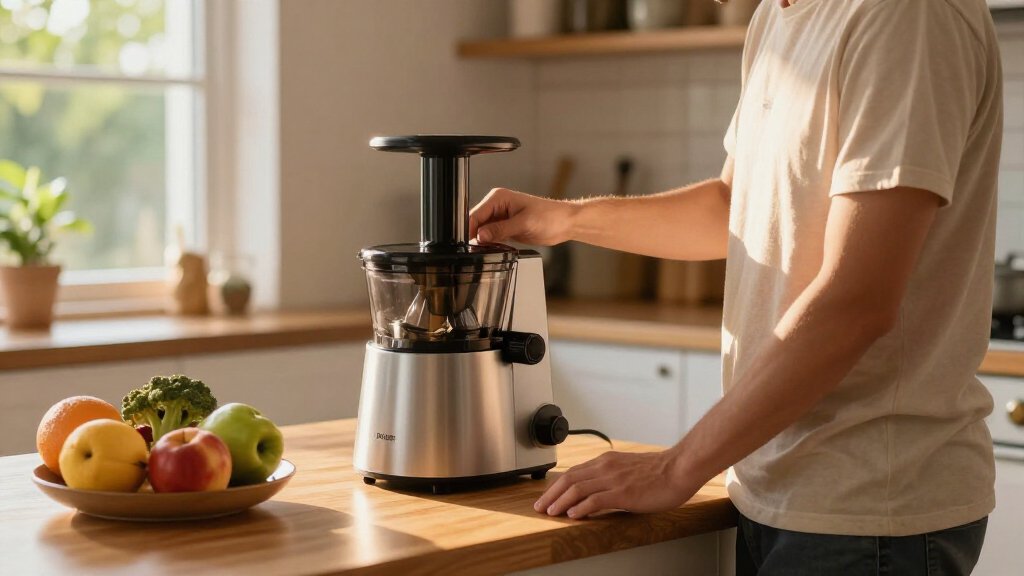
I compared these 13 listings by the factors that matter when juicing for a busy kitchen: extraction style, feed opening and batch capacity, hands-on effort, stated versatility, cleanup claims, and the level of operating detail provided. I treated labels such as “commercial” and “heavy duty” as claims rather than proof of continuous-duty performance. A wide chute may reduce prep, but it does not tell a buyer how quickly a machine can serve a queue or how long it can run without a break.
The ranking favors machines with useful workflow features and a clear role, then separates them by likely fit. The Nama J2 leads for hands-free feeding; the Breville offers a different, speed-oriented centrifugal option; and the Canoly and EanOruus models foreground larger feed openings and batch handling. The several 370W stainless steel listings rank lower because their supplied descriptions give fewer details for comparing sustained use, cleaning, or service requirements. The manual sugar cane press ranks for a specialty task rather than general juice-bar coverage.
Factors to Consider When Choosing Commercial Juicer Machine
Before choosing a machine, define the job it needs to do during your busiest hour. Product names and broad claims can obscure practical limits, so I would match the juicer to your menu, prep routine, staff, and expected run pattern.
Match extraction style to your menu
Centrifugal and cold press machines serve different workflows, so decide which juice you plan to sell before comparing individual features. A centrifugal model may suit a menu built around quick service, while a masticating machine may better fit a slower, batch-oriented process. Neither description alone establishes juice quality or customer preference for your recipes. Test your actual ingredients and serving sizes where possible, including leafy greens if they are central to the menu. Remember that frozen, fibrous, or unusually hard produce can change the workload. Choose for your menu’s main ingredients, rather than assuming one mechanism handles every task equally well.
Estimate peak demand and duty cycle
Daily totals can hide the real challenge: several orders arriving together. Estimate how many servings you need in your busiest 15 to 30 minutes, then check the manufacturer’s guidance for continuous operation, rest periods, and daily limits. A wattage figure describes electrical input, not guaranteed throughput or durability. Likewise, “heavy duty” does not tell you whether a motor can run through a lunch rush. If the documentation omits duty-cycle information, ask the seller or manufacturer before relying on the unit commercially. Build a backup plan for downtime if juice is central to your service.
Treat chute size as a prep aid, not a capacity guarantee
A larger feed opening can reduce cutting time, particularly for whole produce, but it does not guarantee higher output per hour. Hopper volume also does not equal finished juice volume, since yield varies by ingredient and recipe. Consider the size of produce you actually buy and whether large items still need trimming to fit safely. Check whether loading can happen while the machine runs and whether the design creates a practical rhythm for one worker. Compare the machine’s pulp handling with how often your team can pause to empty containers. These details matter more than a headline measurement when you are planning a tight service station.
Plan the cleaning routine before buying
In a commercial setting, cleaning time affects how many orders a station can handle and whether staff keep the machine ready. Identify every part that contacts produce or juice, then check which parts detach, how they are washed, and whether the maker permits dishwasher use. “Easy to clean” is a useful claim to verify against the screen, auger, spout, and pulp path. A machine with more strainers or functions may add flexibility but also add parts to wash and store. Consider how quickly staff can clean between recipes and at closing. If the machine cannot be cleaned within your actual workflow, a larger chute will not solve the bottleneck.
Check footprint, power, and local service
Measure counter depth and overhead clearance, including room to open the hopper and remove containers. Confirm that the electrical requirements match your kitchen and that the outlet and circuit can support the machine alongside other equipment. For commercial use, ask about replacement parts, warranty coverage, and repair options in your region before committing. Listings with similar power figures may differ substantially in support and documented operating limits. Factor in staff training too: an unfamiliar assembly or feed routine can slow service even when the motor is capable. A machine that fits the station and has accessible service support can be a safer operational choice than a feature-rich model with unclear backing.
Pay for the capability your business will use
Extra strainers and drink functions have value only if they support items on your menu. A manual sugar cane press, for example, makes sense when sugar cane juice is a deliberate offering, but it cannot replace a general fruit and vegetable extractor. A 2-in-1 or 3-in-1 design may broaden recipes, though added attachments can increase storage and cleaning demands. Avoid choosing solely by the word “commercial” or by a larger advertised capacity. Compare documented run limits, parts availability, and the time saved by each feature. Paying for verified throughput or easier maintenance can help more than paying for functions your staff rarely use.
Frequently Asked Questions
Can I assume a juicer labeled “commercial” is suitable for all-day service?
No. The label does not specify how long the machine may run, its rest periods, or its expected daily workload. Check the manual for duty-cycle guidance and ask the manufacturer if it is missing. Confirm warranty terms for business use, since some coverage may be written for household use. For a high-volume juice bar, plan around documented operating limits rather than the product title.
Should I choose a wide-chute cold press model or a centrifugal extractor for a busy counter?
Start with the service pattern and recipes, not the chute measurement alone. A wide chute can cut produce prep, while a centrifugal design may better suit a workflow where quick extraction is the priority. Compare actual batch times using the ingredients on your menu, and include loading, emptying, and cleanup in that timing. Also check whether the machine’s operating limits support your rush periods. The best fit depends on the full service cycle, not one advertised feature.
Do similar 370W ratings mean the stainless steel extractors will perform alike?
No. Wattage by itself does not show extraction rate, durability, noise, or how long a machine can operate continuously. The three 370W listings in this roundup provide limited detail for separating their sustained-use capabilities. Compare their manuals, motor and parts warranty, safety certifications, and availability of replacement components. If a seller cannot provide this information, treat performance claims cautiously and seek a better-documented alternative.
Is a large hopper enough to prepare juice in batches for later service?
A large hopper can hold more produce before loading, but it does not tell you how much finished juice you will get or how the juice holds up after extraction. Yield changes with produce type and preparation, and storage time can affect flavor and quality. Check food-safety requirements and your own service standards before preparing batches in advance. If you need a steady stream of fresh servings, evaluate the machine’s continuous operating guidance and pulp capacity. Run a small workflow trial with your planned recipes before building production around hopper size.
When does a manual sugar cane press make more sense than an electric juicer?
A manual press is a sensible specialty tool when sugar cane juice is a core part of the menu and expected volume is manageable by hand. It does not replace a general-purpose machine for fruits and vegetables, so a broader menu may need a separate extractor. Consider staff effort, cleaning, and serving pace alongside the press’s roller design. For a busy station, confirm how quickly cane can be processed and whether the equipment can be securely mounted. Choose it for a defined cane-juice workflow rather than as an all-purpose commercial juicer.
Conclusion
For a broadly useful workflow, I would start with the Nama J2 as the best overall pick, especially when hands-free feeding matters more than extraction speed. The Breville Juice Fountain Plus is the clearest fit for buyers seeking a centrifugal option, while the Canoly C16 and EanOruus 3-in-1 models suit kitchens prioritizing wide-feed batch handling and added functions. The EanOruus listings make a reasonable value-oriented shortlist when their capacity and attachments match your menu, but compare documentation and support before choosing between them. For beginners, a simpler model with an understandable assembly and cleaning routine may be easier to bring into service than a feature-heavy unit; verify those details in the manual. Choose the Garveetech press for sugar cane as a specific need, and treat any of the 370W stainless extractors as a purchase that calls for further checks on duty cycle, warranty, and parts support. A premium choice should be justified by confirmed operating capacity and service backing, since the supplied listings do not establish those advantages for a particular model.
Halloween Picks
halloween
As an affiliate, we earn on qualifying purchases.