For hikers seeking premium hiking boots, the Salomon X Ultra 5 Mid GTX is my best overall pick for its trail-focused balance of support, grip, and weather protection. The Danner Mountain 600 ID Gore-Tex is a standout for hikers who want a more substantial, traditional boot, while the Merrell Moab 3 Mid Waterproof offers a versatile option for everyday trails. The main tradeoffs are weight and support versus flexibility, and rugged construction versus comfort and value. Waterproof membranes help in wet conditions but can feel warm, while lighter boots may give up some structure on rough terrain. Read on for the full comparison, buying criteria, and recommendations by hiking style.

Get kitchen staples and gadgets delivered free with Prime
- Fast, free delivery on millions of items
- Prime Video, Amazon Music and more included
- Member-only deals all year
Key Takeaways
- The Salomon X Ultra 5 Mid GTX leads for trail-focused versatility: It is the clearest fit for hikers who want waterproof protection and a nimble feel rather than a heavy, traditional boot.
- Danner and Timberland’s Mountain 600-style approach favors substance over lightness: The Danner Mountain 600 ID Gore-Tex is the more hiking-specific choice, while Timberland’s Premium 6-inch Boot prioritizes a durable, casual-workwear look over technical trail performance.
- The Merrell Moab 3 Mid Waterproof and Columbia Newton Ridge models target accessible trail use: They offer practical choices for day hikes, but buyers should match the level of structure and support to their pack weight and terrain.
- The Timberland White Ledge listing appears twice: Since the two entries name the same model, the roundup gives them one shared role rather than presenting them as meaningfully different boots.
- Several options are lighter-duty or less established as technical hiking picks: NORTIV 8, the generic mid-top boot, and Columbia’s Transverse Suede Hiking Shoes make more sense for moderate outings than demanding, heavily loaded trips.
| Timberland Men’s White Ledge Mid Waterproof Hiking Boots | 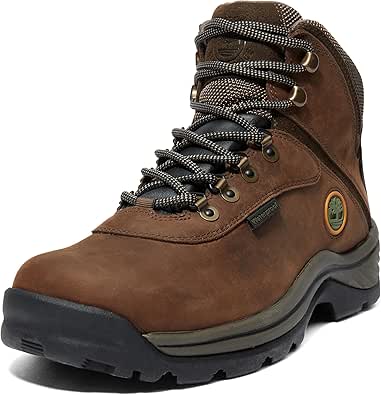 | Best Overall | Upper: Waterproof premium Timberland leather | Construction: Seam-sealed | Lining: ReBOTL fabric | VIEW ON AMAZON | See Our Full Breakdown |
| Timberland Men’s White Ledge Mid Waterproof Hiking Boots |  | Best for Everyday Trail Wear | Upper: Waterproof Timberland leather | Lining: ReBOTL fabric | Insole and midsole: EVA | VIEW ON AMAZON | See Our Full Breakdown |
| Danner Men’s Mountain 600 ID Gore-Tex Hiking Boots |  | Best for Technical Trail Conditions | Outer material: Nylon | Inner material: Gore-Tex | Water resistance: Waterproof | VIEW ON AMAZON | See Our Full Breakdown |
| Timberland Men’s Premium 6-inch Waterproof Boot |  | Best for Cold-Weather Hiking | Shaft height: 6 inches | Upper: Premium waterproof nubuck leather | Insulation: PrimaLoft | VIEW ON AMAZON | See Our Full Breakdown |
| NORTIV 8 Men’s Waterproof Lightweight Hiking Boots |  | Best for Mixed Outdoor Activities | Waterproofing: Waterproof membrane | Outer material: Suede and faux leather | Sole materials: EVA and rubber | VIEW ON AMAZON | See Our Full Breakdown |
| Merrell Men’s Moab 3 Mid Waterproof Hiking Boots |  | Best for All-Day Comfort | Shaft height: Mid | Waterproof: Yes | Upper: Pigskin leather and mesh | VIEW ON AMAZON | See Our Full Breakdown |
| Columbia Men’s Transverse Hike Waterproof |  | Best Lightweight Low-Cut Option | Shaft height: Ankle | Waterproof: Yes | Breathable: Yes | VIEW ON AMAZON | See Our Full Breakdown |
| Timberland Men’s Flume Mid Waterproof Hiking Boot |  | Best for Wet-Weather Protection | Shaft height: Ankle | Upper: Waterproof Premium Timberland Leather | Construction: Seam-sealed | VIEW ON AMAZON | See Our Full Breakdown |
| Columbia Men’s Newton Ridge Plus II Suede Waterproof Hiking Boot |  | Best for Adjustable Fit | Waterproof: Yes | Outer material: Leather | Closure: Lace-up | VIEW ON AMAZON | See Our Full Breakdown |
| Salomon X Ultra 5 Mid GTX |  | Best for Lateral Stability | Midsole: EVA foam | Support system: Advanced Chassis | Outsole: All Terrain Contagrip | VIEW ON AMAZON | See Our Full Breakdown |
| Columbia Women’s Newton Ridge Plus Waterproof Amped Hiking Boot |  | Best Lightweight All-Terrain Pick | Fabric type: EVA | Origin: Imported | Sole material: Rubber | VIEW ON AMAZON | See Our Full Breakdown |
| Timberland Men’s Britton Road Waterproof Boot |  | Best for Cold, Wet Day Hikes | Sole material: Rubber | Shaft height: Ankle | Shaft circumference: 9.75 inches | VIEW ON AMAZON | See Our Full Breakdown |
| Columbia Women’s Transverse Suede Hiking Shoes |  | Best Low-Profile Waterproof Option | Sole material: Rubber | Shaft height: Ankle | Shaft circumference: 1 inch | VIEW ON AMAZON | See Our Full Breakdown |
| Men’s Waterproof Hiking Boots Non-Slip Lightweight Mid Top Ankle Boots Breathable Trekking Shoes |  | Best Lightweight Budget-Style Alternative | Fabric type: Synthetic suede and fabric | Origin: Imported | Sole material: Synthetic rubber | VIEW ON AMAZON | See Our Full Breakdown |
| premium hiking boot | Shaft height | Sole material | Outsole |
|---|---|---|---|
| Timberland Men’s White Ledge M | — | — | Rubber with multidirectional lugs |
| Timberland Men’s White Ledge M | Ankle | — | — |
| Danner Men’s Mountain 600 ID G | — | Rubber | Danner Plyolite |
| Timberland Men’s Premium 6-inc | 6 inches | — | Rubber lug with 10% plant-based materials |
| NORTIV 8 Men’s Waterproof Ligh | Ankle | — | Rubber with multidirectional traction |
| Merrell Men’s Moab 3 Mid Water | Mid | — | Vibram TC5+ rubber |
| Columbia Men’s Transverse Hike | Ankle | Rubber | — |
| Timberland Men’s Flume Mid Wat | Ankle | — | Rubber with multidirectional lugs |
| Columbia Men’s Newton Ridge Pl | — | Rubber | — |
| Salomon X Ultra 5 Mid GTX | — | Rubber | All Terrain Contagrip |
| Columbia Women’s Newton Ridge | — | Rubber | — |
| Timberland Men’s Britton Road | Ankle | Rubber | — |
| Columbia Women’s Transverse Su | Ankle | Rubber | — |
| Men’s Waterproof Hiking Boots | — | Synthetic rubber | — |
More Details on Our Top Picks
Timberland Men’s White Ledge Mid Waterproof Hiking Boots
The White Ledge earns my Best Overall place by pairing waterproof leather and seam-sealed construction with cushioning that suits a broad range of day hikes. Its fully gusseted tongue helps limit water and trail debris entering around the laces, while the multidirectional rubber lugs offer grip on varied paths. Compared with the Danner Mountain 600 ID, this Timberland uses a simpler EVA cushioning setup rather than Gore-Tex and named Vibram components, making it the more straightforward choice for hikers who want dependable basics. That simpler design also means fewer specialized features for rough, demanding routes. The ankle-height cut and speed-lace hardware make it practical for regular trail use, but buyers seeking substantial insulation or a more technical build should look to the Timberland Premium 6-inch or Danner instead.
Pros:- Waterproof premium leather, seam-sealed construction, and a gusseted tongue help keep moisture out.
- EVA footbed and midsole provide cushioning for day-long walking.
- Multidirectional rubber lugs suit a range of trail surfaces.
- Rustproof speed-lace hardware makes adjustment straightforward.
Cons:- EVA cushioning and the listed outsole setup are less specialized than the Danner Mountain 600 ID’s Gore-Tex and Vibram-focused design.
- Ankle-height construction offers less coverage than the six-inch Timberland Premium boot.
- No insulation is listed for cold-weather use.
Best for: Day hikers who want waterproof leather, ankle coverage, and cushioned support in a versatile boot for mixed trail conditions.
Not ideal for: Hikers tackling consistently rugged routes who want a more technical sole system, or anyone who needs an insulated boot for cold-weather outings.
- Upper:Waterproof premium Timberland leather
- Construction:Seam-sealed
- Lining:ReBOTL fabric
- Footbed:EVA
- Midsole:EVA
- Outsole:Rubber with multidirectional lugs
- Closure:Rustproof speed-lace hardware with top lace hooks
- Shaft:Ankle height; 9.75-inch circumference
Our verdict“Choose the White Ledge for a capable, cushioned waterproof boot for everyday hikes, but pick the Danner for a more technical feature set or the Timberland Premium for added warmth.”
Timberland Men’s White Ledge Mid Waterproof Hiking Boots
This White Ledge listing focuses on a simple waterproof leather build for hikers who want one boot for routine trails and wet-weather outdoor use. The EVA insole and midsole add cushioning without the more specialized construction highlighted on the Danner Mountain 600 ID, whose Gore-Tex lining and Vibram components make it the more technical option in this group. Here, rustproof speed-lace hardware and a gusseted tongue keep the design practical and easy to adjust, while the ReBOTL lining adds a recycled-fabric component. The tradeoff is that the supplied specs do not identify a specific outsole compound or lug pattern, so buyers prioritizing documented traction details may prefer the first White Ledge listing or Danner. Its reported heft may also be less appealing for hikers who favor a light, nimble feel.
Pros:- Waterproof Timberland leather upper offers weather protection and a durable exterior.
- EVA insole and midsole provide cushioning for regular outdoor wear.
- Rustproof speed-lace hardware supports quick adjustment.
- ReBOTL fabric lining adds a recycled-material element.
Cons:- The product details warn that the boot may feel heavy to some wearers.
- The supplied specs do not identify outsole material or lug design.
- Less technically specified than the Danner Mountain 600 ID, which names Gore-Tex and Vibram components.
Best for: Casual hikers and outdoor users who prioritize a waterproof leather upper, cushioned EVA interior, and easy-to-adjust lacing.
Not ideal for: Fast-moving hikers who want a lighter-feeling boot, or buyers who need clearly specified outsole traction and technical waterproofing details.
- Upper:Waterproof Timberland leather
- Lining:ReBOTL fabric
- Insole and midsole:EVA
- Closure:Rustproof speed-lace hardware
- Shaft height:Ankle
- Shaft circumference:9.75 inches
Our verdict“Pick this White Ledge version for uncomplicated waterproof comfort on routine outings, but choose the Danner if documented technical traction and waterproofing are higher priorities.”
Danner Men’s Mountain 600 ID Gore-Tex Hiking Boots
The Danner Mountain 600 ID takes the most technical approach to wet, rugged trails among these picks. A Gore-Tex inner layer is paired with a Vibram midsole and an Ortholite footbed, giving buyers more named performance components than either White Ledge listing provides. That distinction makes this a stronger match for hikers who value a clearly specified waterproof system and cushioning underfoot; the White Ledge is the more straightforward choice for general day hikes. The flexible design is described as adapting to movement, but the listed nylon outer material may not appeal to buyers set on a leather upper, such as the Timberland Premium 6-inch. Danner also carries the meaningful tradeoffs of a reported break-in period and possible heaviness, so it is less compelling for casual wear than for demanding outdoor use.
Pros:- Gore-Tex inner material is specified for waterproof protection.
- Vibram midsole and Danner Plyolite outsole provide a more technically specified sole setup than the White Ledge listings.
- Ortholite footbed adds cushioning for extended wear.
- Flexible design is intended to adapt to movement on the trail.
Cons:- The product description notes a break-in period.
- May feel heavy to some wearers.
- Nylon outer material differs from the leather construction of the Timberland Premium 6-inch.
Best for: Experienced hikers who regularly encounter wet, rugged terrain and want named Gore-Tex, Vibram, and Ortholite components.
Not ideal for: Casual walkers seeking a leather boot with little break-in, or hikers who prioritize a lightweight feel and lower-cost construction.
- Outer material:Nylon
- Inner material:Gore-Tex
- Water resistance:Waterproof
- Midsole:Vibram
- Footbed:Ortholite
- Outsole:Danner Plyolite
- Sole material:Rubber
Our verdict“Choose the Danner for wet, demanding hikes where its named waterproof and sole components matter, but favor a White Ledge for simpler day-to-day trail use.”
For hikers who need warmth as well as weather protection, the Timberland Premium 6-inch is the standout: PrimaLoft insulation and a waterproof nubuck upper set it apart from the uninsulated White Ledge boots. Its six-inch shaft gives more coverage than those ankle-height options, while anti-fatigue technology is intended to add comfort during extended wear. A Goodyear welt and triple stitching make the construction a more reinforced proposition than the simpler White Ledge setup. The compromise is a boot built with substantial materials: the listing notes possible heaviness, and its insulated design is less suited to warm-weather hikes. Compared with the Danner Mountain 600 ID, this Timberland prioritizes warmth and leather construction over a named Gore-Tex system and technical sole components.
Pros:- PrimaLoft insulation adds warmth absent from both White Ledge listings.
- Waterproof nubuck upper and seam-sealed construction help protect against wet conditions.
- Six-inch shaft provides more coverage than the ankle-height White Ledge boots.
- Goodyear welt and triple stitching reinforce the construction.
Cons:- The substantial build may feel heavy for hiking.
- Insulation can make this a less suitable choice for warm-weather outings.
- Its listed outsole and waterproofing details are less technically specific than the Danner Mountain 600 ID’s named components.
Best for: Hikers and outdoor workers who need an insulated, waterproof leather boot for cold conditions and value added shaft coverage.
Not ideal for: Warm-weather hikers or anyone seeking a lighter, more trail-focused boot with a specifically named technical waterproof lining and outsole system.
- Shaft height:6 inches
- Upper:Premium waterproof nubuck leather
- Insulation:PrimaLoft
- Outsole:Rubber lug with 10% plant-based materials
- Lining:Leather
- Hardware:Rust-resistant
- Construction:Goodyear welt; triple-stitched
- Features:Waterproof construction; anti-fatigue technology
Our verdict“Choose the Timberland Premium 6-inch when cold-weather insulation and reinforced leather construction take priority over a lighter, more technical hiking build.”
NORTIV 8 Men’s Waterproof Lightweight Hiking Boots
The NORTIV 8 is the multi-activity pick for buyers who want a waterproof ankle boot for hiking, camping, and general outdoor use rather than a specialist build. Its membrane, suede and faux-leather upper, and multidirectional rubber traction cover the basic needs of varied outings. Compared with the Timberland White Ledge, it emphasizes a mixed-material upper and a stated lightweight design, while the Timberland specifies premium leather, seam sealing, and EVA cushioning. The NORTIV 8 listing does not name a waterproof membrane brand or detail the cushioning system, so buyers seeking more fully specified construction may prefer the Timberland or the technical Danner Mountain 600 ID. A stiff initial fit is also flagged, which could be a drawback for hikers who want a comfortable boot straight from the box.
Pros:- Waterproof membrane is designed to keep feet dry in wet conditions.
- Multidirectional rubber outsole is suited to varied outdoor surfaces.
- Suede and faux-leather upper combines two durable materials.
- Ankle-height design works across hiking and general outdoor activities.
Cons:- The listing does not identify the waterproof membrane by brand or specify seam-sealed construction.
- Initial fit may feel stiff.
- Cushioning and support components are not detailed as specifically as on the White Ledge.
Best for: Campers and recreational hikers seeking a waterproof ankle boot for varied outdoor activities and multidirectional traction.
Not ideal for: Hikers who want a premium leather upper, a named waterproofing system, or detailed cushioning specifications before choosing.
- Waterproofing:Waterproof membrane
- Outer material:Suede and faux leather
- Sole materials:EVA and rubber
- Outsole:Rubber with multidirectional traction
- Shaft height:Ankle
- Shaft circumference:30.8 centimeters
Our verdict“Pick the NORTIV 8 for mixed recreational outdoor use, but choose the White Ledge for more clearly specified leather construction and cushioning.”
Merrell Men’s Moab 3 Mid Waterproof Hiking Boots
The Moab 3 Mid Waterproof is the comfort-led choice here: its contoured removable insole, EVA midsole, and heel Air Cushion provide cushioning for long days on uneven trails. The Vibram TC5+ outsole adds dependable grip, while the leather-and-mesh upper and waterproof construction balance protection with some breathability. Compared with the more stability-focused Salomon X Ultra 5 Mid GTX, the Merrell puts more emphasis on underfoot cushioning than on an advanced chassis for lateral support. That makes it a sensible pick for general hiking rather than buyers prioritizing a more technical, supportive ride. The tradeoff is a heavier feel than trail-specific footwear, and the mid-height shaft may feel restrictive to hikers who prefer a lower cut. Choose it for comfort and protection, not minimum weight.
Pros:- Removable contoured insole allows a more adaptable underfoot fit.
- Vibram TC5+ rubber outsole is designed for traction on varied trails.
- Heel Air Cushion and EVA midsole add impact absorption.
- Waterproof leather-and-mesh upper pairs weather protection with breathable materials.
Cons:- Heavier than trail-specific footwear, which can feel tiring on faster hikes.
- Mid-height shaft may restrict hikers who prefer more ankle freedom.
Best for: Hikers who want a waterproof mid boot with cushioned support and a removable insole for long days on established trails.
Not ideal for: Fast-moving hikers who prioritize low weight, or anyone who dislikes the added coverage and feel of a mid-height shaft.
- Shaft height:Mid
- Waterproof:Yes
- Upper:Pigskin leather and mesh
- Insole:Kinetic Fit ADVANCED removable contoured insole
- Midsole:EVA foam
- Outsole:Vibram TC5+ rubber
- Additional features:Air Cushion in heel, bellows tongue, protective toe cap
Our verdict“Pick the Moab 3 if cushioned comfort and waterproof protection matter more to you than a lightweight, technical feel.”
Columbia Men’s Transverse Hike Waterproof
The Columbia Transverse Hike Waterproof suits hikers who want weather protection without the taller coverage of the Merrell Moab 3 Mid Waterproof. Its ankle-height cut and Techlite impact absorption make it a lighter-feeling option for day hikes and mixed outdoor use, while the waterproof, breathable construction helps manage changing conditions. Columbia’s Omni-Grip traction is intended for varied terrain, giving it more trail focus than a casual waterproof shoe. The shorter shaft is also the main compromise: it offers less coverage around the ankle than a mid boot, and the product details provide no removable insole or advanced support system to match the Merrell’s cushioning options or the Salomon X Ultra 5 Mid GTX’s chassis. I would choose it for mobility and straightforward comfort, but not when extra shaft coverage is a priority.
Pros:- Waterproof and breathable construction suits changeable weather.
- Techlite cushioning absorbs impact for everyday hiking comfort.
- Omni-Grip outsole is designed for traction across varied terrain.
Cons:- Ankle-height shaft gives less coverage than the Merrell Moab 3 Mid.
- Available details do not specify a removable insole or advanced stability structure.
Best for: Day hikers who want a waterproof, breathable ankle-height boot with impact-absorbing cushioning and multi-terrain grip.
Not ideal for: Hikers seeking mid-height ankle coverage or a specifically documented support system for rough, demanding routes.
- Shaft height:Ankle
- Waterproof:Yes
- Breathable:Yes
- Upper:Leather and mesh
- Impact absorption:Techlite
- Traction:Omni-Grip
- Sole material:Rubber
Our verdict“Choose the Transverse Hike if you want waterproof protection and cushioning in a more mobile, ankle-height design.”
Timberland Men’s Flume Mid Waterproof Hiking Boot
The Timberland Flume Mid centers its case on a protective leather build: waterproof Premium Timberland Leather, seam-sealed construction, and a fully gusseted tongue help limit water entry on wet trails. Its rubber outsole uses multidirectional lugs, while the EVA footbed and compression-molded EVA midsole provide straightforward cushioning. Compared with the Columbia Transverse Hike Waterproof, the Flume offers a more protective leather, mid-style build; the Columbia is the lighter-feeling pick if mobility and a shorter cut matter more. The Flume’s tradeoff is that this enclosed construction may feel less breathable, especially in warm conditions. Its comfort details are conventional rather than highly adjustable, unlike the Merrell Moab 3 Mid’s removable contoured insole. I would favor it for damp-weather hikes where coverage and water resistance take precedence over ventilation.
Pros:- Waterproof leather upper and seam-sealed construction help protect against moisture.
- Fully gusseted tongue helps limit debris and water entry.
- Multidirectional rubber lugs provide trail grip.
- EVA footbed and compression-molded EVA midsole add cushioning.
Cons:- Waterproof leather construction may feel less breathable in warm weather.
- Does not list the removable, contoured insole found in the Merrell Moab 3 Mid.
Best for: Hikers who want a leather waterproof boot with seam-sealed construction and a gusseted tongue for wet trail conditions.
Not ideal for: Warm-weather hikers who prioritize ventilation, or buyers who want a removable contoured insole for customized underfoot support.
- Shaft height:Ankle
- Upper:Waterproof Premium Timberland Leather
- Construction:Seam-sealed
- Tongue:Fully gusseted
- Footbed:EVA
- Midsole:Compression-molded EVA
- Outsole:Rubber with multidirectional lugs
- Lace hardware:Rustproof speed lace hardware with top lace hooks
Our verdict“Choose the Flume Mid if wet-weather coverage matters more than ventilation or a customizable insole.”
Columbia Men’s Newton Ridge Plus II Suede Waterproof Hiking Boot
The Newton Ridge Plus II Suede is a practical pick for hikers who want a secure, adjustable lace-up fit with waterproof leather construction. Its OMNI-GRIP outsole is built for traction across varied terrain, and the lightweight midsole helps keep cushioning from feeling overly bulky. Compared with the leather-heavy Timberland Flume Mid, this Columbia emphasizes a lighter midsole and an adjustable fit; the Flume counters with specified seam sealing and a fully gusseted tongue for added water protection. The Newton Ridge’s tradeoffs are meaningful for frequent hikers: the available details flag potential weight and outsole wear over extended use, so it is not the strongest case for high-mileage durability. I would shortlist it for mixed-terrain outings where fit adjustment and waterproofing matter, while checking that its weight suits your pace.
Pros:- Waterproof suede and leather construction offers weather protection.
- Lace-up closure lets hikers adjust fit and tension.
- OMNI-GRIP traction is designed for varied terrain.
- Lightweight midsole adds cushioning without a notably bulky setup.
Cons:- May feel heavy to hikers who prioritize a nimble boot.
- Outsole wear over extended use is a stated durability concern.
Best for: Hikers who value a lace-adjustable fit, waterproof leather construction, and traction for varied day-hike terrain.
Not ideal for: Frequent high-mileage hikers seeking a boot with clearly specified long-term outsole durability or the lightest possible feel.
- Waterproof:Yes
- Outer material:Leather
- Closure:Lace-up
- Traction system:OMNI-GRIP
- Sole material:Rubber
- Shaft circumference:9.42 inches
- Origin:Imported
Our verdict“Pick the Newton Ridge Plus II if you want a waterproof, adjustable boot for varied day hikes and can accept potential weight and wear tradeoffs.”
Salomon X Ultra 5 Mid GTX
The Salomon X Ultra 5 Mid GTX is the technical stability pick in this group. Its Advanced Chassis is designed to support lateral movement, an advantage for hikers who want a more controlled feel on uneven ground. The all-terrain Contagrip outsole extends its appeal across different surfaces, while the EVA midsole cushions impacts and quickLACE makes closure adjustment quick. Compared with the Merrell Moab 3 Mid Waterproof, Salomon puts more emphasis on chassis-led stability, while the Merrell specifies a removable contoured insole and heel Air Cushion for a more comfort-focused setup. The tradeoff is that this model may feel heavy, and the supplied details do not specify a waterproof rating despite the GTX name. I would choose it for support and traction, but verify the exact version’s weather protection if waterproofing is a must.
Pros:- Advanced Chassis is designed to improve lateral support and stability.
- All Terrain Contagrip outsole is built for traction across varied surfaces.
- EVA foam midsole provides cushioning.
- quickLACE closure allows fast adjustment.
Cons:- May feel heavy compared with lighter trail footwear.
- The supplied product details do not state a waterproof rating, unlike the Merrell Moab 3 Mid.
Best for: Hikers who want a mid boot with lateral stability features, all-terrain traction, and a quick-adjust closure for uneven routes.
Not ideal for: Buyers who prioritize the lightest feel or need clearly specified waterproof performance before purchasing.
- Midsole:EVA foam
- Support system:Advanced Chassis
- Outsole:All Terrain Contagrip
- Lining:Textile
- Upper material:Textile
- Sole material:Rubber
- Inner material:Leather
- Closure:quickLACE
Our verdict“Choose the X Ultra 5 Mid GTX for chassis-led stability and versatile grip, but confirm its weather protection if waterproofing is non-negotiable.”
Columbia Women’s Newton Ridge Plus Waterproof Amped Hiking Boot
The Newton Ridge Plus Waterproof Amped suits hikers who want a conventional boot setup without unnecessary weight. Its TECHLITE midsole cushions steps, while the Omni-GRIP rubber outsole is designed to hold across varied terrain; reinforced toe and heel areas add protection where routine trail wear tends to accumulate. Compared with Columbia’s Transverse Suede Hiking Shoes, this is the more boot-oriented choice, though the supplied specs do not establish a taller shaft or stronger ankle support. Waterproofing also makes it more weather-ready than a basic trail shoe, but can feel less breathable in warm conditions. I’d choose it for mixed day hikes, not for buyers who need extensive ankle coverage or detailed fit options: the shaft circumference is listed as less than six inches, and the description gives no specific shaft height.
Pros:- Waterproof construction for damp trail conditions
- Omni-GRIP rubber outsole is intended for traction across varied terrain
- TECHLITE midsole provides lightweight cushioning
- Reinforced toe and heel areas help protect high-wear zones
Cons:- Shaft height is not specified, making ankle coverage harder to judge
- Waterproof construction may feel warm during strenuous hikes
- Limited fit and color information is provided
Best for: Women seeking a lightweight waterproof boot for day hikes on mixed surfaces, with added toe and heel reinforcement.
Not ideal for: Hikers who want a clearly specified high-cut shaft, extra ankle coverage, or a highly breathable boot for hot-weather use.
- Fabric type:EVA
- Origin:Imported
- Sole material:Rubber
- Technology:TECHLITE midsole
- Waterproof:Yes
- Traction:Omni-GRIP non-marking rubber outsole
- Reinforced areas:Toe and heel
- Shaft circumference:Less than 6 inches
Our verdict“Choose this Columbia for lightweight, waterproof day-hike protection, but skip it if a clearly defined tall shaft is a priority.”
Timberland Men’s Britton Road Waterproof Boot
The Britton Road Waterproof Boot is the weather-focused option here: its seam-sealed construction blocks water, while PrimaLoft insulation adds warmth without relying on a bulky build. That combination makes it a stronger match for chilly, wet outings than the uninsulated Columbia Women’s Newton Ridge Plus Waterproof Amped. Timberland also lists anti-fatigue technology, which is aimed at comfort over long days on your feet. The tradeoff is that insulation and waterproof materials can limit ventilation, so this is less appealing for warm-weather hikes or high-output climbs. Its ankle-height shaft is more compact than a traditional tall boot, and the available details don’t specify outsole traction technology. I’d pick it for cold-weather walks and moderate outdoor use rather than technical routes where a detailed grip profile matters.
Pros:- Waterproof, seam-sealed construction for wet conditions
- PrimaLoft insulation adds warmth without a bulky design
- Anti-fatigue technology is intended to support all-day wear
- Leather lining and premium leather construction
Cons:- Insulation and waterproofing may reduce breathability in warmer weather
- Ankle-height shaft offers less coverage than a taller hiking boot
- Specific traction technology is not provided
Best for: Men who hike or spend extended time outdoors in cool, wet weather and want insulation alongside waterproofing.
Not ideal for: Warm-weather hikers, people who prioritize ventilation, or buyers seeking documented outsole technology for technical terrain.
- Sole material:Rubber
- Shaft height:Ankle
- Shaft circumference:9.75 inches
- Insulation:PrimaLoft
- Waterproof:Yes
- Construction:Waterproof, seam-sealed
- Lining:Leather
- Comfort technology:Anti-fatigue technology
Our verdict“Pick the Britton Road for cool, wet outings where warmth matters more than maximum ventilation or technical-terrain details.”
Columbia Women’s Transverse Suede Hiking Shoes
The Transverse Suede Hiking Shoes pair a leather-and-mesh upper with OMNI-TECH waterproofing, making them a lower-profile alternative for hikers who prefer a shoe-like feel. TECHLITE cushioning and OMNI-GRIP traction bring useful comfort and grip for everyday trails, while the cushioned collar and metal hardware add practical finishing details. Compared with the Newton Ridge Plus Waterproof Amped, this model emphasizes the hiking-shoe format rather than a more boot-like profile; it may suit lighter day hikes but offers less reason to choose it when extra ankle coverage is the goal. The waterproof membrane can also feel warm during sustained effort, and the supplied shaft measurements are unusual for a shoe, so I would confirm fit carefully. It’s a sensible pick for maintained trails, not demanding terrain that calls for more support.
Pros:- OMNI-TECH waterproof technology paired with a breathable-design upper
- Leather-and-mesh construction balances coverage and ventilation
- TECHLITE cushioning absorbs impact with a lightweight feel
- OMNI-GRIP outsole is designed for multi-terrain traction
Cons:- Low-profile shoe format provides less ankle coverage than a boot
- Waterproof construction may feel warm during strenuous hikes
- Listed shaft circumference may not suit users needing a wider fit
Best for: Women who want a waterproof, low-profile option for maintained trails and casual day hikes.
Not ideal for: Hikers seeking substantial ankle support, a roomier shaft fit, or footwear for demanding routes with heavy loads.
- Sole material:Rubber
- Shaft height:Ankle
- Shaft circumference:1 inch
- Waterproof technology:OMNI-TECH
- Impact absorption:TECHLITE
- Traction:OMNI-GRIP
- Upper material:Leather and mesh
- Additional features:Metal hardware and cushioned collar
Our verdict“Choose the Transverse for waterproof comfort on maintained trails if you prefer a low-profile shoe over the Newton Ridge’s boot-oriented design.”
Men’s Waterproof Hiking Boots Non-Slip Lightweight Mid Top Ankle Boots Breathable Trekking Shoes
This mid-top boot stands out for a lightweight build and comfort-focused materials: the listed weight is 1.25 pounds for size 10, with flexible EVA cushioning and a removable memory-foam insole. A SL-TEX waterproof membrane, breathable lining, closed-cell tongue, and rubber toe cap are intended to keep water and trail debris out. Compared with the insulated Timberland Britton Road, this option favors lower weight and flexibility over added warmth and leather construction. Its synthetic suede and fabric may be less durable over heavy, repeated use, and the product description says it may need breaking in. The specs identify a synthetic-rubber sole but no named traction system, so I’d reserve it for casual hiking, trekking, and camping rather than technical routes where grip details and long-term support are central.
Pros:- Lightweight at 1.25 pounds for size 10
- SL-TEX waterproof membrane and breathable lining
- Removable memory-foam insole with flexible EVA midsole
- Closed-cell tongue and rubber toe cap add practical coverage
Cons:- Synthetic suede and fabric may not match leather durability under heavy use
- May require a break-in period for comfort
- No named outsole traction system is specified
Best for: Men who prioritize light footwear and cushioned comfort for casual hikes, trekking, and camping in wet conditions.
Not ideal for: Frequent hikers needing proven long-term leather durability, technical-terrain traction details, or a boot ready for demanding use without a break-in period.
- Fabric type:Synthetic suede and fabric
- Origin:Imported
- Sole material:Synthetic rubber
- Weight:1.25 lbs (size 10)
- Waterproof membrane:SL-TEX
- Lining:D01 breathable lining
- Insole:Removable memory foam
- Midsole:Flexible EVA
- Design features:Lace-up, closed-cell tongue, rubber toe cap, waterproof sealing
Our verdict“Pick this boot for lightweight, cushioned casual hikes, but choose a more established leather or technical model for demanding, frequent trail use.”

How We Picked
I ranked these boots around the needs that separate a dependable hiking purchase from a boot that only looks rugged: trail traction, underfoot support, waterproof protection, comfort potential, and build quality. I also weighed versatility across common day-hiking conditions, the practical costs of extra weight and heat, and whether a model’s design appears aimed at hiking or at casual and workwear use. Product names and specifications alone do not establish fit, durability, or field performance, so I avoid treating any feature as proof that a boot will suit every foot or trail.
The ordering favors models with a clear hiking purpose and a balanced mix of protection, support, and mobility. The Salomon X Ultra 5 Mid GTX ranks first for that broad trail-use balance, with the Danner and Merrell offering distinct alternatives for more traditional construction or versatile everyday hiking. More specialized, casual-oriented, duplicate, or lightly specified options rank lower because buyers may face greater compromises in trail utility or have less information to judge fit. I treat the two White Ledge entries as the same model, not separate upgrades.
| premium hiking boot | Outsole | Sole material |
|---|---|---|
| Timberland Men’s White Ledge M | Rubber with multidirectional lugs | — |
| Timberland Men’s White Ledge M | — | — |
| Danner Men’s Mountain 600 ID G | Danner Plyolite | Rubber |
| Timberland Men’s Premium 6-inc | Rubber lug with 10% plant-based materials | — |
| NORTIV 8 Men’s Waterproof Ligh | Rubber with multidirectional traction | — |
| Merrell Men’s Moab 3 Mid Water | Vibram TC5+ rubber | — |
| Columbia Men’s Transverse Hike | — | Rubber |
| Timberland Men’s Flume Mid Wat | Rubber with multidirectional lugs | — |
| Columbia Men’s Newton Ridge Pl | — | Rubber |
| Salomon X Ultra 5 Mid GTX | All Terrain Contagrip | Rubber |
| Columbia Women’s Newton Ridge | — | Rubber |
| Timberland Men’s Britton Road | — | Rubber |
| Columbia Women’s Transverse Su | — | Rubber |
| Men’s Waterproof Hiking Boots | — | Synthetic rubber |
Factors to Consider When Choosing Premium Hiking Boots
Choosing premium hiking boots is less about collecting the most features and more about matching a boot’s design to your routes, feet, and pack. These broader checks can help you avoid paying for protection you rarely use—or buying a light boot that feels under-supported when the trail gets rough.
Match Support to Terrain and Pack Weight
Boot height alone does not tell you how much support a boot provides; sole stiffness, midsole structure, and how securely the heel is held matter too. For smooth day-hiking trails with a light pack, a flexible boot can feel less tiring and move naturally. Rocky paths, uneven descents, or heavier loads place more demand on stability and underfoot protection. A common mistake is choosing the stiffest boot available for every outing, which can add bulk without solving a real need. Try to picture your hardest regular hike, not only your easiest weekend route, when setting your support requirements.
Treat Waterproofing as a Weather Choice
A waterproof membrane helps with rain, shallow puddles, and damp ground, but it does not make a boot immune to water entering over the cuff. Waterproof builds can also hold more warmth and dry more slowly than non-waterproof footwear after water gets inside. For frequent wet-weather hiking, the tradeoff may be worthwhile; for hot, dry routes, ventilation can matter more. Pairing waterproof boots with breathable socks does not erase heat buildup, so consider your local climate and pace. Do not assume waterproofing makes a boot the right choice for snow or prolonged immersion without checking its intended use.
Prioritize Fit at the Heel and Toe
A boot can have strong materials and still be a poor buy if your foot slides forward on descents or your toes meet the front. Check fit while wearing the socks you plan to hike in, and allow room for natural foot swelling on longer walks. Heel movement can cause rubbing, while a cramped toe box may become painful when the trail tilts downhill. Sizing varies among brands and models, so use the maker’s fit guidance and try both feet rather than relying on your usual size alone. If you need an unusual width or have recurring pressure points, fit should take precedence over a feature list.
Read Traction Claims Through Your Trail Conditions
“Non-slip” is not a universal guarantee: grip changes with rubber compound, tread shape, surface, and wear. Deep, widely spaced lugs can shed mud, while a flatter pattern may feel smoother on packed paths but struggle in loose ground. Wet rock, mud, and steep gravel each challenge soles in different ways, so no single tread is best everywhere. Think about the surfaces you encounter most, then check whether the outsole design suits them. If your routes include frequent scrambling or steep, loose descents, prioritize secure footing over a casual-looking profile.
Pay for Useful Construction, Not Just a Premium Label
A premium purchase makes sense when its materials, repair potential, fit, or trail-focused design address a need you actually have. More substantial construction can offer a reassuring feel, but added weight may reduce comfort on long, fast hikes. Casual leather styling and waterproofing can be useful off trail, yet neither proves that a boot has the support or traction you need on technical terrain. Look for clear details about the upper, sole, membrane, and care instructions, then compare those details with your intended use. For occasional easy hikes, a simpler boot that fits well may serve better than a heavier model with features left unused.
Plan for Break-In and Ongoing Care
Even comfortable boots can create friction when new, so wear them for short walks before committing to a full-day hike. Pay attention to hot spots, lace pressure, and heel movement; these often show up before serious discomfort. Follow the manufacturer’s cleaning and drying guidance, since direct heat can damage materials and adhesives. Remove dirt after muddy trips and let wet boots dry gradually with the insoles out when possible. Care cannot fix a poor fit, but it can help preserve materials and keep a good-fitting pair ready for regular use.
Frequently Asked Questions
Which boot in this lineup is the best starting point for varied day hikes?
The Salomon X Ultra 5 Mid GTX is the strongest general starting point here for hikers who want a trail-oriented balance of mobility and weather protection. The Merrell Moab 3 Mid Waterproof is another sensible route if you prefer a versatile everyday-hiking option. Neither model can be assumed to fit every foot, so try them with hiking socks and check heel hold and toe room. If your usual hikes are rocky or involve a heavy pack, compare support and sole feel in person rather than choosing by boot height alone.
Are waterproof hiking boots a poor choice for warm-weather trails?
Not automatically, but waterproof membranes can feel warmer than less-protective footwear, especially on hot, dry routes. They are most useful when rain, wet grass, or muddy trails are regular parts of your hikes. If you mostly walk in warm weather and can avoid standing water, ventilation may matter more than a waterproof lining. Also remember that water can enter over the boot cuff, and a soaked waterproof boot may take longer to dry. Let your usual climate and trail conditions guide the choice.
Should I choose a traditional-looking Timberland boot for technical hiking?
That depends on the specific model and the terrain, since Timberland’s lineup includes casual or workwear-oriented designs alongside boots marketed for hiking. The Premium 6-inch Waterproof Boot has a more lifestyle-focused identity than trail-specific options such as the Salomon X Ultra 5 Mid GTX. A rugged appearance does not tell you how a boot will grip, support a loaded hike, or handle long descents. Check the model’s intended use and fit before choosing it for technical routes. For demanding terrain, favor clear hiking-focused design details over styling alone.
Are the two Timberland White Ledge entries different choices?
No meaningful difference is indicated by the product names supplied for this roundup: both entries identify the Timberland Men’s White Ledge Mid Waterproof Hiking Boots. I treat them as a duplicate listing, not as separate versions with distinct advantages. Before buying, compare the exact product code, size, and current manufacturer details in the listing you are considering. If those details reveal different generations or specifications, assess the version you would receive rather than relying on the shared name.
When is it worth paying more for a hiking boot built for demanding trails?
Paying more can make sense if you hike often, cover rough terrain, carry a substantial pack, or need a particular fit and construction for long days. Those demands make support, reliable traction, durable materials, and a secure fit more valuable than appearance alone. For occasional walks on maintained paths, an expensive or heavy boot may bring little practical benefit. This roundup includes several lighter-duty and casual-oriented choices, so compare their intended use carefully before assigning them to strenuous routes. Whatever the cost, a boot that does not fit well is the wrong choice.
Conclusion
For most hikers choosing among these premium hiking boots, I’d start with the Salomon X Ultra 5 Mid GTX as best overall for its trail-focused balance. The Merrell Moab 3 Mid Waterproof is my best value-oriented pick for versatile everyday hiking, while the Danner Mountain 600 ID Gore-Tex is the best premium choice for buyers drawn to a more substantial, traditional build. Beginners can start by comparing the Merrell and Columbia Newton Ridge options, then choose the one that fits securely and matches their local trails. For casual wear with waterproof protection, Timberland’s Premium 6-inch Boot has a distinct role; for lighter, moderate outings, the Columbia Transverse and NORTIV 8 options may suit specific needs. I would not treat the duplicate White Ledge listings as separate choices, and I’d reserve the less clearly technical boots for terrain that matches their intended use.