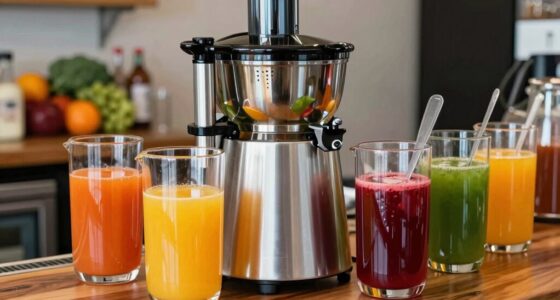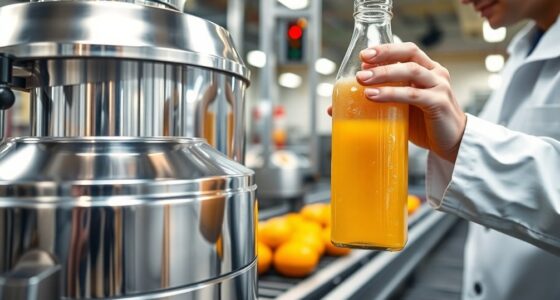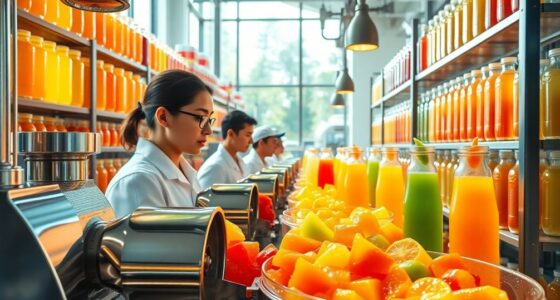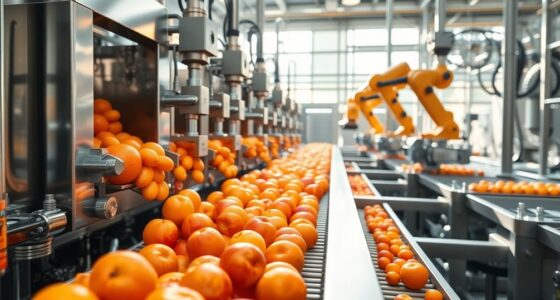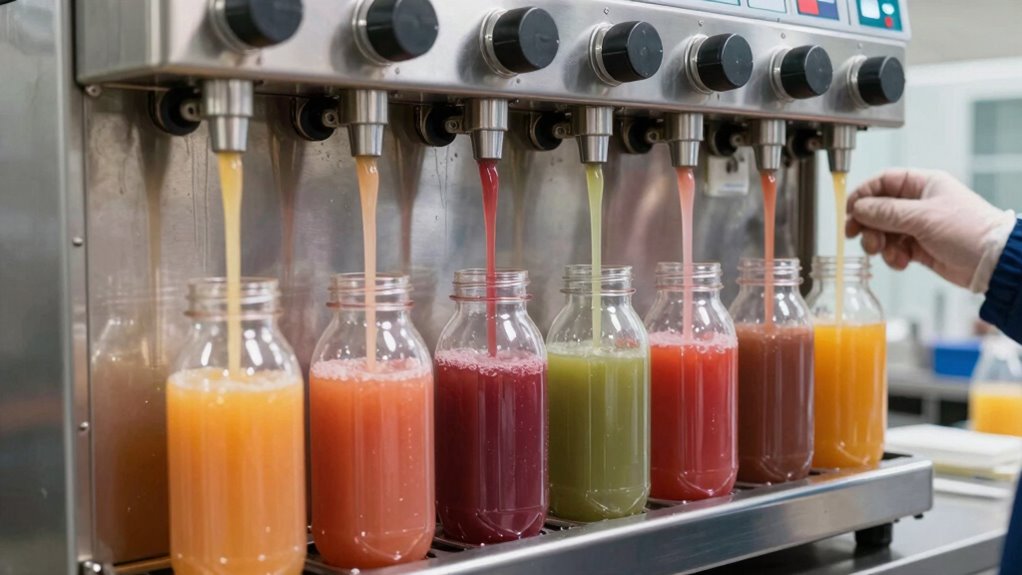

When choosing a bottle filling machine for juice, understanding its viscosity is essential. Thicker juices require high-viscosity handling equipment to prevent clogging and guarantee accurate filling. Thinner juices need smooth, precise mechanisms to avoid spills and maintain flow. Matching your machine to your juice’s viscosity helps protect flavor, prevent contamination, and optimize efficiency. If you want to discover more about selecting the right equipment based on viscosity, keep exploring this important factor.

Get kitchen staples and gadgets delivered free — and shop member deals
- Fast, free delivery on millions of items
- Access to Prime Big Deal Days deals on October 6–7
- Prime Video, Amazon Music and more included
Key Takeaways
- Assess the juice’s viscosity to determine the suitable filling mechanism, such as piston, gear, or gravity-fed systems.
- Match viscosity levels with equipment capabilities to prevent overflows, underfills, or damage.
- Consider viscosity impacts on cleaning, ensuring equipment can be thoroughly sanitized after processing thick or thin liquids.
- Select machines designed for the specific bottle type and shape to maintain accurate fill levels and minimize spillage.
- Understand how viscosity influences flow rate and agitation requirements to preserve juice flavor and quality during filling.
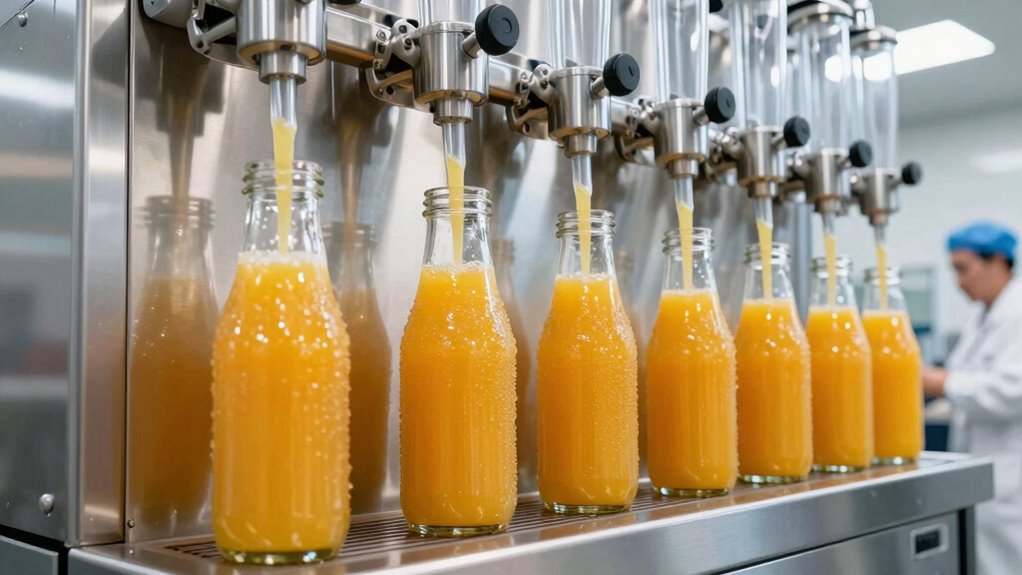
If you’re involved in juice production, choosing the right bottle filling machine can considerably boost your efficiency and product quality. One of the most essential factors to consider is the viscosity of your juice. Viscosity impacts how your liquid flows, and understanding it is vital to selecting a machine that preserves flavor integrity while maintaining packaging compatibility. Thicker juices, like smoothies or pulp-rich blends, require equipment designed to handle high-viscosity fluids without compromising the product or slowing down your line. Conversely, thinner juices, such as citrus or clear apple juice, demand different mechanisms to guarantee smooth, accurate filling.
Choosing the right filling machine depends on your juice’s viscosity for optimal quality and efficiency.
When it comes to flavor preservation, the viscosity of your juice plays a significant role. If your machine isn’t suited to your product’s thickness, you risk introducing air bubbles, contamination, or inconsistent filling levels—all of which can degrade flavor quality. Properly matched equipment minimizes agitation and exposure to oxygen, helping your juice retain its fresh taste and nutritional value from filling to consumption. For instance, high-viscosity juices may need piston or gear pumps that gently transfer thick liquids without damaging the pulp or fruit particles, ensuring the flavor remains intact and unaltered. Additionally, selecting equipment that matches the viscosity can help prevent over-pressurization, which might otherwise cause leaks or damage.
Packaging compatibility is another vital consideration influenced by viscosity. Different bottles and caps require specific filling mechanisms to prevent spills, overflows, or underfills. For example, narrow-neck bottles might need precise volumetric fillers that can handle viscous liquids without clogging or dripping. Wide-mouth bottles, on the other hand, may allow for gravity-fed or pump-based systems that accommodate thicker textures. Choosing a machine that aligns with your packaging design ensures a seamless operation, reduces waste, and maintains a professional appearance for your product on the shelf. Ensuring compatibility between your filling equipment and packaging design can streamline your production process and improve overall efficiency.
Furthermore, the viscosity of your juice influences cleaning and maintenance routines. High-viscosity liquids tend to leave more residues, so you’ll want a filling system that’s easy to disassemble and clean thoroughly. This not only preserves flavor by preventing cross-contamination but also ensures your equipment stays in top condition, reducing downtime and extending its lifespan. Recognizing liquid viscosity as a key factor in your equipment choice can help optimize both production efficiency and product quality. Implementing appropriate cleaning protocols tailored to your juice’s viscosity can further enhance your operational efficiency and product safety.
juice bottle filling machine for high viscosity liquids
As an affiliate, we earn on qualifying purchases.
As an affiliate, we earn on qualifying purchases.
Frequently Asked Questions
How Do Viscosity Levels Affect Machine Maintenance Requirements?
Viscosity levels directly impact your machine’s maintenance needs. Higher viscosity liquids cause more wear and tear on components, leading to frequent breakdowns if not properly managed. You should modify lubrication schedules accordingly to prevent damage. Low-viscosity fluids, meanwhile, require less lubrication but can cause issues if not monitored. Regularly inspecting and maintaining your equipment ensures it operates smoothly, regardless of the juice’s viscosity.
Are There Specific Bottle Types Compatible With High-Viscosity Juices?
You’ll find that certain bottle types, like thick, squeezable PET bottles, work best with high-viscosity juices, matching your packaging design’s flexibility. The bottle material influences how well the juice flows during filling, ensuring no leaks or damage. Coincidentally, selecting the right bottle shape and durability complements your product’s presentation, making it easier to handle and appealing on the shelves, all while maintaining a seamless filling process.
What Safety Features Are Essential for Filling Sticky or Thick Liquids?
When filling sticky or thick liquids, you must prioritize safety features like safety protocols and emergency shutoffs. These precautions protect operators from accidental spills or machine malfunctions. Make certain your filling machine has automatic emergency shutoffs that activate if blockages occur or pressure spikes happen. Regularly train staff on safety procedures, and install guards and sensors to prevent injuries. These measures keep your operation safe and compliant with industry standards.
How Does Viscosity Impact Fill Volume Accuracy?
You’ll find that viscosity greatly impacts fill volume accuracy because thicker liquids resist flow, leading to underfilling if not properly managed. Viscosity measurement helps you monitor this property, guaranteeing consistency. Calibration techniques, like adjusting valve timing or flow rates, compensate for viscosity changes, maintaining precise fill volumes. Regularly measuring viscosity and calibrating your machine guarantees accuracy, especially when filling sticky or thick juices, preventing waste and ensuring customer satisfaction.
Can These Machines Handle Seasonal or Ingredient-Based Viscosity Variations?
Of course, your bottle filling machine can handle seasonal or ingredient-based viscosity variations—if you’ve got the magic of viscosity measurement on your side. It’s all about maintaining ingredient consistency, right? By regularly monitoring viscosity, you guarantee the machine adapts seamlessly, no matter how the weather or ingredients conspire to change things. So yes, with proper oversight, your machine’s ready to tackle any viscosity fluctuation that comes its way!
Conclusion
So, next time you’re faced with a juice bottle that’s too thick or too thin, remember—your filling machine’s viscosity question isn’t just a technical detail. It’s the secret handshake to flawless filling, avoiding spills and spills of spills. Because nothing says “professional” like a machine that knows exactly how thick your juice should be—without turning your production line into a sticky, fruit-scented chaos. Cheers to smooth operations and perfectly filled bottles!
Halloween Picks
halloween
As an affiliate, we earn on qualifying purchases.