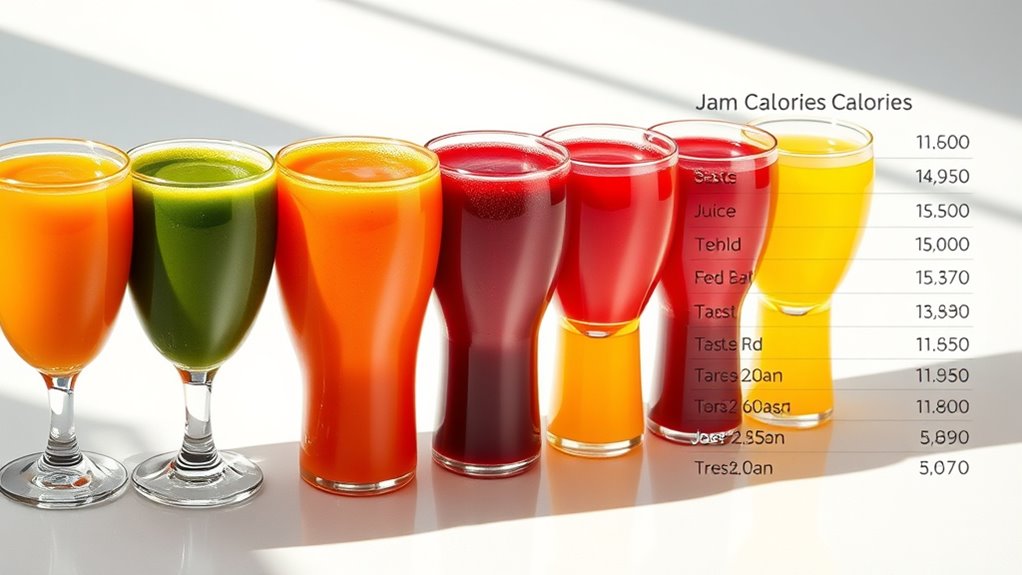

For an 8-ounce serving, orange juice has about 110 calories, while apple juice is slightly higher at around 114 calories. Grape juice packs more at roughly 150 calories, mainly from sugar, which is about 21 grams for orange, 24 grams for apple, and 36 grams for grape. To cut calories and sugar, consider vegetable juices like tomato or carrot, which have fewer calories and less sugar. Discover more ways to choose healthier options as you explore further.
Key Takeaways
- Orange juice contains approximately 110 calories per 8 oz. serving.
- Apple juice has about 114 calories per 8 oz. serving.
- Grape juice generally provides around 150 calories per 8 oz. serving.
- Vegetable juices like tomato or carrot typically have 35-50 calories per 8 oz. serving.
- Sugar content varies, with grape juice containing roughly 36 grams per 8 oz., while vegetable juices have less than 10 grams.
Juices can be an invigorating and nutritious addition to your diet, but it’s important to understand their calorie content to make healthier choices. When you choose a juice, you’re not just selecting a flavorful beverage—you’re also deciding what kind of nutrients and calories you’ll consume. Knowing the calorie counts of common juices helps you balance your diet and maintain your health goals. Many people assume that fruit juices are always healthy, but the reality is that their health benefits depend on their sugar content and overall calorie load. For example, 8-ounce servings of different juices can vary widely in calories, which can impact your health if you’re not mindful.
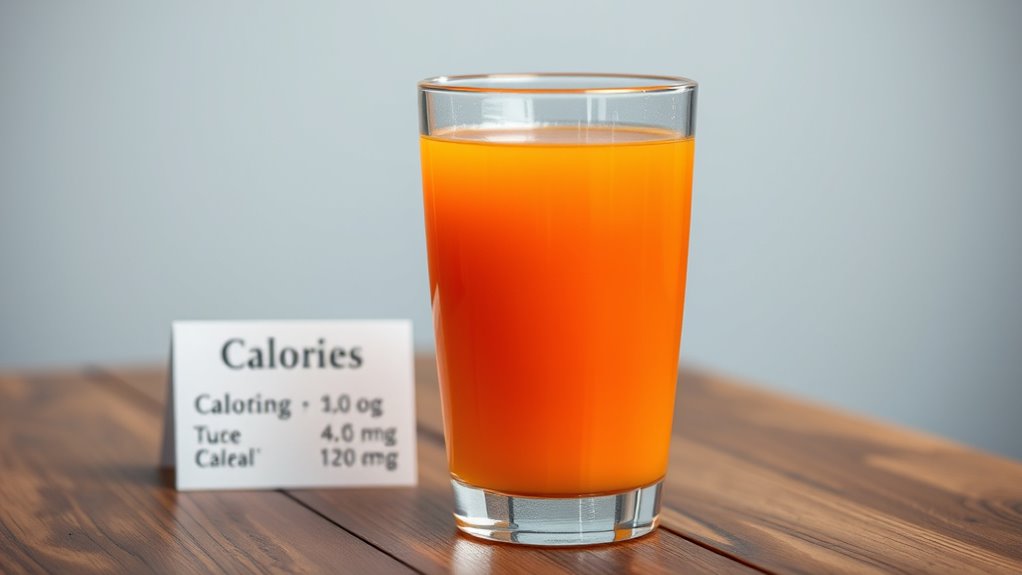
Orange juice, for instance, is a popular breakfast staple, but it contains roughly 110 calories per 8 oz. It provides essential nutrients like vitamin C and antioxidants, which offer health benefits, but it also has a significant amount of natural sugars—about 21 grams per serving. Consuming too much sugar through juice can lead to weight gain, blood sugar spikes, and increased risk of metabolic issues. That’s why understanding the sugar content is *vital*—while the vitamins and antioxidants support your immune system and overall health, excessive sugar can negate some of these benefits by contributing empty calories.
Apple juice is another common choice, with around 114 calories per 8 oz. It’s naturally sweet, which makes it appealing, but it also contains roughly 24 grams of sugar. The high sugar content can quickly add up if you drink multiple servings a day. Although it provides some vitamins, it lacks the fiber found in whole apples, which means you miss out on the satiety and digestive benefits fiber offers. Similarly, grape juice packs about 150 calories per 8 oz and contains roughly 36 grams of sugar. Its high sugar content makes it a less ideal option if you’re watching your calorie intake or trying to limit sugar consumption.
On the other hand, vegetable juices like tomato or carrot juice tend to have fewer calories—around 35 to 50 per 8 oz—and contain less sugar, generally under 10 grams. These juices offer health benefits like antioxidants and vitamins without a high calorie or sugar load. If you’re looking for a nutritious, lower-calorie option, vegetable juices can be a smart choice.
Frequently Asked Questions
Are There Low-Calorie Juice Options for Weight Loss?
Yes, you can find low-calorie juice options for weight loss. Opt for vegetable-based juices or diluted fruit juices, which help reduce calorie intake. Incorporate a juice detox plan with nutrient-rich, low-calorie drinks, and enjoy fruit smoothies made with fresh fruits and water or ice instead of high-calorie ingredients. These choices support your weight loss goals while satisfying your craving for flavorful, nutritious beverages.
How Does Juice Calorie Content Compare to Whole Fruit?
Juice typically has fewer calories than whole fruit, but it also loses fruit fiber, which helps you feel full longer. For example, an 8-ounce glass of orange juice contains about 110 calories, while a whole orange has only 62 calories and more fiber. The high sugar content in juice can lead to quick energy spikes, making whole fruit a better choice for sustained fullness and healthier weight management.
Do Freshly Squeezed Juices Have Fewer Calories Than Packaged Ones?
Freshly squeezed juices don’t necessarily have fewer calories than packaged ones, despite fruit juice myths suggesting otherwise. Many assume that squeezing out juice removes excess calories, but in reality, both can contain similar calorie counts, especially if added sugars or concentrates are involved. Juice calorie myths often oversimplify the issue. Always check labels or make your own juice to control sugar and calorie intake, rather than relying on assumptions about freshness.
Can I Drink Juice Daily Without Gaining Weight?
You can drink juice daily without gaining weight, but only if you’re mindful. Juices with added sugars or lacking fruit fiber can lead to calorie overload, making a juice detox less effective. Opt for fresh, 100% fruit juice with pulp to boost fiber, which helps control hunger and stabilize blood sugar. Moderation is key—drinking small portions and balancing with whole fruits keeps your weight in check.
Do Added Sugars Significantly Increase Juice Calorie Counts?
Yes, added sugars substantially increase juice calorie counts. When you consume juices with added sugars, the sugar impact leads to a notable calorie increase, making the drink more calorie-dense. This can contribute to weight gain if consumed in excess. To enjoy juice without the extra calories, opt for unsweetened options or make your own at home, minimizing added sugars and keeping the calorie impact lower.
Conclusion
Knowing the calorie counts for your favorite juices helps you make smarter choices. For example, imagine starting your morning with a glass of orange juice and then choosing a lower-calorie option like cucumber water on a busy afternoon. By being mindful of these numbers, you can enjoy your drinks without overdoing it. So next time you reach for juice, think about the calories and pick what fits your health goals.

Cindy thoroughly researches juicing trends, techniques, and recipes to provide readers with practical advice and inspiration. Her writing style is accessible, engaging, and designed to make complex concepts easy to understand. Cindy’s dedication to promoting the advantages of juicing shines through her work, empowering readers to make positive changes in their lives through the simple act of juicing.