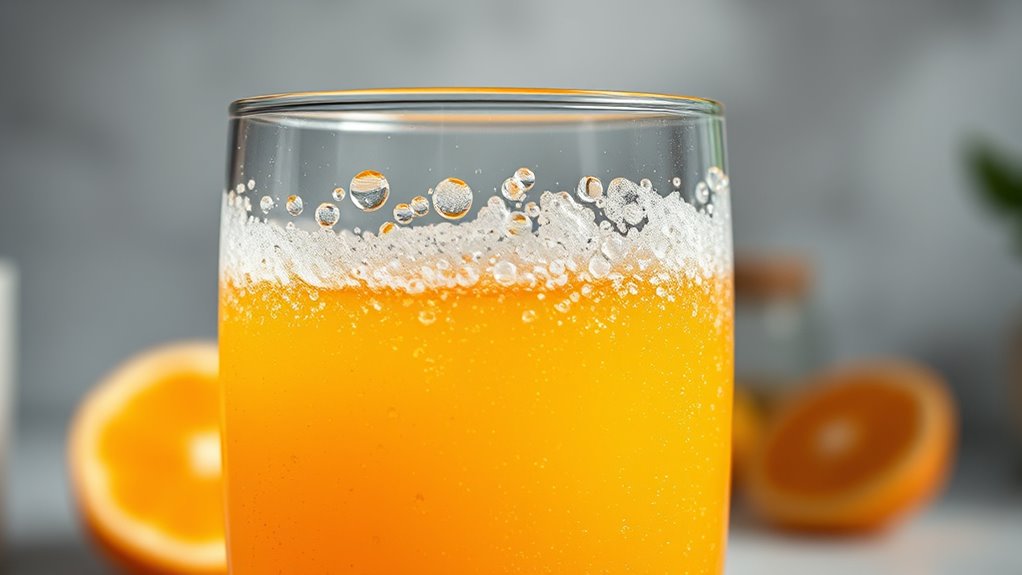

When carbonating juice drinks, you need to control temperature, pressure, and CO2 levels carefully to preserve natural flavors and prevent off-notes. Cooler temperatures help CO2 stay dissolved, while proper packaging ensures it stays fizzy until consumption. Managing the process avoids flavor loss and maintains packaging integrity. If you keep these considerations in mind, you’ll produce a consistently invigorating beverage. Continuing will reveal more tips to optimize your carbonation process for the best results.
Key Takeaways
- Maintain optimal temperature during carbonation to maximize CO2 solubility and preserve juice flavor.
- Use high-quality, pressure-resistant packaging to prevent leaks and ensure carbonation stability.
- Precisely control CO2 pressure and flow to achieve desired fizziness without overpowering natural flavors.
- Ensure proper sealing and barrier properties in packaging materials to retain carbonation over shelf life.
- Monitor process parameters regularly to prevent chemical reactions that could impact flavor and quality.

Have you ever wondered why some juice drinks feel surprisingly fizzy? The answer lies in the delicate balance of carbonation process considerations, especially when it comes to maintaining flavor retention and packaging integrity. When carbonating juice drinks, it’s essential to understand how introducing carbon dioxide (CO2) impacts not just the sensation but also the quality of the product. You want the drink to have the right amount of fizz without sacrificing its natural flavors or risking leaks and spoilage. Achieving this balance requires careful control of the carbonation process.
Flavor retention is a critical aspect of carbonated juice drinks. When CO2 dissolves into the juice, it can sometimes alter the taste, making it sharper or slightly tangy. If not managed properly, the process can strip away delicate fruit flavors or introduce off-notes, diminishing the overall quality of the beverage. To prevent this, manufacturers often optimize carbonation levels, ensuring the CO2 dissolves smoothly and doesn’t overpower the natural fruit essence. Maintaining the right temperature during carbonation plays a role here too—cooler temperatures help the CO2 stay dissolved longer, preserving the intended flavor profile. Proper formulation and process control are key to guaranteeing the juice retains its vibrant taste even after carbonation. Additionally, understanding the effects of temperature on CO2 solubility can significantly improve the quality of the final product.
Proper carbonation control preserves juice flavor and prevents off-notes.
Packaging integrity is another essential factor. When you bottle a carbonated juice, the packaging must withstand the internal pressure created by dissolved CO2. If the packaging isn’t robust enough, it could leak or burst, leading to spoilage, product loss, and safety hazards. High-quality bottles or cans designed for carbonated beverages are essential, and sealed containers need to be tested rigorously to handle the pressure without compromise. Using materials with good barrier properties helps prevent CO2 from escaping over time, ensuring the beverage remains fizzy until opened. Proper sealing and pressure testing during manufacturing help maintain carbonation levels and prevent spoilage, which is indispensable for consumer satisfaction.
In essence, successful carbonation of juice drinks hinges on understanding how to preserve flavor and guarantee packaging integrity. You need to control the process precisely—monitoring temperature, pressure, and CO2 levels—to prevent flavor loss or unwanted chemical reactions. Simultaneously, you must choose packaging that can handle the internal pressure and keep the carbonation fresh from production to consumption. When these considerations are addressed, you get a juice drink that’s delightfully fizzy, flavorful, and safe, making the drinking experience both invigorating and enjoyable.
Frequently Asked Questions
How Does Carbonation Affect Juice Shelf Life?
Carbonation can extend your juice shelf life by improving packaging integrity and microbial stability. The bubbles create a tighter seal, reducing oxygen ingress and slowing spoilage. Plus, the carbonation’s acidity inhibits microbial growth, helping maintain freshness longer. You’ll want to make certain your packaging withstands the pressure to prevent leaks, which can compromise quality. Overall, properly carbonated juice drinks stay fresher, longer, giving your product a competitive edge.
What Are the Best Ingredients for Natural Carbonation?
Imagine a bubbling garden of flavors right in your bottle. You’ll want to focus on natural fermentation for carbonation, using ingredients like fruit sugars and wild yeasts. Choose fresh, organic fruits like apples, grapes, or berries, which naturally contain the yeasts and nutrients needed. Proper ingredient selection guarantees lively bubbles and a clean, authentic taste, making your juice both invigorating and naturally sparkling without added chemicals.
How Does Temperature Influence Carbonation Stability?
Temperature fluctuations markedly impact carbonation stability in juice drinks. When you store your beverages at inconsistent temperatures, the CO2 dissolves unevenly, causing the fizz to diminish faster. To maintain carbonation, keep your drinks at steady, cool temperatures and avoid frequent temperature changes. Proper storage conditions help preserve the bubbles, ensuring your juice drinks stay fizzy and invigorating for longer periods.
Can Carbonation Alter Juice Flavor Profiles?
Think of carbonation as a musical note added to a song; it can enhance the flavor profile or clash with the original tune. Yes, carbonation can alter juice flavor profiles by adding a tangy or crisp taste, depending on the carbonation levels. It can also enhance the overall flavor experience, making the drink more invigorating. Adjusting carbonation levels carefully ensures the flavor enhancement complements the natural juice notes without overpowering them.
What Equipment Is Needed for Carbonation in Juice Production?
You’ll need specific carbonation equipment or juice carbonation systems to carbonate juice effectively. These systems typically include a carbonator tank, pressure regulators, and a CO2 supply line. The equipment helps dissolve CO2 into the juice under controlled pressure and temperature, guaranteeing consistent carbonation levels. Investing in quality carbonation equipment ensures your juice retains its flavor and quality while achieving the desired fizziness.
Conclusion
As you master the art of carbonation in juice drinks, think of it as painting a vibrant, bubbling mosaic on a canvas. Every process step adds a splash of sparkle, turning simple juice into a lively, effervescent masterpiece. With careful attention and precision, you’re fundamentally orchestrating a symphony of bubbles that dance and shimmer like tiny stars, making each sip an exciting journey. Embrace the process, and let your creations sparkle with spirited life.