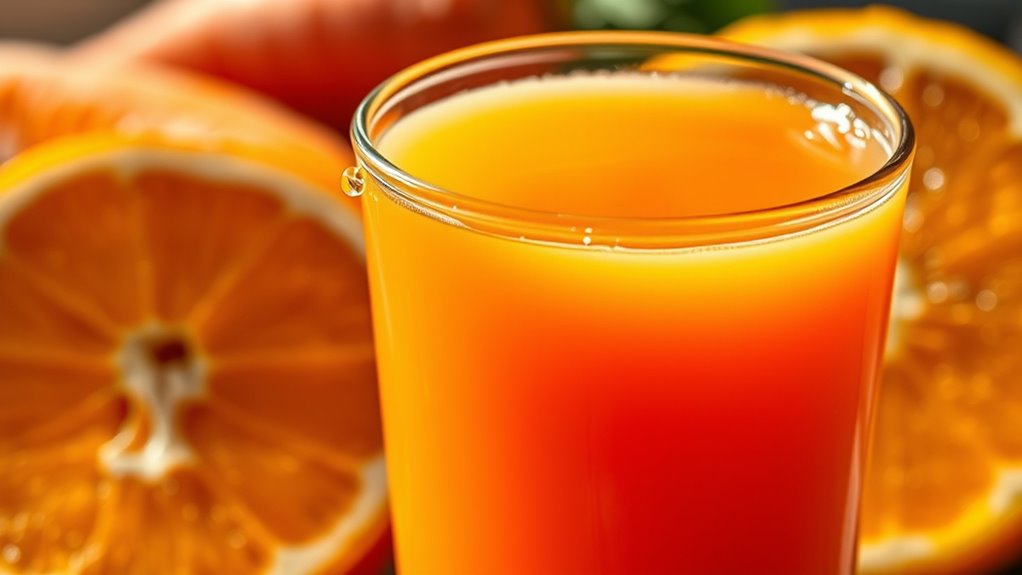

Carotenoids in orange and carrot juices are powerful antioxidants that give them vibrant color and offer health benefits like supporting your immune system and eye health. The levels you get depend on how the juice is processed; freshly squeezed or cold-pressed versions usually retain more carotenoids than commercial ones that undergo heat and filtration. Proper storage helps preserve these nutrients longer. Keep exploring to discover how to maximize the benefits of your juice choices.
Key Takeaways
- Orange and carrot juices are rich sources of carotenoids like beta-carotene, lutein, and zeaxanthin.
- Freshly squeezed or minimally processed juices retain higher carotenoid levels than commercial, pasteurized options.
- Processing methods such as heat and light exposure can degrade carotenoids, reducing antioxidant benefits.
- Cold-pressed juices better preserve carotenoids compared to heat-treated or filtered juices.
- Proper storage and consuming juices soon after processing help maintain their carotenoid content.
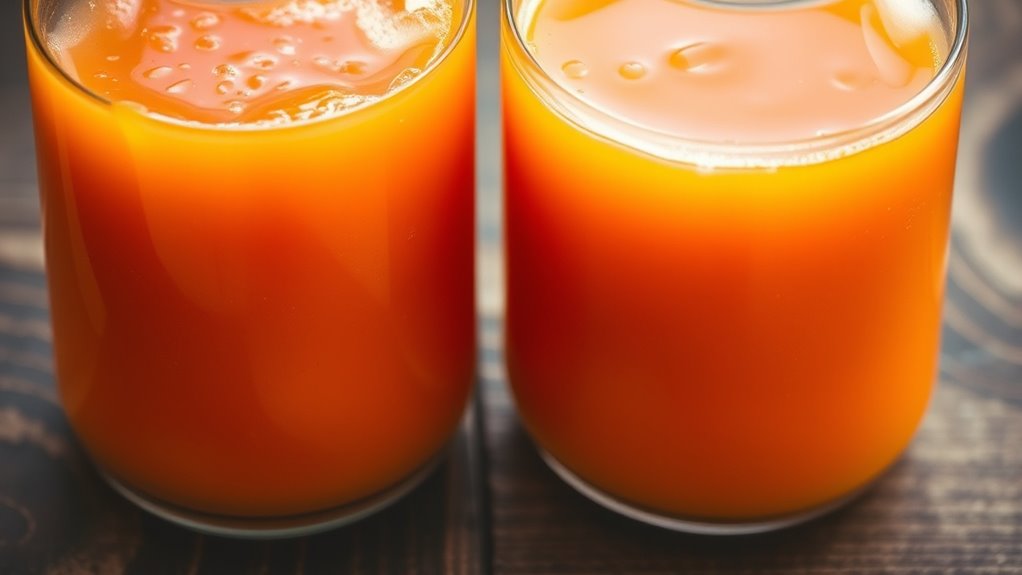
Carotenoids are powerful antioxidants that give orange and carrot juices their vibrant color and health benefits. When you enjoy a glass of these juices, you’re not just savoring a revitalizing drink—you’re also consuming compounds that support your overall health. These carotenoids, such as beta-carotene, lutein, and zeaxanthin, are linked to numerous nutritional benefits. They help boost your immune system, protect your eyes from age-related decline, and may even reduce the risk of certain chronic diseases. Incorporating these juices into your diet is an easy way to enhance your intake of essential nutrients naturally found in fruits and vegetables.
Understanding the impact of processing methods is key to maximizing the nutritional benefits of orange and carrot juices. Freshly squeezed juices tend to retain the highest levels of carotenoids because they involve minimal processing, preserving more of these sensitive nutrients. However, commercial juices often undergo pasteurization and filtration to extend shelf life, which can lead to some nutrient loss. Heat, light, and oxygen exposure during processing can degrade carotenoids, reducing their antioxidant potency. That’s why reading labels and choosing minimally processed or cold-pressed options can make a significant difference in the health benefits you receive from your juice.
The way you prepare and store these juices also influences their nutritional value. For instance, cutting fruits and vegetables into smaller pieces increases the surface area exposed to oxygen, which can accelerate nutrient degradation. Storing juice in airtight containers in the refrigerator helps slow down this process, preserving carotenoid content longer. Additionally, consuming juices shortly after processing ensures you get the maximum nutritional benefits, as carotenoids can degrade over time when exposed to light and heat.
When it comes to processing methods, some techniques are better at preserving carotenoids. Cold-pressing, for example, uses hydraulic pressure rather than heat, helping retain more antioxidants and nutrients. Conversely, high-heat pasteurization may reduce some carotenoid levels, but it also helps eliminate harmful bacteria, offering a trade-off between safety and nutrient preservation. Ultimately, your choice of processing method impacts the nutritional benefits you reap from orange and carrot juices, making it worthwhile to seek products that prioritize nutrient retention.
Frequently Asked Questions
How Do Processing Methods Affect Carotenoid Levels in Juices?
Processing techniques substantially impact carotenoid retention in juices. Heat treatments like pasteurization can degrade these sensitive compounds, reducing their levels, while high-pressure processing helps preserve them better. You should opt for gentler methods to maintain maximum carotenoid content, as aggressive processing often leads to nutrient loss. By choosing appropriate techniques, you guarantee your juices retain their health benefits, providing you with more antioxidants and better nutritional value.
Are There Any Health Risks From Consuming High Carotenoid Concentrations?
Imagine a vibrant sunset, but too much carotenoid intake can turn your skin orange or yellow, causing skin discoloration. While carotenoid overdose from juices is rare, excessive consumption might lead to health risks like skin discoloration. Moderation is key. You won’t face serious health issues if you enjoy carotenoid-rich juices occasionally; just avoid overdoing it to prevent unexpected skin changes or other minor effects.
Can Carotenoids in Juices Be Absorbed Effectively Without Fat Intake?
Carotenoids in juices are better absorbed when you include some dietary fat, as fat aids in fat-soluble nutrient absorption like carotenoids. Without fat intake, your body won’t absorb these antioxidants as effectively. To maximize benefits, follow dietary guidelines by pairing carotenoid-rich juices with healthy fats, such as nuts or a small amount of oil. This guarantees you get the full nutritional value from your juice consumption.
How Does Storage Time Impact the Carotenoid Content in Juices?
Storage time causes degradation of carotenoids in juices, reducing their antioxidant preservation. As you store juices longer, exposure to light, heat, and air accelerates storage degradation, leading to a decline in carotenoid levels. To maximize nutrient retention, it’s best to consume juices fresh or store them properly in airtight, opaque containers in the refrigerator. Doing so helps preserve the antioxidant properties and nutritional benefits of the carotenoids.
Are Organic Orange and Carrot Juices Richer in Carotenoids Than Conventional Ones?
You’ll find organic orange and carrot juices often pack more carotenoids than conventional ones, thanks to organic benefits like reduced pesticide use and fewer processing steps. However, they typically come with higher price differences. While organic options may offer a richer nutrient profile, your choice depends on your budget and preference for organic benefits. Enjoying either can boost your carotenoid intake, but organic might give you that extra nutritional edge.
Conclusion
As you savor orange and carrot juices, remember they’re like sunshine in a glass, packed with carotenoids that boost your health. These vibrant compounds not only brighten your beverage but also nourish your body, supporting your vision and immune system. So, next time you enjoy these juices, know you’re sipping on nature’s own treasure trove. Embrace their colorful power—your health will thank you for it, shining as brightly as the fruits themselves.

Cindy thoroughly researches juicing trends, techniques, and recipes to provide readers with practical advice and inspiration. Her writing style is accessible, engaging, and designed to make complex concepts easy to understand. Cindy’s dedication to promoting the advantages of juicing shines through her work, empowering readers to make positive changes in their lives through the simple act of juicing.