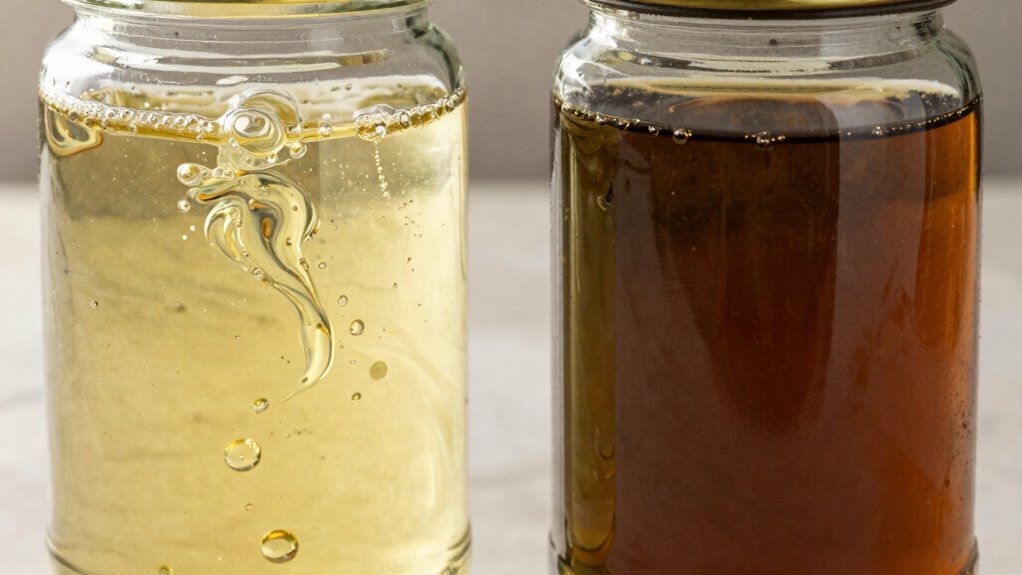

When comparing centrifugal and cold press juicers, you should know that centrifugal models spin rapidly, causing heat and air to mix with your juice. This process increases oxidation, which breaks down nutrients like enzymes and vitamin C, making your juice less fresh and shorter-lasting. Cold press juicers operate slowly, so they produce less heat and oxygen exposure, keeping more nutrients intact. Want to discover how these differences affect your health? Keep exploring to learn more.
Key Takeaways
- Cold press juicers generate less heat, reducing oxidation and preserving nutrients better than centrifugal juicers.
- Centrifugal juicers spin rapidly, creating more heat and air exposure, which increases oxidation and nutrient loss.
- Oxidation in centrifugal juicers causes quicker nutrient degradation, especially for sensitive vitamins like C and enzymes.
- Cold press juice remains fresher longer due to lower oxidation levels during the slower extraction process.
- Faster juicing in centrifugal models leads to more oxidation, but offers quick results, while cold press prioritizes nutrient retention.
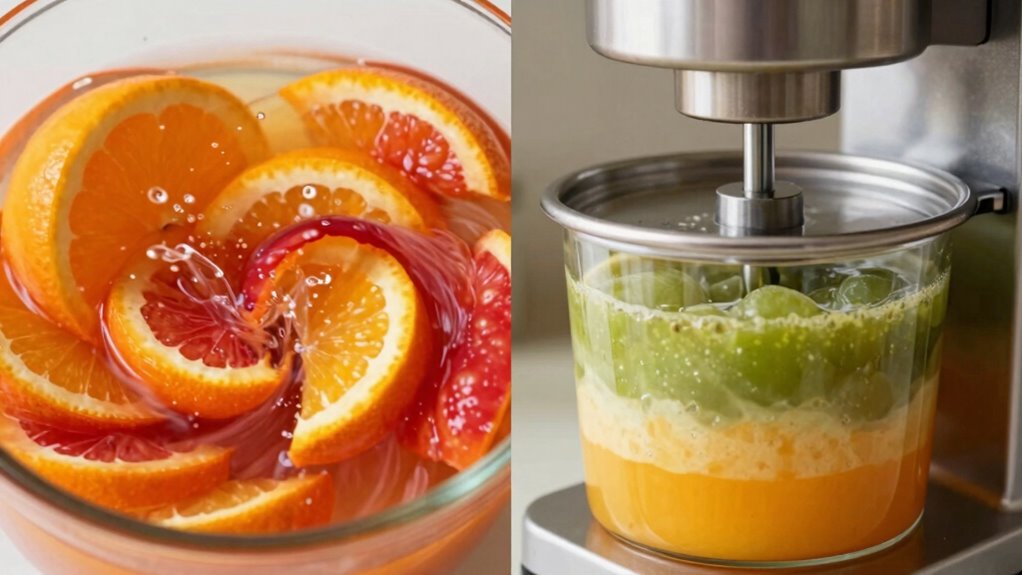
When choosing between centrifugal and cold press juicers, understanding their differences can help you select the right one for your needs. One of the main considerations is nutrient retention—how much of the vitamins, enzymes, and minerals stay intact after juicing. Cold press juicers, also known as masticating juicers, operate slowly but are better at preserving nutrients. They gently crush and press fruits and vegetables, which minimizes heat and oxidation that can degrade sensitive nutrients. This means your juice retains more of its natural goodness, making it a healthier choice if you want maximum nutrient intake.
Cold press juicers preserve more nutrients by gently crushing produce, making healthier, more nutrient-rich juices.
On the other hand, centrifugal juicers spin at high speeds, using rapidly rotating blades to extract juice quickly. This processing speed is a major advantage if you’re pressed for time. You can produce a glass of juice in just a few seconds, making them ideal for busy mornings or quick snacks. However, this rapid processing generates heat and introduces more air into the juice, which accelerates oxidation. As a result, the nutrients, especially delicate enzymes and vitamin C, can degrade faster, leading to a less nutrient-dense juice compared to cold press options.
While centrifugal juicers offer impressive speed, their quick processing can also produce more foam and froth, which some people find less appealing. Cold press juicers, although slower, typically yield a higher quality juice with less separation and foam. They also tend to extract more juice from the same amount of produce, meaning less waste and more efficient use of your fruits and vegetables. Additionally, choosing a European-made cold press juicer can ensure higher quality standards and better durability.
If you’re focused on maintaining the maximum nutritional value and don’t mind waiting a little longer for your juice, cold press juicers are usually the better choice. They produce juice that lasts longer in the fridge and retains more of the natural flavors and nutrients. Conversely, if convenience and speed are your priorities, centrifugal juicers serve well, especially if you consume juice immediately after extraction to enjoy the freshest nutrients possible, despite some nutrient loss from oxidation.

EanOruus Juicer Machines, 3-in-1 Cold Press Juicer with 6.5" Extra Large Chute, 100oz Large Capacity, AC Motor, Makes Juice, Nut Milk & Sorbet, Premium Gray
3-in-1 Versatility for Wellness: Equipped with two interchangeable strainers (Juice & Sorbet), easily switch between extracting pure, nutrient-rich…
As an affiliate, we earn on qualifying purchases.
As an affiliate, we earn on qualifying purchases.
Frequently Asked Questions
Which Method Retains More Nutrients Over Time?
You’ll find that cold press juicing retains more nutrients over time because it minimizes oxidation impact. Unlike centrifugal methods, cold press preserves enzymes and vitamins better, helping your juice stay fresh longer. When you choose cold press, you’re reducing nutrient loss caused by exposure to air and heat. This means your juice maintains its nutritional value, flavor, and freshness longer, making it a smarter choice if nutrient preservation over time matters to you.
How Does Equipment Cost Differ Between Methods?
You’ll find that cold press juicers typically have a higher initial investment compared to centrifugal juicers, making the cost comparison quite noticeable upfront. Cold press equipment tends to be more expensive due to its slower, more complex pressing process. However, while the initial investment is higher, many users find that cold press machines last longer and produce higher-quality juice, which can justify the extra cost over time.
Are There Specific Fruits Better Suited for Each Method?
Think of your juicer as a musical instrument, tuned for different fruit melodies. For centrifugal juicers, berries and softer fruits hit the right note, especially when in season, offering quick, vibrant results. Cold press excels with apples and carrots, matching seasonal abundance with a gentle, slow dance that preserves nutrients and flavor. Choose your method based on fruit pairings and seasonal advantages, turning everyday juicing into a harmonious symphony.
Does Oxidation Affect Juice Flavor Long-Term?
Oxidation impacts juice flavor stability over time, causing it to degrade and develop off-flavors. When you expose juice to air during processing, the oxidation impact can lead to a less fresh taste, especially with centrifugal juicing. Cold-pressed juices, which minimize air exposure, tend to retain their flavor longer. So, oxidation does affect juice flavor long-term, making proper storage and processing methods essential to preserve freshness.
Is One Method Safer for Home Use?
Think of choosing a juicer like picking a trusty sidekick—you want safety and ease. Cold press juicers often have fewer moving parts, making them safer for home use, while centrifugal ones spin rapidly, increasing risk if not handled carefully. To guarantee a smooth user experience, follow safety precautions like avoiding overloading and keeping hands clear. Ultimately, cold press juicers offer a safer, more controlled method for your daily juice adventures.

Qcen Juicer Machine, 800W Centrifugal Juicer Extractor with Wide Mouth 3” Feed Chute for Fruit Vegetable, Easy to Clean, Stainless Steel, BPA-free (Black)
Upgraded 800W Motor – Centrifugal juicer machine with upgraded 800W high speed motor, more efficient and powerful than…
As an affiliate, we earn on qualifying purchases.
As an affiliate, we earn on qualifying purchases.
Conclusion
So, when choosing between centrifugal and cold press, remember it’s a battle of speed versus preservation. Do you want quick extraction with some oxidation loss, or slower, gentler pressing that keeps more nutrients intact? Think of it as a race—do you want the swift rush or the steady, nourishing journey? Whichever you pick, just know that your choice shapes the quality of your juice. The power’s in your hands—make it count.

Elite Gourmet EJX600 Mini Compact Small Space-Saving Masticating Slow Juicer Cold Press Juice Extractor, Nutrient and Vitamin Dense, BPA-Free Tritan, Easy to Clean, 16 oz Juice Cup, Charcoal Grey
✅ MINI COMPACT JUICER (Single-Serve Size): This is a mini / compact juicer – smaller than standard countertop…
As an affiliate, we earn on qualifying purchases.
As an affiliate, we earn on qualifying purchases.

Cold Press Juicer, Upgraded AC Motor Masticating Juicer, Never Wears Stainless Steel Auger, BPA-FREE Slow Juicing Extractor Machine with Easy Clean 5.8" Feeding Chute for Whole Vegs and Fruits
ADVANCED AC MOTOR: Upgrade from noisy DC motor cold press juicers that wear out in 100 hours to…
As an affiliate, we earn on qualifying purchases.
As an affiliate, we earn on qualifying purchases.