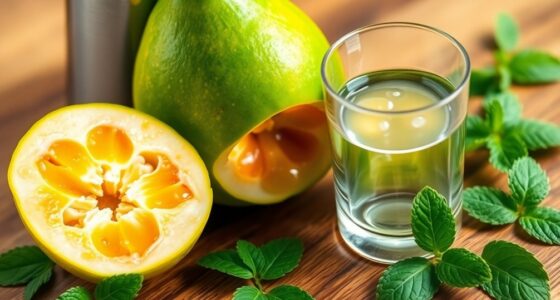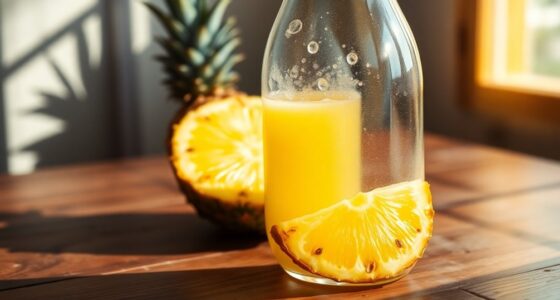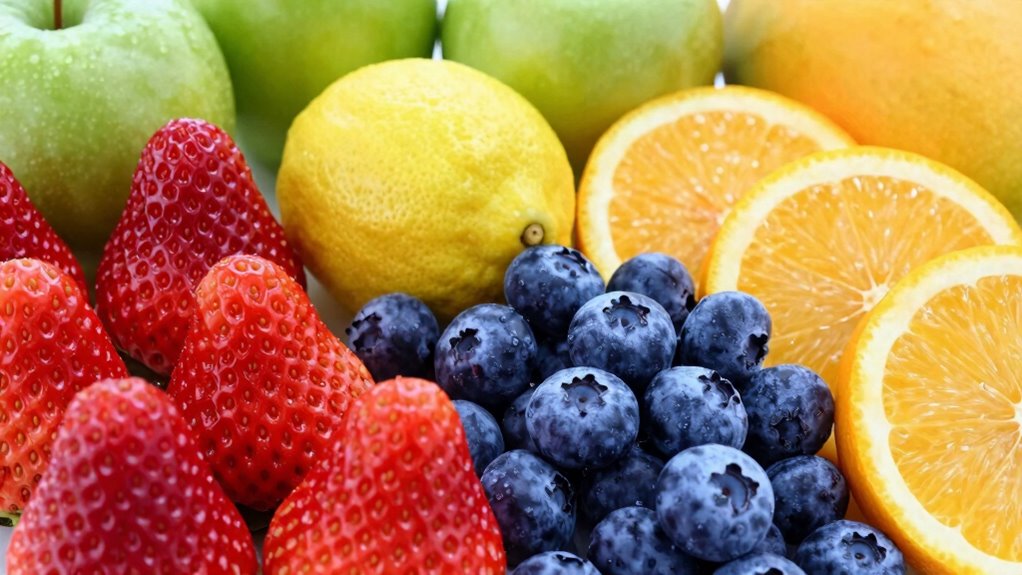

To choose better produce for high-color juices, opt for organic options grown without synthetic pesticides or fertilizers, which helps preserve natural vibrancy. Prioritize seasonal fruits and vegetables at peak ripeness for the freshest, brightest colors. Look for firm, blemish-free items with rich, consistent hues, and avoid dull, soft, or damaged produce. Proper handling and storage also matter for maintaining color and flavor. Keep these tips in mind, and you’ll discover more ways to boost your juice quality.

Get kitchen staples and gadgets delivered free with Prime
- Fast, free delivery on millions of items
- Prime Video, Amazon Music and more included
- Member-only deals all year
Key Takeaways
- Select organic produce to avoid dulling chemicals and retain natural vibrancy.
- Choose fruits and vegetables in season for peak ripeness and optimal color.
- Look for firm, blemish-free items with deep, consistent colors.
- Properly handle and store produce to preserve freshness and brightness.
- Prioritize fresh, high-quality, and minimally pesticide-treated produce for vibrant juices.
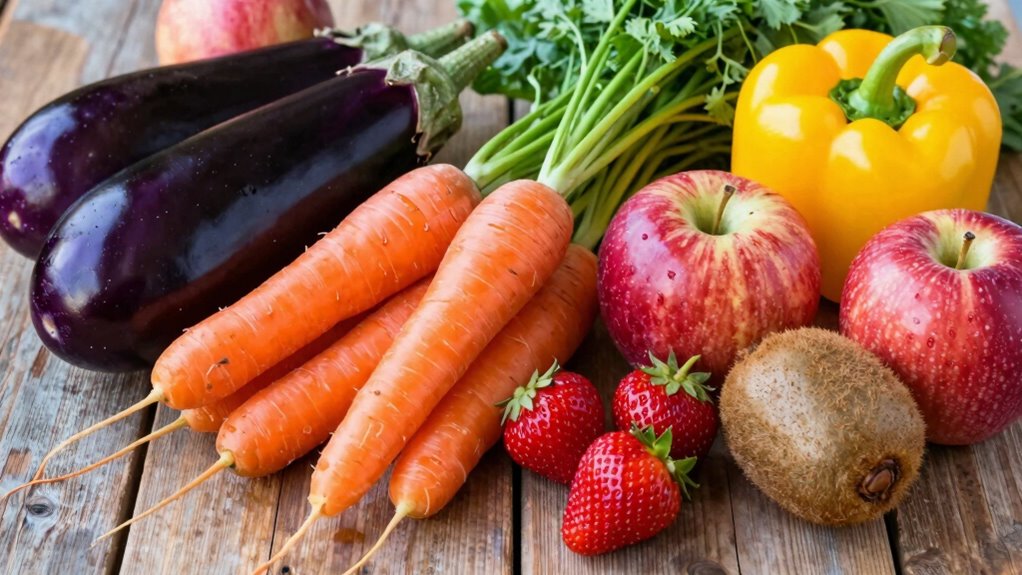
When you’re aiming to create vibrant, high-color juices, selecting the right produce makes all the difference. The key lies in choosing fruits and vegetables that are fresh, ripe, and full of natural pigments. One of the first considerations is organic certification. Organic produce is grown without synthetic pesticides or fertilizers, which means it often retains more of its natural nutrients and vibrant colors. When you opt for organic, you’re more likely to get produce that’s free from chemicals that can dull its appearance or compromise its flavor. Certified organic items also tend to be fresher because they’re often harvested at peak ripeness and handled with more care, which helps preserve their bright hues.
Choosing organic produce ensures brighter colors and fresher flavors for vibrant, nutritious juices.
Beyond organic certification, seasonal availability plays a vital role in selecting produce for high-color juices. When fruits and vegetables are in season, they’re at their peak ripeness, offering the most intense colors and flavors. For instance, in summer, berries, ripe tomatoes, and sweet peaches burst with vibrant reds and oranges, while in winter, root vegetables like carrots and beets provide deep, rich hues. Buying produce during its natural season guarantees you get the best color, texture, and nutritional value. Off-season produce, on the other hand, may be harvested prematurely, stored for long periods, or shipped from afar, which can diminish its vibrancy and overall quality.
It’s also important to pay attention to the produce’s appearance. Look for fruits and vegetables that are firm, free from blemishes, and have a rich, consistent color. For example, a ripe, high-color strawberry will be bright red and plump, while a good-quality beet should have a deep, uniform purple. Avoid produce with dull colors, wrinkles, or soft spots, as these signs point to aging or subpar quality, which can result in duller juices. Additionally, proper handling and storage can significantly impact produce quality and color, so choosing items that have been stored correctly is beneficial.
Furthermore, understanding how pesticide use can affect produce quality and color can help you make more informed choices, as chemicals often dull the natural vibrancy of fruits and vegetables. When choosing produce for your high-color juices, always consider freshness and how well it’s been handled. Fresh, organic, seasonal produce will give your juices the most striking colors and the best flavors. By prioritizing organic certification and seasonal availability, you’re more likely to create vibrant, appealing, and nutritious juices that truly stand out.
As an affiliate, we earn on qualifying purchases.
Frequently Asked Questions
How Do Ripeness Levels Affect Juice Color Quality?
Ripeness levels directly impact juice color quality because ripe produce showcases vibrant hues. You can identify ripeness indicators like color brightness, firmness, and aroma to select fruits that preserve their vivid color. When you choose produce at ideal ripeness, it enhances color preservation in your juice, resulting in appealing, high-quality drinks. Overripe or underripe fruits can dull the juice’s color, so paying attention to ripeness indicators is key for vibrant results.
What Are the Best Storage Methods for Maintaining Produce Color?
To maintain produce color, you should focus on proper storage techniques that promote color preservation. Store fruits and vegetables in a cool, dark, and humid environment, like a crisper drawer or sealed containers. Keep produce away from direct sunlight and avoid temperature fluctuations. Proper ventilation also helps prevent spoilage. By following these storage techniques, you’ll help preserve vibrant colors, ensuring your high-color juices stay visually appealing and flavorful.
Do Organic Fruits Have More Vibrant Colors Than Conventional Ones?
Did you know organic fruits often have more vibrant colors? This is because they typically undergo less artificial additive use and focus more on natural color enhancement. Organic produce tends to retain higher levels of antioxidants and phytochemicals, which contribute to richer hues. So, for high-color juices, choosing organic can give you more vivid, appealing results, without relying on artificial additives that may dull or artificially boost color.
How Does Seasonal Variation Influence Produce Color Intensity?
Seasonal variation greatly influences produce color intensity because it affects pigment stability and harvest timing. During peak seasons, fruits and vegetables are harvested when their pigments are most vibrant, resulting in richer colors. Off-season, pigments may degrade or be less stable, leading to duller hues. By choosing produce harvested at ideal times, you guarantee better color intensity for high-color juices, making your drinks more appealing and flavorful.
Can Genetic Differences Impact the Color of Produce Used in Juices?
Genetic differences substantially impact the color of produce used in juices, thanks to genetic diversity and color genetics. You’ll notice that different varieties have distinct hues because of their unique genetic makeup. When selecting produce, focus on those with desirable color genetics, as they naturally produce more vibrant, appealing colors. By understanding genetic diversity, you can choose fruits and vegetables that yield high-color juices, ensuring a more visually appealing and flavorful product.
Conclusion
Think of selecting produce for vibrant juices as tending a garden of colors—each fruit a brushstroke on your palate’s canvas. When you choose ripe, fresh, and vivid produce, you’re crafting a masterpiece that bursts with life and flavor. Your careful choices become the gardener’s touch, transforming simple ingredients into a lively, beautiful harvest. So, nurture your selection process, and watch your juices bloom with radiant hues and irresistible taste—your colorful garden awaits your attentive hand.
NFL season / tailgating Picks
team gear
As an affiliate, we earn on qualifying purchases.