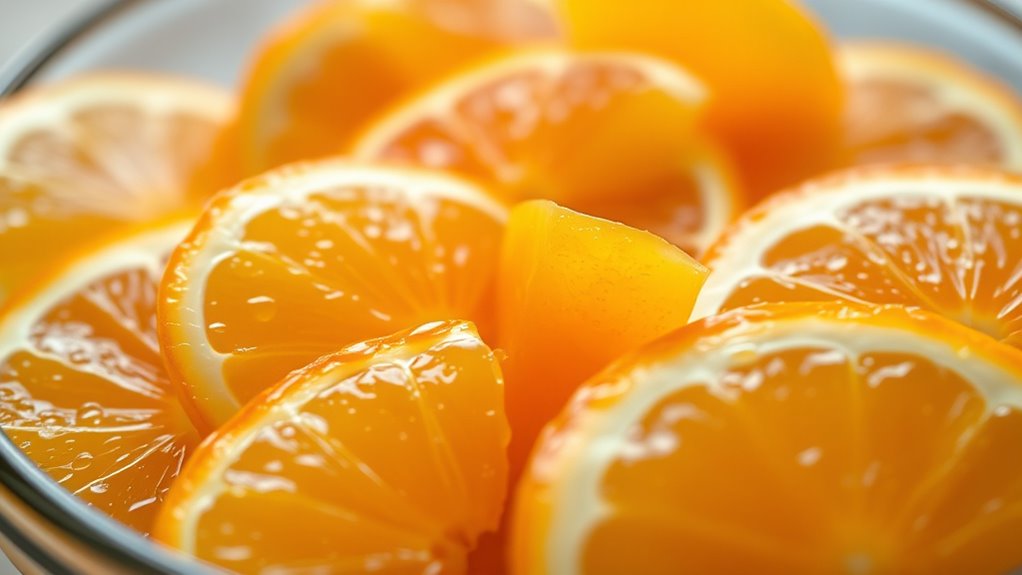

To maximize citrus yield, focus on carefully targeting the fruit’s natural dividing points when segmenting. Handle the fruit gently to prevent bruising and reduce waste, using sterilized tools to minimize contamination. Removing peel and separating segments at natural membranes helps keep pests out and preserves fruit freshness. Proper segmentation also makes storage and distribution more efficient, extending shelf life. Keep these techniques in mind, and you’ll discover even more ways to boost your citrus harvest success.
Key Takeaways
- Identify and target natural segment boundaries to maximize extraction efficiency and reduce waste.
- Handle fruit gently during harvesting to prevent bruising that can lower yield.
- Use sterilized tools and clean workspace to minimize contamination and pest attraction.
- Remove peel and damaged areas carefully to prevent pest entry and spoilage.
- Store segments properly to extend freshness and prevent pest infestations, ensuring higher overall yield.

Have you ever wondered how citrus fruits are divided into neat, edible sections? It’s a fascinating process that not only enhances your eating experience but also plays a essential role in maximizing yield during harvest. Proper citrus segmenting begins long before you peel the fruit; it involves understanding the natural structure of the fruit and employing techniques that promote fruit preservation and pest management. When you grasp how to handle citrus correctly, you reduce waste and guarantee the fruit remains fresh for longer periods.
Citrus fruits naturally develop into segments separated by thin membranes, which are delicate but fundamental for easy consumption. Recognizing this structure allows you to develop methods that preserve the fruit’s integrity, preventing damage that could lead to spoilage or pest infiltration. For example, gentle handling during harvesting and post-harvest processing minimizes bruising, which is critical for fruit preservation. When the fruit remains intact and undamaged, it’s less susceptible to rot or pest intrusion, extending its shelf life and maintaining quality.
Effective pest management is essential when segmenting citrus, especially since damaged or bruised fruit attracts pests like fruit flies and other insects. By carefully removing the peel and separating the segments, you prevent entry points that pests could exploit. Using sterilized tools and maintaining a clean workspace further reduces contamination risks. If pests are a concern, integrating natural repellents or biological control methods during the segmentation process can help protect the fruit without resorting to harmful chemicals, aligning with sustainable fruit preservation practices.
Furthermore, segmenting citrus isn’t just about eating convenience; it’s about optimizing the entire harvesting process to boost yield. When you target the natural dividing points within the fruit, you can carefully extract individual segments without damaging the rest of the fruit. This selective approach minimizes waste and allows for better distribution of the fruit, whether for commercial sale or personal consumption. Proper segmentation also makes it easier to package and store citrus, which is essential for maintaining freshness and preventing pest infestations during storage.
In essence, mastering citrus segmenting is a strategic component of fruit preservation and pest management. It’s a skill that guarantees you get the most out of each fruit, reduces waste, and keeps pests at bay. When you handle citrus with care and attention to detail, you’re not just enjoying a better fruit; you’re also supporting sustainable practices that extend the fruit’s usability and quality. Additionally, understanding the natural structure of citrus fruits helps streamline the entire process, resulting in more efficient and effective yields. In the end, understanding how to segment citrus properly empowers you to maximize yield and enjoy the freshest, most delicious fruit possible.
Frequently Asked Questions
What Tools Are Best for Citrus Segmenting?
You should use specialized citrus segmenting tools like precision knives or segmented scoops to guarantee clean cuts that preserve fruit maturity and minimize damage. These tools help you carefully remove segments, reducing pest entry points and maintaining freshness. By choosing sharp, ergonomic tools, you can improve efficiency and quality, making pest control easier and boosting your citrus yield. Proper segmenting directly impacts fruit quality and overall harvest success.
How Often Should Citrus Be Segmented for Optimal Yield?
You should segment citrus trees based on fruit maturity and your harvesting schedule, typically every 2 to 4 weeks. Regularly monitoring fruit ripeness helps you identify the right time to segment, ensuring maximum yield. By staying consistent with your segmentation, you can optimize fruit development, improve harvest quality, and reduce waste. Adjust your schedule as needed, especially if weather or crop conditions change, to keep your yield at its best.
Can Citrus Segmenting Be Automated With Machinery?
Yes, citrus segmenting can be automated with machinery, but you’ll face mechanization challenges like adapting equipment to different fruit sizes and shapes. Automating this process helps reduce labor costs markedly and increases efficiency. You should explore advanced robotic peelers and sensors that identify segments accurately. While initial investment might be high, automation streamlines harvesting, minimizes manual labor, and boosts overall yield, making it a worthwhile upgrade for modern citrus farms.
What Are Common Mistakes During Citrus Segmenting?
You often make mistakes during citrus segmenting by rushing the peel separation, which damages the fruit, or neglecting seed removal, leaving seeds that affect quality. You might also overlook the importance of gentle handling and precise cuts, leading to uneven segments. To avoid these pitfalls, focus on careful peel separation, thorough seed removal, and consistent techniques, ensuring each segment stays intact and maintains the fruit’s quality and appearance.
How Does Climate Affect Citrus Segmenting Techniques?
Climate variability considerably impacts your citrus segmenting techniques, as changing temperatures and humidity levels can alter fruit firmness and peel adhesion. You need to adapt seasonally, adjusting your methods to account for these conditions. During warmer periods, fruits may be easier to segment, while cooler seasons require more precise cuts. By understanding seasonal adaptation, you can optimize your segmentation process, ensuring maximum yield and quality despite climate fluctuations.
Conclusion
By mastering citrus segmenting, you open the potential for maximum yield, transforming a simple fruit into a treasure trove of flavor. Just as precision enhances a delicate art, careful segmentation elevates your harvest’s value. The difference between a rushed process and a mindful approach is like the contrast between a fleeting taste and lasting satisfaction. Embrace this technique, and you’ll see how small details make all the difference, turning your citrus into a true masterpiece.

Cindy thoroughly researches juicing trends, techniques, and recipes to provide readers with practical advice and inspiration. Her writing style is accessible, engaging, and designed to make complex concepts easy to understand. Cindy’s dedication to promoting the advantages of juicing shines through her work, empowering readers to make positive changes in their lives through the simple act of juicing.