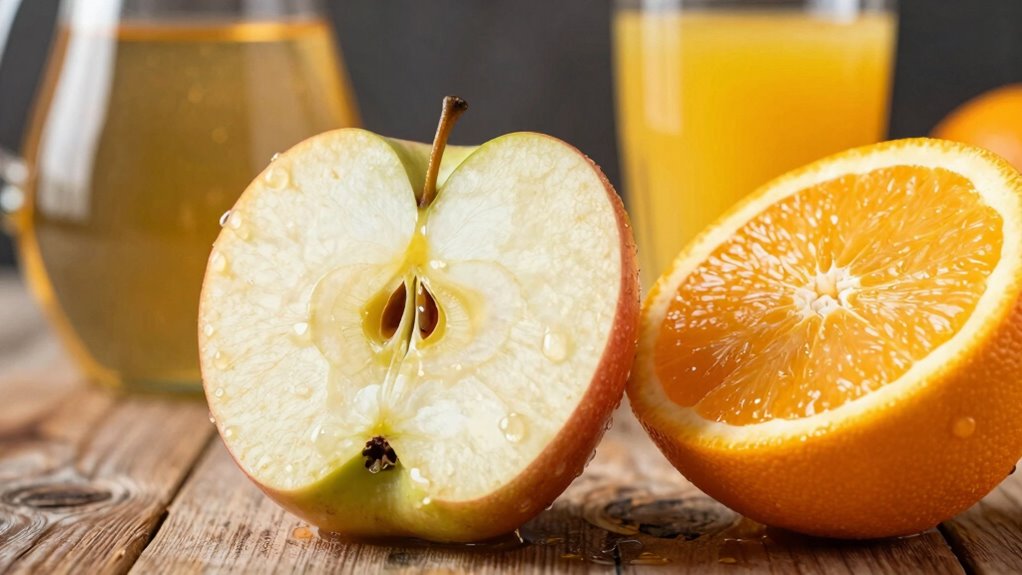

You need different clarification steps for apple and citrus juices because their natural compositions affect how solids and soluble materials are removed. Apples contain more pulp, pectin, and starch, which require enzymatic treatments and filtration to achieve clarity. Citrus fruits are more liquid with less pectin, so decanting, centrifugation, and fining agents work better. Understanding these differences helps optimize each method. Keep exploring to discover how these techniques are tailored for each juice type.

Get kitchen staples and gadgets delivered free with Prime
- Fast, free delivery on millions of items
- Prime Video, Amazon Music and more included
- Member-only deals all year
Key Takeaways
- Apples contain higher levels of pectin and starch, requiring enzymatic treatment, unlike citrus which has lower pectin content.
- Citrus juice naturally has more soluble solids and membranes, making decanting and fine filtration more effective.
- Apple juice’s cloudiness is due to suspended solids and pulp, necessitating filtration and centrifugation, whereas citrus clarity relies on fining agents.
- Enzymatic clarification is more critical for apples to break down pectin, while citrus often needs less enzymatic intervention.
- Storage and preservation methods differ due to their distinct compositions, affecting clarification techniques to maintain clarity and flavor.
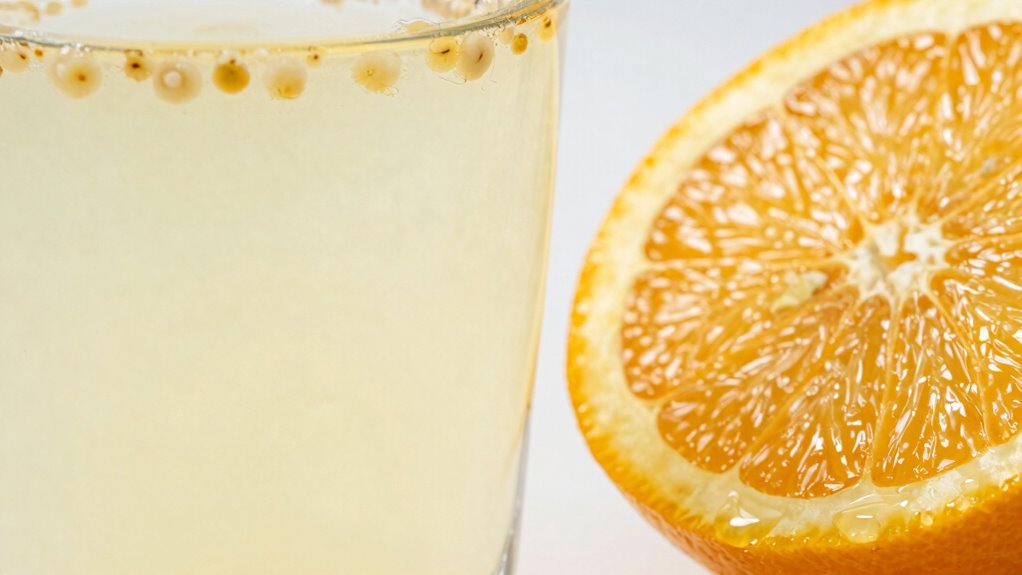
Making clear apple and citrus juices involves carefully removing solids to achieve a smooth, appealing beverage. The processes behind clarifying these juices differ because of their unique compositions and natural properties. Apples contain a higher amount of pulp, starches, and pectin, which can cause cloudiness and sedimentation if not properly treated. Citrus fruits, on the other hand, are naturally more liquid and contain different solids like pulp and membranes that require a different approach to clarity. Understanding these differences influences your processing techniques and storage methods to produce the best possible juice.
Apple and citrus juices require different clarification methods due to their distinct natural compositions.
When you process apple juice, you often rely on techniques like filtration, centrifugation, and enzymatic treatments. Filtration removes larger pulp particles, while centrifugation separates heavier solids from the liquid. Enzymes, such as pectinases, break down pectin, reducing haze formation and sedimentation. These methods are necessary because apple juice tends to be cloudier, with suspended solids that need careful removal to achieve a clear, stable product. Proper processing techniques guarantee you get a smooth texture and prevent cloudiness from reforming during storage. Additionally, controlling enzymatic activity is crucial to prevent over-clarification that could impact flavor. Proper enzyme management ensures optimal clarity without compromising the juice’s natural qualities.
Citrus juice clarifies differently because of its natural composition. Citrus fruits contain less pectin and starch but have more soluble solids and pulp membranes. To clarify citrus juice, you could use techniques like decanting, centrifugation, or even filtration through fine mesh or cheesecloth to remove pulp and membranes effectively. Sometimes, you might employ fining agents like gelatin or bentonite, which bind to impurities and clarify the juice further. These techniques help you avoid over-clarifying, which can strip away flavor and aroma compounds essential to citrus juice’s character. Additionally, understanding the natural composition of citrus fruit helps optimize the clarification process for better clarity and flavor retention. Recognizing the natural properties of citrus ensures that clarification enhances the juice without stripping away its distinctive qualities.
Storage methods also play a key role in maintaining clarity. Apple juice, which contains more suspended solids, benefits from cold storage and light protection to prevent enzymatic activity that can cause cloudiness or spoilage. Proper storage minimizes microbial growth and maintains clarity over time. Citrus juice, with its higher acidity, is generally more stable but still needs refrigeration to prevent fermentation or spoilage. If not stored correctly, both juices can develop haze, sediment, or off-flavors. Using airtight containers and storing at consistent low temperatures extends shelf life and preserves clarity.
apple juice clarification enzymes
As an affiliate, we earn on qualifying purchases.
As an affiliate, we earn on qualifying purchases.
Frequently Asked Questions
How Do Clarification Steps Affect Juice Flavor?
Clarification steps impact juice flavor by enhancing clarity and maintaining flavor retention. When you clarify juice, you remove cloudiness and particles, which can dull or alter the natural taste. This process allows the true flavor to shine through, resulting in a cleaner, fresher taste. Proper clarification guarantees that the juice’s vibrant flavor is preserved while achieving a clear, appealing appearance, making the drinking experience more enjoyable and visually appealing.
Are There Differences in Clarification Equipment for Apples and Citrus?
Did you know citrus juice generally requires 30% more pulp separation than apple juice? When clarifying these fruits, you’ll find that equipment differs: citrus needs specialized centrifuges to handle its acidity, while apple processing may rely on simpler filtration systems. Regular equipment maintenance is vital to prevent clogging and guarantee smooth clarification, especially since citrus pulp can be more stubborn. Tailoring your equipment for each fruit improves clarity and preserves flavor.
Can Clarification Remove Beneficial Nutrients From Juice?
Clarification can reduce some beneficial nutrients in juice, but the extent depends on the process’s complexity. You’ll want to choose gentle clarification methods to maximize nutrient retention, especially for sensitive vitamins. More complex clarification steps might remove more solids and nutrients, but simpler techniques often maintain better nutritional quality. So, balancing clarification efficiency with nutrient preservation is key to producing healthy, tasty juice.
How Long Does Each Clarification Process Typically Take?
The clarification process usually takes about 24 to 48 hours for apple juice and 12 to 24 hours for citrus juice. You rely on fruit pectins and enzyme activity to help break down solids, speeding up clarification. Enzymes activate faster in citrus, reducing time, while apple juice needs more time due to higher pectin content. Monitoring these factors helps you optimize the process efficiently.
Is Clarification Necessary for Homemade Apple or Citrus Juice?
Think of your homemade juice as a work of art; clarification isn’t always necessary. If you prefer clear juice, you might strain out fruit pulp and use proper storage methods to keep it fresh. For a more rustic feel, leave the pulp in. Clarification helps remove cloudiness and sediments but isn’t essential unless you want a smoother presentation. Your choice depends on your taste and how you plan to store your juice.
Conclusion
Understanding why apple and citrus juices require different clarification steps is like knowing the unique personalities of two friends—you adjust your approach to get the best results. By respecting their differences, you guarantee a clearer, more flavorful juice. So, next time you’re clarifying, remember that each fruit has its own story, and tailoring your method is the key to revealing their true potential. It’s these small adjustments that make your juice shine brighter than the sun.
Fall Picks
fall essentials
As an affiliate, we earn on qualifying purchases.