
High-quality water is essential for commercial ice makers because it directly impacts the safety, clarity, and taste of your ice. Using effective filtration removes minerals, chlorine, and sediments, preventing impurities and bacteria that could harm your customers or damage your equipment. Incorporating integrated hygiene features keeps your ice clean and reduces maintenance efforts. Ensuring top water quality not only enhances your business’s reputation but also builds customer trust—discover how to optimize your ice system further.
Key Takeaways
- High-quality water ensures clear, safe, and appealing ice, enhancing beverage presentation and customer trust.
- Integrated filtration systems remove minerals and impurities, preventing taste issues and equipment buildup.
- Maintaining water purity reduces bacterial growth and contamination risks, supporting hygiene standards.
- Consistent water quality simplifies maintenance and ensures reliable ice production for busy operations.
- Superior water quality boosts customer confidence by guaranteeing safe, clean ice that meets health regulations.
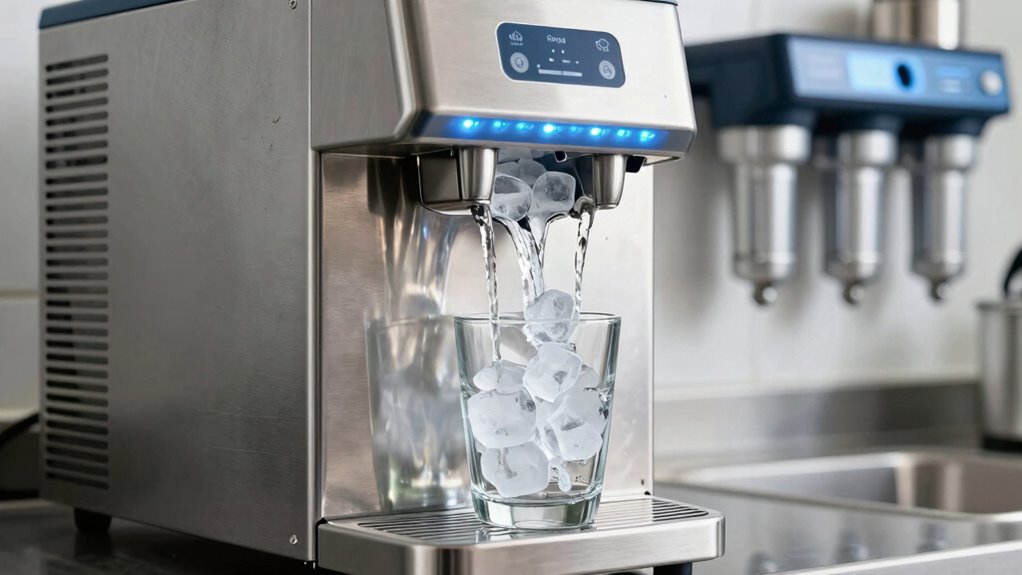
Whether you run a restaurant, bar, or catering service, having a reliable source of ice is indispensable for smooth operations. The quality of that ice can profoundly impact your business, especially when it comes to water filtration and maintaining strict hygiene standards. Poor-quality ice can introduce impurities and bacteria, jeopardizing customer safety and damaging your reputation. That’s why investing in commercial ice makers with integrated water filtration systems is a smart move. These systems guarantee that the water used to produce ice is purified before freezing, removing contaminants, sediments, and odors. As a result, the ice you serve will be cleaner, clearer, and safer for consumption, aligning with hygiene standards that your customers expect.
Reliable ice sources with integrated filtration ensure safety, quality, and hygiene for your restaurant or bar.
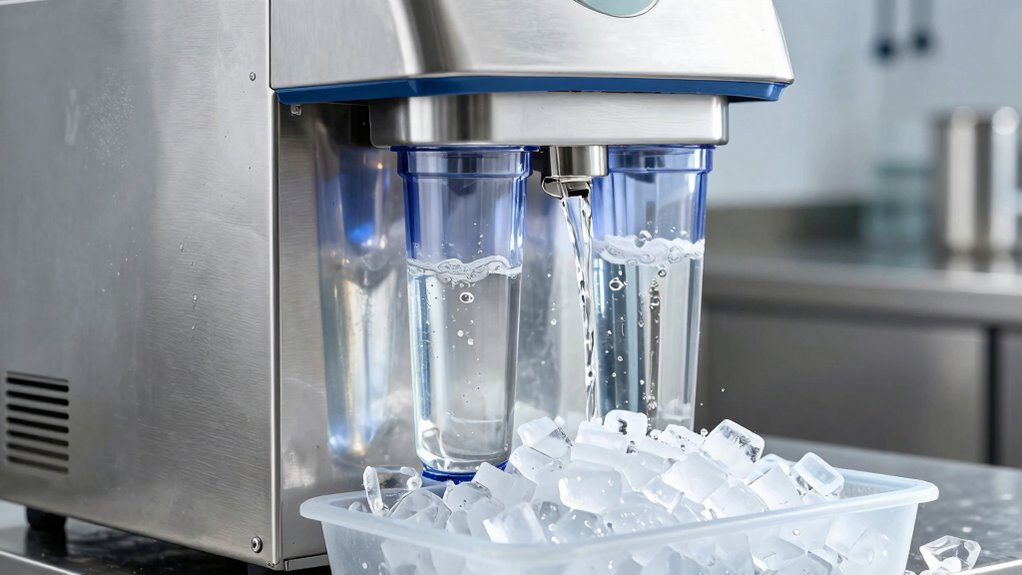
Water filtration plays a critical role in the overall quality of your ice. Without proper filtration, tap water may contain minerals, chlorine, or other impurities that can affect taste and appearance. When these substances freeze into ice, they can alter the flavor of your beverages and create an unappealing visual impression. Advanced filtration systems in commercial ice makers minimize these issues by removing unwanted substances at the source, giving you consistently high-quality ice. This consistency is essential in hospitality environments where presentation and taste are critical to customer satisfaction.
Maintaining hygiene standards with your ice supply is non-negotiable in the foodservice industry. Contaminated ice not only affects flavor but can also pose health risks. Bacteria and other pathogens can thrive in water that isn’t properly filtered or stored correctly. Commercial ice makers equipped with sanitation features and easy-to-clean components help you uphold rigorous hygiene protocols. Regular cleaning and maintenance of your machine are indispensable to prevent biofilm buildup and bacterial growth. By integrating water filtration and adhering to strict hygiene standards, you reduce the risk of cross-contamination, ensuring your ice remains safe for all your customers. Proper water filtration systems can also extend the lifespan of your equipment by reducing mineral buildup, which is an important maintenance consideration.
Furthermore, choosing a commercial ice maker with reliable filtration and hygiene features can streamline your operations. You won’t need to rely on external filtration systems or worry about the quality of water coming from different sources. This convenience allows you to focus on delivering excellent service, confident that your ice meets health and safety regulations. Ultimately, the water quality factor isn’t just about aesthetics or taste — it’s about safeguarding your business and your customers’ well-being. Proper filtration and hygiene practices deliver peace of mind, consistent ice quality, and a reputation for excellence that keeps your customers coming back.
Frequently Asked Questions
How Often Should I Clean My Commercial Ice Maker?
You should clean your commercial ice maker at least every three to six months, depending on usage and water quality. Follow your maintenance schedules closely, and use proper cleaning techniques like descaling and sanitizing to prevent buildup. Regular cleaning guarantees your ice remains clear and safe, extending your machine’s lifespan. If you notice cloudy ice or a foul smell, clean it sooner. Staying consistent with maintenance keeps your ice maker running smoothly.
What Water Filters Are Best for Ice Quality?
Ironically, the best water filters for ice quality use advanced filtration technology that removes impurities and controls water mineralization. You should look for filters with activated carbon, reverse osmosis, or multi-stage systems to guarantee crystal-clear ice. These filters not only improve taste but also prevent scale buildup. By choosing the right filtration technology, you assure consistently high-quality ice, elevating your establishment’s reputation and customer satisfaction.
Can Hard Water Damage My Ice Machine?
Yes, hard water can damage your ice machine over time. Mineralization from hard water causes scale buildup that hampers performance and reduces lifespan. To prevent this, regularly maintain your filters and use water softeners if needed. Proper filter maintenance guarantees mineral deposits don’t accumulate, keeping your ice machine running smoothly and producing high-quality ice. Always monitor water quality and address hardness issues promptly.
How Does Water Temperature Affect Ice Clarity?
Imagine your ice as a crystal-clear mirror, reflecting purity. When water temperature drops, it affects water mineralization, leading to more dissolved gases and impurities. Cooler water produces ice with greater transparency because fewer impurities are trapped during freezing. Conversely, warmer water may result in cloudy ice, as mineral deposits and bubbles become more prevalent. So, keep water cold to make sure your ice remains crisp, clear, and visually appealing.
Are There Certifications for Water Quality in Ice Makers?
Yes, there are certifications for water quality in ice makers. You should look for units with certification standards like NSF/ANSI 42 or 53, which guarantee proper water filtration and safety. These certifications verify that the ice maker meets strict guidelines for contaminant reduction, ensuring you get clean, clear ice. Choosing certified equipment helps protect your customers and maintains high-quality standards in your operation.
Conclusion
If you ignore water quality, your commercial ice maker could turn your business into a disaster zone faster than you can say “meltdown.” Poor water can clog, corrode, and ruin your machine, causing endless headaches and costly repairs. Don’t let subpar water sabotage your reputation or profits. Invest in top-tier water quality now, and watch your ice maker operate flawlessly—saving you from chaos and keeping your customers cool and happy.