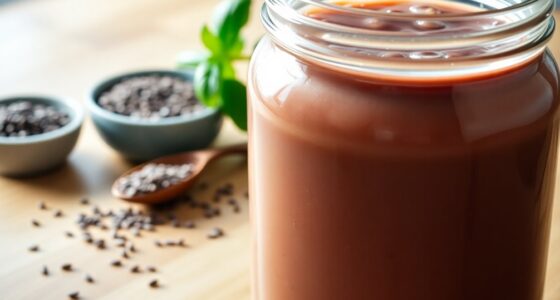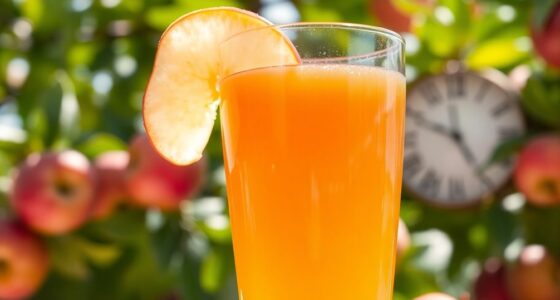
To control pulp texture, decide if you want a smooth or rustic result. Use filtering tools like a fine strainer or cheesecloth to create a clear, silky drink. If you prefer a more textured, fiber-rich beverage, skip some filtering or choose a juicer that produces coarser pulp. Adjust your technique based on your taste and nutritional goals. Exploring different methods will help you perfect the ideal consistency for every recipe.
Key Takeaways
- Use fine mesh strainers or cheesecloth to achieve a smooth, clear liquid by removing pulp fibers.
- Select juicers like centrifugal for moderate pulp, or masticating for richer, rustic textures.
- Adjust pulp retention during blending by controlling liquid amount and filtering to create desired consistency.
- Remove pulp for a refined, smooth beverage, or retain it for a rustic, textured flavor and added fiber.
- Experiment with sieving, filtering, or blending techniques to tailor the pulp texture to your preference.

Have you ever wondered how to achieve the perfect pulp texture in your recipes? Whether you prefer a smooth, silky drink or a more rustic, textured one, controlling pulp is all about understanding the right techniques. When you’re doing fruit juicing, the way you handle pulp can make a significant difference in flavor, mouthfeel, and presentation. To get that desired texture, it’s essential to master pulp removal techniques that suit your taste. If you want a beverage free of any pulp, you’ll need to use a fine mesh strainer, cheesecloth, or a nut milk bag to filter out solids after juicing. These tools catch even the tiniest pulp particles, leaving you with a clear, smooth liquid. On the other hand, if you love some texture and want to retain pulp for added fiber and flavor, you might skip these filtering steps or opt for a juicer that produces a more pulpy result.
Master pulp control with filtering tools or choose juicers for desired texture and flavor.
The type of juicing equipment you choose plays a vital role in controlling pulp texture. Centrifugal juicers tend to produce a more consistent, moderate pulp, while masticating juicers often yield a richer, more fibrous result. Some juicers even allow you to adjust the pulp output, giving you more control over the final texture. When you prefer smooth juice, you can strain the extracted liquid thoroughly, removing larger pulp chunks and fibers. Conversely, to achieve a rustic feel, leave the pulp in or add it back into your drink after juicing. This not only enhances texture but also boosts nutritional content, especially fiber, which benefits digestion. Additionally, understanding how juicing technology impacts pulp control can help you select the best equipment for your needs.
Remember, pulp removal techniques aren’t limited to just filtering after juicing. You can influence pulp presence during the process itself. For example, when making smoothies, you can use a blender with minimal liquid to keep more pulp intact, or add water or juice to thin out the mixture for a silkier consistency. If you’re preparing sauces or purees, pulping techniques like sieving or blending can be adjusted to control how coarse or smooth your final product becomes.
Ultimately, controlling pulp texture is about balancing your personal preferences with the tools and techniques at your disposal. Whether you want a clear, refined juice or a hearty, textured beverage, understanding how to manipulate pulp through careful pulp removal techniques will help you perfect every recipe. It’s all about experimenting until you find that ideal balance, ensuring your drinks and dishes match your taste perfectly.
Frequently Asked Questions
Which Pulp Texture Is More Popular Globally?
You’ll find that smooth pulp textures are more popular globally because they align with modern consumer preferences for sleek, refined pulp aesthetic. People tend to favor the consistency and clean look of smooth pulp, making it the preferred choice in many markets. While rustic textures appeal to niche audiences seeking natural or artisanal qualities, smooth pulp continues to dominate due to its universal appeal and perceived quality.
Can Pulp Texture Affect Fruit Juice Shelf Life?
Pulp fiber can dramatically influence your fruit juice’s shelf life, almost like its secret weapon! When you choose a rustic pulp texture, the increased pulp fiber creates a natural barrier, slowing oxidation and microbial growth, which extends juice freshness. On the flip side, smooth pulp results in a more consistent juice but may reduce shelf life because fewer pulp fibers mean less protection. So, your pulp texture choice really impacts how long your juice stays fresh!
Are There Health Benefits to Rustic Pulp?
Yes, rustic pulp offers health benefits because it has higher fiber content and better nutritional differences than smooth pulp. You’ll get more dietary fiber, which supports digestion and helps control blood sugar levels. By choosing juices with rustic pulp, you’re consuming more nutrients and promoting overall health. The rougher texture preserves more of the fruit’s natural vitamins and antioxidants, making it a healthier option for your diet.
How Does Pulp Texture Influence Flavor Perception?
You might notice that pulp texture influences flavor perception by altering flavor intensity and mouthfeel. Rustic pulp, with its coarser texture, often enhances mouthfeel, making the juice feel richer and more robust, which can intensify flavor perception. Conversely, smooth pulp provides a cleaner, more refined taste, but may lessen the overall flavor impact. Your sensory experience is shaped by these textures, affecting how vibrant or subtle the flavors seem.
Is There a Way to Customize Pulp Texture at Home?
Yes, you can customize pulp texture at home through DIY pulp modification and pulp filtration techniques. To make it smoother, blend your fruit or vegetable more thoroughly, then strain the pulp using a fine mesh sieve or cheesecloth. For a rustic texture, blend less or skip the straining step. Experiment with different filtration methods to achieve your desired pulp consistency and enhance your flavor perception.
Conclusion
Whether you prefer a silky smooth or satisfyingly rustic pulp, the choice is yours to make. By mastering the method, you’ll mold your masterpiece with confidence, creating the perfect texture for your taste. Remember, the secret is in your hands—so smile, stay focused, and enjoy the process. With a little practice, you’ll produce a pulp that’s precisely pleasing, whether polished or proudly chunky. Happy blending!

Cindy thoroughly researches juicing trends, techniques, and recipes to provide readers with practical advice and inspiration. Her writing style is accessible, engaging, and designed to make complex concepts easy to understand. Cindy’s dedication to promoting the advantages of juicing shines through her work, empowering readers to make positive changes in their lives through the simple act of juicing.