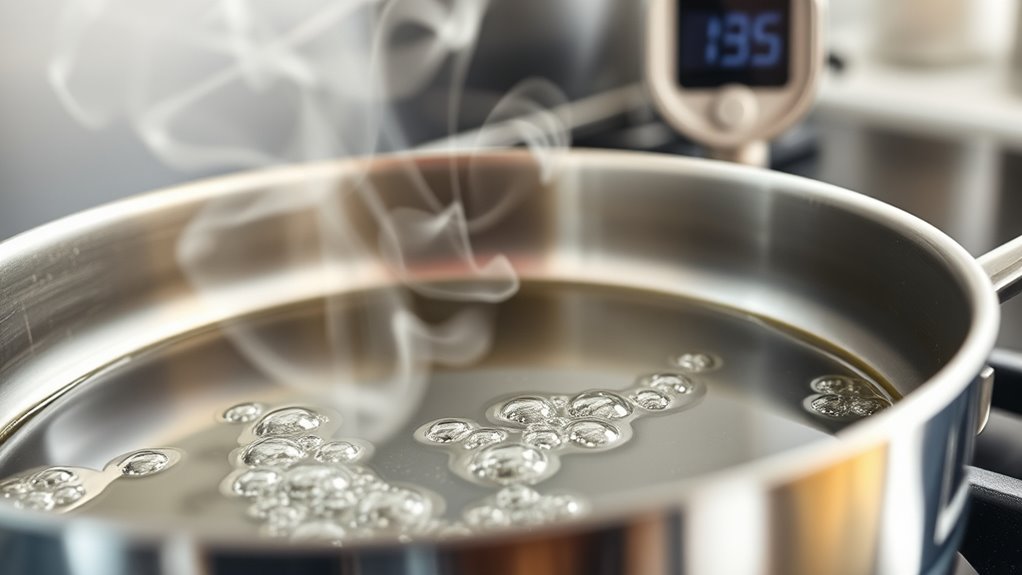

To manage cooking oil smoke points, you should choose oils suited for your heat level and use a thermometer to monitor temperatures closely. Avoid overheating beyond the smoke point, as it releases harmful compounds and affects flavor. Keep your stove at recommended settings and adjust as needed. If you stick to these tips, you’ll cook safely and preserve your oils’ flavor and nutritional value. Want to master the full approach? Keep exploring for more expert guidance.

Get kitchen staples and gadgets delivered free with Prime
- Fast, free delivery on millions of items
- Prime Video, Amazon Music and more included
- Member-only deals all year
Key Takeaways
- Do use a reliable thermometer to monitor oil temperature and prevent exceeding the smoke point.
- Don’t heat oils beyond their designated smoke points to avoid harmful compound formation.
- Do select oils with high smoke points for high-heat cooking methods like frying.
- Don’t guess cooking temperatures; rely on visual cues and temperature control tools.
- Do store oils properly and replace them once they start smoking or develop off-flavors.
As an affiliate, we earn on qualifying purchases.
Understanding Smoke Points and Their Significance
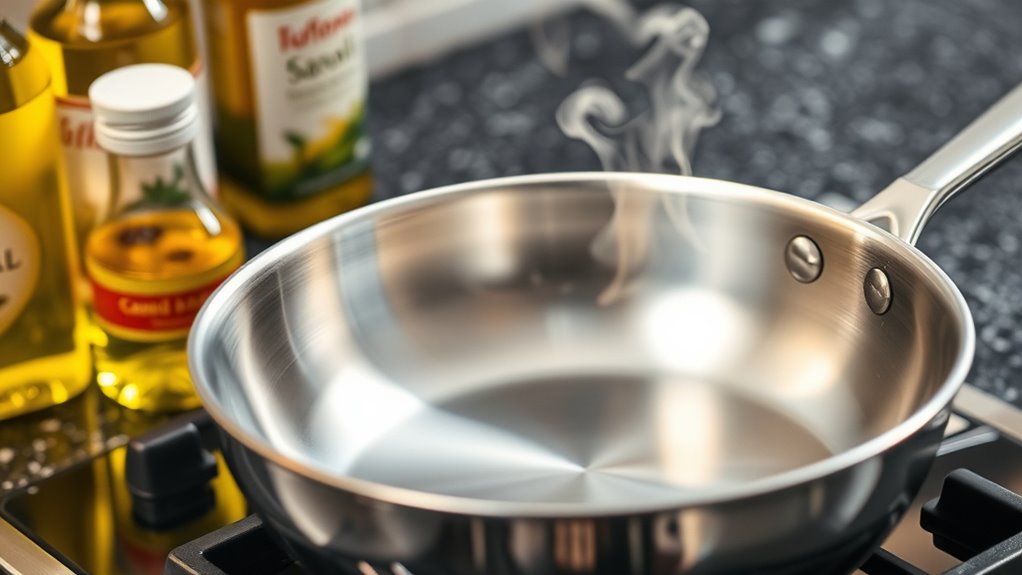
Understanding smoke points is essential because they determine how hot you can safely cook with a particular oil. When you exceed an oil’s smoke point, it begins to break down, reducing its oil stability and releasing harmful compounds. This breakdown can also negatively affect flavor preservation, causing burnt or bitter tastes in your dishes. Knowing the smoke point helps you select the right oil for your cooking method, whether frying, sautéing, or roasting. Using oils within their proper temperature range ensures they retain their nutritional qualities and maintain their intended flavor profiles. Respecting smoke points can prevent the formation of harmful compounds and improve your overall cooking safety. By respecting smoke points, you extend the usability of your oils and avoid unwanted smoke, off-flavors, and health risks. Ultimately, understanding these limits makes your cooking safer and more flavorful.
Practical Tips for Managing Cooking Oil Temperatures
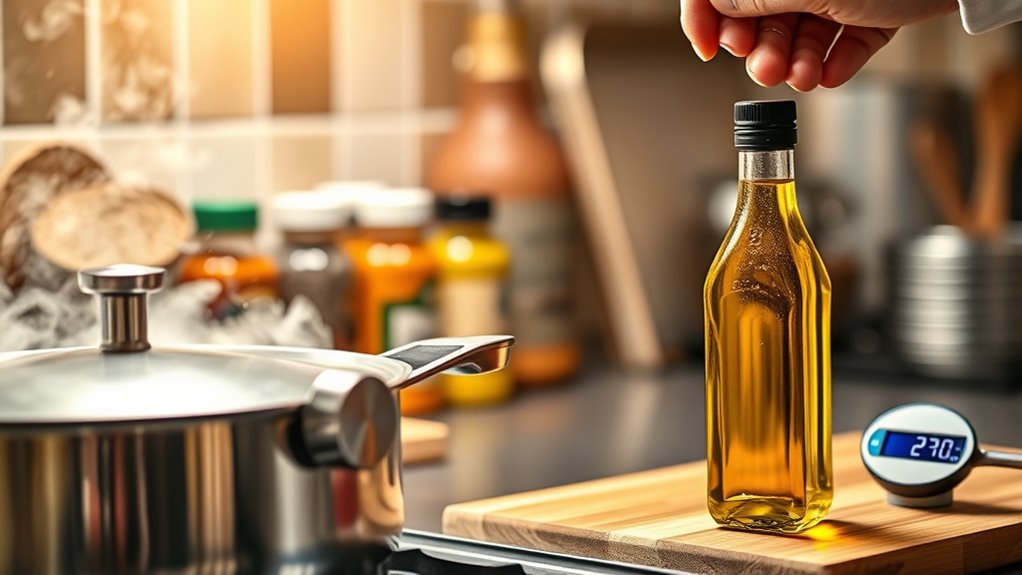
To effectively manage cooking oil temperatures, you need to stay attentive and use practical tools. Monitoring your stove’s heat and using a reliable thermometer helps you maintain proper temperature control, preventing the oil from overheating. Choose oils with good oil stability for high-heat cooking, as they resist breaking down and producing smoke. Keep your heat at the recommended level for your specific oil—medium-high for most stir-frying, lower for delicate oils. Avoid guesswork; instead, rely on visual cues like bubbling and color changes, and listen for signs of smoking. Regularly adjust the heat to keep the oil within its ideal smoke point range. Proper voiceover technique and clear communication can also help guide your cooking process smoothly. This careful attention helps preserve oil quality, enhances safety, and ensures your dishes turn out perfectly.
Frequently Asked Questions
How Do I Identify the Smoke Point of Different Oils at Home?
To identify the smoke point of different oils at home, you can perform simple smoke point testing by heating a small amount of oil in a pan. Watch for the moment it begins to smoke, which indicates reaching its smoke point. Use oil temperature indicators for accuracy, ensuring you don’t exceed the oil’s safe heating limit. This helps you choose the right oil for your cooking needs without risking smoke or burnt flavors.
Can Mixing Oils Affect the Overall Smoke Point?
Mixing oils can affect the overall smoke point, especially if you blend oils with different smoke point stability. When you combine an oil with a high smoke point with one that has a lower smoke point, the mixture may burn sooner or produce more smoke. To avoid this, choose oils with similar smoke points for blending, ensuring better stability and safer cooking at high temperatures.
What Are Signs That My Oil Has Started to Break Down?
When your oil starts to break down, it’s clear as day—you’ll notice discoloration and a funky smell. These are signs that the oil has gone past its prime. If you see darkening or a strange odor, don’t ignore it; it’s a sign to toss it out. Trust your senses—your oil is telling you it’s time to replace it before it affects your food’s flavor and safety.
Does the Smoke Point Vary With Different Cooking Methods?
Yes, the smoke point varies with different cooking methods because of oil flavor and cooking temperature. When you sauté or stir-fry, you typically use higher temperatures, so you’ll need oils with higher smoke points. For gentle simmering or low-heat techniques, lower smoke point oils work fine. Adjust your choice based on the desired flavor and temperature to prevent smoking and preserve oil quality.
Are There Health Risks Associated With Cooking Beyond the Smoke Point?
Cooking beyond the smoke point can pose health risks because it breaks down oils, creating harmful compounds like acrolein and free radicals. These substances can irritate your eyes, throat, and may even increase inflammation in your body. When you push oil past its smoke point, you compromise its stability, making it less safe and healthier to consume. Always monitor your cooking temperature to avoid these risks and preserve oil quality.
Conclusion
Now that you know the importance of smoke points, you’re ready to master your cooking. But beware—using the wrong oil at the wrong temperature can lead to surprises you didn’t see coming. Will your next dish turn out perfect, or will it smoke and burn unexpectedly? Pay close attention to your oils and their limits. The secret to flawless cooking lies in understanding what’s just beyond that smoke point—are you prepared to find out?
Halloween Picks
halloween
As an affiliate, we earn on qualifying purchases.