
🔍 Read the full analysis: Costoletta Alla Valdostana: The Fontina-Stuffed Veal Chop Of The Aosta Valley on Mad Tasting

Get kitchen staples and gadgets delivered free with Prime
- Fast, free delivery on millions of items
- Prime Video, Amazon Music and more included
- Member-only deals all year
TL;DR
Costoletta alla Valdostana is an Aosta Valley dish made with veal filled with Fontina, coated in breadcrumbs and pan-fried. Recipes vary: cooks may use a pocketed bone-in chop or sandwich cheese between thinner cutlets, and some add ham.
Costoletta alla Valdostana is an Aosta Valley specialty in which veal is filled with Fontina cheese, breaded and pan-fried. A source guide from Mad Tasting describes the dish’s common forms and offers cooking advice, while noting that household and restaurant recipes vary.
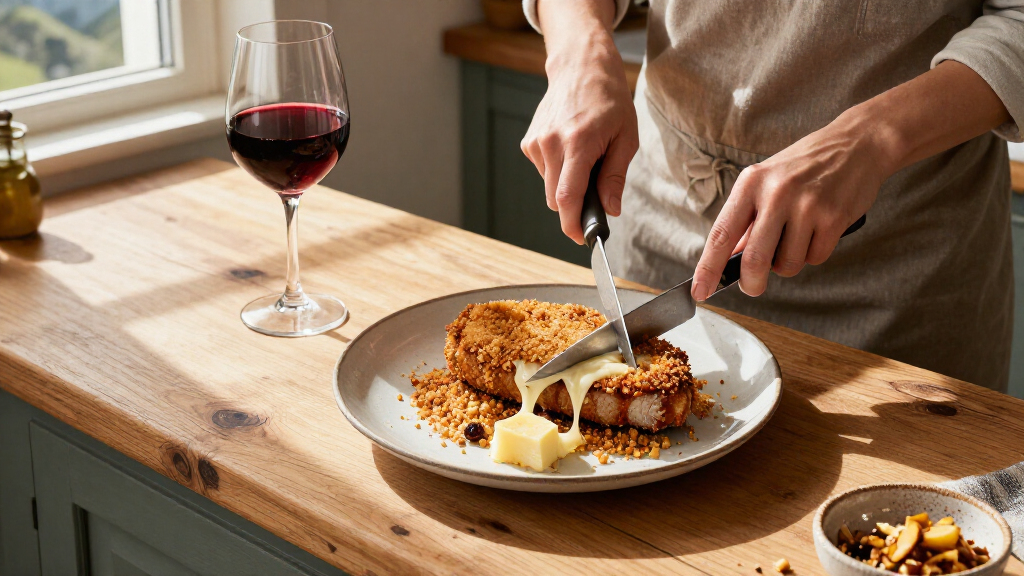
The usual presentation is a thick, bone-in veal chop with a pocket cut into the meat. Fontina goes inside, the opening is closed, and the chop is coated in flour, egg and breadcrumbs before frying. Some cooks instead sandwich cheese between two thinner cutlets. Both versions aim for a browned crust and a softened cheese center.
Fontina Val d’Aosta, a cow’s-milk cheese associated with the region, gives the filling its mild, nutty flavor. Ham appears in some versions but is optional; the guide describes Fontina alone as another common approach. Cooking fat can also vary, with butter or a mixture of butter and oil suggested.
For a chop that holds together, the guide recommends using a modest amount of cheese, securing the opening with toothpicks or kitchen twine, and cooking over moderate heat. If the crust browns before the center is ready, lowering the heat and continuing to cook can help. The chop should be checked with a food thermometer using current food-safety guidance for whole cuts of veal; color alone does not confirm safe cooking. Remove all toothpicks or twine before serving.
Costoletta alla Valdostana Fontina-filled veal chop
This regional dish pairs breaded, pan-fried veal with a softened Fontina center. Its preparation varies from kitchen to kitchen.
The regional signature
Fontina connects the dish to the Aosta Valley’s dairy traditions.
Fontina at the center
The cow’s-milk cheese brings a mild, nutty flavor and softens as the veal cooks.
Breaded and pan-fried
Flour, egg and breadcrumbs form the browned crust around the filled veal.
Two ways to prepare it
Choose a cut that suits the meat available and the cooking time.
- Cut a pocket into a thick chop.
- Seal the opening around the Fontina.
- Cook over moderate heat.
- Sandwich cheese between two cutlets.
- Seal the edges carefully.
- The thinner cut cooks faster.
Keep the filling in place
Small choices can help the chop hold together during cooking.
A smaller amount of Fontina can make the opening easier to close.
Fasten the opening with toothpicks or kitchen twine, then coat the veal.
Use moderate heat; lower it if the crust browns before the center is ready.
Variations are part of the dish
The guide describes common approaches, not one required recipe.
A Regional Dish Built Around Fontina
The dish brings together veal and Fontina in a format that is familiar as a breaded cutlet but distinct in its filled center. That cheese helps connect the recipe to the Aosta Valley’s dairy traditions, giving readers a concrete regional marker when encountering the dish on a menu or preparing it at home.
Its variations also matter in the kitchen. A thick chop makes a substantial centerpiece but needs careful cooking so the crust does not outpace the interior. Thin cutlets are a practical substitute and cook faster, though their edges need to be sealed well. Knowing those trade-offs helps cooks choose a method that suits the meat available and the time they have.
Products Worth Considering

Ninja MultiPot XL 12-in-1 Multicooker, Cyberspace, MZ1001BL1

Weber Lumin Portable Electric Grill, Black

Le Creuset Noël Collection Holiday Tree Round Dutch Oven, 4.5 qt, Shell Pink
As an affiliate, we earn on qualifying purchases.
Aosta Valley Cooking Traditions
The Aosta Valley lies in northwest Italy, bordering France and Switzerland. The source connects the dish’s regional identity to local dairy culture and Fontina, which is also used in fonduta, a melted-cheese preparation associated with the area.
The name means Aosta Valley-style chop. The guide places the dish within the broader family of breaded cutlets, including Milanese cooking, while distinguishing it by its cheese-filled interior. It does not offer a single definitive origin story or claim that one recipe is the only authentic version.
“Recipes vary from kitchen to kitchen, so think of this as a reliable guide rather than a claim that one family’s method is the only authentic one.”
— Mad Tasting source guide
Recipes Differ by Kitchen
The source does not establish one standard recipe, a definitive origin, or a single required cut. Ham is optional, and cooks may choose a bone-in pocketed chop or two thinner cutlets. The guide also gives no precise cooking time or internal temperature, so readers should follow current food-safety guidance for veal and use a thermometer.
Choosing a Cut and Cooking Method
For a traditional presentation, cooks can ask a butcher for a thick, bone-in chop suitable for cutting a pocket. If that is unavailable, two thin cutlets can be closed around a smaller piece of Fontina. Secure the seam, bread the veal, and fry over moderate heat, adjusting the cooking time to the cut’s thickness and checking doneness with a thermometer.
The source suggests serving the chop with a green salad or vegetables to balance the richness. Before serving, remove any fastening and check that the cheese has softened without relying on a deeply browned crust as proof that the center is cooked.
Key Questions
What is Costoletta alla Valdostana?
It is an Aosta Valley veal dish made by filling a chop with Fontina, coating it in breadcrumbs and pan-frying it.
Does it have to be made with a bone-in chop?
No. A common version uses a thick, bone-in chop with a pocket, but the source also describes two thinner cutlets closed around the cheese.
Is ham part of the filling?
Ham is optional. Some cooks add it, while others use Fontina alone. Since ham adds salt, adjust additional seasoning accordingly.
How can I keep the cheese from leaking out?
Use a modest amount of Fontina, close the opening carefully and secure it with toothpicks or kitchen twine. Remove the fastening before serving.
How should the veal be checked for doneness?
Use a food thermometer and current food-safety guidance for whole cuts of veal. Crust color alone does not show whether the center has cooked safely.
Source: Mad Tasting