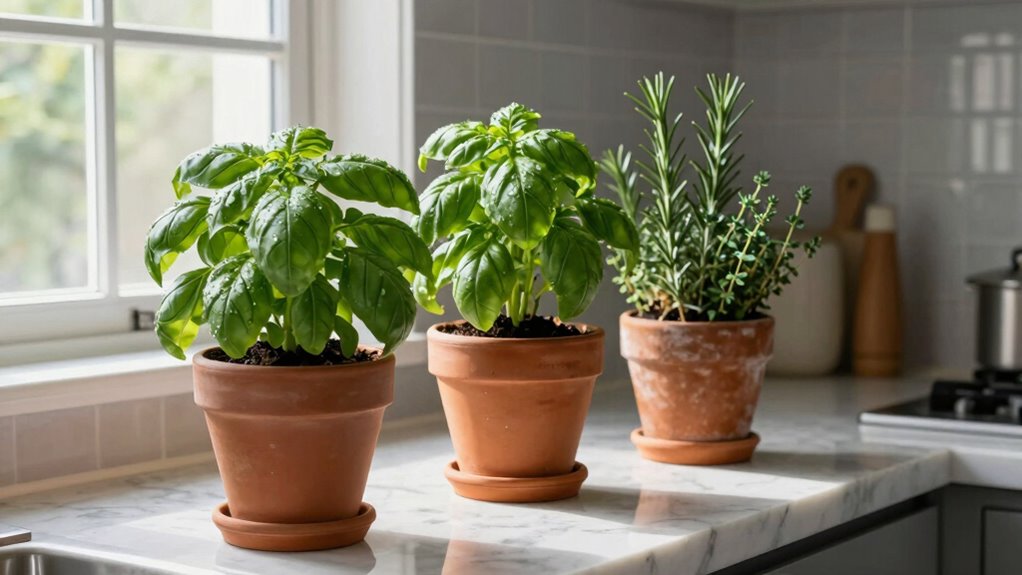

To guarantee your countertop herb garden produces juicy, flavorful leaves, choose herbs like basil, mint, cilantro, parsley, and chives, which are known for their vibrant taste and moisture content. These herbs thrive indoors with proper care and sunlight, providing you fresh ingredients for cooking and reducing reliance on store-bought options. Keep in mind that maintaining the right environment enhances their juiciness, and if you keep going, you’ll discover tips to optimize your herb garden for maximum flavor.

Get kitchen staples and gadgets delivered free with Prime
- Fast, free delivery on millions of items
- Prime Video, Amazon Music and more included
- Member-only deals all year
Key Takeaways
- Herbs like mint, basil, and parsley are known for their juicy leaves and vibrant flavor when grown indoors.
- Choose herbs with tender, succulent leaves such as cilantro and chervil for optimal juicing results.
- Regular harvesting encourages fresh, juicy growth, enhancing flavor and juice yield.
- Proper watering and light conditions preserve herb moisture content, improving juiciness.
- Avoid woody or overly mature herbs, as they tend to be less juicy and more fibrous.

A countertop herb garden offers a convenient way to enjoy fresh herbs right at your fingertips. Not only does it bring vibrant greenery into your kitchen, but it also makes herb preservation simple. When you grow herbs on your countertop, you can snip what you need for your recipes without the hassle of store-bought options that often lose their flavor quickly. Plus, with easy access, you’re encouraged to incorporate herbs more frequently, ensuring you get the most out of your plants before they fade. One key benefit is that you control the environment, which helps extend the herbs’ freshness. Proper watering, adequate light, and regular harvesting prevent them from wilting prematurely. When you prioritize herb preservation, your herbs stay flavorful longer, reducing waste and saving money. It’s also easier to identify when they need watering or care, so they don’t become overgrown or rot, which can lead to pest problems. Pest control becomes a more manageable task with a countertop garden because you’re directly involved in maintaining a clean growing area. Unlike outdoor gardens, where pests can be unpredictable and widespread, indoor gardens allow you to keep a close eye on your herbs. You can spot issues early on and take quick action, such as removing pests manually or using natural remedies, preventing infestations from spreading. This proactive approach reduces the need for chemical pesticides, keeping your herbs safe and healthy. additionally, the confined space of a countertop garden means pests have fewer places to hide or breed, making pest control easier and more effective. You also avoid common outdoor threats like aphids, caterpillars, or fungal infections, which can quickly damage your plants if left unchecked. The compact setup allows you to regularly inspect your herbs and maintain their health, ensuring they grow robust and flavorful. Growing herbs indoors on your countertop also gives you control over the environment, such as light exposure and humidity, which are critical in preventing mold or mildew that can attract pests. As a result, your herbs stay healthier and juicier, ready to be used in your culinary creations. With a little attention to herb preservation and pest control, your countertop garden becomes a sustainable source of fresh, flavorful herbs. It’s a practical, efficient way to have herbs at your fingertips without the worries that come with outdoor gardening. When you’re mindful of these factors, you’ll enjoy a thriving herb garden that consistently yields juicy, aromatic herbs that elevate your dishes. Plus, maintaining this kind of garden is straightforward and rewarding, giving you fresh ingredients whenever you need them while keeping pests at bay and herbs preserved at their peak. Additionally, understanding the importance of scientific skepticism can help you make better decisions about herb care and pest management strategies.
As an affiliate, we earn on qualifying purchases.
Frequently Asked Questions
Which Herbs Are Easiest for Beginners to Grow Indoors?
You’ll find basil, mint, and chives the easiest indoor herb varieties for beginners. These herbs thrive in small herb container sizes and require minimal care, making them perfect for your countertop garden. Keep their soil moist and place them in bright, indirect sunlight. With consistent watering and proper container drainage, you’ll enjoy fresh herbs for cooking and juicing, all while gaining confidence in your indoor gardening skills.
How Often Should I Water My Countertop Herb Garden?
Like a trusty knight checks his armor, you should check your herb garden daily. Water it when the soil moisture feels dry to the touch, usually every couple of days. Overwatering can lead to root rot, so avoid soaking the soil. Stick to a consistent watering frequency, and your herbs will flourish. Remember, attentive care and monitoring soil moisture are key to a thriving countertop herb garden.
Can I Grow Herbs Year-Round Indoors?
Yes, you can grow herbs year-round indoors with proper indoor herb containers. To succeed, provide ample light, such as a sunny windowsill or grow lights, and maintain consistent watering. Regular herb garden maintenance, like trimming and fertilizing, keeps your herbs healthy. With these steps, you’ll enjoy fresh herbs all year, regardless of outdoor conditions, making your indoor herb garden both convenient and productive.
What Lighting Is Best for Countertop Herb Gardens?
You might believe natural sunlight is enough, but LED lighting is actually your best choice for a thriving indoor herb garden. LED grow lights mimic sunlight, providing the specific spectrum herbs need to grow strong and flavorful. Place your herbs near a sunny window for maximum benefit, but supplement with LED lights if natural light is limited. This combo guarantees your herbs stay healthy and lush year-round.
How Do I Prevent Pests in My Indoor Herb Garden?
To prevent pests in your indoor herb garden, start with composting tips that avoid overfeeding and excess moisture, which attract bugs. Keep your herbs healthy by watering appropriately and ensuring good air circulation. Regularly inspect plants for signs of pests, and remove any infested leaves immediately. Using natural pest prevention methods like neem oil or introducing beneficial insects can also help, keeping your garden pest-free and thriving.
Conclusion
With your countertop herb garden flourishing, you’ll feel like a culinary maestro, conjuring fresh flavors from a vibrant, fragrant oasis. Each leaf is a tiny burst of sunshine, turning your kitchen into a lush sanctuary of taste and aroma. Embrace this green sanctuary, where every snip and sprout ignites your passion for home-cooked goodness. Let your herbs be the heartbeat of your space, transforming everyday cooking into a blooming celebration of life and flavor.
Halloween Picks
halloween
As an affiliate, we earn on qualifying purchases.