
Using a dehydrator is a smart way to turn surplus fruits and vegetables into delicious, zero-waste snacks like fruit leather and pulp crackers. You can customize flavors, control textures, and extend the shelf life of your homemade treats—all while reducing food waste and packaging. Dehydrators help preserve nutrients and support eco-friendly practices. Keep exploring how this sustainable approach boosts your snack options and fits into a zero-waste lifestyle.

Get kitchen staples and gadgets delivered free with Prime
- Fast, free delivery on millions of items
- Prime Video, Amazon Music and more included
- Member-only deals all year
Key Takeaways
- Dehydrators enable efficient transformation of surplus or overripe produce into nutritious fruit leather and pulp crackers, reducing food waste.
- They allow customization of flavors and textures, supporting zero-waste, health-focused snacking options.
- Adjustable temperature and dehydration time ensure optimal nutrient preservation and consistent, even drying.
- Dehydrators promote eco-friendly practices by minimizing packaging and extending the shelf life of homemade snacks.
- They facilitate experimentation with ingredient blends and flavor infusions, enhancing culinary creativity sustainably.
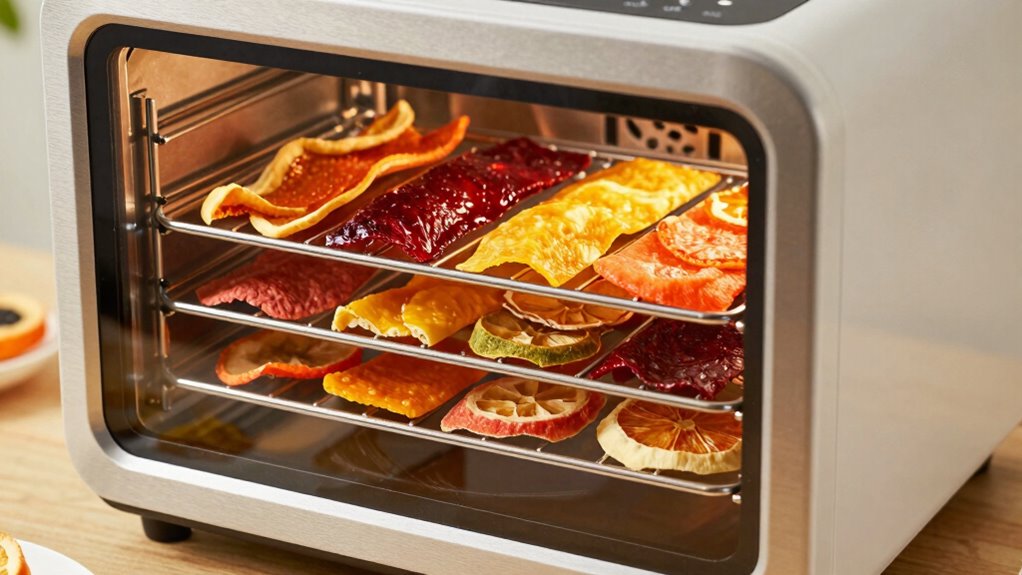
If you’re passionate about making healthy snacks at home, dehydrators are indispensable tools for creating delicious fruit leather and pulp crackers. These devices give you the power to turn surplus or overripe produce into tasty, nutritious treats while minimizing waste. When you start experimenting with dehydration, you’ll discover that the key to exceptional results lies in mastering flavor infusion and dehydration techniques. Flavor infusion allows you to add herbs, spices, or natural sweeteners directly into your fruit purees, enhancing the taste without relying on preservatives or excess sugar. By blending in ingredients like cinnamon, ginger, or vanilla before spreading the mixture onto dehydration trays, you create flavorful snacks that excite your palate and stay true to your health goals.
Master flavor infusion and dehydration techniques to craft healthy, delicious snacks from surplus produce.
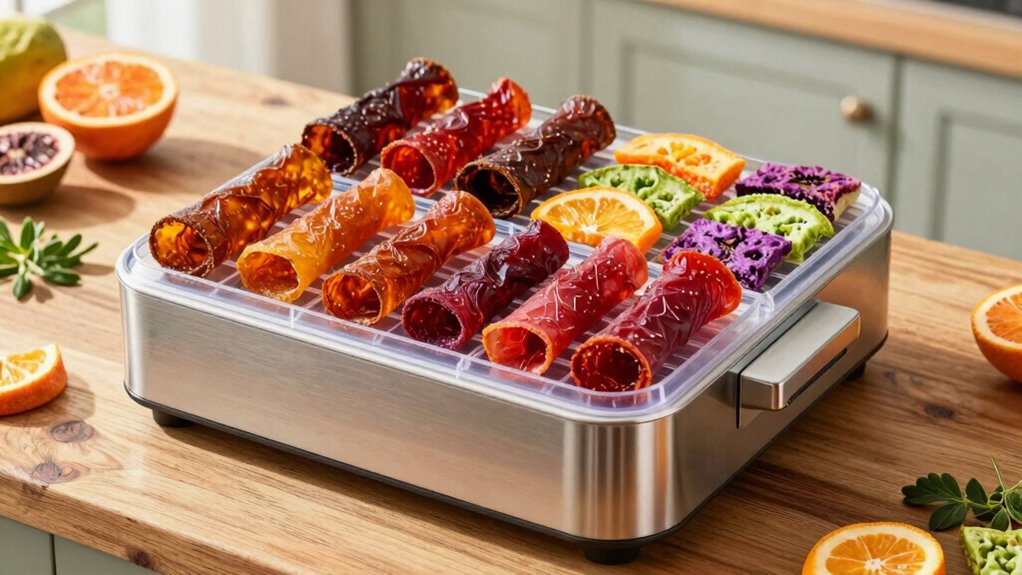
Dehydration techniques are essential for achieving the perfect texture and consistency. You want your fruit leather to be pliable enough to roll without cracking but firm enough to hold its shape. Similarly, pulp crackers should be crisp and crunchy, which depends on precise temperature and timing controls. Many modern dehydrators come with adjustable temperature settings, allowing you to fine-tune the process based on the type of fruit or pulp you’re working with. Lower temperatures typically preserve more nutrients and prevent overheating, while higher temperatures speed up dehydration for quick results. Consistency is indispensable, so following a steady dehydration schedule ensures your snacks turn out evenly dried and flavorful. Understanding the dehydration process can help you troubleshoot common issues like uneven drying or stickiness. Additionally, keeping track of dehydration times can help you develop personalized recipes suited to your preferences.
Another benefit of using a dehydrator is the versatility it offers. You can experiment with different fruit combinations—think apples and strawberries or mango and pineapple—adding layers of flavor and texture. The ability to control dehydration time also means you can create various snack styles, from chewy leather to crisp crackers. As you become more familiar with dehydration techniques, you’ll find it easier to customize recipes to suit your taste and dietary needs, whether you’re aiming for a low-sugar snack or an ultra-crispy cracker. Proper temperature control and dehydration duration help optimize nutrient retention and texture quality, ensuring your snacks are both delicious and nourishing. Additionally, understanding the importance of dehydration techniques and ingredient prep can help you maximize flavor extraction and preserve nutrients more effectively. Embracing the zero-waste lifestyle not only benefits the environment but also encourages more creative culinary experiments using ingredients that would otherwise go to waste.
Investing in a good dehydrator also supports a zero-waste lifestyle. Instead of letting excess produce go to waste, you transform it into delicious snacks that last longer and reduce packaging waste from store-bought options. With proper flavor infusion and dehydration techniques, you can enjoy your homemade treats knowing you’re making eco-friendly choices without sacrificing taste or nutrition. Overall, mastering these skills with your dehydrator turns everyday ingredients into healthful, zero-waste snacks that are satisfying and sustainable.
electric food dehydrator for fruit leather
As an affiliate, we earn on qualifying purchases.
As an affiliate, we earn on qualifying purchases.
Frequently Asked Questions
How Long Does It Take to Dehydrate Different Fruit Types?
The time to dehydrate different fruit types varies based on fruit drying techniques and your dehydrator’s shelf life. Generally, softer fruits like berries take 6-8 hours, while denser ones like apples or mangoes can need 8-12 hours. Thin slices dry faster, so monitor progress regularly. Keep in mind, your dehydrator’s shelf life impacts efficiency, so make sure it’s well-maintained for consistent, safe drying results.
Can Dehydrators Be Used for Jerky or Other Snacks?
Yes, dehydrators are perfect for making jerky and other snacks. You can find dehydrator recipes tailored for beef, poultry, or plant-based snacks, ensuring they turn out crispy and flavorful. When storing your homemade snacks, follow storage tips like keeping them in airtight containers to maintain freshness. Dehydrators give you control over snack textures and ingredients, making your zero-waste journey more sustainable and delicious by creating versatile, preservable treats.
What Is the Energy Consumption of Common Dehydrator Models?
You’ll find that common dehydrator models vary in energy consumption, but most prioritize energy efficiency. Power comparison shows that smaller, energy-efficient models use around 250-500 watts, while larger or commercial units can consume over 1000 watts. To save energy, choose a dehydrator with adjustable temperature controls and a timer, ensuring you use only the power needed. This way, you make smarter, greener choices while drying your food.
Are Dehydrators Safe for Use Around Children and Pets?
You need to keep child safety and pet protection in mind, as dehydrators can be safe if used properly. Always place the dehydrator out of reach of children and pets, and supervise its use. Make sure it’s on a stable surface, and unplug it after use. With precautions, you can enjoy your dehydrator without worries, but never underestimate the importance of vigilance around little ones and furry friends.
How Do I Clean and Maintain My Dehydrator Effectively?
To clean and maintain your dehydrator effectively, follow regular cleaning routines after each use. Remove trays and wipe them with warm, soapy water, then dry thoroughly. Clean the interior with a damp cloth to prevent residue buildup. Maintenance tips also include checking the fan and heating element periodically for dust or debris. This keeps your dehydrator running efficiently, guarantees food safety, and prolongs its lifespan.
Conclusion
As you embrace the use of dehydrators, you’re not just preserving fruit—you’re nurturing a cycle of renewal, a silent promise to respect nature’s bounty. Each sheet of fruit leather or pulp cracker becomes a symbol of mindful abundance, transforming waste into nourishment. With every dehydrated snack, you’re weaving a legacy of zero-waste living, where your choices echo like seeds planted in fertile soil—hopeful, sustainable, and destined to flourish.
Halloween Picks
halloween
As an affiliate, we earn on qualifying purchases.