TL;DR

Get kitchen staples and gadgets delivered free with Prime
- Fast, free delivery on millions of items
- Prime Video, Amazon Music and more included
- Member-only deals all year
Electric citrus juicers use a powered reamer to extract juice from halved lemons, limes, oranges, and grapefruits with less hand effort than a manual reamer. Compare cone sizes, pulp control, container capacity, stability, and cleanup; a compact model can suit a glass of orange juice, while a larger reservoir and pressure-assisted design can help with batches. Refrigerate fresh juice promptly, and never immerse the motor base.
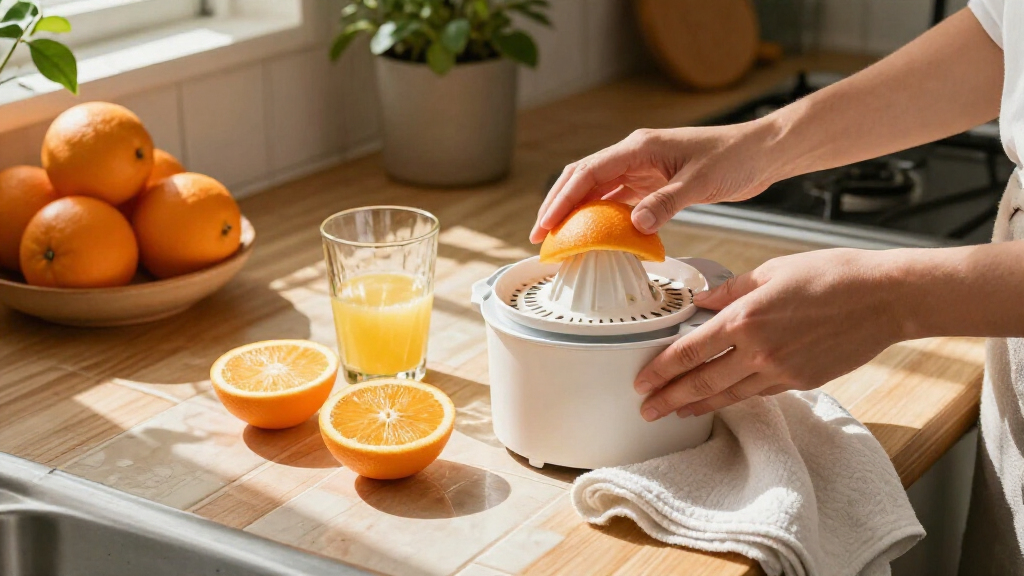
A bowl of oranges can turn into a sticky workout when you’re squeezing breakfast juice by hand. An electric citrus juicer replaces much of that effort with a spinning reamer, so you can press a halved orange down and watch bright juice gather below.
This appliance is built for lemons, limes, oranges, and grapefruits, not apples or leafy greens. You’ll learn how the reamer and strainer work, which features matter for your routine, and what to do for easier cleaning and safer storage.
The right pick depends on the morning you’re planning: one small glass before work, or a pitcher for brunch. A compact model may be plenty for the first; for the second, a larger container and a steadier press can save time and sore wrists.
A powered citrus juicer handles halved citrus with a spinning reamer; it does not juice whole fruit or replace a general-purpose juicer.
Compare cone sizes if you juice both small limes and large oranges or grapefruit.
Strainers can catch much of the pulp and many seeds, but they may not make completely pulp-free juice.
Choose container capacity to fit your usual batch, and look for removable parts if quick cleanup matters.
Refrigerate leftover fresh juice promptly, unplug the juicer before cleaning, and keep its motor base dry.
How an Electric Citrus Juicer Turns Halves Into Juice
An electric citrus juicer uses a powered reamer to extract juice from fruit that you’ve cut in half. You place the cut side against a cone, apply gentle pressure, and the motor spins the reamer as juice runs through a strainer into a cup or reservoir. That powered rotation replaces the twisting motion of a hand reamer, which can make repeated servings less tiring. You still need to cut and position each half, so the convenience is greatest when you juice several pieces at a time.
Most countertop models use a rotating cone; some add a lever or pressure-assisted arm to press the fruit down. Imagine preparing four oranges for a Saturday brunch: instead of twisting each half by hand, you hold each one against the cone while the motor does the turning. A lever can make pressure more consistent and reduce the effort of holding fruit down, though it adds bulk and another part to clean. A simple cone is smaller and easier to store, but you provide the pressure yourself.
The machine handles citrus in a simple sequence: wash the fruit, cut it across the middle, then juice each half. It doesn’t usually juice whole fruit, and it isn’t a stand-in for a centrifugal or masticating juicer designed to handle produce such as apples or greens. That difference matters when choosing an appliance: a citrus juicer is specialized and straightforward, while a general-purpose juicer can handle more ingredients but may take more counter space and cleanup.
A strainer catches some pulp and seeds, but the amount that passes through varies by model and fruit. The strainer sits between the reamer and the collection container, so its openings affect texture as well as how often you may need to clear away pulp. If you love a smooth glass of lemon juice, choose a finer strainer or adjustable pulp setting; if you like orange juice with bits in it, a looser setting may suit you better. Neither option guarantees that every seed or fleck will be caught, so strain the juice separately when a recipe needs a particularly smooth result.
Products Worth Considering

Instant Pot Duo Plus 6-Quart 9-in-1 Electric Pressure Cooker

Instant Pot RIO Wide 7.5-Quart 7-in-1 Electric Pressure Cooker

Ninja Foodi Air Fryer 10 Qt DualZone XL 6-in-1 Grey (DZ401)
As an affiliate, we earn on qualifying purchases.
Choose the Right Juicer for Your Morning Routine
Electric citrus juicers are most useful when their capacity and design match how much juice you make. A small container and direct-to-glass spout can work well for an occasional single serving, while a larger reservoir helps when you’re juicing several pieces of fruit for a meal. Capacity is about more than the amount the machine holds: it determines how often you have to stop, empty it, and manage juice while the fruit is still waiting to be pressed.
Consider Sunday breakfast: you want juice for four people, but a tiny cup fills after a couple of oranges. You’ll need to stop, pour, and start again. Capacity changes the workflow, so compare the container size with the batch you actually make, rather than choosing by appearance alone. A large reservoir can reduce interruptions, but it also takes more storage space and can be heavier to handle when full. Check whether it lifts off easily and whether its markings help you judge how much you’ve made.
A compact body can tuck into a cabinet, but frequent users may prefer a heavier, more stable base that stays put during repeated pressing. Stability matters because the juicer is being pressed from above: a light appliance may shift on a smooth counter, making a batch more awkward and increasing the chance of spills. The tradeoff is that a heavier base is less convenient to move and store. A drip-stop spout can help prevent a last streak of juice from running down the counter after you fill your glass, though it won’t prevent spills from an overfilled container or careless pouring.
Use this comparison to match a common routine with the features that can make it easier:
| Routine | Features to compare | What they help with |
|---|---|---|
| One glass now and then | Compact size, direct-to-glass spout | Easy storage and quick serving |
| Several glasses at once | Larger reservoir, steady base | Fewer pauses and easier repeated pressing |
| Mixed sizes of citrus | More than one cone size | A better fit for small limes and larger oranges |
| Less mess after pouring | Drip-stop spout, removable container | Cleaner counter and easier washing |
Think of these as workflow tradeoffs rather than a ranking: a feature earns its place when it solves a recurring inconvenience, while each added size or removable part may affect storage and cleaning.
Compare Cones and Pulp Settings Before You Buy
Fruit fit and pulp control help determine whether a citrus juicer feels convenient or awkward in daily use. Cone size and shape affect how comfortably a lime, orange, or grapefruit sits, and some models include multiple cones for different fruit sizes. A well-fitting cone gives the cut fruit a stable contact point, so pressure reaches the segments more evenly; a poor fit can make you reposition the fruit or press harder, adding effort without necessarily extracting more juice.
Picture a small lime perched awkwardly on a broad cone: it may wobble instead of pressing evenly. A second, smaller cone can make that fruit easier to handle, while a large grapefruit may feel cramped on a compact appliance with a narrow opening. Multiple cones add flexibility, but they also mean another piece to store and wash. If you mostly juice one size of fruit, a single cone that fits it well may be the simpler choice.
Strainers and adjustable pulp settings offer another choice. They can limit how much pulp gets into the drink, but they rarely make juice completely pulp-free. The openings must let liquid pass, and fine pulp can travel with it; seeds may also pass through depending on their size and how the fruit is positioned. A finer strainer can give a smoother result, but pulp can collect faster and need clearing during a larger batch. An adjustable setting lets you change texture without a separate strainer, though it may not offer as precise a result.
For example, if you’re making lemon juice for salad dressing, a strainer that catches seeds may matter more than a pulp dial. If you’re filling a pitcher for people with different preferences, an adjustable setting or removable filter can make it easier to serve juice with more or less pulp. Consider whether you need to change the texture during a single batch or simply want a reliable setting for your usual drink; that distinction can help you avoid paying for controls you rarely use.
- Check the cone count: one cone may suit your usual oranges; more than one can help with small and large citrus.
- Look at pulp options: adjustable strainers give you control, but don’t promise perfectly clear juice.
- Match the opening to your fruit: unusually large grapefruit can be cumbersome on a small model.
Use These Steps for More Juice and Less Mess
To get more from an electric citrus juicer, start with fruit at room temperature, cut it across the middle, and press steadily without forcing it. Fruit variety, ripeness, and freshness affect yield, so two oranges of the same size may not fill your glass equally. Gentle, even pressure helps the reamer stay in contact with the fruit; pressing harder on a spent half is more likely to strain your hand or the appliance than to recover much juice.
- Wash and inspect the fruit. Clean the peel before cutting; grime on the outside can transfer to the knife and cut surface.
- Cut across the middle. Halving an orange or lemon exposes the segments to the reamer.
- Seat the cut face on the cone. Keep your fingers clear of moving parts and follow the maker’s instructions.
- Press gently and evenly. A steady hold lets the powered reamer work without forcing the fruit against it.
- Pause when the half is spent. Move to the next half rather than pushing harder on a dry, flattened shell.
If you’re juicing cold oranges straight from the fridge, letting them warm on the counter first may make them easier to juice. For a pitcher of juice, work over a stable surface and keep a spare cup nearby so you can pour off the reservoir before it fills to the rim. Leaving some space reduces the risk of splashing when you remove or pour from the container.
Some machines make a noticeable motor and reaming sound. If you juice before others wake up, check reviews or try a model in person where possible; noise varies by appliance, and a powered reamer won’t be silent. Noise matters most when the machine is used in a shared kitchen or early in the morning, so consider that routine alongside speed and capacity.
Keep Cleanup Short and Fresh Juice Food-Safe
Removable cones, strainers, and containers can make cleanup simpler, especially when you rinse them soon after juicing. Follow the manufacturer’s cleaning instructions, since dishwasher safety varies between models and parts. Parts that come apart are easier to reach around, but more pieces also mean more items to wash and keep track of; a quick rinse before pulp dries can matter more than the number of detachable components.
Say you’ve just made lime juice for tacos and need to get dinner on the table: pulp left to dry around the strainer can be stubborn to scrub later. Remove the parts the manual says are removable, rinse away the pulp, then wash them as directed. Keep the motor base dry and unplug the appliance before cleaning. This separation is important because the parts that contact juice can be washed, while water around the motor or electrical connections can damage the appliance and create a hazard.
Fresh juice is perishable. Pour what you won’t serve right away into a covered container and refrigerate it promptly, following food-safety guidance for storage. A sealed bottle and a cold fridge help protect your leftover juice, but the juicer doesn’t make it shelf-stable. Keeping it cold slows spoilage; it doesn’t stop it, so make an amount you expect to use and follow relevant storage guidance.
Safety note: Unplug the juicer before cleaning, keep your fingers clear while the reamer moves, and never immerse the motor base in water.
Good cleanup also helps the next batch taste fresh: dried orange pulp or lemon seeds can cling to a filter and make the machine unpleasant to handle. A quick rinse after use takes less effort than scraping a sticky strainer the next morning. It also lets you spot residue before putting the parts away, when it can be harder to see.
Know When a Manual Reamer Is the Better Buy
An electric citrus juicer is a practical choice if you make juice often, prepare several servings, or find hand squeezing tiring. If you squeeze half a lemon only once in a while, a simple manual reamer may be enough and can take up less space. The value of the powered option comes from reducing repeated twisting and hand pressure; if those tasks are rare or comfortable for you, the time and storage space it saves may not outweigh the appliance’s cost and cleanup.
For instance, someone who drinks a glass of fresh orange juice every weekday may appreciate the powered cone; it handles repeated halves with less twisting by hand. Someone who uses lemon juice for one salad dressing on Friday might prefer a small manual tool that rinses quickly and fits in a drawer. The frequent juicer still needs to cut each orange and wash the machine, so the advantage is mainly less effort during extraction, not a completely hands-free process.
Think about the whole routine, not just the moment the juice pours. How often will you use it? Will it live on the counter or in a cabinet? Do you need juice for one person or a family? These answers can matter more than a long feature list. A countertop appliance that is easy to reach may support frequent use, while a bulky model stored high in a cabinet may add enough friction that you stop using it.
Features such as adjustable pulp settings, detachable parts, drip-stop spouts, and pressure-assisted designs appear in recent models. They are conveniences, not guarantees of higher juice yield; performance still depends on the fruit, reamer, and how you use the appliance. Each feature has a practical cost: extra parts need storage, a pressure arm adds bulk, and a pulp setting helps only if you care about texture. Before buying a specific model, check its current specifications, care instructions, and warranty.
One useful rule: if your manual reamer stays in a drawer because your wrist gets tired, the powered option may earn its counter space. If juicing is a rare kitchen task, simplicity may win.
Frequently Asked Questions
Are electric citrus juicers worth it?
They can be worthwhile if you juice often, make several servings, or want to reduce the hand effort of twisting fruit. If you only squeeze lemon occasionally, a manual reamer may be simpler and easier to store.
Can an electric citrus juicer handle lemons, limes, oranges, and grapefruit?
Many are designed for several kinds of citrus, but fit depends on the cone and opening. Check whether the model includes multiple cones if you use small limes and large grapefruit.
Do electric citrus juicers remove pulp and seeds?
The strainer catches much of the pulp and many seeds, but results vary by machine and fruit. Adjustable settings can change how much pulp passes through, though juice may not be completely pulp-free.
How can I get more juice from each orange?
Use fruit at room temperature, cut it across the middle, and press steadily without forcing it against the reamer. Yield also depends on the fruit’s variety, ripeness, and freshness.
Can I put the juicer parts in the dishwasher?
Only put parts in the dishwasher if the manufacturer’s instructions say they are dishwasher-safe. Unplug the appliance before cleaning, and keep the motor base out of water.
How should I store leftover fresh juice?
Put leftover juice in a covered container and refrigerate it promptly, following food-safety guidance for storage. Freshly squeezed juice is perishable and does not become shelf-stable because you used an electric juicer.
Conclusion
Choose an electric citrus juicer around the job you do most: one quick glass, a family pitcher, or frequent batches with several kinds of citrus. Match the cone, capacity, pulp control, and cleanup to that routine, and the appliance is more likely to earn its place in your kitchen.
Then cut, press gently, and pour while the juice is bright and fragrant. A good juicing morning should end with a clean glass, not a sticky counter.