In juice making, enzymes like pectinases break down pectin in plant cell walls, making it easier to extract juice and improve clarity. They reduce cloudiness, decrease viscosity, and help solids settle faster, resulting in a clearer, more appealing product. Using these enzymes speeds up the process and minimizes mechanical effort. If you keep exploring, you’ll discover how these enzymes can optimize your juice quality even further.
Key Takeaways
- Pectinases break down pectin in plant cell walls, reducing cloudiness and improving juice clarity.
- They increase juice yield by easing the extraction process and minimizing mechanical pressing.
- Enzymes accelerate tissue breakdown, decreasing processing time and enhancing efficiency.
- Hydrolysis of pectin fragments lowers viscosity, resulting in clearer, more stable juice.
- Using pectinases reduces solids, improves appearance, and decreases the need for filtration.
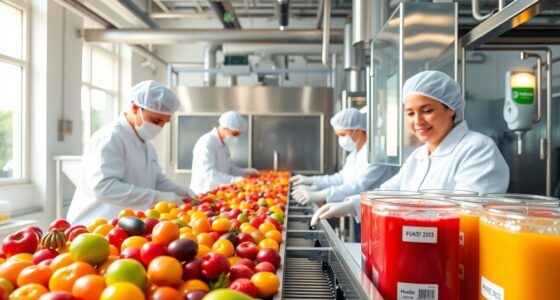
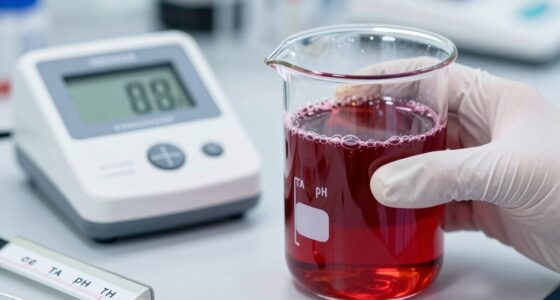
Enzymes play a vital role in juice making by speeding up natural processes that break down fruit and vegetable tissues. When you’re producing juice, enzyme activity is essential for efficiently converting raw produce into a clear, smooth liquid. These biological catalysts accelerate the breakdown of cell walls, particularly the pectin substances that hold plant tissues together. As a result, the juice becomes easier to extract, and you achieve a higher yield with less effort. By facilitating these reactions, enzymes help reduce the need for mechanical pressing and minimize unwanted solids, making your juice clearer and more appealing. Incorporating enzymes can also help improve the quality of juice by reducing processing time and enhancing clarity. Particularly important in the clarification process are enzymes like pectinases, which target pectin — a structural carbohydrate in plant cell walls. Pectin can cause cloudiness in juice, making it look murky and unappetizing. When you add pectinases during juice processing, they catalyze the hydrolysis of pectin molecules, breaking them down into soluble fragments. This enzymatic action reduces viscosity and helps separate the juice from suspended solids, resulting in a clearer product. The effectiveness of enzyme activity here directly influences the quality of your final juice, as quicker and more complete breakdown of pectin leads to less cloudy, more stable juice. Understanding fermentation processes is also key when working with enzymes in juice making. Fermentation isn’t typically a step in commercial juice clarification but is part of traditional or craft methods where natural enzymes and yeasts interact. During fermentation, enzymes are produced naturally by yeast and bacteria, which can further break down sugars and complex carbohydrates. While fermentation can add unique flavors, it can also cause cloudiness or spoilage if not controlled. That’s why, in modern juice production, enzymes like pectinases are added intentionally before fermentation begins, to preemptively reduce cloudiness and improve clarity. This controlled enzymatic activity helps streamline processing, minimizes the need for filtration, and ensures the stability of the final product.
Frequently Asked Questions
How Do Enzymes Affect Juice Shelf Life?
Enzymes help extend juice shelf life by breaking down complex pectins and other compounds that cause cloudiness and spoilage. When you use enzymes with good stability, they remain active longer, preventing microbial growth and oxidation. This process effectively reduces spoilage agents, resulting in a clearer, fresher-tasting product. Proper enzyme selection and handling guarantee shelf life extension, keeping your juice fresh and appealing for a longer period.
Can Enzymes Be Used in Organic Juice Production?
Yes, you can use enzymes in organic juice production, but only if they meet organic certification standards. You need to guarantee enzyme sourcing aligns with organic regulations, meaning they come from natural, non-GMO sources. Using approved enzymes helps clarify juice naturally without synthetic additives, maintaining organic integrity. Always verify that enzyme products are certified organic to ensure your process complies with organic standards and appeals to health-conscious consumers.
Are There Natural Alternatives to Pectinases?
While natural enzymes can help clarify juice, relying solely on plant-based alternatives may not achieve the same efficiency. You might consider using natural enzymes like bromelain from pineapples or papain from papayas, which gently assist in breakdown processes. These plant-based alternatives are gentle options that can support juice clarity without synthetic additives, but they may require longer processing times or higher concentrations for ideal results.
How Do Enzyme Levels Vary With Different Fruit Types?
You’ll notice that fruit enzyme levels vary with different fruit types, impacting juice clarity and yield. For example, softer fruits like berries have lower pectinase activity, while firmer fruits like apples and citrus have higher enzyme levels. Fruit type variations influence the amount of enzymes needed during processing. By understanding these differences, you can adjust enzyme dosages to optimize juice quality and efficiency, ensuring the best results for each fruit you handle.
What Are the Safety Concerns With Enzyme Residues?
Like a cautious alchemist, you should be aware of enzyme residue health concerns, even if residues are minimal. Regulatory standards set safe levels, ensuring enzyme traces don’t pose risks. While enzyme residues generally aren’t harmful, excessive amounts can cause allergic reactions or digestive issues. Always follow proper processing guidelines and safety protocols to minimize residues, safeguarding consumer health and maintaining compliance with food safety regulations.
Conclusion
By now, you see how pectinases play a crucial role in juice making, breaking down pectin to clarify your drink. Did you know that enzyme use can increase juice yield by up to 15%? That means more delicious juice with less waste! Next time you enjoy a glass, appreciate the science behind it—enzymes make your juice clearer, tastier, and more enjoyable. Cheers to the power of enzymes in every sip!