This checklist is for home cooks who want to get started with fermented foods and need a clear way to think through the basic equipment. The picks cover jars, covers, cloth, temperature checking, and a kombucha starter kit, with advice for choosing fermentation weights separately. Start with your recipe so you can focus on the supplies that fit what you plan to make.

Get kitchen staples and gadgets delivered free with Prime
- Fast, free delivery on millions of items
- Prime Video, Amazon Music and more included
- Member-only deals all year
The sections are organized by equipment slot, from the vessel that holds your ferment to tools that support particular preparations. Each section explains what the item does, what details to check, and where the named pick may fit. Match each item to its job rather than assuming one container or lid works for every ferment.
Use the look-for points as a quick shopping checklist, then compare the product’s stated dimensions, materials, and included parts with your recipe and existing kitchen gear. Product names alone do not confirm compatibility or intended use. Check the listing details before buying, especially for lids, jar openings, and any kit components.
Glass Fermentation Jars
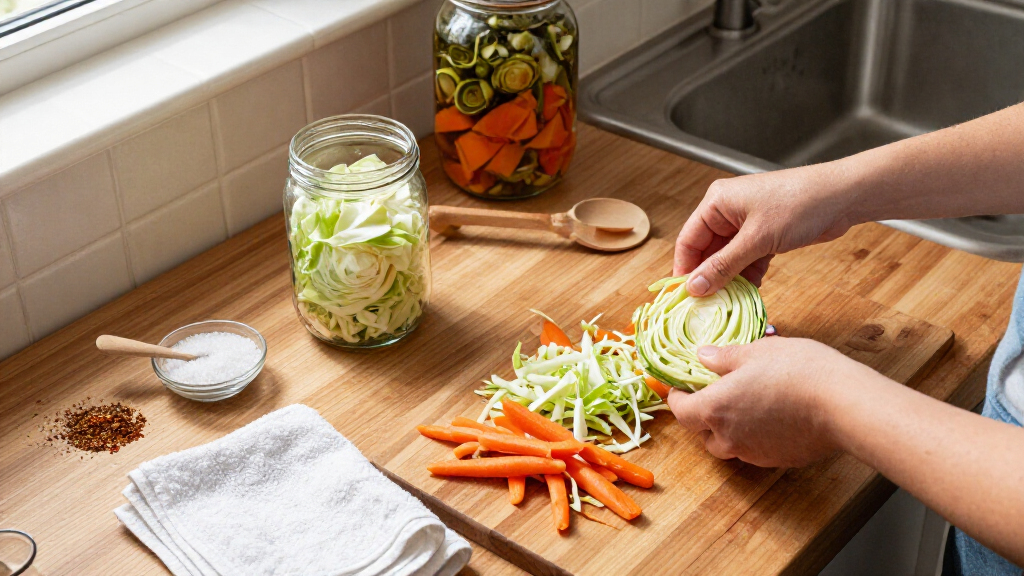
A glass jar gives you a container for preparing and holding a ferment, so its capacity and opening matter as much as the material. The listed pick is the Masontops Mason Jar Fermentation Kit. Before choosing it, confirm the jar size and exactly which pieces the kit includes. A kit name does not establish that it contains every accessory you need, or that its parts suit a specific recipe. Verify the included components and their intended use in the product listing.
A common shopping mistake is selecting a jar based on its appearance or assuming that any lid will fit. Check the mouth style and dimensions against replacement lids or accessories you already own. Consider how much headroom your recipe requires and whether the jar will be manageable to fill, clean, and store. If you plan to make more than one kind of ferment, compare the recipes’ vessel requirements before settling on a single size. Capacity and opening style help determine whether the jar will work with your setup. Read care instructions for the jar and included parts, and make sure the kit aligns with the specific preparation you have in mind.
What to look for:
- Confirm the jar capacity in the listing.
- Check the mouth style and dimensions.
- Review exactly which kit components are included.
- Compare the jar size with your recipe’s batch needs.
- Read care instructions for the jar and its parts.
Masontops Mason Jar Fermentation Kit

This kit includes accessories to convert four wide-mouth mason jars into fermenters for vegetables such as sauerkraut, kimchi, pickles, and hot sauce. Airlock lids vent gas without letting oxygen in, and the kit includes fermentation weights, an acacia wood tamper, and a recipe book.
Pros:
- Converts up to four wide-mouth mason jars into fermenters
- Airlock lids vent gas without letting oxygen in
- Includes weights, a vegetable tamper, and a recipe book
Cons:
- Wide-mouth mason jars are needed but are not listed among the included components
Best for: Home cooks who want a named jar kit to compare with their recipe
Not ideal for: Shoppers who need a confirmed capacity or accessory fit without checking the listing
Bottom line: The Masontops Mason Jar Fermentation Kit is a starting point, but verify its capacity, included pieces, and compatibility before buying.
Fermentation Weights
A fermentation weight is an advice-only slot in this checklist, with no named product pick. For recipes that call for a weight, the relevant job is to keep the ingredients positioned as directed by that recipe. Choose a weight only after confirming the vessel’s opening and the amount of space available inside it. A weight that cannot pass through the opening or sit properly in the jar will not suit that setup. Fit the weight to the vessel rather than purchasing by category name alone.
A frequent mistake is assuming every weight fits every jar or that one is necessary for every ferment. Follow your recipe’s directions, then check the weight’s dimensions, material, and care guidance. Compare those details with the jar’s interior and opening, including any lid or other components that occupy space. If you already own a jar kit, review its contents first to see whether a suitable weight is included. Check dimensions and instructions before adding a separate item to your shopping list. The right choice depends on the recipe and the vessel, so use those specifics to narrow the options.
What to look for:
- Follow the recipe to determine whether a weight is needed.
- Measure the vessel opening and interior space.
- Check the weight’s material and care instructions.
- Review existing kit contents before buying separately.
- Confirm the weight can be used with your chosen jar and lid.
Airlock Lids
This slot names the Mason Large Glass Coin Bank with Gold Slotted Lid, 1 Gallon. Despite appearing under airlock lids, the product name describes a coin bank with a slotted lid; it does not establish that the lid is an airlock or is suitable for fermentation. Confirm the intended use in the listing before considering it for a ferment. A product’s placement in a checklist cannot verify its function or compatibility.
For any lid you plan to use, check the opening style, dimensions, material, and how it is meant to fit the vessel. Look for clear product details that explicitly describe the lid’s use and confirm whether it includes the parts your recipe or setup requires. A common buying mistake is assuming that a lid fits because its container is described as large or because the size sounds familiar. Compare measurements with your jar and read the care instructions. Do not infer airlock function from the words “slotted lid.” If the listing does not confirm suitability for fermentation and fit with your jar, choose a product with those details clearly stated.
What to look for:
- Check whether the listing explicitly identifies the lid as suitable for fermentation.
- Confirm the lid’s dimensions and fit with your jar.
- Review the material and care instructions.
- Check whether any additional parts are included or required.
- Do not treat a slotted lid as an airlock without confirmation.
Mason Large Glass Coin Bank with Gold Slotted Lid, 1 Gallon

This 1-gallon clear glass jar has a gold screw-on lid with a slot for coins, folded bills, or raffle tickets. It can hold up to $3,000 in quarters and is suited for savings, tips, donations, or fundraisers.
Pros:
- Large capacity for coins, bills, tickets, tips, or donations
- Transparent glass lets you see savings accumulate
- Slotted screw-on lid makes deposits convenient
- Versatile for home, business, and fundraising use
Cons:
- Glass may break if dropped
- No separate withdrawal opening is described
Best for: Shoppers willing to review the listing carefully before choosing a lid
Not ideal for: Anyone needing a confirmed fermentation airlock without further product details
Bottom line: The named item is described as a coin bank with a slotted lid, so confirm fermentation use and jar fit before considering it.
Cheesecloth Bundles
The listed pick is Cheesecloth Roll, Grade 10, 30 Yards, White Bleached for Cooking & Dec. Its name identifies a roll, a grade, a length, and a color, but it does not specify the full range of uses or care requirements. Think about how your recipe uses cloth and how much material you expect to need. Check the listing’s specifications and compare them with the task before purchasing.
A common mistake is choosing cloth by length alone without checking its grade, construction, or intended use. Review the product details for those points and for washing or reuse guidance, if applicable. Consider whether the roll format suits how you plan to cut or store the cloth, and avoid assuming that “cooking” in the name guarantees suitability for every fermentation recipe. If your recipe gives particular cloth requirements, use those as your guide. Let the recipe set the requirements, then confirm the product description matches. The product name is truncated after “Dec,” so consult the complete listing to understand the full description and any usage notes.
What to look for:
- Read the complete product listing, including the truncated description.
- Confirm the grade and material details.
- Check the roll length against your intended use.
- Review washing, reuse, and care instructions.
- Compare any recipe-specific cloth requirements with the listing.
Cheesecloth Roll, Grade 10, 30 Yards, White Bleached for Cooking & Decoration

This high-quality white bleached cheesecloth roll is versatile for food straining, cooking, arts, crafts, and decoration projects. It is durable, reusable, and offers excellent water absorption, making it suitable for various applications.
Pros:
- Versatile for cooking, arts, and decorations
- Reusable and easy to clean
- High water absorption and durability
Cons:
- Limited to grade 10, may not suit all needs
- May require hand washing for best longevity
Best for: Cooks who need a roll format and can confirm the listed details suit their recipe
Not ideal for: Shoppers who need specific care or use guidance not shown in the product name
Bottom line: Check the full listing and your recipe’s requirements before choosing this cheesecloth roll.
Digital Food Thermometer
The Taylor Waterproof Digital Food Thermometer with 4.5 Inch Stem and Ambe is the named pick for temperature checking. Its name specifies a waterproof design and a 4.5-inch stem, while the final word is truncated. Review the complete listing for the full product name, operating details, and care directions. Confirm the full specifications before deciding whether it fits your kitchen and recipe needs.
For fit, consider how the stem length works with the containers and quantities you expect to check, and read the instructions for use and cleaning. A common mistake is assuming that a thermometer’s features cover every intended task; the name alone does not specify accuracy, temperature range, or approved uses. Check those details in the product information and compare them with your recipe’s requirements. If you need a particular display or operating feature, verify it rather than inferring it from the product name. Match the stated range to your recipe and follow the manufacturer’s guidance. The waterproof description does not replace checking cleaning instructions or confirming which parts can be exposed to water.
What to look for:
- Check the complete product name and listing.
- Confirm the stated temperature range and intended uses.
- Compare the 4.5-inch stem with your containers.
- Review cleaning instructions and which parts are waterproof.
- Check operating and display details against your preferences.
Taylor Waterproof Digital Food Thermometer with 4.5 Inch Stem and Amber Backlit

This waterproof digital food thermometer features a 4.5-inch stem, FDA-recommended probe, and amber backlit LCD for easy reading. Designed for professional kitchens, it offers a wide temperature range, fast response time, and antimicrobial housing for safety and durability.
Pros:
- Waterproof and dishwasher safe for easy cleaning
- Wide temperature range suitable for various cooking needs
- Amber backlit LCD for clear readability in low light
- Antimicrobial housing enhances hygiene
Cons:
- Limited to professional or commercial use
- Requires batteries for operation
Best for: Cooks who want a named thermometer and can confirm its range and care details
Not ideal for: Shoppers who need unlisted accuracy or temperature specifications
Bottom line: The 4.5-inch stem is specified in the name; verify the thermometer’s full range, uses, and cleaning guidance.
Kombucha Scoby Kit
The Kombucha Shop Kombucha Starter Kit with Premium Heating Wrap is the named option for shoppers planning to make kombucha. The product name indicates a starter kit and a heating wrap, but it does not list the kit’s contents or explain the wrap’s operation. Review the full kit contents to see what is included and what your recipe or setup may require separately.
A common buying mistake is assuming that a starter kit contains every supply needed or that its components fit the vessel you already own. Check the listing for the included items, their sizes, and any directions or care requirements. Confirm the vessel compatibility and how the heating wrap is meant to be used before relying on it for your setup. If your recipe calls for particular equipment or conditions, compare those instructions with the product details. Check vessel and component fit, especially if you already have jars or accessories. The product name alone does not establish the kit’s exact contents or compatibility, so use the complete listing to decide whether it matches your plan.
What to look for:
- Confirm which starter items are included.
- Check the kit’s vessel or jar compatibility.
- Review the heating wrap’s stated use and care instructions.
- Compare kit contents with your recipe and existing supplies.
- Read any setup directions in the complete listing.
Kombucha Shop Kombucha Starter Kit with Premium Heating Wrap

This kombucha starter kit includes a premium heating wrap with precise temperature control, ensuring optimal brewing conditions year-round. The bundle provides all necessary cultures, equipment, and instructions for home brewing, backed by a fermentation guarantee.
Pros:
- Precise temperature control for optimal fermentation
- Complete starter kit with cultures and equipment
- Bundle offers savings
Cons:
- Requires some brewing knowledge
- Limited details on specific contents
- No price information provided
Best for: Kombucha makers who want to compare a named starter kit with their recipe
Not ideal for: Shoppers who need confirmed contents or vessel fit from the product name alone
Bottom line: Review the full kit contents and wrap instructions to confirm they suit your kombucha setup.
Build your shopping list in recipe-first order: choose the vessel your batch requires, then check whether you need a weight or a particular lid. Add cloth, a thermometer, or a kombucha kit when they match your planned preparation and the details in their listings. Prioritize recipe essentials and verify fit before adding accessories.
You can start with the equipment for one recipe and expand as you learn what your kitchen setup needs. Read product descriptions in full, compare dimensions with your existing jars, and follow recipe and care instructions. A clear checklist makes buying easier—choose each item for the job you need it to do, and you’ll have a more practical starting point.