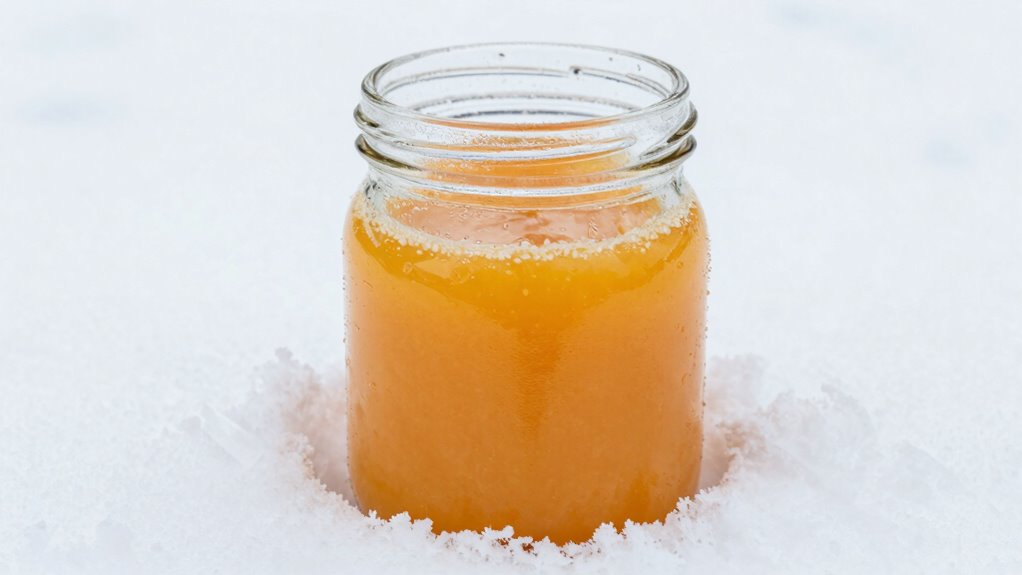
To freeze juice safely, choose airtight containers with enough headspace to allow for expansion during freezing. Seal them tightly and label the date to track freshness. For thawing, transfer the juice to the refrigerator overnight instead of room temperature to prevent bacteria growth. Be aware that freezing may cause slight flavor or texture changes over time, but proper storage techniques help preserve taste. Keep exploring to learn more about maintaining your juice’s quality during freezing.
Key Takeaways
- Leave about ½ inch headspace in containers to allow for liquid expansion during freezing.
- Seal containers tightly to prevent air entry, which can cause freezer burn and flavor loss.
- Thaw frozen juice slowly in the refrigerator overnight to preserve flavor and ensure safety.
- Proper packaging and sealing help maintain juice quality and extend freezer shelf life.
- Freezing may cause minor flavor or texture changes, especially with longer storage or high pulp content.

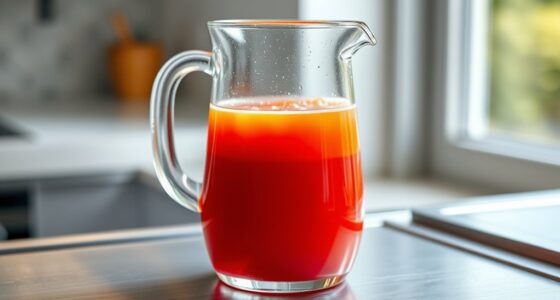
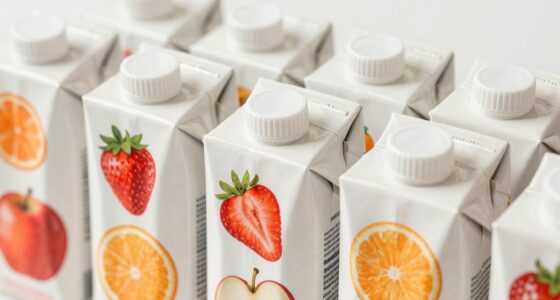
Ever wondered how to extend the freshness of your favorite juices? Freezing is a fantastic way to do it, but getting it right guarantees you enjoy your juice at its best. The key to successful freezing lies in choosing the right storage containers and understanding how to preserve flavor. When you select storage containers, opt for ones that are airtight and made specifically for freezing. These containers prevent air from entering, which helps maintain flavor preservation and avoid freezer burn. Make sure you leave some headspace—the space between the liquid and the container lid—because liquids expand when frozen. Without enough headroom, your container might crack or leak, leading to messy defrosting and potential flavor loss. Proper headspace also helps the juice freeze evenly and reduces the chance of spoilage.
As you prepare to freeze your juice, remember that proper packaging plays a crucial role in preserving taste. Transfer the juice into your chosen storage containers, leaving about half an inch of space at the top for expansion. Seal the containers tightly to prevent air from seeping in during freezing, which could cause oxidation and diminish flavor quality. Label each container with the date so you can keep track of how long it’s been frozen. The longer juice stays in the freezer, the more its flavor may degrade, especially if exposed to air or fluctuating temperatures. Freezing in small portions makes it easier to thaw only what you need, helping to maintain ideal flavor and freshness.
Thawing your frozen juice correctly is just as important as freezing it. For best results, transfer the container from the freezer to the refrigerator and let it thaw slowly overnight. This gentle process minimizes flavor loss and preserves the original taste. Avoid thawing at room temperature, as this can encourage bacterial growth and compromise safety. Once thawed, give the juice a good stir or shake to reincorporate any separated components, as freezing can sometimes cause ingredients to settle. Be aware that some juices, especially those high in pulp or fiber, may experience slight changes in texture or flavor after freezing and thawing. While most juices retain their original taste if properly stored and thawed, expect some minor differences, particularly in more delicate flavors.
Frequently Asked Questions
Can Freezing Juice Affect Its Nutritional Value?
Freezing juice can lead to some nutrient degradation and vitamin loss, but it generally doesn’t substantially impact its overall nutritional value. When you freeze juice, the cold slows down enzyme activity and preserves most nutrients. However, prolonged freezing might cause minor vitamin loss, especially of sensitive vitamins like C. To maximize nutrients, freeze juice promptly after juicing and consume it within a few months for the best benefits.
How Long Can I Store Frozen Juice Safely?
You can store frozen juice safely for about 8 to 12 months, but always check for spoilage indicators like off smell, discoloration, or freezer burn. Proper storage duration is key to maintaining quality, so label your containers with dates. If you notice any signs of spoilage, it’s best to discard the juice. Staying within the recommended time helps prevent taste changes and ensures your juice stays fresh when thawed.
Is It Better to Freeze Juice in Glass or Plastic Containers?
You should prefer plastic containers for freezing juice because they’re more flexible and less likely to break, especially during expansion. Studies show glass containers can only be safely used if they’re specifically designed for freezing, but they still pose a risk of breaking due to temperature changes. When considering storage considerations, plastic offers better durability and convenience, making it the smarter choice for preserving your juice safely and without mess.
Can Juice Be Refrozen After Thawing?
Yes, you can refreeze juice after thawing, but it’s important to contemplate thawing methods and refreezing safety. If you thaw juice in the refrigerator, it’s safer to refreeze since bacteria growth is minimized. Avoid refreezing juice that’s been left out at room temperature for too long. Keep in mind, refreezing may affect taste and quality, so only do it if the juice remains safe and still tastes good.
Does Freezing Alter the Juice’s Color or Appearance?
Freezing can cause your juice’s color to change or fade, making it look less vibrant. You might notice a slight cloudiness or visual clarity reduction, especially if it contains pulp or fruit pieces. These changes happen because ice crystals form and can alter the juice’s appearance. However, the taste usually remains good, so don’t worry too much—just give it a good shake or stir after thawing to restore some clarity.
Conclusion
Freezing your juice is a great way to enjoy it later, and with the right headspace and thawing tips, you’ll keep its flavor intact. Don’t worry if it seems like it might lose quality — a little taste change can even add a new twist! Just follow these steps, and you’ll have fresh-tasting juice anytime. So go ahead, freeze with confidence, and enjoy your delicious, homemade frozen juice whenever you like!