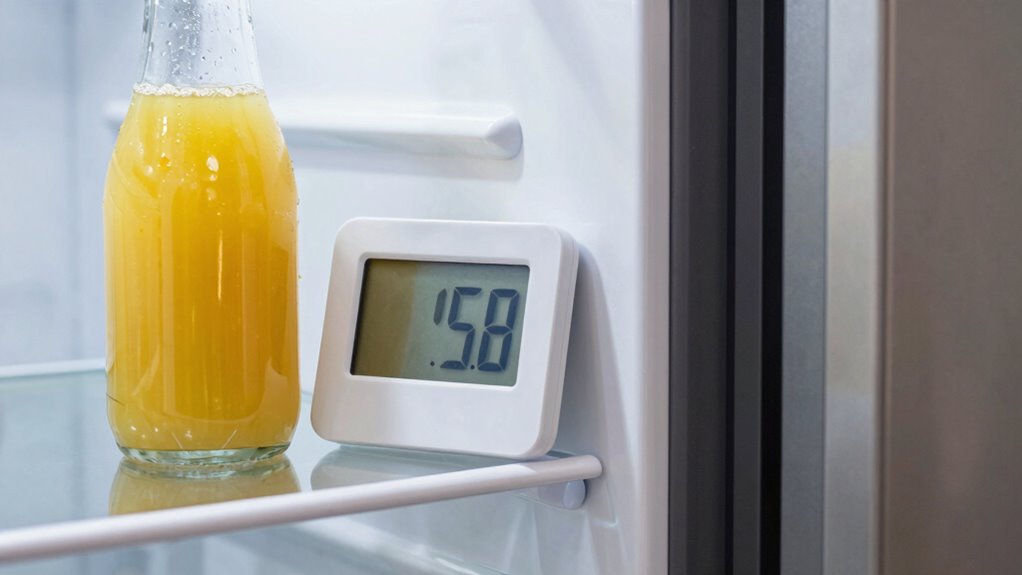
Using a thermometer on your fridge’s door shelf can mislead you because frequent opening, external heat sources, and door placement cause fluctuating and inaccurate readings. These spots are exposed to sunlight or hot kitchen air, skewing the temperature. To keep your juice fresh and safe, place a reliable, calibrated thermometer deeper inside, such as on the middle shelf. If you want to understand how to improve your fridge monitoring, keep exploring for more tips.

Get kitchen staples and gadgets delivered free with Prime
- Fast, free delivery on millions of items
- Prime Video, Amazon Music and more included
- Member-only deals all year
Key Takeaways
- Door shelf thermometers are affected by frequent opening and external heat, leading to inaccurate juice storage temperatures.
- Proper placement inside the fridge, away from door influences, provides more reliable temperature readings.
- Inexpensive thermometers may be inaccurate; calibration ensures consistent, trustworthy measurements.
- External heat sources like sunlight can cause false high temperature readings on door-mounted thermometers.
- Accurate temperature monitoring inside the fridge helps prevent juice spoilage and maintains quality.
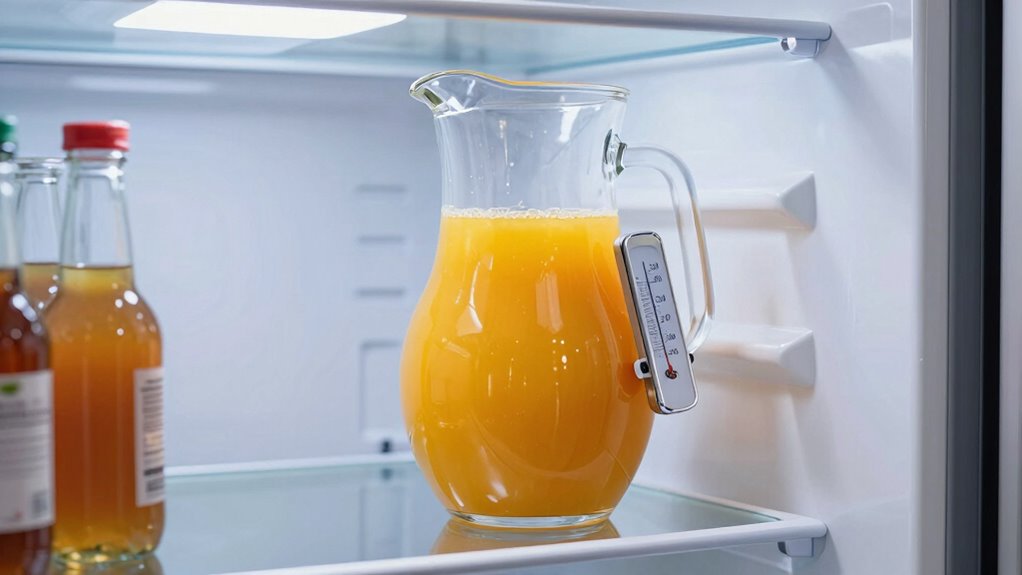
Have you ever wondered if your juice stays fresh and safe in the fridge? It’s a common concern, especially if you rely on the door shelf to check the fridge’s temperature. While it might seem convenient to glance at the door-mounted thermometer or the temperature setting, this approach can be misleading. The truth is, the door shelf isn’t an accurate spot for assessing your fridge’s overall temperature, which is crucial for proper juice storage.
Fridge thermometers are essential tools, but their effectiveness depends heavily on thermometer accuracy. When you place a thermometer on the door shelf, it’s exposed to temperature fluctuations caused by opening and closing the door. Every time you reach in for a snack or a drink, warm air rushes in, temporarily raising the temperature. The door’s position also means it’s more exposed to external heat sources, like sunlight or hot kitchen air, which can skew readings. As a result, the thermometer may show a temperature that’s either too high or too low, leading you to believe your fridge is at the right temperature when it’s not.
Placing a thermometer on the door shelf can give false readings due to temperature fluctuations and external heat exposure.
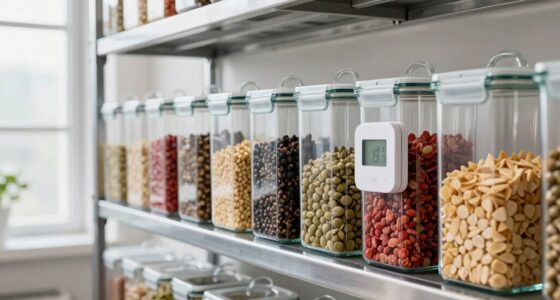
To ensure your juice stays fresh, you need a reliable way to monitor your fridge’s temperature. The ideal spot for a fridge thermometer is deeper inside, away from the door, on a middle shelf or near the back where air circulation is better. This placement helps you get a more accurate reading of the overall temperature, which should be maintained between 35°F and 40°F (2°C to 4°C). Keeping your fridge within this range prevents bacteria growth and preserves the quality of your juice. Additionally, understanding the impact of external heat sources on temperature readings can help you make better placement choices.
It’s also worth noting that thermometer accuracy is critical. Many inexpensive thermometers can be off by several degrees, giving you a false sense of security. Investing in a good quality, digital fridge thermometer with a calibration feature can make a big difference. Regularly checking the thermometer’s accuracy by comparing it to a known accurate device ensures you’re getting truthful readings. proper thermometer placement inside your fridge helps reduce the impact of external temperature influences and provides more consistent readings. Additionally, calibrating your thermometer can further improve measurement precision, ensuring you’re always working with trustworthy data.
In the end, don’t rely solely on the door shelf for temperature checks. Instead, focus on proper juice storage and ensure your thermometer provides accurate readings from a suitable spot inside your fridge. Doing so guarantees your juice stays fresh longer, and you avoid the risk of consuming spoiled drinks. Proper fridge temperature monitoring and placement are key to maintaining food safety. By paying attention to these details, you’re taking an important step toward better food safety and smarter fridge management.
digital fridge thermometer with calibration
As an affiliate, we earn on qualifying purchases.
As an affiliate, we earn on qualifying purchases.
Frequently Asked Questions
How Often Should I Calibrate My Fridge Thermometer?
You should calibrate your fridge thermometer at least once a year to guarantee thermometer accuracy. Also, calibrate it whenever you notice inconsistent temperature readings or after any sudden temperature changes. Regular calibration helps you maintain reliable temperature control, keeping your juice fresh and safe. By keeping track of calibration frequency, you ensure your fridge stays at the right temperature, preventing spoilage and ensuring the best food safety.
Can Fridge Door Temperature Vary Significantly From the Interior?
Ever wonder if your fridge door temperature fluctuates more than inside? Yes, it can! Door temperature variations happen because of frequent opening and closing, causing inconsistent readings. These fluctuations are especially noticeable near the door shelves, which sit in different refrigerator temperature zones. This means your juice stored on the door might not stay at the ideal temperature, so it’s best to check with a reliable thermometer inside the fridge’s main compartment.
Are Digital Thermometers More Accurate Than Analog Ones?
Digital thermometers are generally more accurate than analog ones because of digital accuracy, providing precise readings and easy-to-read displays. However, analog reliability can be sufficient for everyday use, especially if you calibrate them regularly. If you want consistent, accurate measurements, choose a digital thermometer. But if you prefer simplicity and durability, an analog thermometer can still serve you well, just keep an eye on calibration.
What Is the Ideal Temperature Range for Juice Storage?
You should keep juice between 35°F and 40°F to prevent juice spoilage. This temperature range slows bacterial growth and preserves flavor. Be aware of temperature fluctuation, especially near the door shelf, since opening and closing can cause inconsistencies. Using a reliable thermometer helps you monitor accurately, ensuring your juice stays fresh longer. Avoid relying solely on the door shelf, as it may not reflect the true fridge temperature.
Do Certain Types of Juice Affect Thermometer Readings?
Like a fox in the henhouse, certain juices can deceive your thermometer readings. Highly acidic juices, such as citrus, may slightly alter the temperature due to their chemical properties. Container insulation also plays a role; well-insulated bottles keep temperature more stable, while poorly insulated ones can cause fluctuations. So, yes, juice acidity and container insulation can affect thermometer accuracy, making it essential to check temperatures with a reliable, properly placed thermometer.
Conclusion
So, next time you check your fridge, don’t rely solely on the door shelf thermometer for your juice. That small detail might seem harmless, but it could be hiding a bigger temperature mystery inside. Are your drinks truly chilled to perfection? Or is something lurking just beneath the surface that could change everything? Stay curious, stay vigilant—because sometimes, the biggest surprises are hidden where you least expect them.
NFL season / tailgating Picks
team gear
As an affiliate, we earn on qualifying purchases.