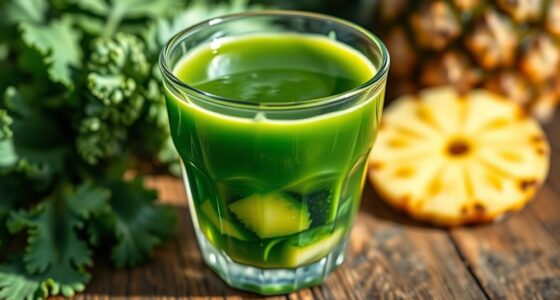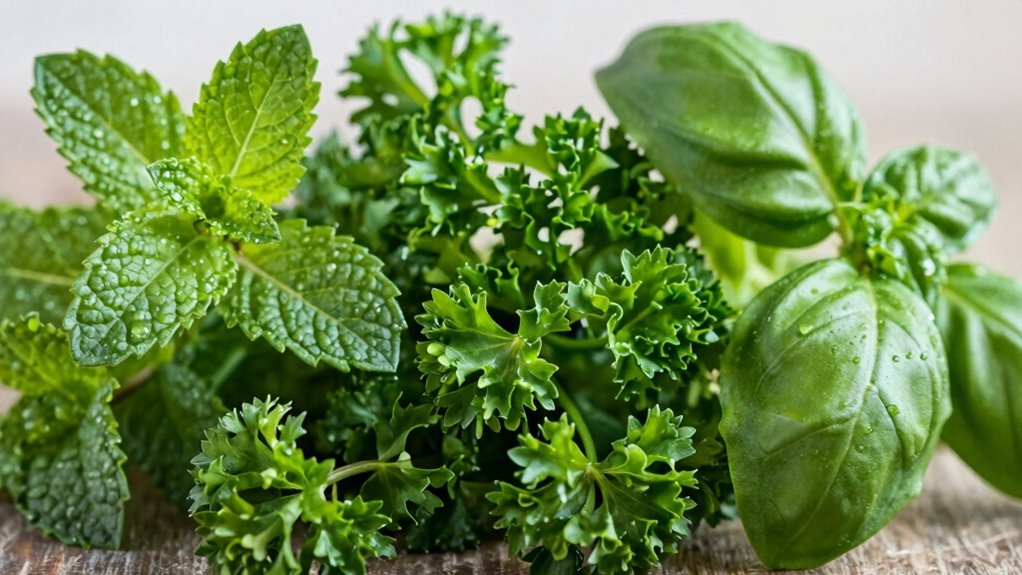

Mint, parsley, and basil each have unique chemical compositions that influence how they behave in juices, impacting their flavor, aroma, and nutritional benefits. Mint contains menthol, which offers a cool, invigorating sensation, while parsley is rich in vitamins and minerals, and basil has essential oils that add depth to your juice. These chemical differences explain why they react differently in your blends. Keep exploring to discover how understanding these herbs can optimize your juicing experience.

Get kitchen staples and gadgets delivered free with Prime
- Fast, free delivery on millions of items
- Prime Video, Amazon Music and more included
- Member-only deals all year
Key Takeaways
- Different herbs have unique chemical compounds affecting their flavor, aroma, and interaction with other ingredients in juices.
- Variations in essential oils and phytochemicals determine how mint, parsley, and basil release flavors during blending.
- The chemical makeup influences each herb’s nutritional profile and how they contribute to health benefits.
- Herb-specific enzymes and compounds respond differently to juicing processes, altering their sensory and nutritional properties.
- Biodiversity among herbs ensures diverse chemical structures, leading to distinct behaviors in taste, aroma, and health effects.
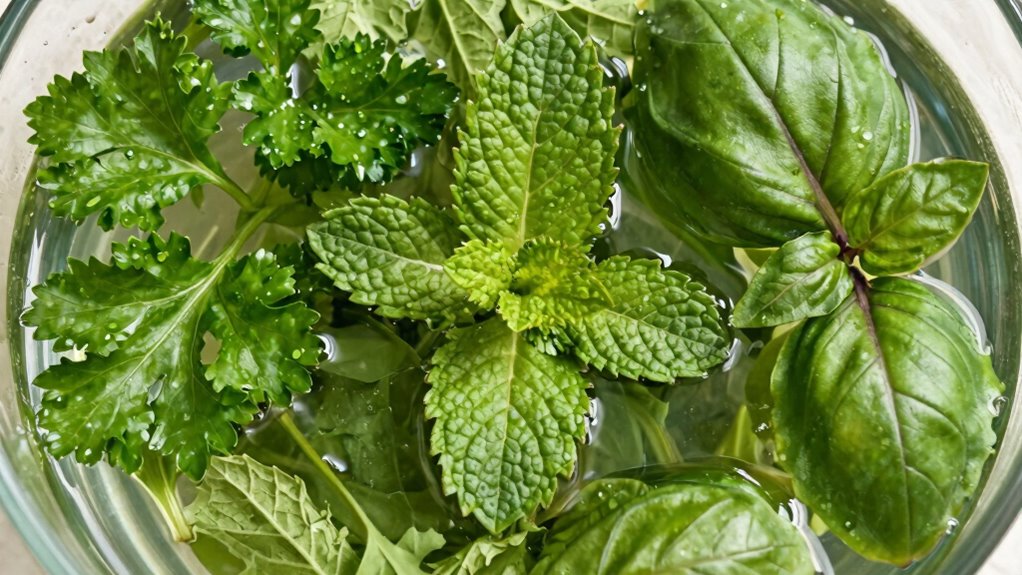
Have you ever considered how herb juicing can elevate your health routine? When you incorporate herbs like mint, parsley, and basil into your juices, you’re not just adding flavor—you’re revealing a world of nutritional benefits and sensory experiences. Each herb behaves differently because of its unique chemical makeup, which influences how it interacts with your palate and body. Understanding these differences helps you maximize flavor enhancement and nutritional intake, making your juicing practice more effective and enjoyable. Recognizing the distinct chemical makeup of each herb allows you to better predict their behavior in your juice and tailor your blends for optimal benefits. Additionally, appreciating the biodiversity among herbs can inspire more sustainable and diverse culinary practices.
herb juicer for mint parsley basil
As an affiliate, we earn on qualifying purchases.
As an affiliate, we earn on qualifying purchases.
Frequently Asked Questions
How Do Herb Juices Compare Nutritionally to Whole Herbs?
Herb juices often have lower herb potency and nutrient retention compared to whole herbs. When you juice herbs, some delicate nutrients, like vitamins and enzymes, can degrade or be lost during processing. Whole herbs retain more of their natural fiber and nutrients, providing a more complete nutritional profile. If you want maximum nutrient intake, eating the herbs directly is better, but juicing offers a concentrated, invigorating way to enjoy their flavors.
Can Herb Juices Be Stored Long-Term Without Losing Potency?
Herb juices don’t store long-term without losing potency due to herb spoilage. To maximize freshness, use airtight containers and keep them refrigerated or frozen. Freezing slows spoilage but may alter texture and flavor. Avoid storing juices at room temperature, which accelerates spoilage. Proper storage techniques, like using dark glass bottles and minimizing air exposure, help preserve nutrients longer, but for the best potency, consume herb juices within a few days.
Are There Any Herbs That Shouldn’t Be Juiced at All?
You should steer clear of juicing herbs like deadly nightshade or foxglove, as their herbal toxicity can cause serious health issues. Juicing safety is essential, and some herbs have dangerous properties when consumed in concentrated forms. Always research thoroughly before adding herbs to your juice, and trust your senses—if something smells or tastes off, it’s better to avoid it. Remember, not all herbs are meant for juicing.
How Does the Age of the Herb Affect Juice Flavor?
Herb maturity considerably impacts juice flavor, as younger herbs tend to have milder, more delicate flavors, while mature herbs develop stronger, more intense flavors. When you juice herbs at various stages of maturity, you’ll notice a difference in flavor intensity—older herbs can make your juice taste bolder and sometimes more bitter. To achieve the desired flavor, it’s best to harvest herbs at the right age, usually when they’re fully developed but not overgrown.
What Are Some Creative Ways to Incorporate Herb Juices Into Recipes?
Imagine adding a splash of vibrant mint juice to a summer cocktail or mixing parsley into a tangy salsa. You can blend basil into pesto or infuse it into lemonades. To enhance herb flavor profiles, use gentle juicing techniques like crushing leaves before juicing. Incorporate herb juices into dressings, marinades, smoothies, or even desserts, giving your recipes a fresh, aromatic twist that delights the senses.
Conclusion
So, next time you juice those herbs, remember that mint, parsley, and basil each have their quirks. You’d think they’d cooperate for a perfect blend, but no—they insist on behaving differently just to keep things interesting. Isn’t it funny how something as simple as herbs can remind us that even nature’s most straightforward ingredients love a little drama? Embrace the chaos, and maybe, just maybe, you’ll enjoy your herb juicing adventures even more.
Halloween Picks
halloween
As an affiliate, we earn on qualifying purchases.