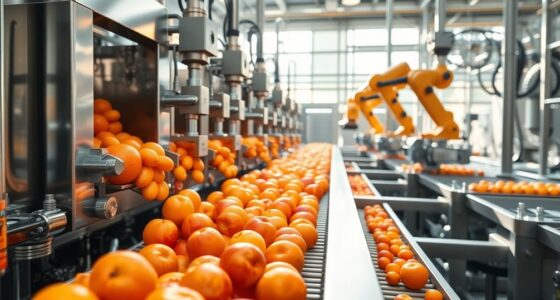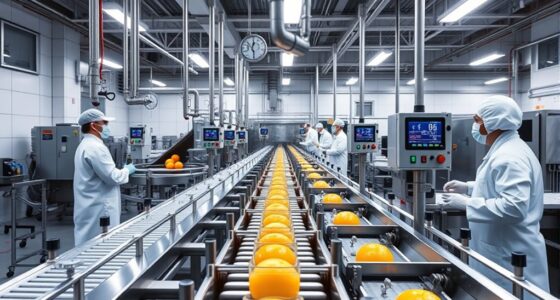
High-Pressure Processing (HPP) is a non-thermal technique that uses intense pressure, typically between 100-600 MPa, to inactivate harmful microbes and enzymes in your food. This method preserves fresh flavors, textures, and nutrients without relying on heat or chemicals, extending shelf life naturally. It’s ideal for preserving products like juices and seafood while maintaining quality. Keep exploring to discover how this innovative process enhances food safety and keeps your favorite foods fresh and healthy.

Get kitchen staples and gadgets delivered free with Prime
- Fast, free delivery on millions of items
- Prime Video, Amazon Music and more included
- Member-only deals all year
Key Takeaways
- HPP uses intense pressure (100-600 MPa) to inactivate microbes without heat, preserving food’s quality.
- It disrupts microbial cell membranes, leading to rapid inactivation of bacteria, yeasts, molds, and pathogens.
- As a non-thermal method, HPP maintains fresh flavors, textures, and nutrients better than traditional heat-based preservation.
- The process ensures food safety, extending shelf life while reducing reliance on chemical preservatives.
- HPP is suitable for various products like juices, seafood, and ready-to-eat meals, aligning with consumer demand for minimally processed foods.

High-Pressure Processing (HPP) is a modern food preservation technique that uses intense pressure to inactivate microbes and enzymes, extending shelf life without the need for heat or chemicals. When you subject food to high pressure—typically between 100 and 600 MPa—the pressure effects disrupt the cellular structures of microorganisms. This disruption halts their metabolic functions, effectively preventing them from multiplying and causing spoilage. The process doesn’t rely on thermal treatment, so it preserves the fresh qualities, flavors, and nutrients of your food better than traditional methods.
High-Pressure Processing inactivates microbes without heat, preserving freshness, flavor, and nutrients naturally.
The pressure effects on microbes are profound. They cause physical damage to cell membranes and walls, leading to leakage of vital cellular contents. As a result, bacteria, yeasts, molds, and other pathogens are rapidly inactivated. This microbial inactivation is essential because it guarantees your food remains safe from foodborne illnesses without the need for preservatives or additives. You’ll notice that foods treated with HPP often retain a fresh taste and texture, which is a significant advantage over heat-based methods that can alter sensory qualities.
You’ll find that the process is quick and efficient. When you apply pressure uniformly across the product, microbial cells are compromised almost instantly, often within seconds to minutes. The degree of inactivation depends on the pressure level, duration, and the type of microorganism present. For instance, higher pressures tend to be more effective at eliminating resistant pathogens, giving you confidence that your food is safe. The non-thermal nature of HPP means you don’t have to worry about heat-sensitive nutrients breaking down, so your food maintains its nutritional profile.
Moreover, because HPP targets microbes without heating the food, it preserves the integrity of delicate ingredients like fresh juices, seafood, and ready-to-eat meals. You benefit by getting products with extended shelf life, improved safety, and preserved natural flavors. This method also reduces the reliance on chemical preservatives, aligning with clean-label trends and consumer preferences for minimally processed foods. Understanding the underlying mechanisms of HPP can help you better appreciate its benefits and applications in food safety and preservation.
As an affiliate, we earn on qualifying purchases.
Frequently Asked Questions
How Does HPP Compare Cost-Wise to Traditional Pasteurization?
You’ll find that HPP has a higher initial equipment investment compared to traditional pasteurization, making the cost comparison seem less favorable upfront. However, HPP can save you money in the long run through reduced energy costs, less waste, and extended shelf life. While the upfront costs are higher, the overall operational expenses may balance out or even become more economical over time, especially with increasing demand for fresh, minimally processed products.
Are There Any Sensory Changes in Foods After HPP?
Like a vintage vinyl, foods processed with HPP often retain their original flavor, with minimal sensory alterations. You might notice slight texture changes, but overall, the flavor preservation remains excellent. Unlike thermal methods, HPP doesn’t cause significant sensory shifts, so your produce stays fresh-tasting. While some subtle differences can occur, they’re usually barely perceptible, making HPP a great choice for maintaining food quality and sensory appeal.
Is HPP Suitable for All Types of Food Products?
HPP isn’t suitable for all food products because it can affect food texture and requires compatible packaging. You’ll want to take into account the specific product’s sensitivity to pressure, as some may become too soft or lose quality. Also, ensure your packaging can withstand high pressure without breaking or contaminating the food. By evaluating these factors, you can determine if HPP fits your product’s needs and maintains quality.
What Are the Limitations of HPP in Food Preservation?
You might find that HPP struggles with scalability challenges, especially for large-scale operations, which can limit its widespread use. Equipment costs are high, making it less accessible for small producers. Additionally, certain food types, like those with irregular shapes or high juice content, may not benefit fully. These limitations mean you need to weigh the benefits against costs and practicality before choosing HPP for your products.
How Does HPP Impact the Nutritional Content of Foods?
HPP helps preserve the nutritional content of foods by maintaining nutritional retention and bioactive stability better than traditional heat methods. You’ll find that vitamins, antioxidants, and other bioactives stay intact because the process avoids high temperatures that can degrade nutrients. As a result, foods processed with HPP retain their freshness and nutritional quality longer, offering you healthier options without sacrificing essential nutrients.
Conclusion
High-Pressure Processing offers a gentle touch to preserve your foods’ natural goodness without the harshness of heat. It’s a quiet guardian, keeping nutrients intact and flavors vibrant, all while extending shelf life. Embrace this innovative method, knowing it nurtures your food with care and respect. As you choose HPP, you’re embracing a future where quality and safety harmoniously coexist, softly guiding your culinary experience toward a brighter, healthier tomorrow.
NFL season / tailgating Picks
team gear
As an affiliate, we earn on qualifying purchases.