To keep your high-volume juicing fresh, start by thoroughly sterilizing all equipment and workspace before each batch. Prep your ingredients in advance, washing, peeling, and cutting uniformly, then juice in a careful sequence to prevent contamination. Store your juice immediately in sterilized, airtight bottles, filling them completely, and refrigerate or freeze promptly to preserve nutrients. Maintain a clean workflow and systematic timing to guarantee quality. Continue exploring these steps to master efficient, fresh batch juicing.
Key Takeaways
- Thoroughly sterilize all equipment before starting each batch to prevent contamination and preserve freshness.
- Prepare and organize ingredients in advance to streamline the juicing process and minimize exposure time.
- Juicing in a sequence starting with delicate produce reduces cross-contamination and maintains quality.
- Fill sterilized bottles completely and refrigerate immediately to slow oxidation and microbial growth.
- Batch process efficiently with a clean workspace, maintaining consistent timing for optimal nutrient retention.
Have you ever wondered how to streamline your juicing process for maximum efficiency and freshness? When you’re handling large batches, proper juice preservation becomes vital to maintain flavor, nutrients, and quality. The first step is ensuring your equipment sterilization is thorough. Clean all juicing tools, containers, and storage bottles meticulously before starting. Using hot water and a suitable sterilizing solution helps eliminate bacteria and mold, preventing spoilage and extending the shelf life of your juice. Proper equipment sterilization isn’t just about cleanliness; it’s about safeguarding the freshness of your product from the moment you juice to when it hits the glass.
Thorough sterilization of equipment is essential for maintaining fresh, safe, high-quality juice.
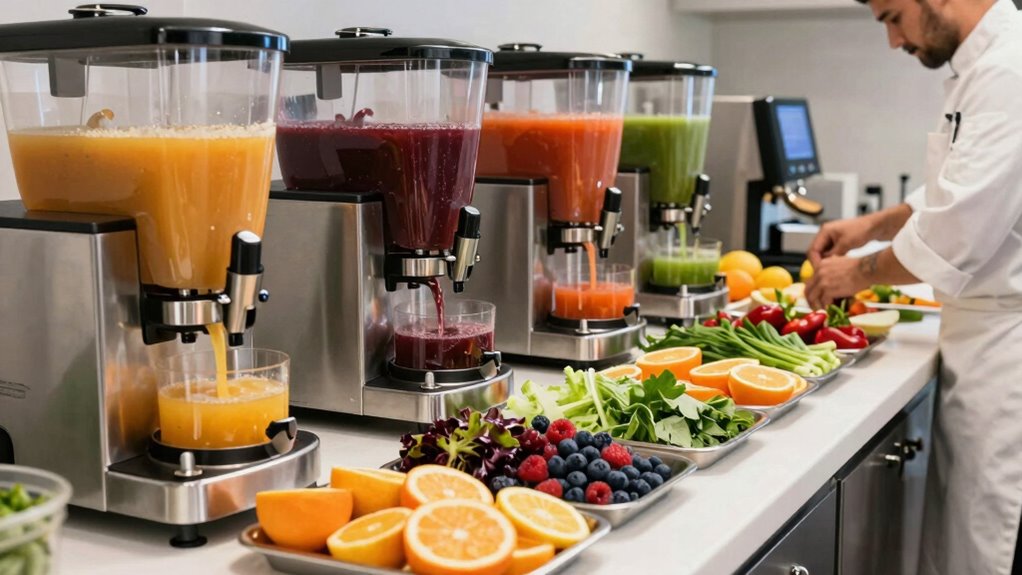
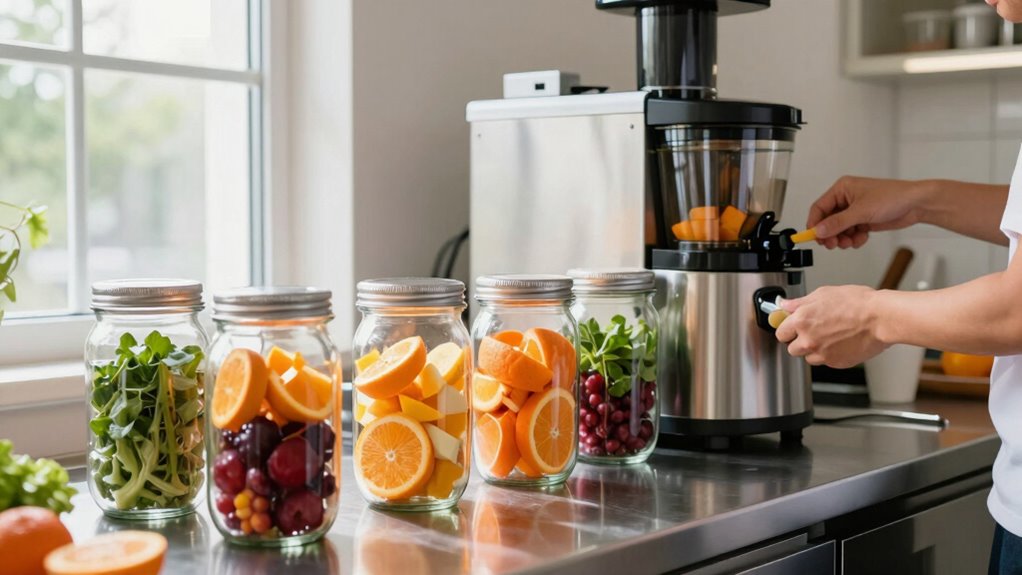
Once your equipment is spotless, focus on the juicing workflow itself. Efficient batch processing begins with organized ingredients. Prepare your fruits and vegetables in advance—wash, peel, and cut them uniformly. This reduces downtime during juicing and ensures consistent extraction. When you’re ready to juice, do so in a systematic way, starting with the most delicate produce to avoid cross-contamination. This minimizes the need for frequent cleaning of your equipment between ingredients, saving time and maintaining hygiene standards. Maintaining a clean workspace is essential to prevent contamination and ensure optimal juice quality throughout the process.
To maximize juice preservation, consider the method of storing your fresh batches. Use airtight, sterilized bottles or jars to prevent oxygen exposure, which degrades juice quality over time. Filling containers to the brim minimizes air pockets, helping to preserve flavor and nutrients longer. Keep your juice refrigerated immediately after bottling—ideally at a temperature of around 37°F (3°C)—to slow down microbial activity and oxidation. For longer storage, consider freezing smaller portions, but be mindful that freezing can sometimes alter the texture and flavor.
Timing is also key. Juicing in large volumes is most efficient when you plan ahead. Allocate specific times for preparation, juicing, and storage. This structured approach reduces the risk of rushing, which can lead to overlooked sterilization steps or sloppy juice preservation. Keep your workspace clean throughout the process, wiping down surfaces and sterilizing utensils as needed. This consistency helps maintain the integrity of your juice and ensures that each batch remains fresh, vibrant, and safe to consume.
In short, mastering high-volume juicing hinges on meticulous equipment sterilization and smart juice preservation techniques. By staying organized, clean, and quick to refrigerate or freeze, you can batch large quantities without sacrificing quality. Your commitment to these steps ensures that every glass of juice you serve is as fresh, nutrient-rich, and delicious as the first sip.
Frequently Asked Questions
How Do Pros Prevent Oxidation During Large Batches?
To prevent oxidation during large batches, you should use oxidation prevention techniques like adding natural antioxidants such as lemon juice or vitamin C. Store your juice in airtight, dark containers to minimize exposure to light and air, which helps with batch preservation. Keep the juice cold, ideally refrigerated or on ice, to slow oxidation processes. Proper sealing and quick processing also ensure your juice stays fresh and vibrant longer.
What Storage Methods Keep Juice Fresh Longer?
Think of your juice like a delicate bloom; proper storage keeps it vibrant. Use bottles with airtight, dark glass or specialized juice bottle design to block light and air. Keep your juice at a consistent, cold storage temperature—ideally around 32-39°F (0-4°C)—to slow oxidation. Properly sealed containers and cool temperatures preserve freshness longer, ensuring your juice stays flavorful and nutritious until it’s enjoyed.
Which Equipment Optimizes High-Volume Juicing Efficiency?
You should choose commercial-grade juicers like high-speed centrifugal or masticating models to optimize your workflow. These equipment selections process large quantities quickly, reducing prep time and maintaining freshness. Incorporating multiple juicers streamlines batching, while easy-to-clean machines enhance efficiency. By selecting the right equipment, you’ll improve productivity, keep juice fresh longer, and achieve a smooth, high-volume workflow that meets your demands effortlessly.
How Do Pros Manage Cleaning After Batch Processing?
Did you know that proper cleaning protocols can reduce cross-contamination risks by up to 90%? To manage cleaning after batch processing, you should follow strict sanitation standards, thoroughly disassembling and rinsing all equipment. Use food-safe sanitizers, scrub parts carefully, and make certain everything is dry before reuse. Consistent adherence to these practices keeps your juicing operation safe, efficient, and compliant with health regulations, maintaining high-quality freshness with each batch.
Are There Safety Concerns With Batch Juicing?
Yes, there are safety concerns with batch juicing, but you can manage them effectively by following strict safety protocols. Always sanitize equipment thoroughly to prevent contamination and guarantee proper storage temperatures to preserve freshness and safety. Use clean handling practices, avoid cross-contamination, and regularly monitor ingredients. By adhering to these measures, you minimize health risks and maintain high-quality, safe juice batches for your customers.
Conclusion
Mastering high-volume juicing is like conducting a well-oiled orchestra—you keep everything flowing smoothly without missing a beat. By batching your prep and using smart storage, you guarantee each glass of juice stays fresh and vibrant, no matter how busy your day gets. Remember, consistency is your secret ingredient. With these tips, you’ll turn chaos into harmony, serving up fresh, delicious juice every time—making your workflow as smooth as a perfectly blended smoothie.