This checklist is for home bakers gathering the basics for homemade bread, whether you are starting from scratch or filling a gap in your setup. It pairs a named pick with each product slot where one was provided and gives practical guidance for the yeast slot.

Get kitchen staples and gadgets delivered free with Prime
- Fast, free delivery on millions of items
- Prime Video, Amazon Music and more included
- Member-only deals all year
The sections follow the bread-making process: measuring ingredients, choosing flour and yeast, proofing dough, baking, and scoring. Each section explains what the item contributes and what to check before buying.
Use the checklist to compare fit and function against your recipes, kitchen storage, and existing tools. Confirm product details with the seller, especially where a listing name does not clearly describe the item or its compatibility.
Digital kitchen scale
A scale helps you measure ingredients by weight, which is useful when you want to follow a recipe consistently. The OXO Good Grips 11-Pound Digital Kitchen Food Scale is the listed pick for this slot. Before choosing any scale, consider whether its capacity suits the quantities you expect to weigh and whether the display and controls will be convenient on your counter.
A common mistake is assuming a scale’s maximum capacity tells you everything about its usefulness. Check the seller’s specifications for measurement units, precision, display visibility, and how the weighing surface fits your bowls. If you bake larger batches, think about the combined weight of the container and ingredients; if you bake small loaves, make sure the scale can register the smaller quantities your recipes call for.
Also consider counter and storage space, along with whether the platform can be cleaned easily after flour or sticky ingredients spill. Compare the listed product dimensions and operating details with your kitchen routine. A scale is most helpful when it is simple to set up and easy to read while you are working through a recipe.
What to look for:
- Capacity that accommodates your bowl plus ingredients
- Measurement units suited to your recipes
- A display you can read from your usual working position
- A platform that fits common mixing bowls
- Dimensions that work with your counter and storage
OXO Good Grips 11-Pound Digital Kitchen Food Scale

This digital kitchen scale weighs food up to 11 pounds in 1/8-ounce or 1-gram increments. Its pull-out display helps prevent shadows from large bowls, while the tare function, remaining-capacity indicator, and easy-to-clean platform make food preparation convenient.
Pros:
- Pull-out display helps prevent shadowing from large containers
- Measures in both US and metric increments
- Tare function supports weighing ingredients in a container
- Thin profile and easy-to-clean platform simplify storage and cleanup
Cons:
- Maximum capacity is limited to 11 pounds
- Requires four AAA batteries
Best for: Bakers who want to weigh recipe ingredients
Not ideal for: Kitchens without room to store another countertop tool
Bottom line: Check the capacity, display, units, and dimensions before selecting this scale.
Bread flour
Flour is a central ingredient in bread, so the first step is matching the product to the recipe. The supplied pick, Lehman’s Diamant European Grain Mill, is named as a grain mill rather than bread flour. Confirm the listing details before treating it as flour: check what the product is, what it is designed to process, and whether it includes the material or components you expect.
A common shopping mistake is relying on a section label when a product name points to a different kind of item. If you are buying flour for a recipe, check the package or seller description for the flour type and intended use. If you are considering a mill, verify what grains it accepts, how it is operated, and what else you need to produce flour. Do not assume the mill itself is a bag of bread flour.
For recipe compatibility, use the flour type the recipe specifies and consider whether you want a ready-to-use ingredient or equipment for processing grain. Check product identity and included contents before adding the pick to your list. This avoids arriving home with a tool when your immediate baking plan calls for an ingredient.
What to look for:
- A clear distinction between flour and milling equipment
- Product description that matches your intended purchase
- Flour type specified by your bread recipe
- For a mill, confirmation of accepted grains and included parts
- Seller details on operation and required accessories
Lehman’s Diamant European Grain Mill

The Diamant grain mill is a durable, high-performance cast iron mill suitable for grinding grains, spices, legumes, nuts, and seeds. It features an adjustable burr system, a large cast iron flywheel for smooth operation, and is designed for long-lasting use in both farm and kitchen settings.
Pros:
- Durable cast iron construction ensures long-lasting performance
- Adjustable from fine powder to coarse grind easily
- Can grind a wide variety of grains, spices, nuts, and seeds
- Smooth operation with a large cast iron flywheel
Cons:
- Heavy weight may be difficult to move
- Not suitable for peanuts
- Requires manual effort unless motorized
Best for: Shoppers who have confirmed they want a grain mill
Not ideal for: Bakers seeking a ready-to-use bag of bread flour
Bottom line: Confirm whether this listing is a mill or flour before buying for a recipe.
Instant yeast
No specific product is listed for instant yeast, so choose a package that clearly identifies instant yeast and matches the kind your recipe calls for. Read the label and product description rather than relying on a general baking or yeast category. If you already have yeast at home, check its type and the recipe’s instructions before deciding you need another package.
A common mistake is treating different yeast types as automatically interchangeable. Follow the recipe’s stated yeast type and directions, and check the package for guidance on use and storage. Package size also matters: choose an amount that makes sense for the recipes you expect to bake and that you can store according to the label once opened.
Check the ingredient and storage information before purchase, particularly if you have preferences or constraints that affect what you can use. Keep the package details available while mixing so you can follow its directions alongside the recipe. If the recipe gives a specific amount, make sure you can measure that amount with the tools you have.
What to look for:
- The label explicitly identifies instant yeast
- Package directions that fit your recipe method
- An amount suited to your planned baking
- Storage instructions you can follow
- Clear ingredient and product information
Dough proofing basket
A proofing basket can support dough during its final rise, while a liner may be part of the setup depending on the product and your method. The listed pick is the Gejoy 25 Sets Bread Proofing Baskets Kit with Cloth Liners and Scraper. Because the title describes a kit, check the listing for the exact contents and the dimensions of each basket rather than assuming every piece will suit your loaves.
A common mistake is choosing by set size alone. Compare basket shape and measurements with the dough size and shape in your recipes, and confirm that the basket can be stored in your available space. Read the product details to understand how the cloth liners are intended to be used and whether the scraper is included as described. A kit may contain more pieces than you need, so consider how many you will actually use.
Think about cleaning and storage before buying. Check the seller’s care instructions for the baskets and liners, and make sure you have room to keep them dry between uses. If you bake different loaf sizes, compare the available basket dimensions with those recipes. The right choice is one whose capacity, shape, and care requirements fit your routine.
What to look for:
- Basket dimensions and shape listed clearly
- Contents of the 25-set kit spelled out
- Cloth liner details and care instructions
- Scraper inclusion confirmed in the listing
- Storage needs that fit your kitchen
Gejoy 25 Sets Bread Proofing Baskets Kit with Cloth Liners and Scrapers, 10 Inch
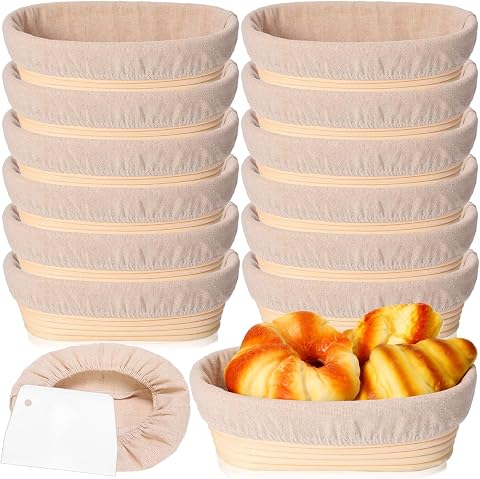
This comprehensive bread proofing kit includes 25 oval baskets, cloth liners, and plastic scrapers, ideal for making various types of bread such as sourdough and French bread at home. Made from natural rattan, these durable and easy-to-clean proofing bowls help create crispy, artisan-style bread.
Pros:
- Complete set with baskets, liners, and scrapers for versatile baking
- Made from natural, odor-free rattan for safe use
- Easy to clean and maintain, suitable for home and commercial use
- Great gift for baking enthusiasts
Cons:
- Natural rattan smell may be strong initially
- Baskets may require seasoning or preparation before first use
- Size may be too small for larger bread recipes
Best for: Bakers who want baskets, liners, and a scraper together
Not ideal for: Anyone who needs only one specific basket size
Bottom line: Check the kit contents, basket dimensions, and care instructions before ordering.
Dutch oven
The listed pick for the Dutch oven slot is Bread Baking Cookbook for Beginners: 1200 Easy and Affordable Homemade, whose name describes a cookbook. Confirm the listing identity before purchasing: it may not be the cookware your baking setup needs. If you are shopping for a Dutch oven, look for a product description that clearly identifies the pot and provides its dimensions and use details.
A common mistake is assuming a section heading accurately describes a mismatched product listing. Check the item type, included contents, and seller description. For actual cookware, compare the pot’s capacity and interior dimensions with the loaf size in your recipes, and consider whether it will fit in your oven and available storage. Also review any product-specific instructions for use and care.
If you intended to buy a book, verify the title and contents to see whether it suits your baking plans; if you intended cookware, continue comparing Dutch ovens separately. The oven fit and loaf capacity are practical checks for cookware, while title and format matter for a book. Confirm which item the listing offers before relying on this pick for the Dutch oven slot.
What to look for:
- Listing clearly identifies cookware or a cookbook
- For cookware, capacity and interior dimensions
- Oven fit for the pot’s stated dimensions
- Use and care instructions for cookware
- For a book, accurate title and description
Bread Baking Cookbook for Beginners: 1200 Easy and Affordable Homemade Recipes

This cookbook offers 1200 simple and budget-friendly recipes for making fresh, fragrant, and tasty bread and bakery products at home. Ideal for beginners looking to improve their baking skills and enjoy homemade bread daily.
Pros:
- Extensive collection of recipes for all skill levels
- Affordable and easy-to-follow instructions
- Helps bakers create fresh, flavorful bread at home
Cons:
- No specific details on recipe types or ingredients
- No information on additional baking tools or equipment
- Content may be overwhelming for complete beginners
Best for: Shoppers who confirm the listing matches their intended item
Not ideal for: Bakers expecting a Dutch oven based on the section label alone
Bottom line: The pick name describes a cookbook, so verify the listing before buying cookware.
Bread lame
A bread lame is used for scoring dough, and the listed pick is the JACYAO’S Bread Lame & Dough Scissors Sourdough Scoring Tool Kit with B. The product name is cut off, so check the complete listing title and description before buying. Confirm which tools are included and how the lame is assembled or handled, rather than inferring details from the partial name.
A common mistake is assuming a kit contains a particular blade, holder, or accessory because the title mentions a scoring tool. Read the contents list and look for clear product images and use instructions. Consider whether you want a standalone lame or a kit with additional tools, and check how any parts are stored safely between uses.
For fit with your baking routine, compare the tool’s stated design and handling instructions with how you plan to score dough. Check whether replacement or additional components are described by the seller if that matters to you. Prioritize clear contents and handling guidance, especially when the listing title ends mid-word, so you know what will arrive and how to use it.
What to look for:
- Complete product title and description
- Specific list of included tools and components
- Clear instructions for assembly and handling
- Product images that show the listed contents
- Storage and component details from the seller
JACYAO’S Bread Lame & Dough Scissors Sourdough Scoring Tool Kit with Blades

This professional bread scoring kit includes a stainless steel lame, sourdough scissors, cotton twine, blades, and a metal storage box. Designed for durability and safety, it helps bakers create intricate patterns and shapes on bread with ease.
Pros:
- Durable stainless steel construction for easy cleaning and sanitation
- Ergonomically designed lame with safety features
- Includes multiple tools for versatile bread scoring and shaping
- Comes with a protective metal storage box
Cons:
- Tools may require some skill for intricate designs
- Limited to bread scoring and shaping, not suitable for other baking tasks
Best for: Bakers seeking a scoring tool set after confirming its contents
Not ideal for: Shoppers relying on the truncated title alone
Bottom line: Verify the complete listing and included components before choosing this scoring kit.
Build your checklist in recipe-first order: confirm the ingredients and yeast type your recipes call for, then choose measuring and proofing tools that fit your batches. Next, resolve the product identity for the flour and Dutch oven slots, since the supplied names describe a grain mill and a cookbook. Add a scoring kit after checking its complete contents.
Start with what your recipes require and your kitchen can store, then fill the remaining gaps as you bake. Clear product details make it easier to choose tools and ingredients that fit your bread-making plans. Keep the checklist handy as you compare listings, and enjoy building a setup that works for you.