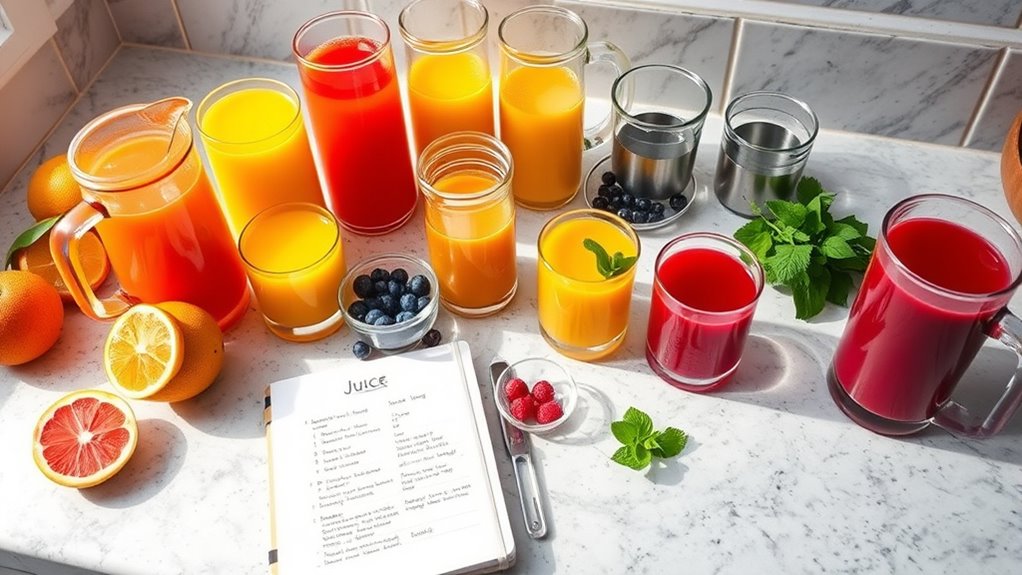

To determine how much juice to make, start by considering typical serving sizes—about 8 ounces per glass—and plan accordingly based on how many people you’ll serve. Preparing a little extra guarantees everyone gets enough, especially if guests are enthusiastic. Use airtight containers to keep juice fresh and plan for storage time. Proper portioning and planning help prevent waste while keeping your juice tasty and nutritious; keep going to learn more tips for efficient planning.
Key Takeaways
- Plan for approximately 8 ounces of juice per serving to meet standard glass sizes.
- Calculate total juice needed by multiplying servings by 8 ounces to prevent shortages.
- Prepare extra to accommodate larger groups or unexpected guests, avoiding shortage.
- Use airtight containers to store and preserve fresh juice, planning for storage duration.
- Adjust ingredient quantities based on the number of servings and the fruits’ ripeness for optimal flavor.

Have you ever wondered how to accurately plan your meals and avoid overeating? When it comes to making fresh juice, understanding serving sizes and proper planning can make a big difference. Before you start blending, think about the ideal fruit combinations to keep your juice flavorful and balanced. Combining fruits like apples and oranges adds sweetness and nutrition, while mixing berries with bananas creates a rich, vibrant flavor. Experimenting with different fruit combinations helps you discover what you enjoy most and ensures your juice stays interesting without relying on added sugars. Once you’ve chosen your fruits, consider how much juice you want to make in one batch. A common serving size is around 8 ounces, which is enough for a glass and provides a good dose of vitamins and hydration. Planning your quantities ahead of time prevents waste and helps you stick to your nutritional goals. Knowing the right serving sizes helps prevent overconsumption and supports a balanced diet.
To guarantee your juice stays fresh, storage tips are essential. Freshly made juice should ideally be consumed within 24 hours, but if you need to store it longer, keep it in an airtight container in the refrigerator. Fill the container to the top to minimize air exposure, which can cause oxidation and spoilage. For longer storage, consider freezing smaller portions in ice cube trays, making it easy to thaw just what you need. When storing, always label your containers with the date so you can track freshness. If you notice any change in color, smell, or taste, it’s best to discard the juice to avoid consuming spoiled liquid.
Planning your juice servings also involves considering how many people you’re serving. If you’re preparing for a family breakfast or a gathering, multiply your typical serving size accordingly. For example, if one person’s 8-ounce glass, then for four people, set aside at least 32 ounces. Remember, it’s better to prepare a little extra than to run short, especially if your guests are enthusiastic for more. When you’re shopping for ingredients, buy in quantities that match your planned servings, taking into account the ripeness of your fruits; overripe fruits can be great for juice but should be used quickly. Keeping these storage tips and thoughtful fruit combinations in mind ensures that your juice is not only delicious but also safe and convenient to enjoy throughout the week.
Frequently Asked Questions
How Do I Adjust Juice Quantities for Dietary Restrictions?
To adjust juice quantities for dietary restrictions, focus on nutritional adjustments and allergen considerations. You can modify ingredients by substituting allergen-free fruits or vegetables, such as using coconut water instead of dairy-based options. Increase or decrease portions based on individual nutritional needs, like reducing sugar content for diabetics. Always check labels and consult with a healthcare professional if necessary, ensuring your juice aligns with specific dietary restrictions and safety standards.
What Are the Best Containers for Storing Homemade Juice?
You should store your homemade juice in reusable bottles or glass storage containers. Reusable bottles are convenient and eco-friendly, perfect for on-the-go use. Glass storage offers the best preservation, preventing flavor transfer and contamination. Make certain containers are airtight to keep your juice fresh longer. Avoid plastic that might leach chemicals. Using these options guarantees your juice stays fresh, flavorful, and safe for as long as possible.
How Can I Estimate Juice Needs for Large Events?
Think of yourself as a master chef in event planning, estimating juice needs with precision. To do this, consider typical juice portioning—about 4-6 ounces per person for a refreshment. Multiply this by your expected guest count, and add a 10-20% buffer for seconds or unexpected guests. Keep track of your measurements, and you’ll guarantee everyone stays refreshed without excess, making your large event a delicious success.
What Is the Shelf Life of Freshly Made Juice?
Freshly made juice typically has a shelf life of 24 to 72 hours when properly refrigerated. Juice preservation depends on factors like temperature, acidity, and cleanliness during preparation. To extend shelf life, store your juice in airtight containers and keep it chilled. Always check for signs of spoilage, such as off smells or fermentation, before serving. Proper storage and handling are key to maintaining freshness and safety.
How Do I Account for Juice Loss During Processing?
You should account for juice loss during processing by considering your juice yield and processing efficiency. Typically, you’ll lose some juice due to peeling, pulping, or spillage, so measure your starting produce and track the final volume. Adjust your recipe accordingly, multiplying your desired final amount by an efficiency factor (usually 70-90%) to guarantee you make enough juice. This way, you prevent shortages and optimize your process.
Conclusion
Understanding serving sizes helps you plan your juice-making effectively. Did you know that a single medium orange yields about 4 ounces of juice? This means if you want 16 ounces, you’ll need four oranges. By keeping these measurements in mind, you can reduce waste and make sure everyone gets enough. Planning ahead with these simple calculations makes your juice preparation smoother and more enjoyable, saving you time and effort while satisfying your guests or family.

Cindy thoroughly researches juicing trends, techniques, and recipes to provide readers with practical advice and inspiration. Her writing style is accessible, engaging, and designed to make complex concepts easy to understand. Cindy’s dedication to promoting the advantages of juicing shines through her work, empowering readers to make positive changes in their lives through the simple act of juicing.