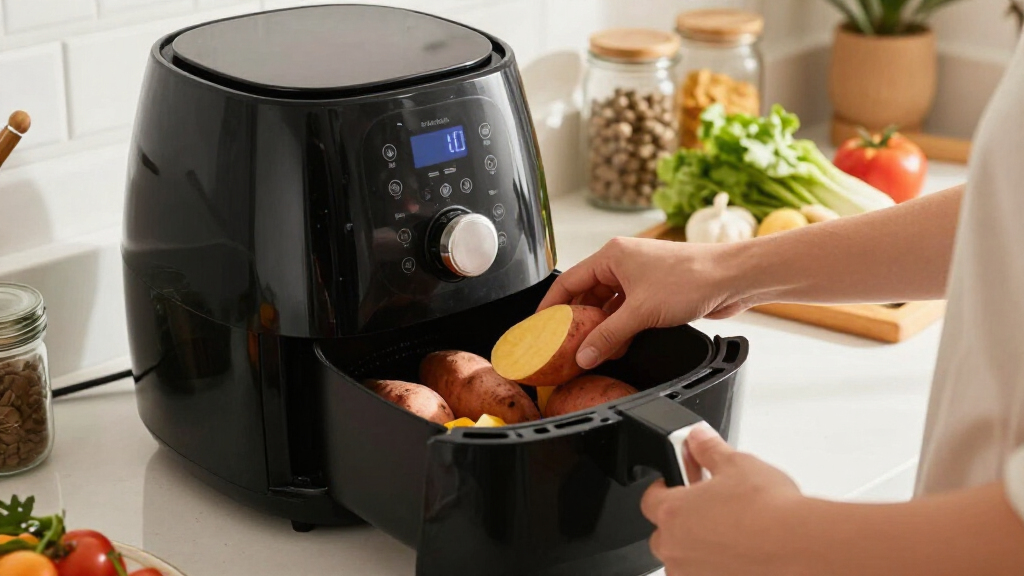
This guide explains how to use an air fryer to cook healthy meals. It covers selecting ingredients, setting up the appliance, and choosing the right cooking techniques. Suitable for beginners, this process can take about 30 to 60 minutes depending on the recipe. By following these steps, you will be able to prepare crispy, flavorful, and nutritious dishes with less oil and fewer calories, making your meals healthier and quicker to cook.

Get kitchen staples and gadgets delivered free with Prime
- Fast, free delivery on millions of items
- Prime Video, Amazon Music and more included
- Member-only deals all year

Cosori TurboBlaze Air Fryer, 9-in-1, 6 Qt, PFAS-Free Ceramic Coating
- ✔ Capacity: 6 quarts
- ✔ Temperature Range: 90°F–450°F
- ✔ Fan Speed: up to 3600 rpm

Dash Compact Air Fryer – 2 Quart, Cool Grey
- ✔ Capacity: 2 Quarts
- ✔ Color: Cool Grey
- ✔ Technology: AirCrisp®
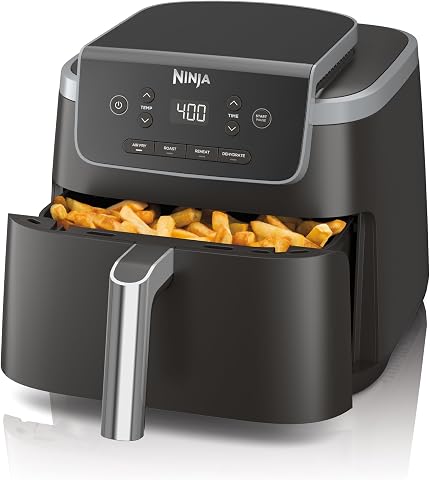
Ninja Air Fryer Pro, 5 Qt, 4-in-1, Grey, AF141
- ✔ Capacity: 5 Qt
- ✔ Power: 1750 watts
- ✔ Functions: Air Fry, Roast, Reheat, Dehydrate
Difficulty: Beginner | Time: 30-60 minutes
What You’ll Need
Tools & Materials:
- air fryer
- measuring spoons and cups
- sharp knife
- cutting board
- mixing bowls
Knowledge:
- basic understanding of cooking times and temperatures
- ability to prepare raw ingredients
Ensure your air fryer is clean before use. Read the manufacturer’s manual for specific safety and operational instructions. Have all ingredients prepared and measured before starting to streamline the process.
Cosori TurboBlaze Air Fryer, 9-in-1, 6 Qt, PFAS-Free Ceramic Coating
<p>The <strong>Cosori TurboBlaze</strong> stands out for its impressive 6-quart capacity, making it an excellent choice for families seeking healthy, crispy meals without excess oil. Its <strong>PFAS-free ceramic coating</strong> ensures safer cooking, while the powerful fan system delivers evenly cooked, juicy results quickly. Compared to smaller models, it offers the convenience of preparing larger portions, though it may be bulky for small kitchens. The quiet operation and included recipe book add to its appeal, but the higher price might be a barrier for budget-conscious buyers. This model is ideal for those prioritizing capacity and quiet operation but willing to invest in versatile, health-focused cooking.</p>
Pros:
- Crispy, juicy results with less oil
- Quiet operation at less than 53dB
- Spacious 6-quart basket suitable for family meals
- Includes a recipe cookbook for versatile cooking
Cons:
- May be bulky for small kitchens
- Complex features might require a learning curve
- Price not specified
Best for: Families or batch cooks needing large capacity for healthy meals
Not ideal for: Small kitchens or users seeking a lightweight, compact appliance
Bottom line: A versatile, spacious air fryer perfect for healthy family cooking, with some size and complexity tradeoffs.
“A versatile, spacious air fryer perfect for healthy family cooking, with some size and complexity tradeoffs.”
Dash Compact Air Fryer – 2 Quart, Cool Grey
<p>The <strong>Dash Compact Air Fryer</strong> is tailored for those with limited space or who cook small meals often. Its <strong>AirCrisp® technology</strong> reduces fat intake by up to 75%, making it a healthy choice for quick, crispy snacks or single servings. Its 2-quart capacity is perfect for small households, but it’s not suited for large families or bulk cooking. The auto shut-off and cool-touch handle enhance safety, and cleanup is straightforward with its removable nonstick basket. However, the small size means it takes longer to cook larger portions, and it may not meet the needs of those cooking for multiple people. This pick makes the most sense for singles or couples prioritizing space and quick, healthy meals.</p>
Pros:
- Healthy cooking with less fat
- Compact size saves counter space
- Easy to clean with removable basket
- Safe operation with auto shut-off and cool-touch handle
Cons:
- Limited capacity for larger families
- May take longer to cook larger portions
- Small size might not suit all needs
Best for: Singles or small households needing space-efficient healthy frying
Not ideal for: Large families or those cooking big batches regularly
Bottom line: A compact, space-saving air fryer ideal for small households focusing on quick, healthy snacks or meals, with capacity constraints for larger needs.
“A compact, space-saving air fryer ideal for small households focusing on quick, healthy snacks or meals, with capacity constraints for larger needs.”
Ninja Air Fryer Pro, 5 Qt, 4-in-1, Grey, AF141
<p>The <strong>Ninja Air Fryer Pro</strong> offers a well-rounded 5-quart capacity with multiple functions, including air fry, roast, reheat, and dehydrate. Its <strong>superheated air technology</strong> ensures crispy, healthier foods with less oil, and the nonstick basket and crisper plate simplify cleaning. Compared with the Cosori, it offers more cooking versatility, making it suitable for users who want one appliance that can do it all. However, it might be bulky for small countertops, and cooking times can vary depending on the food. It’s a strong choice for those seeking flexibility, but its size and multi-function complexity may be overkill for basic needs.</p>
Pros:
- Versatile 4-in-1 functionality
- Large capacity fits up to 4 lbs of fries or chicken wings
- Uses less oil for crispy, healthier foods
- Easy to clean with nonstick parts
Cons:
- May be bulky for small countertops
- Requires space for ventilation
- Cooking times vary depending on food type
Best for: Home cooks wanting a multi-functional appliance for healthy meals
Not ideal for: Small kitchens or users who prefer simple, single-function devices
Bottom line: A versatile, multi-function air fryer ideal for users who want to replace several appliances with one, though size and complexity may be drawbacks.
“A versatile, multi-function air fryer ideal for users who want to replace several appliances with one, though size and complexity may be drawbacks.”
As an Amazon Associate we earn from qualifying purchases.
Before You Start
Confirm your air fryer is plugged in and clean. Decide on the recipes you want to cook and gather all ingredients. Be aware that some foods may require pre-cooking or marinating. Always operate the appliance on a flat, stable surface in a well-ventilated area. Avoid overcrowding the basket to ensure even cooking.
Step-by-Step Instructions
Step 1: Preheat the air fryer
Set your air fryer to the recommended temperature for your recipe, typically between 350°F and 400°F, and let it preheat for 3-5 minutes. Some models have a preheat function; if so, activate it according to the manual.
Tip: Preheating helps achieve a crispy exterior and even cooking. Do not skip this step, especially for foods like vegetables or proteins.
Check: The air fryer reaches the set temperature indicator or you notice the heating element is active, and the interior is warm to the touch.
Step 2: Prepare ingredients for cooking
Wash, peel, and cut vegetables or proteins into uniform sizes to ensure even cooking. Lightly coat the ingredients with a small amount of healthy oil (e.g., olive oil) if desired, using a spray or brush, to enhance crispiness.
Tip: Avoid using too much oil; a light coating is enough to promote browning without adding excess calories.
Check: Ingredients are evenly coated and cut into uniform pieces, with no excess oil pooling.
Step 3: Arrange ingredients in the basket
Place the prepared ingredients into the air fryer basket in a single, even layer. Do not overcrowd; leave space between pieces for air circulation.
Tip: Overcrowding causes uneven cooking and sogginess. For larger quantities, cook in batches.
Check: Ingredients are spread out with space around each piece, allowing hot air to circulate freely.
Step 4: Set cooking time and temperature
Use the recommended temperature and time settings from your recipe or the air fryer manual. Adjust if necessary based on the thickness of ingredients or desired crispiness.
Tip: Start with lower times and check for doneness; you can always add more time if needed.
Check: The air fryer timer begins counting down without errors, and the display shows the set temperature and time.
Step 5: Cook the food
Press start and let the air fryer cook the food. Shake or turn ingredients midway through cooking if your recipe suggests, to promote even browning.
Tip: Use tongs or a spatula to flip or shake ingredients carefully, avoiding hot steam or splatters.
Check: Food develops a golden-brown, crispy exterior, and internal temperature reaches safe levels for proteins (e.g., 165°F for chicken).
Step 6: Check for doneness
At the end of cooking time, open the basket to assess doneness. Use a food thermometer if needed, especially for meats, to confirm it reaches the safe internal temperature.
Tip: If not fully cooked, add additional 2-3 minute intervals, checking after each.
Check: Food is cooked through, with a crispy exterior, and internal temperature or texture matches the recipe’s guidance.
Step 7: Remove and serve
Carefully lift the cooked food out of the basket with tongs or a spatula. Place on a plate lined with paper towels if excess oil is present, then serve immediately.
Tip: Serve hot for best texture and flavor. Use a clean spatula or tongs to prevent burns.
Check: Food looks crisp, smells appealing, and texture is tender inside with a browned exterior.
Common Mistakes to Avoid
- Overcrowding the basket — Arrange ingredients in a single layer with space between pieces to ensure even air circulation.
- Using too much oil — Lightly spray or brush ingredients with oil; avoid pouring it directly onto the basket or food.
- Not preheating the air fryer — Always preheat according to recipe or manual to help achieve crispness and even cooking.
- Cooking at incorrect temperatures or times — Follow recommended settings, and check food early to avoid overcooking or burning.
Troubleshooting
Problem: Food is not crispy or evenly cooked
Solution: Ensure ingredients are in a single layer with space around each piece. Shake or turn halfway through cooking.
Problem: Food is burnt on the outside but undercooked inside
Solution: Lower the temperature slightly and extend cooking time. Use a meat thermometer to verify doneness.
Problem: The air fryer is smoking
Solution: Check for excess oil or food particles in the basket. Clean the basket thoroughly and avoid over-oiling ingredients.
Problem: The air fryer doesn’t turn on or heats poorly
Solution: Verify the power connection, ensure the basket is seated properly, and consult the manual for troubleshooting specific to your model.
What Success Looks Like
The food is evenly cooked with a crispy, golden exterior, and internal temperatures or textures match the intended recipe. The appliance operates without errors, and the results are visually appealing and flavorful.
Next Steps
Clean the basket and interior after each use to maintain performance. Experiment with different healthy ingredients and recipes. Adjust cooking times and temperatures based on your preferences. Consult the manual for advanced features or troubleshooting. Repeat the process to master cooking various healthy dishes in your air fryer.
Frequently Asked Questions
Can I cook frozen foods in an air fryer?
Yes, most frozen foods can be cooked directly in an air fryer. Add a few extra minutes to the cooking time and shake or turn halfway through for even results.
How much oil should I use for healthy cooking?
Use only a light spray or a teaspoon of oil to coat ingredients. This reduces fat intake while helping foods crisp up nicely.
Is it safe to cook all types of vegetables in an air fryer?
Most vegetables are suitable, but thicker or denser types like potatoes or carrots may require longer cooking times. Cut vegetables into uniform sizes for consistent results.
How do I clean my air fryer properly?
Remove the basket and pan, wash with warm soapy water, and dry thoroughly. Avoid abrasive cleaners or metal scouring pads that could damage non-stick surfaces. Wipe the interior with a damp cloth.
Can I cook multiple types of food at once?
It is best to cook different foods separately to prevent flavor transfer and uneven cooking. If combining, select compatible ingredients and adjust cooking times accordingly.
Halloween Picks
halloween
As an affiliate, we earn on qualifying purchases.

![[Mimi] Sushi. [16]](https://thejuiceryworld.com/wp-content/uploads/2026/09/mimi-sushi-16-featured-560x300.jpg)